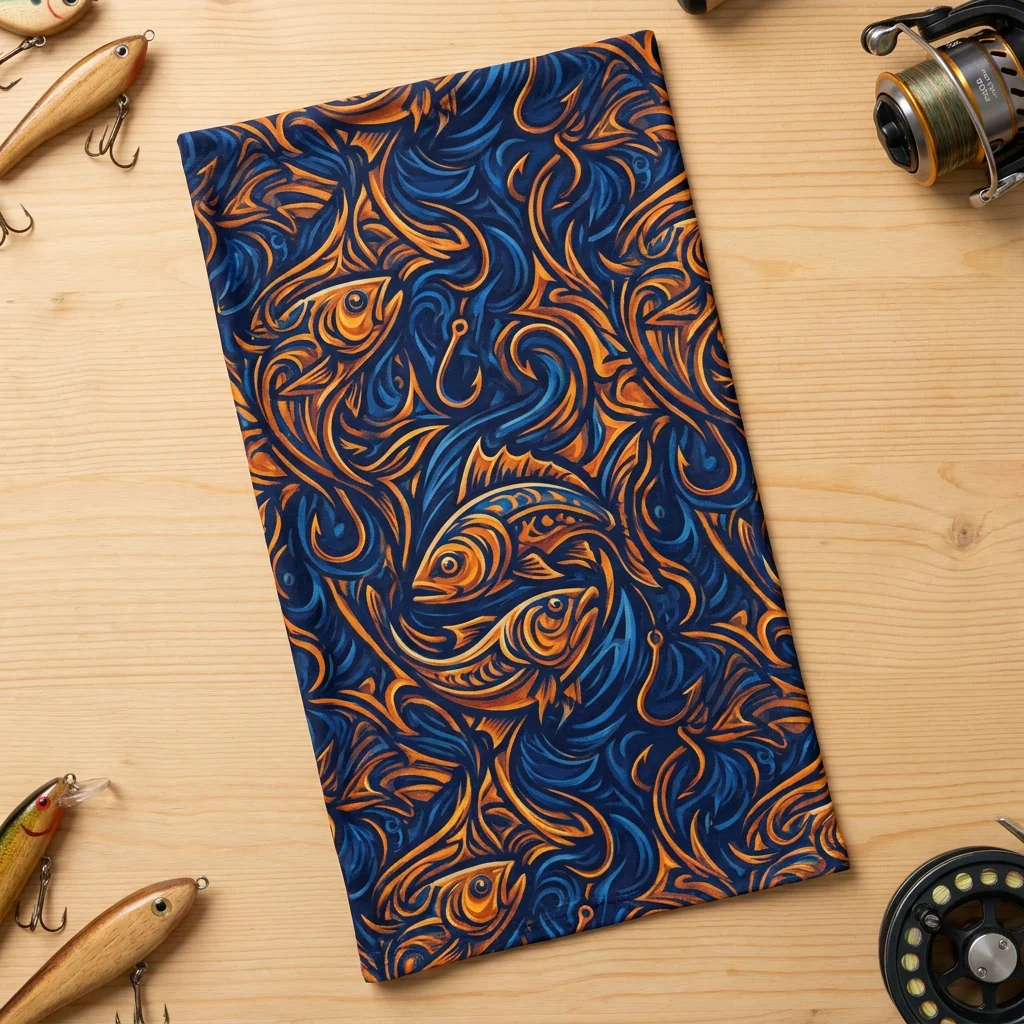
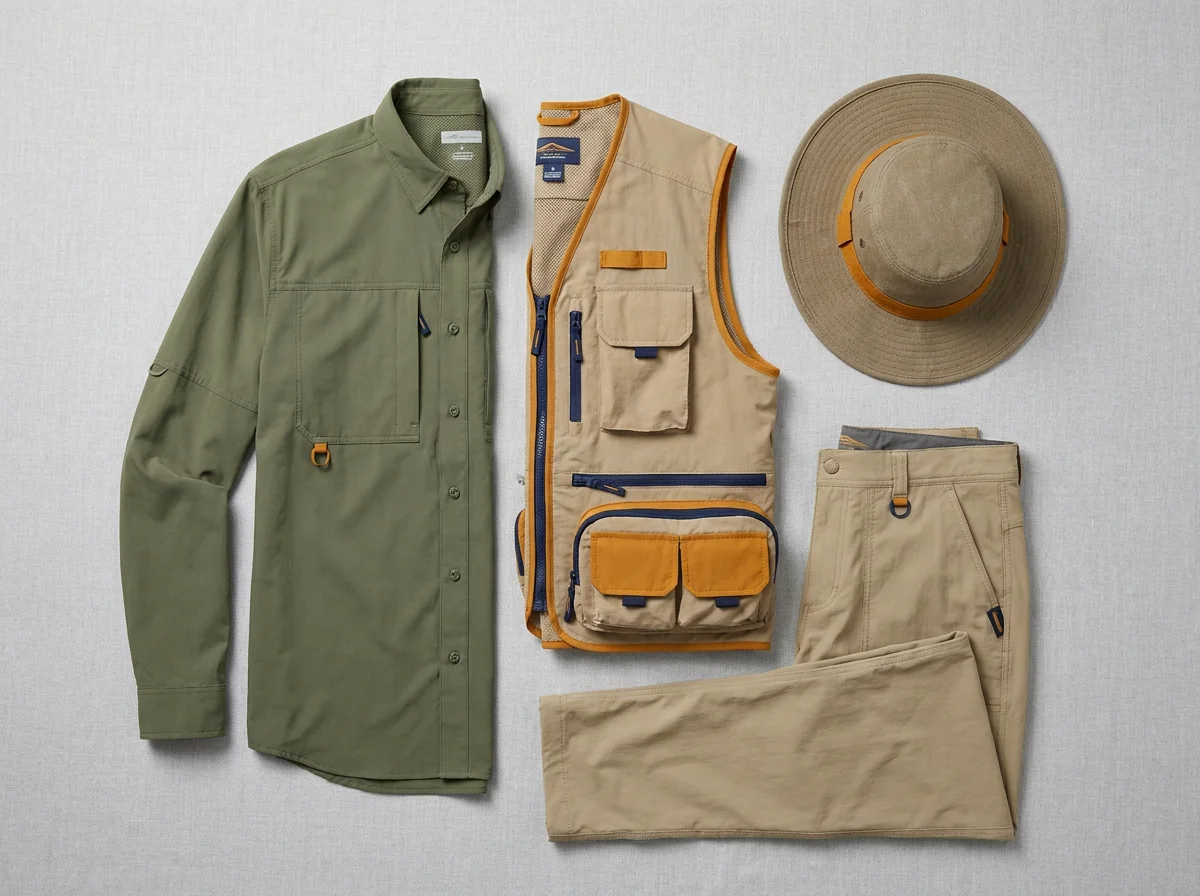
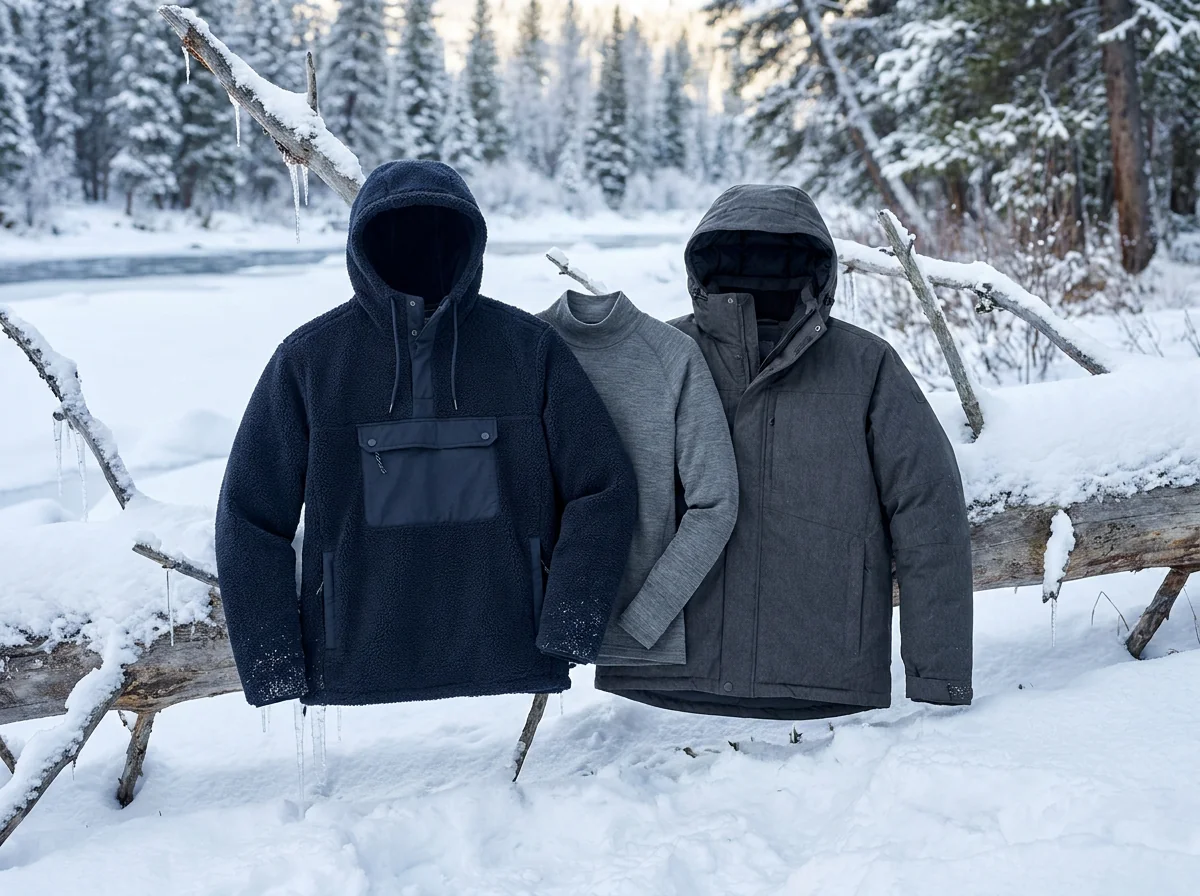
Representative program · identity withheld under NDA

Client Case Studies — Fishing Apparel Programs We've Run, by Region and Buyer Type, with Names Held Under NDA.
Most case-study pages are a wall of logos you can't verify and quotes anyone could write. This one is a logbook instead: the actual programs this factory runs, each shown by region, buyer type, what we built, how it moved from first sample to reorder, and the number that mattered — with the buyer's identity held under NDA. Every profile is a representative, anonymized program, so you can judge whether we've run your kind of order without any client's brand being used as an ad. The work is on the record; the name is withheld.
The four kinds of fishing apparel programs the factory runs.
Before the individual case files, here's the shape of the work. Almost every program the factory runs falls into one of four types, grouped by who the buyer is and how the order behaves — not by what the client is called. Whatever the type, it rides the same floor, fabric library and QC discipline; what changes is how the order starts, scales and repeats. Pick the type that matches your line, then read the anonymized files below.
Private LabelPrivate-Label House Brands — a label built to sell, launched small.
A logo, label art and a destination — DTC, retail or a marketplace — turned into a garment that carries your brand, not ours. The classic test-and-scale program.
What they bring / what we run / how it scalesPrivate-Label House Brands
WholesaleWholesale & Distributor Season Runs — capacity you can book against a calendar.
Styles, a size grid and a season, turned into bulk and repeat runs tied to a reserved fabric lot and invoiced ex-factory.
What they bring / what we run / how it scalesWholesale & Distributor Season Runs
Fleet & TeamFleet & Team Programs — matching sets for boats and rosters.
A crew, a fleet or a team roster and often a fixed date, turned into matching sets with per-crew names and low mid-season top-ups.
What they bring / what we run / how it scalesFleet & Team Programs
Test-and-ScaleMarketplace Test-and-Scale — low-MOQ tests, fast replenishment.
A few styles and a listing to prove, turned into a small test grid with barcode and FBA-ready cartons to spec.
What they bring / what we run / how it scalesMarketplace Test-and-Scale
Whatever the type, every program rides the same self-owned line — see how the floor is set up under manufacturing services.

A real case study proves the factory did the work — it shouldn't have to expose whose work it was. So this logbook shows every program by region, build and result, and keeps the buyer's name off the page under NDA. The programs are on the record; the identities stay ours to protect.
Open the Program FilesSix fishing apparel programs on file — region, build and result, name withheld.
Here are six programs the factory has run, laid out as logbook entries. Each shows the region, the buyer type, the styles built, the volume, one line on how it moved, and the number that mattered — with the identity field redacted and held under NDA. Every card is a representative, anonymized program: the figures are representative and the profiles are composites, not a single named account, so nothing here trades on a client's brand. (Representative programs; identities withheld; figures factory-stated and set against your own spec on a real order.)
Representative program · identity withheld under NDA
Six programs, six buyer types, one rule — every result is shown, every name is withheld. How a couple of these actually moved from inquiry to reorder is spelled out next; the generic program track is the section after.
How three of those programs moved from first inquiry to a clean reorder.
The cards show the outcomes; here's the mechanism behind three of them, still anonymized. These are the moves that turned a first order into a repeat — in plain factory terms, tied to what we actually did, not adjectives. (Representative programs; identities withheld; the how applies to your program too, confirmed on your spec and sample.)
The private-label test-and-scale (Entry 01) moved on a reserved fabric lot.
It started deliberately small — a 500-pc test across five SKUs — so listings could prove before volume was committed. When three SKUs moved, the scale-up ran against the same reserved dye lot logged to the style, which is why ~6,000 pcs across eight months held color with zero shade complaints over three repeats. The mechanism is the reserved lot + logged spec, run under private label fishing apparel.
The charter-fleet program (Entry 02) moved on one approved proof, reused.
A 12-boat fleet started with crew shirts and guest gaiters off a single approved design proof. Because that proof and the fleet's spec were held on file, the mid-season top-up of 240 pcs re-cut without a new sample round and shipped in ~3 weeks — a repeat measured in weeks, not the 6–8 of a first run, plus a ~600-pc resale line off the same artwork.
The tournament program (Entry 03) moved on a date-locked build with color held across the roster.
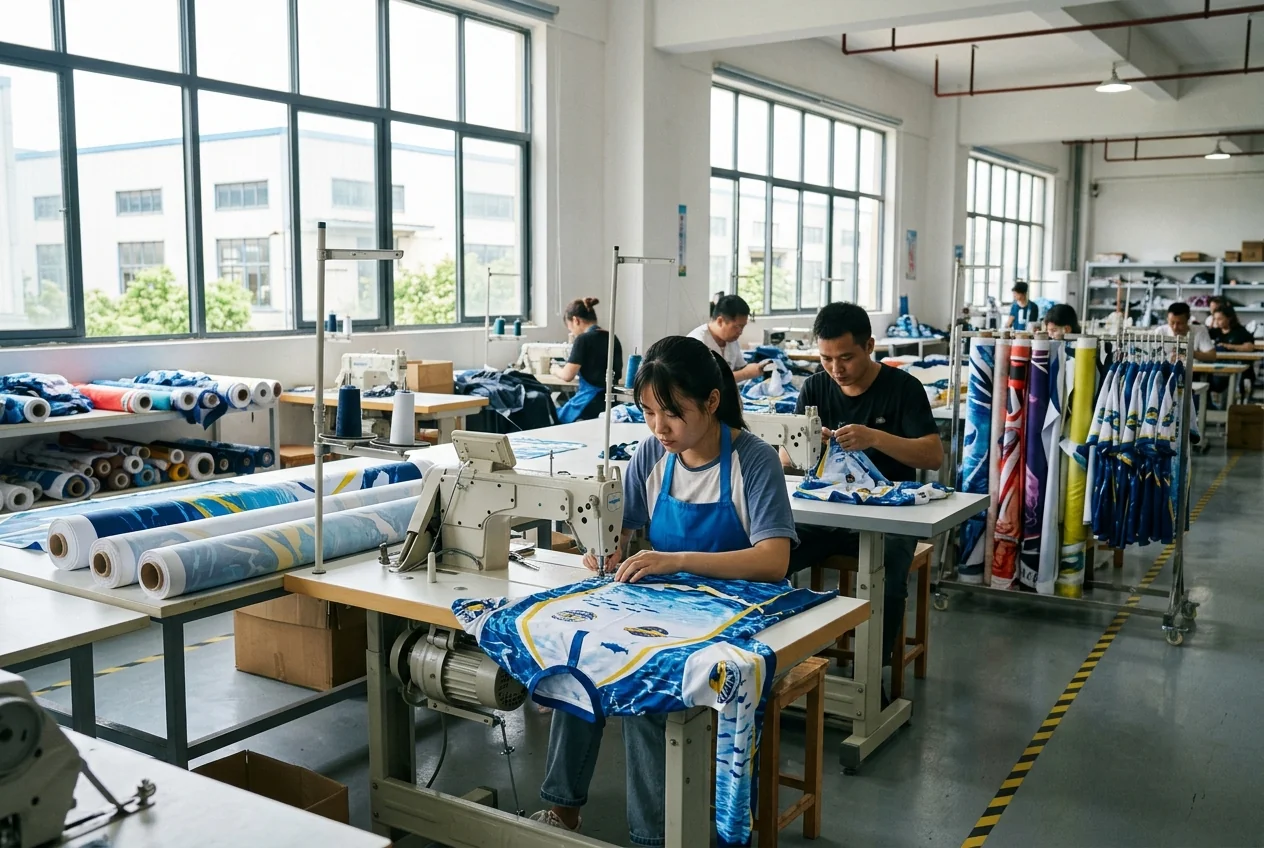
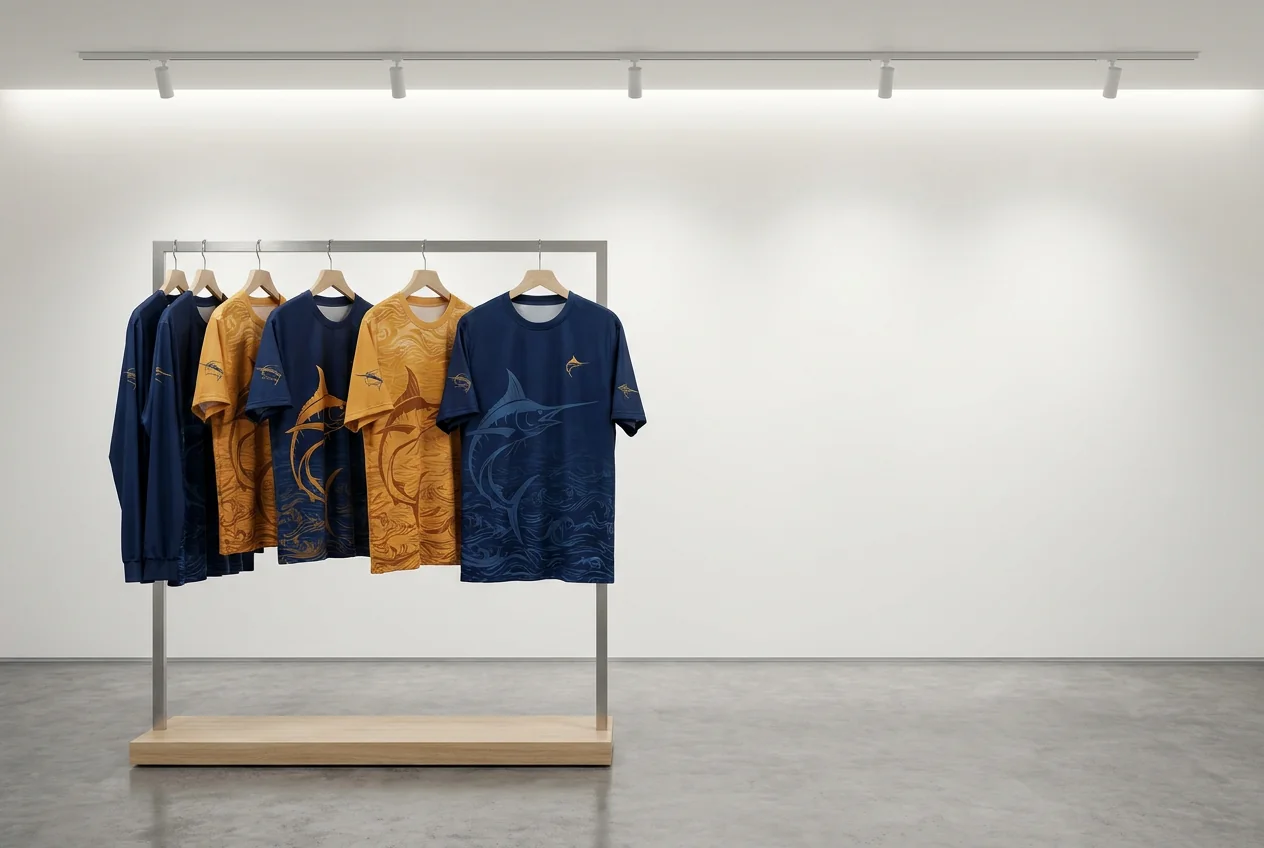
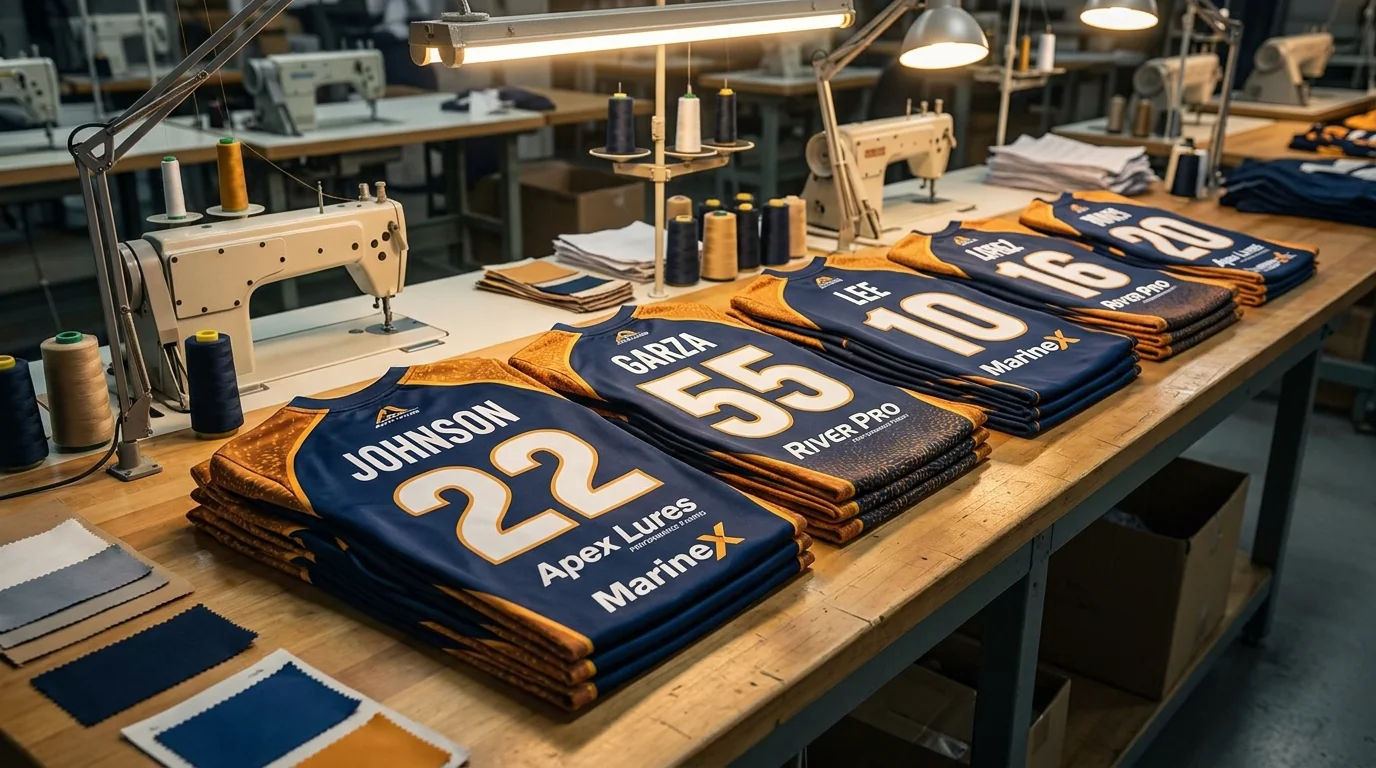
1,400 sublimated jerseys for 8 teams were built backward from a fixed event date, with print color locked across the full roster so every team matched on camera. Holding the schedule and the color file is why it delivered ~2 weeks ahead with all eight teams matching — the consistency itself comes from our quality and workmanship discipline, not luck.
Different buyers, same underlying moves — a small, honest start, a spec reserved and logged, and a repeat that inspects to the first. What that repeatable track looks like end to end is mapped in the next section.
How a fishing apparel program typically moves, from first inquiry to a scaled reorder.
Every program in the files above followed roughly the same track — so here it is laid out generically, as one representative progression rather than any single account. Six stops from first inquiry to a scaled reorder, each with the rough day range and volume shift buyers ask about first, so you can see where your own program would sit before you start. (Representative track; day ranges and volumes are factory-stated and set against your order.)
Inquiry
You send styles, rough quantity and target date; a written scope and line-item quote come back within 24 hours. No name needed to start — a program opens on a spec, not a logo.
Sample
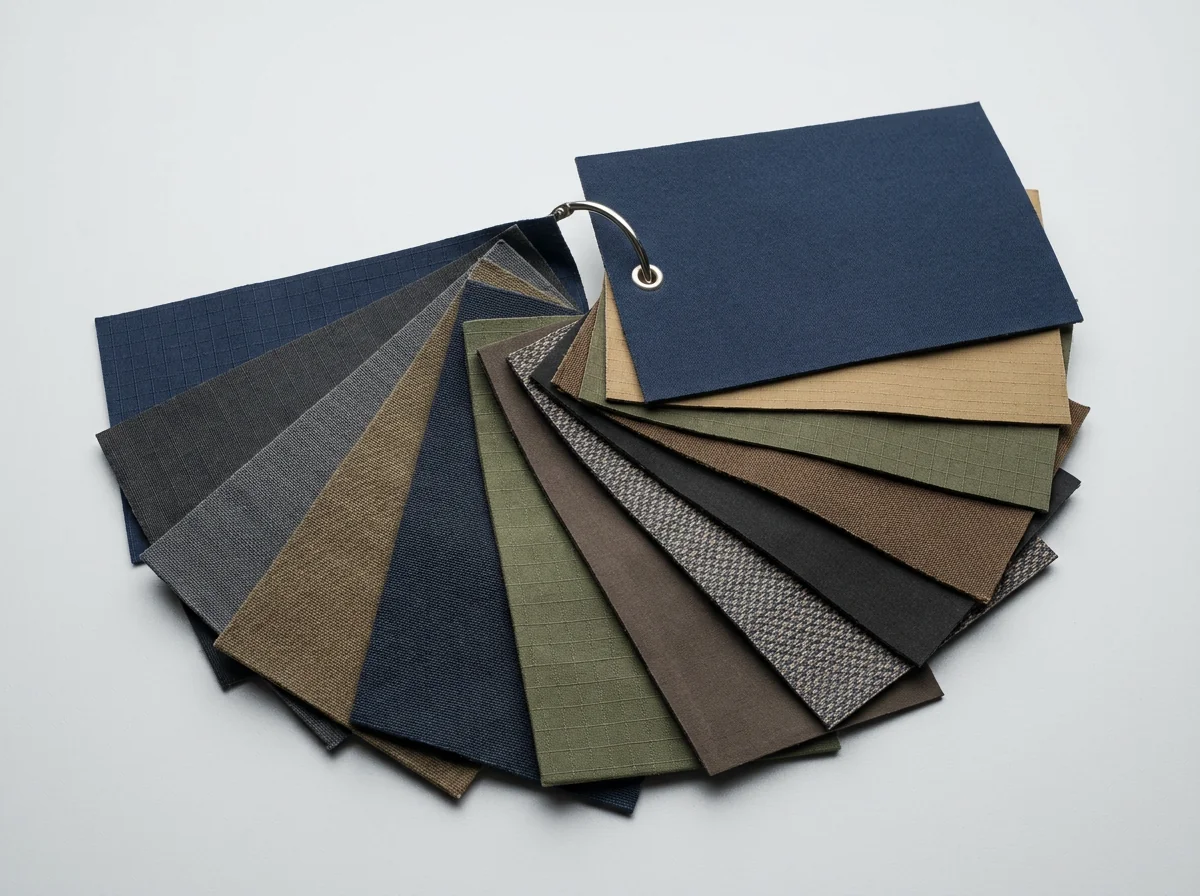
A sample is cut and sewn in-house from the exact production fabric, then revised once if needed, so fit and hand are real before any bulk commitment.
First Bulk
The first run is deliberately small — often a test grid from 100 pcs per style, mix-and-match — so a listing, a season or a fleet can be proven before scaling.
QC & Ship
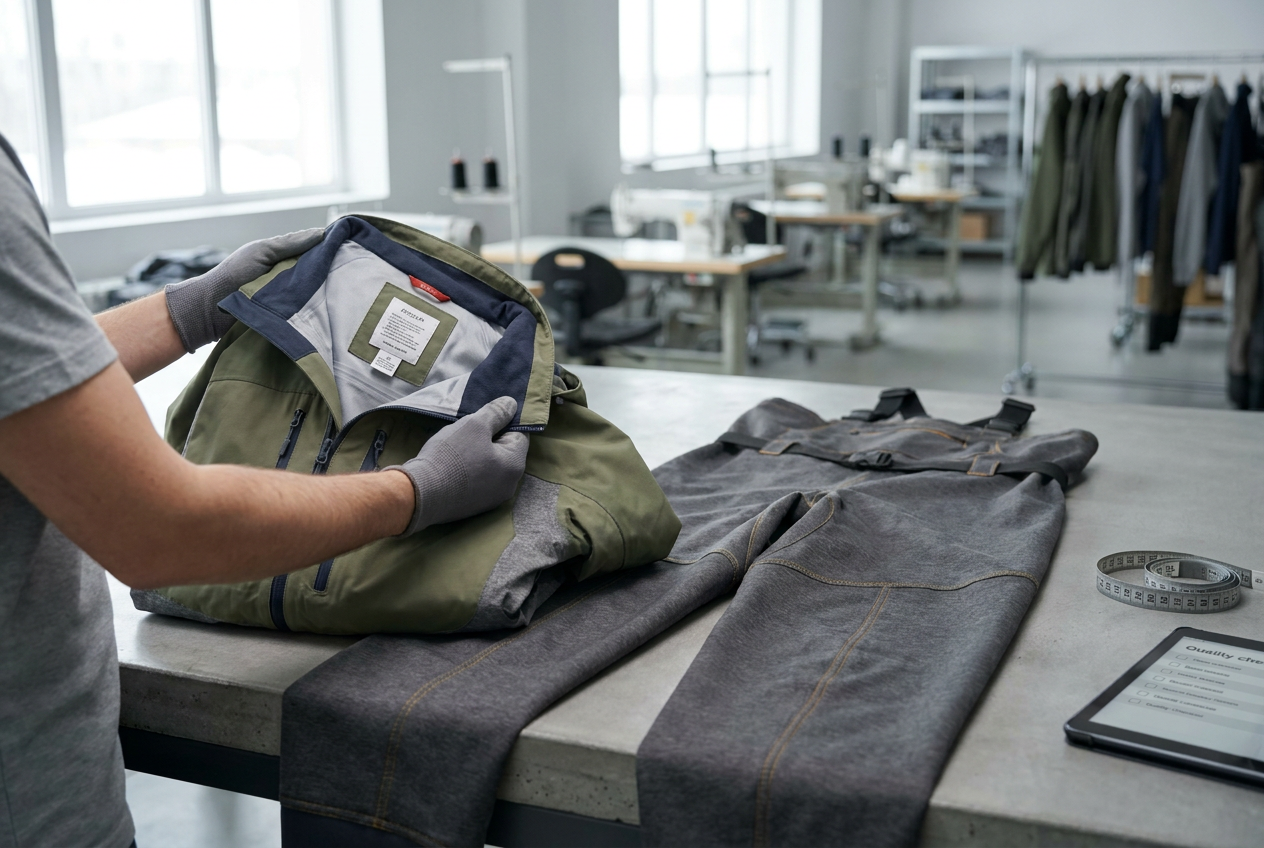
The lot is inspected against your approved sample and shipped DDP/DDU with a QC photo report — sample-to-delivery lands in the 20–30 day range.
Reorder
Because the spec, fabric lot and artwork are logged, a repeat skips the sample rounds and starts from a lower repeat minimum — where a program becomes a standing relationship.
Scaled
Proven styles scale into recurring blocks — the 500-pc test that became ~6,000 pcs, the fleet run that added a resale line — each reorder inspected to the same logged standard as the first.
Inquiry · Day 0
Written scope and line-item quote back within 24 hours. No name needed to start.
Sample · Day 7–17
Cut and sewn in-house from the exact production fabric, revised once if needed.
First Bulk · Small on purpose
Often a test grid from 100 pcs per style, mix-and-match, proven before scaling.
QC & Ship · Day 20–30
Inspected to your approved sample, shipped DDP/DDU with a QC photo report.
Reorder · From ~½ MOQ
Logged spec + fabric lot + artwork mean a repeat starts from a lower minimum.
Scaled · Standing program
The 500-pc test that became ~6,000 pcs; each reorder inspected to the first.
Six stops, one honest shape — start small, prove it, log it, repeat it clean. The track is the same whether your program is a house brand, a fleet or a season; only the volumes change.
The standard behind every program, whether it's 100 pieces or 6,000.
The reason those outcomes repeat isn't the size of the order — it's that every program, small or large, gets the same four things. This is what makes a reorder inspect to the first run instead of drifting, and it's why a small first program is a safe way to test us. (Factory-stated standard practices; the QC and fabric detail live on their own pages, linked, so this isn't repeated here.)
A reserved fabric lot logged to your style.
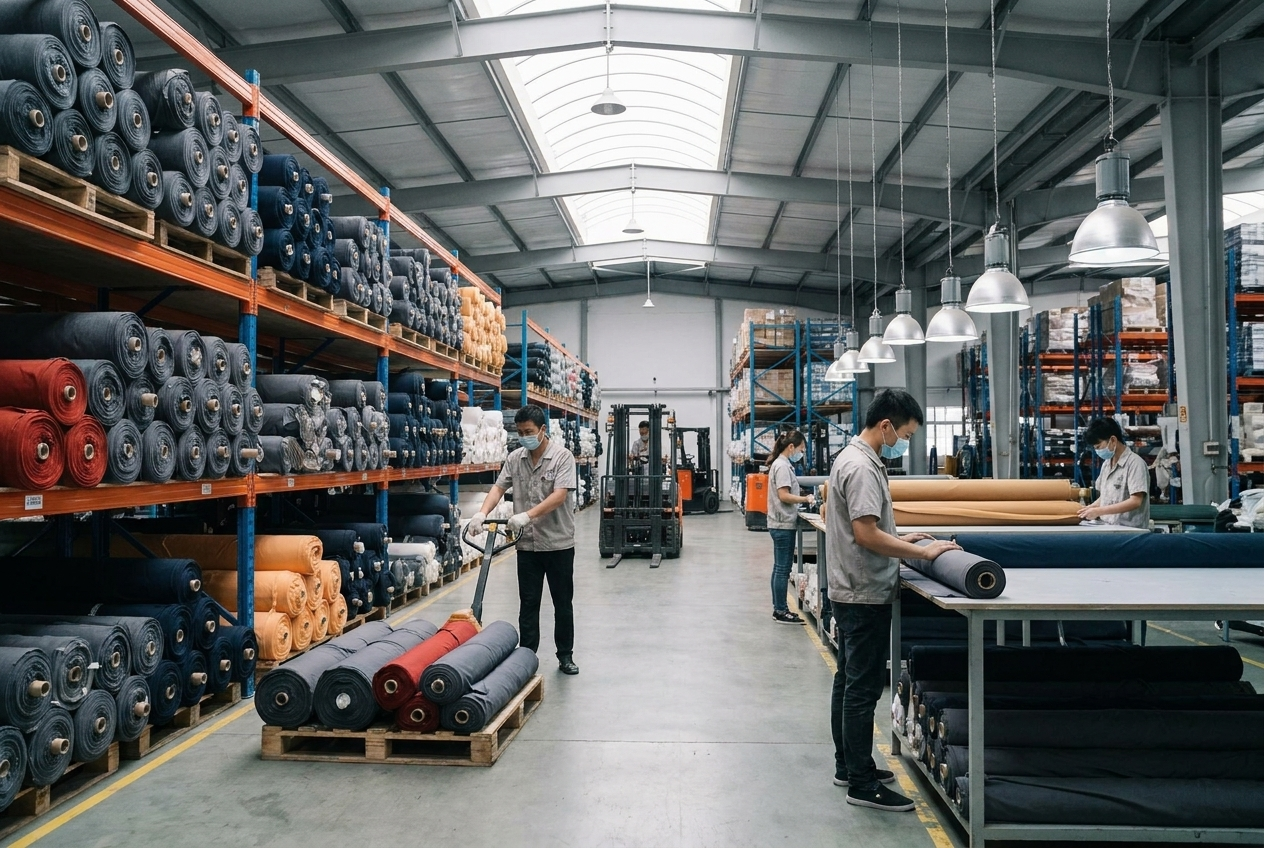
At first bulk, the dye lot behind your color is reserved and logged, so a repeat is knit and dyed against that reference — the mechanism behind "shade-matched across 3 repeats" in the files above. The fabric science itself is in fabric technology.
Your approved spec and artwork held on file.
Pattern, measurements, decoration and colorway are logged at sign-off, so a reorder skips the sample rounds and reprints identically — this is why a fleet top-up or a marketplace restock re-cuts without restarting.
One project manager who owns the program end to end.
A single English-speaking PM carries your file across the first run and every repeat, so you're not re-briefing a new contact — the same person who logged the first program runs the fifth.
The same inspection standard on every run.
Whatever the volume, each program is checked against your approved sample and a pre-shipment AQL, with a photo report — the QC discipline is detailed in quality and workmanship, and it's identical on a 100-pc test and a 6,000-pc scale.
Why a small first order is a fair test
- The same reserved lot, logged spec, one PM and one QC standard apply whether you order 100 pieces or 6,000.
- So a low-MOQ first program behaves exactly like a big one will — you're testing the real thing, not a scaled-down version.
- From 100 pcs per style, mix-and-match, so a test can be cheap to run.
Start one small.
Four things, held the same on every program — which is exactly why a small first order is a fair test of what a big one will do.
Request a Sample
Fishing apparel programs run across six buyer types and every category.
The files above are a sample; across all of them, the factory runs programs for six buyer types and every fishing apparel category. Here's the breadth, each linked to how that program actually works — so you can confirm we've run your kind of order and go straight to the detail. (Representative of program types run; specific accounts held under NDA.)

Private-label & house brands
Turnkey label, hangtag and retail-ready cartons on a small SKU test that scales.
See how a private label program runs
Charter & boat fleets
Matching crew and guest sets with per-crew names and low mid-season top-ups.
See charter fleet uniforms
Tournament & competitive teams
Date-locked sublimated rosters with color held across every team.
See tournament team apparel
Marine & outdoor retail brands
Series-level contract runs built to a brand's own tech pack and retail calendar.
See marine brands apparel
Work-crew & guide services
Durable branded shirts for guides, marinas and on-water crews.
See work shirts
Women's & youth lines
True women's-block patterns and age-graded youth builds within the same program.
See women's · youthWhy these fishing apparel case studies hold up — the control behind the record.
A track record is only as trustworthy as the factory's control over what it's recording. Anonymized or not, these programs are real because the floor that ran them is our own — cut, sew, decorate and QC under one roof, every program logged to a spec and held under NDA. Here's the control behind the record (factory-stated), the reason the outcomes above repeat instead of being one-off luck.


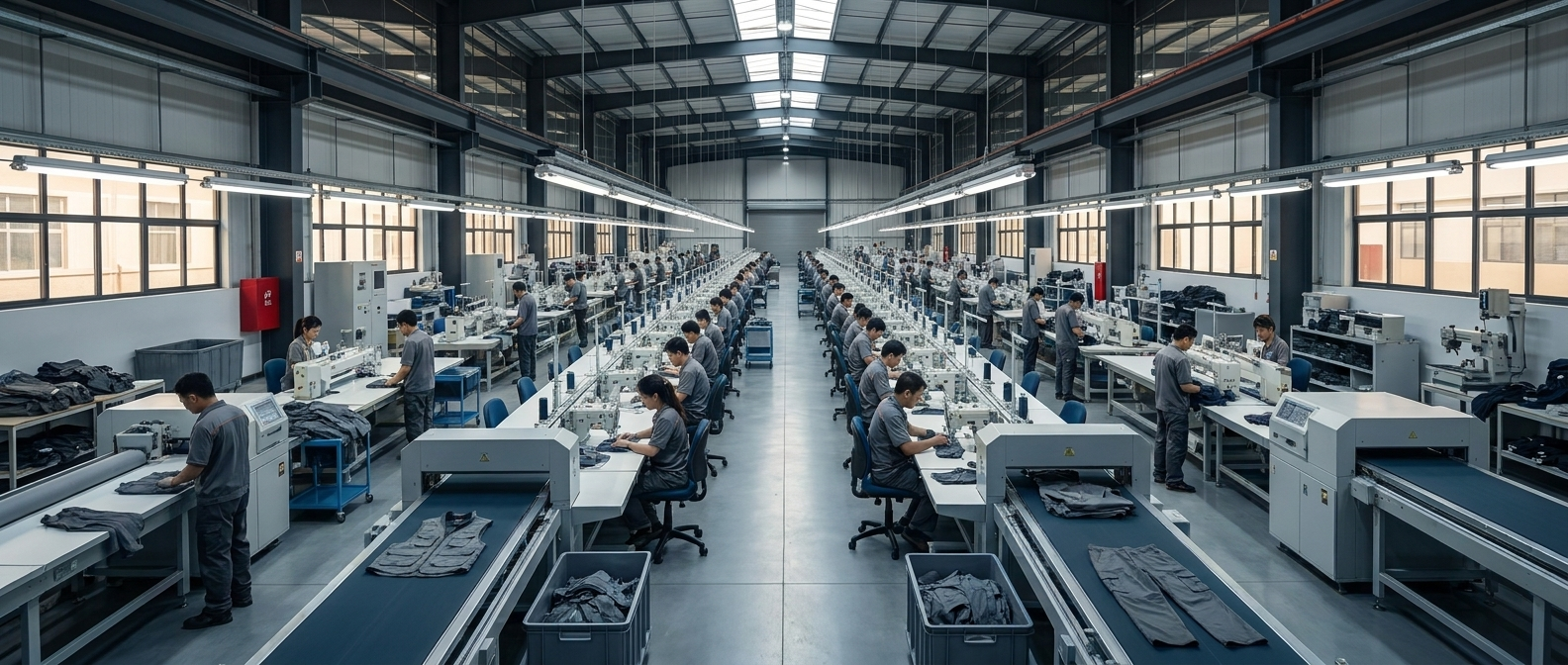
Every program runs on our own floor.
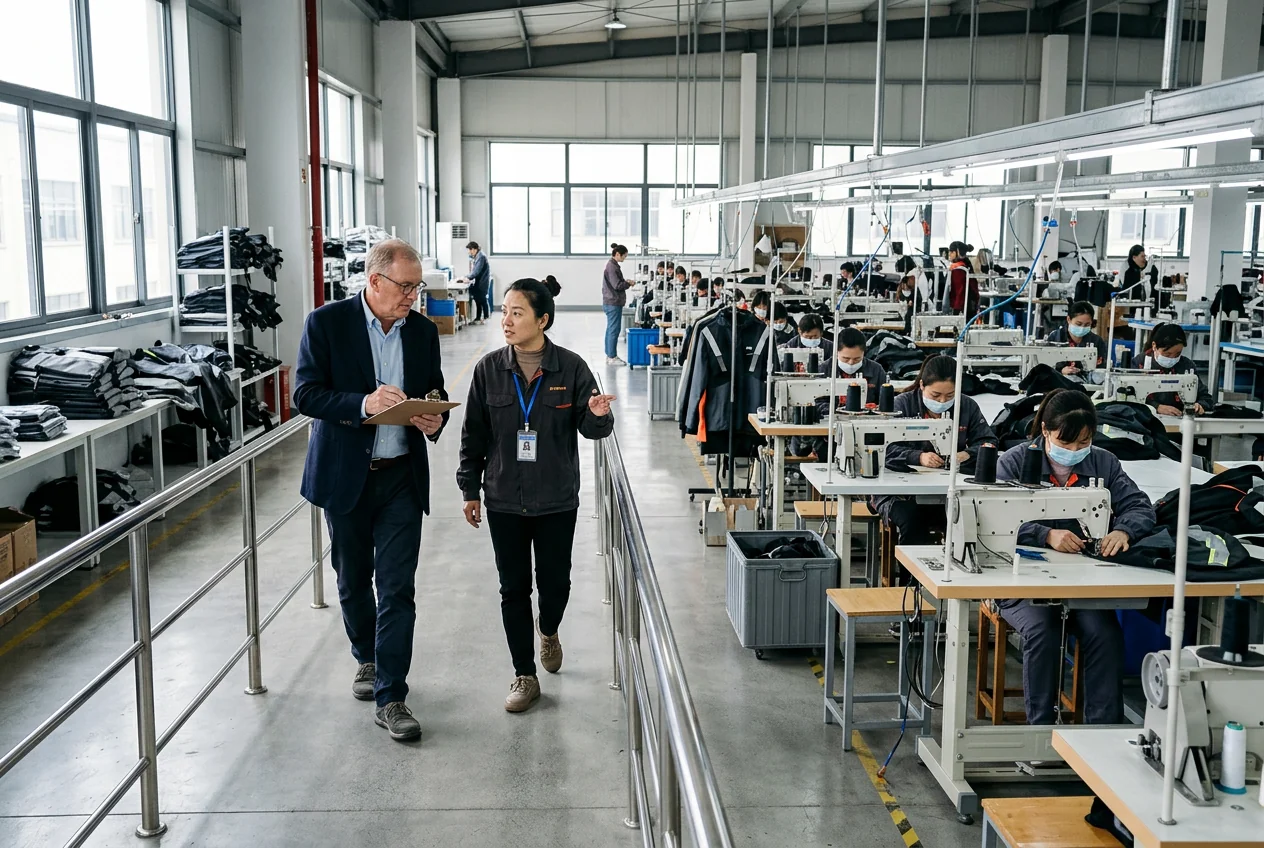
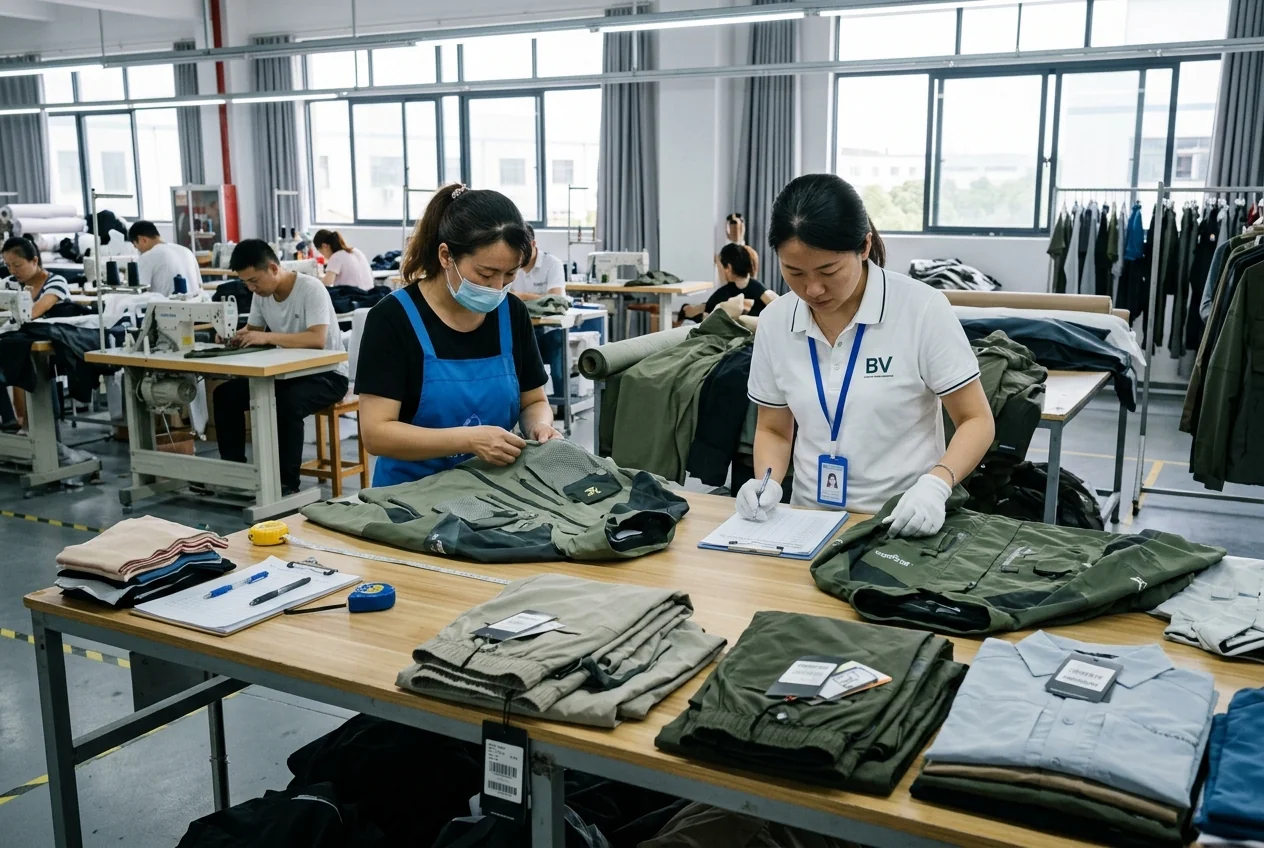
Cutting, sewing, decoration and inspection all sit under one manufacturing services roof, so a program's result isn't at the mercy of a subcontractor — which is what makes a track record repeatable, not anecdotal.
Every program is logged, so a repeat isn't a fresh gamble.
Reserved fabric lot, approved spec and artwork on file mean the fifth reorder inspects to the same standard as the first — the drift that makes other suppliers' "case studies" un-repeatable is designed out.
Every identity is held under NDA.
The reason this page can be honest is that no client's name is on it — the same confidentiality protects your program, so your brand never becomes someone else's advertisement.
Every result is a representative program, not a borrowed logo.
The figures here are factory-stated representative programs, confirmed against your own spec on a real order — no invented testimonials, no logo wall you can't verify.
Tell us your program and we'll show you how one like it would run.
Send the styles, rough quantities, buyer type and target date — and you'll hear back within 24 hours in plain English, with how a program like the ones above would start, scale and repeat for you. Your details stay under NDA from the first message.
- First response within 24 hours (GMT+8)
- Low first-order minimums — from 100 pcs per style, mix-and-match
- NDA & confidentiality on every program
- Worldwide shipping — DDP / DDU
Prefer to chat? Message us on WhatsApp.
Get a Program Like These
A project manager replies within 24 hours — no obligation, held under NDA.