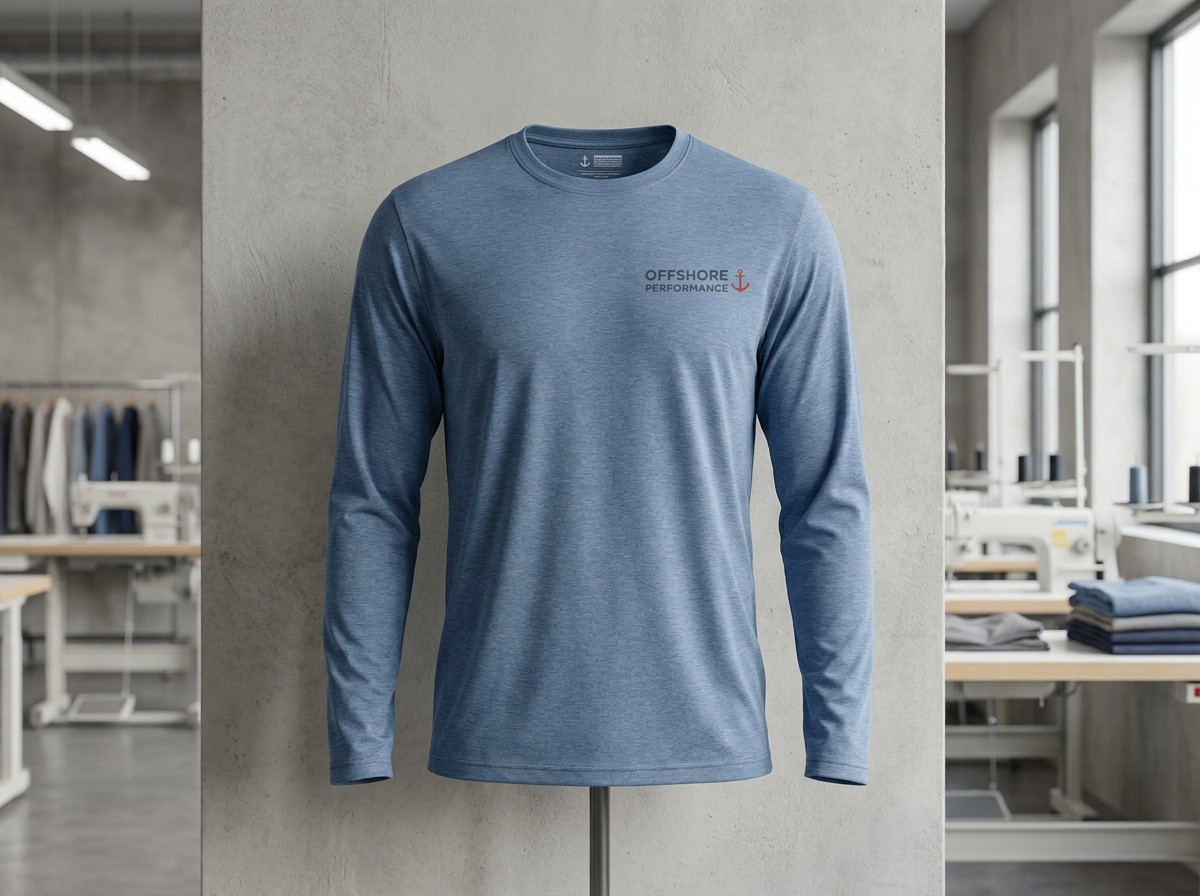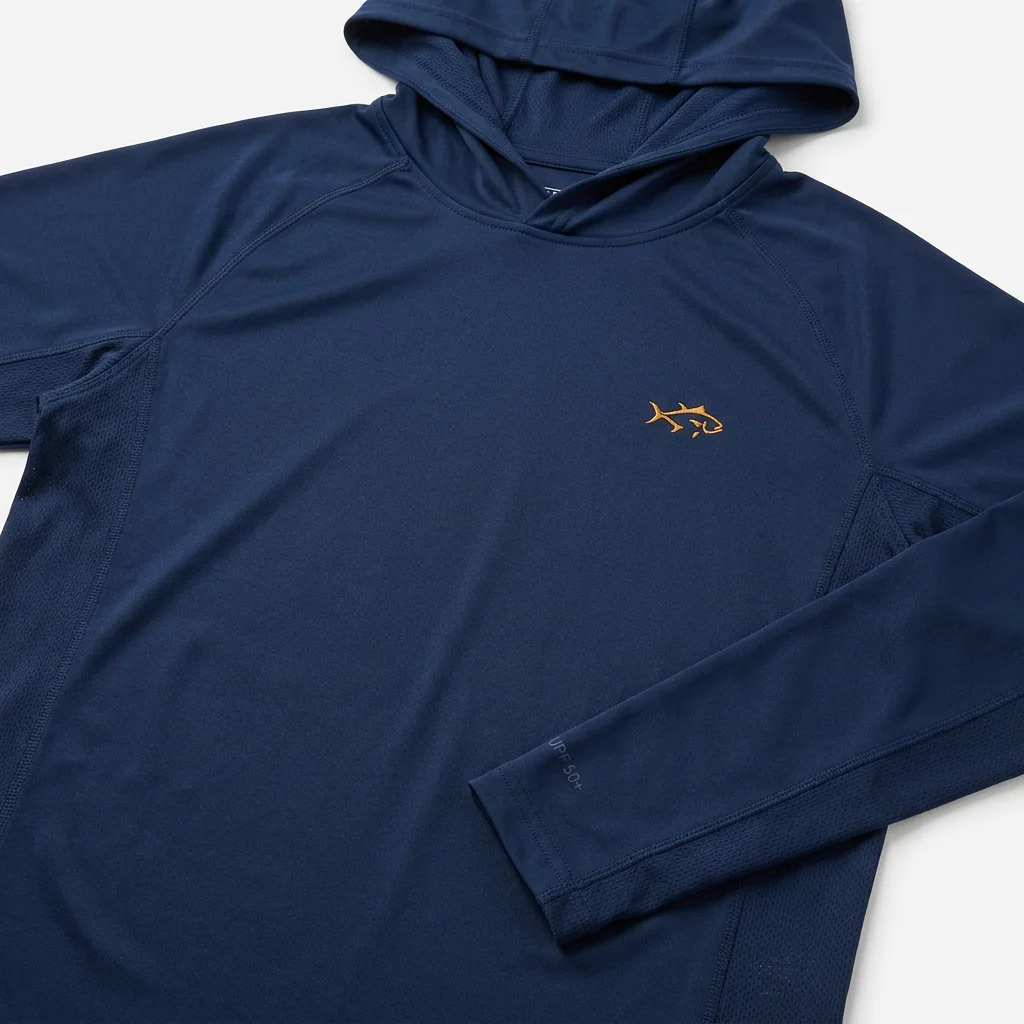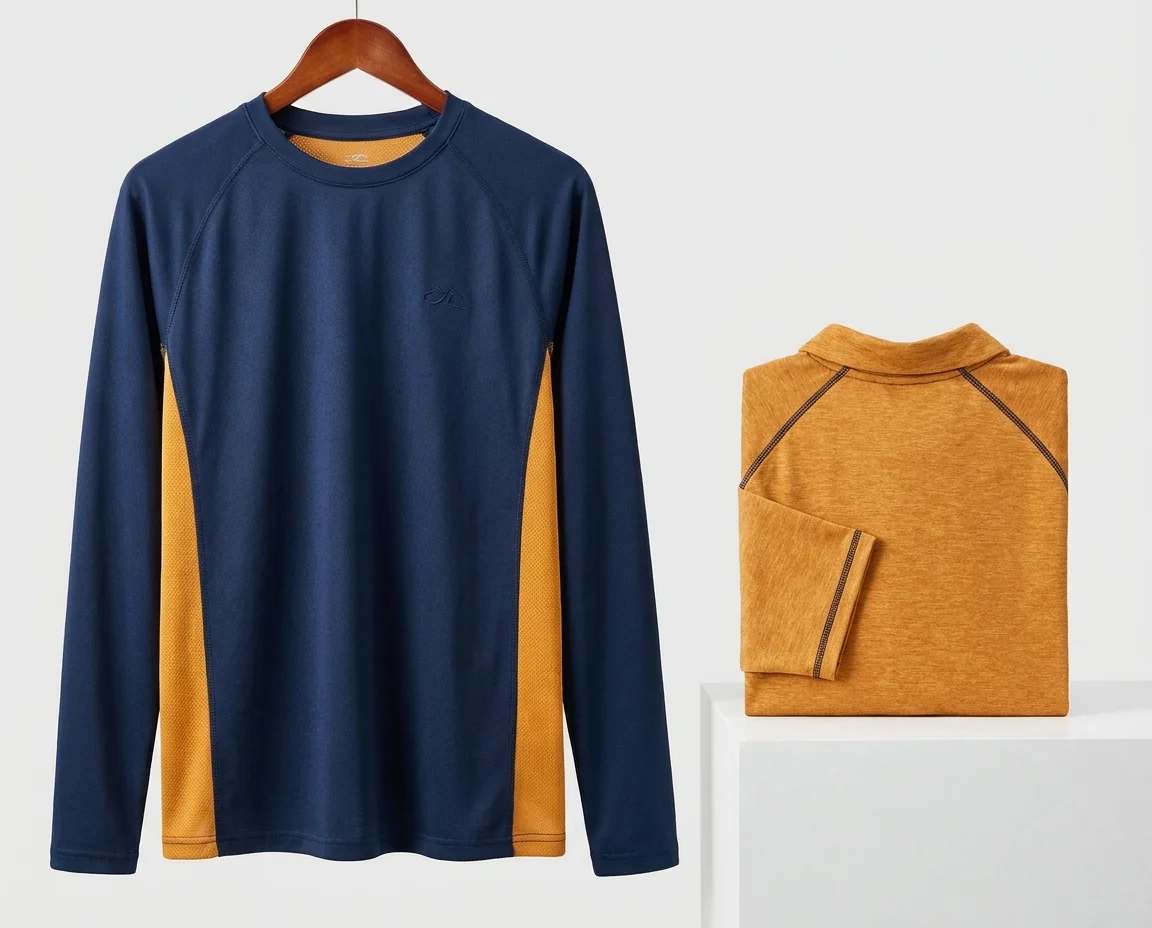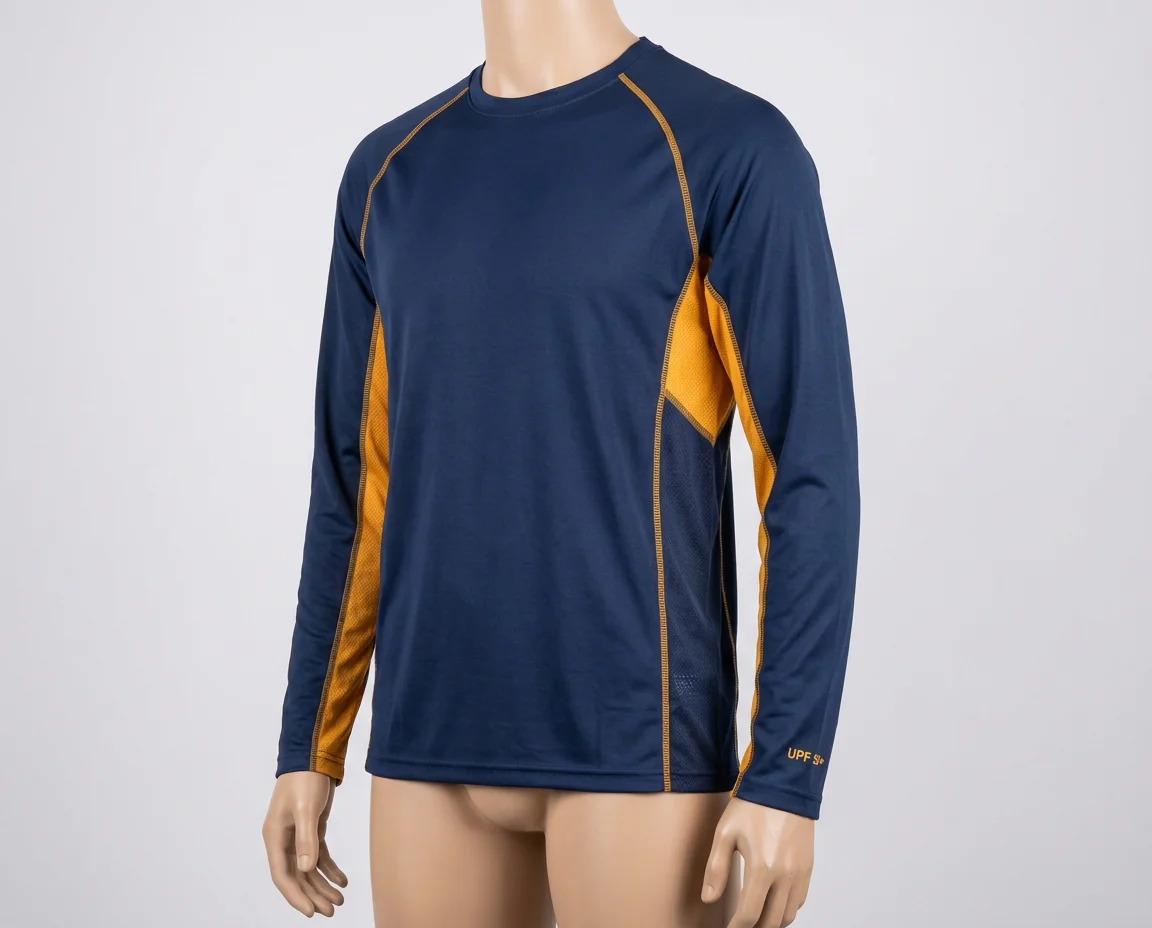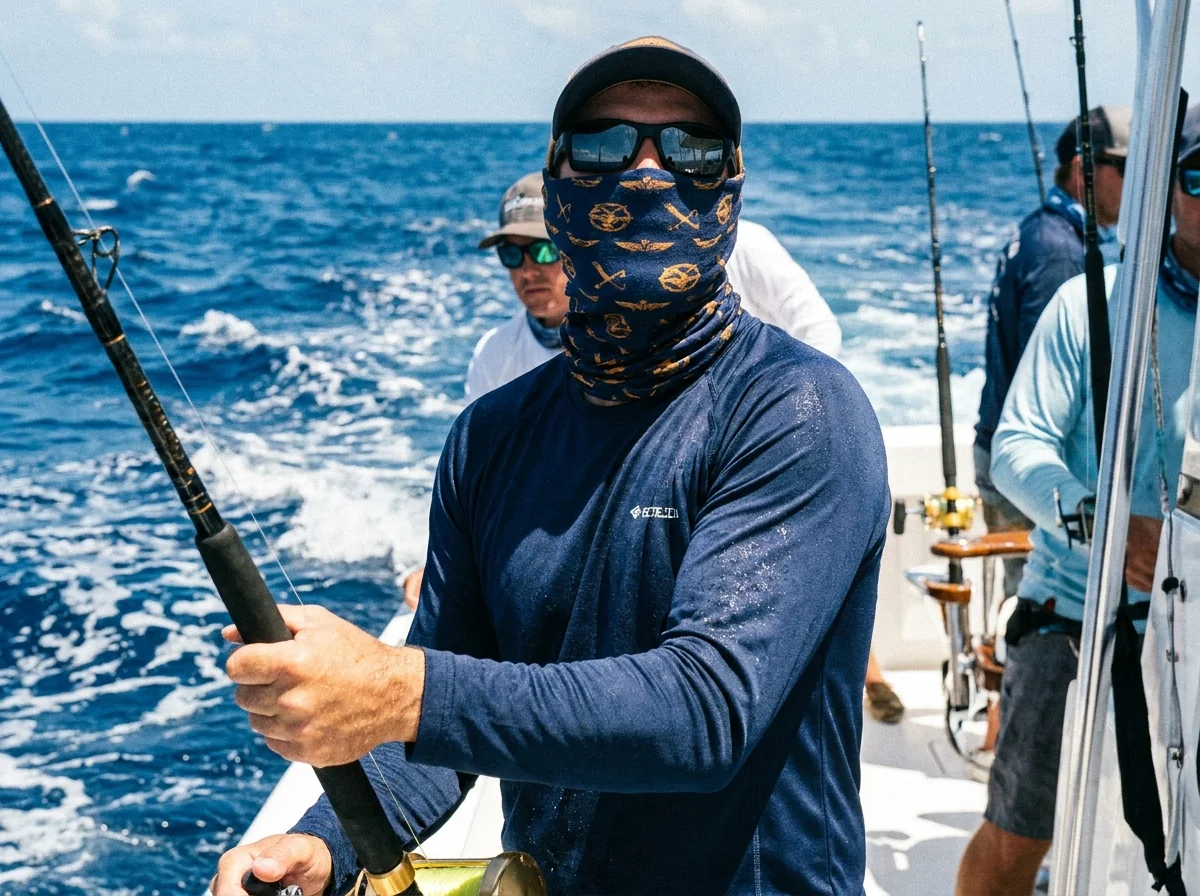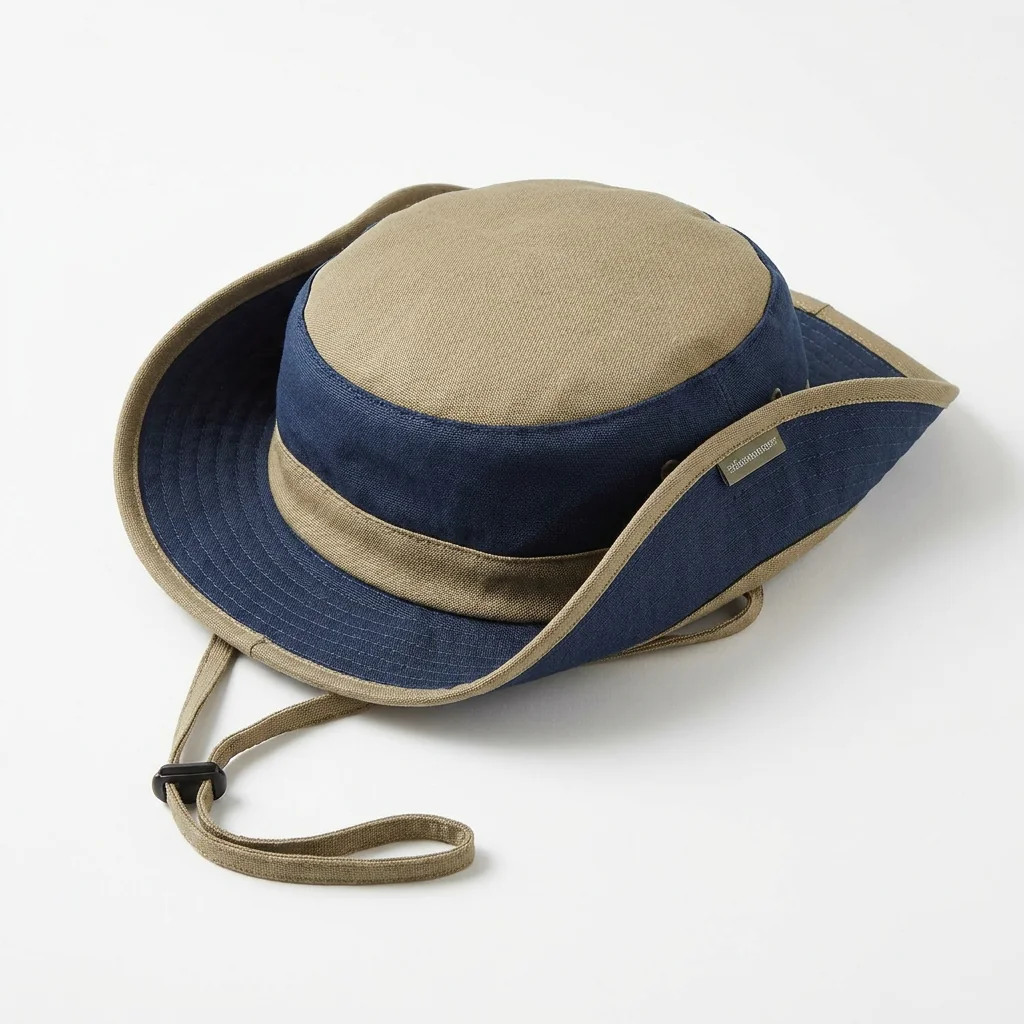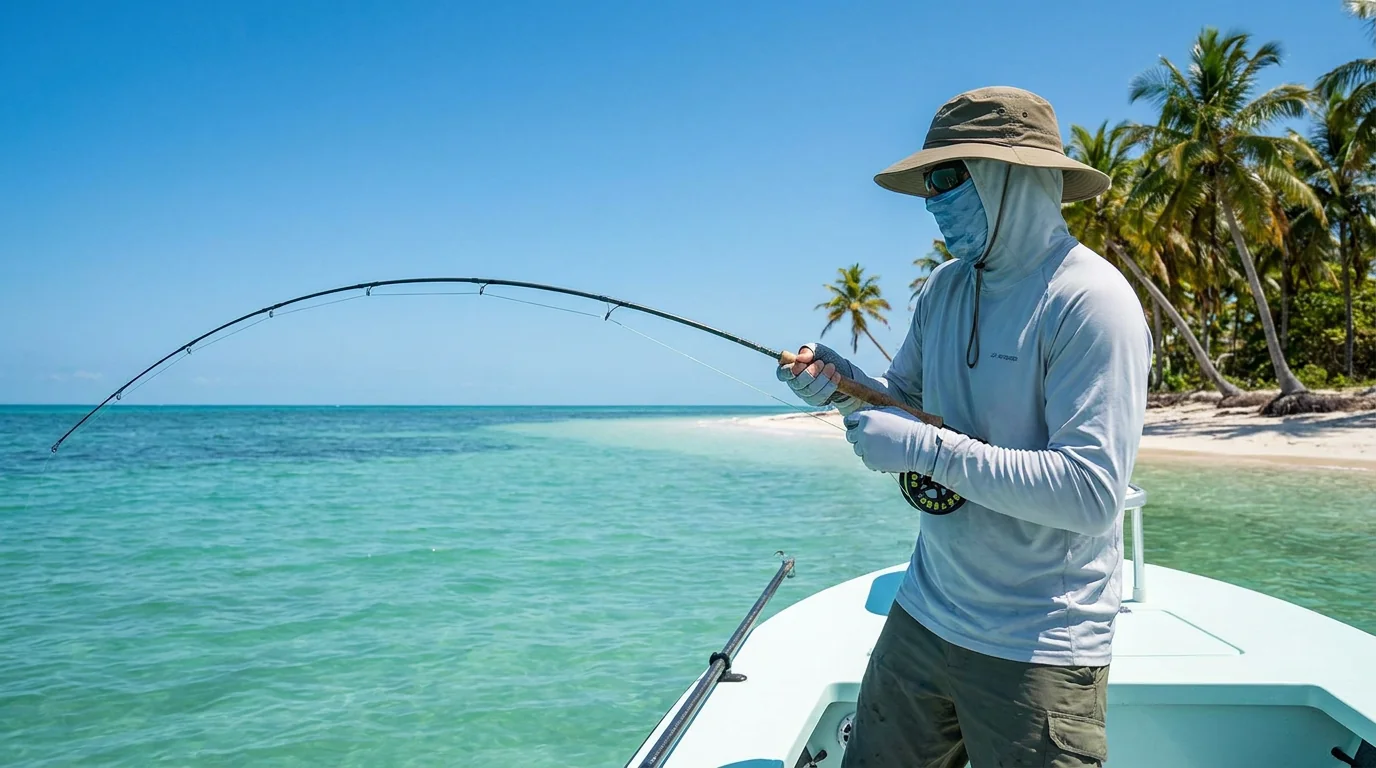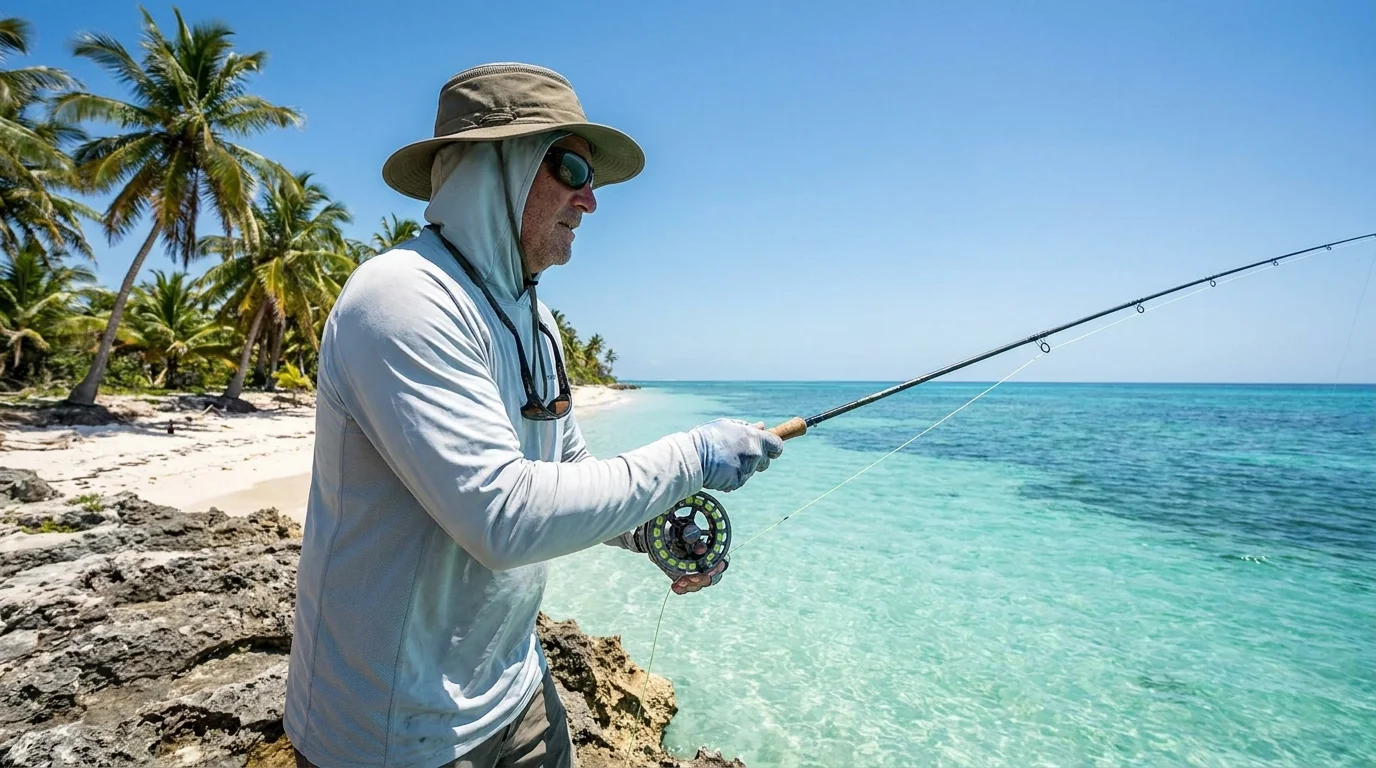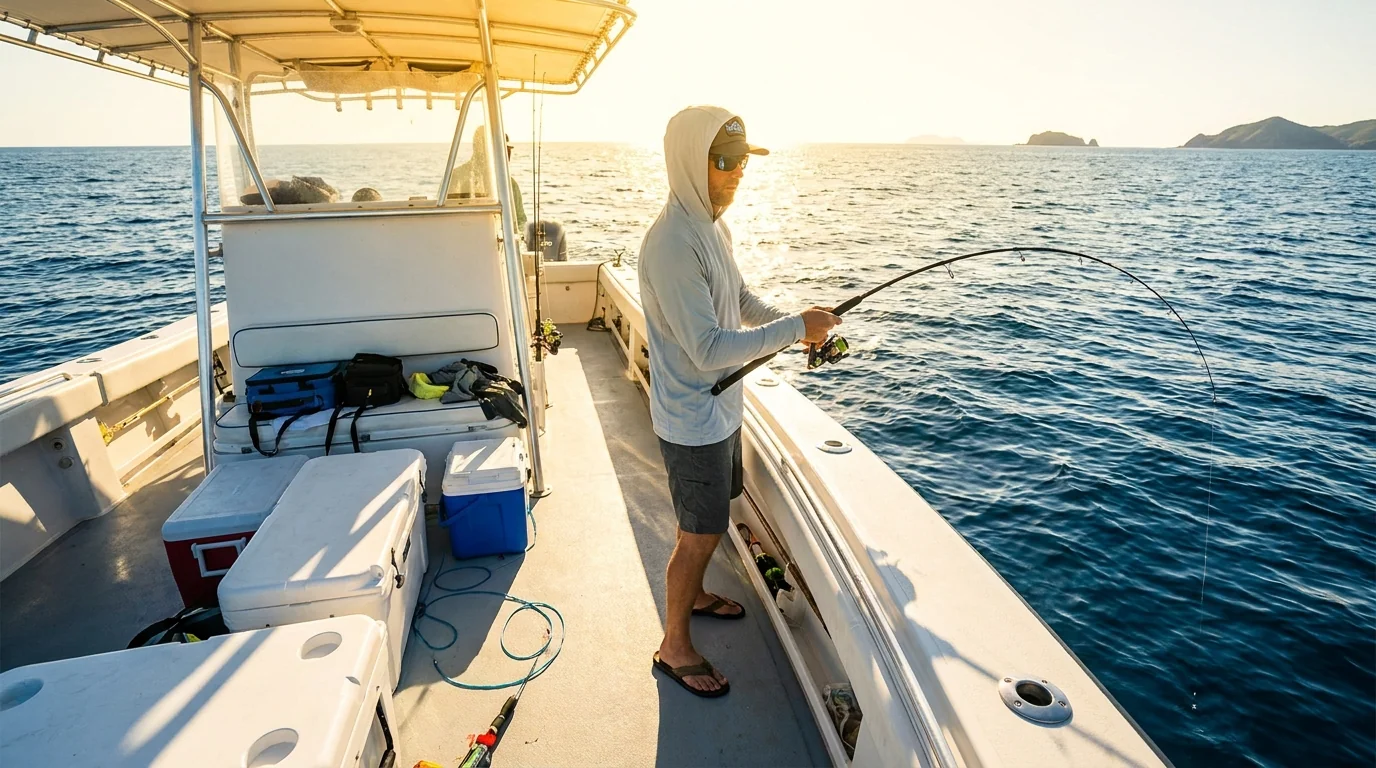
A fishing-only factory's complete UPF 50+ sun-protection line in one place — sun shirts, hoodies, light-colored and heather work shirts, polos, gaiters, hats and sleeves, every piece rated to AATCC 183, curated by how much sun it blocks and decorated with your logo from 100 pcs per style.
Building a shirt line instead? See all custom fishing shirts →This is the sun-protection line, gathered from across the range and sorted by what it's for — not by garment type. Every piece runs on the same UPF 50+ knit; what changes is which patch of skin it's built to shade. Filter by group, then tap any style for its own page. (~8 sun-protection categories, with 2–4 new styles boarded a month.)

The core of the line: full-length sleeves and a fold-up sun collar, the everyday flats-to-offshore build.
long-sleeve sun shirts
The maximum-cover build with an integrated hood and gaiter-ready collar; the hood system is detailed on its own page.
sun hoodies
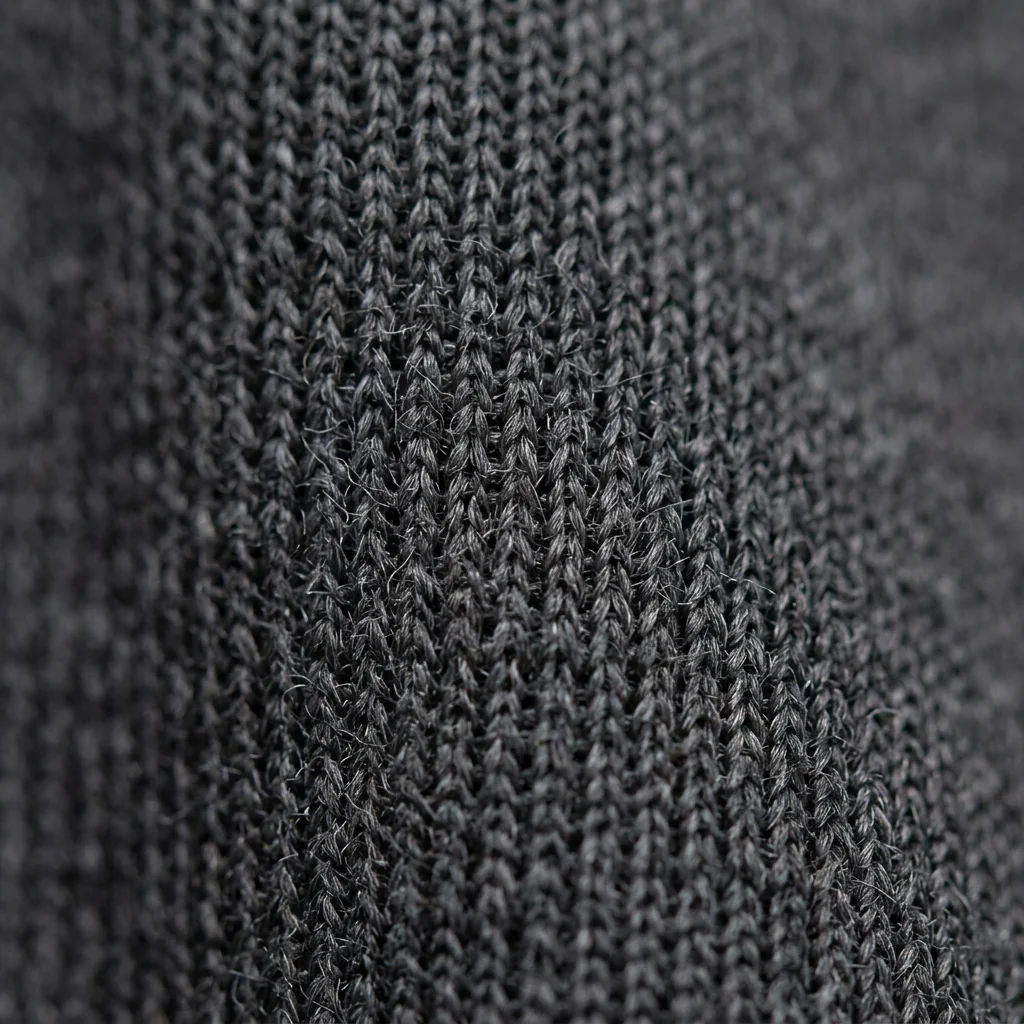
A heather-fabric UPF shirt that disguises dirt and sweat marks for guides and dock crews who work in it all day; about six heather colors.
Grouped with the work line · sizing below
A flat-knit collar sun polo for lodge staff, resort retail and corporate lines.
fishing polos
A UPF tube for the face and neck, full-print sublimation ground; the pack-mate that finishes a head-to-hand sun setup.
neck gaiters
Brimmed and mesh-vented sun hats that shade the scalp and ears a hood doesn't reach.
fishing hats
Pull-on UV sleeves that add forearm cover to a short-sleeve or a bare-arm crew without a full shirt change.
arm sleeves & accessories
The same UPF fabrics and fit system graded to women's and youth patterns across the line (see sizing below).
Graded across every groupLooking at the range by garment type instead? See all fishing shirt styles.
"UPF 50" gets printed on a lot of apparel — here's how to read the scale so you can tell a buyer, and a listing, exactly how much sun a piece blocks. UPF rates the fabric across both UVA and UVB; the higher the number, the smaller the fraction that gets through. (Rating scale is the industry standard; how the fabric blocks UV and how we lab-test it is on fabric technology.)
Reading the scale: it runs from full exposure to full protection; a UPF 50+ piece sits at the protected end, blocking 98%+ of both UVA and UVB — which is why you spec the whole line at 50+ rather than mixing ratings across a sun-protection range.

The ratings above are the what. This is the why — the reasons buyers spec a whole UPF line from one factory instead of chasing sun-protection pieces category by category. (Curation logic, not construction — how each piece covers is on its own style page.)
Spec the line at UPF 50+ and a buyer's shirt, hood, gaiter and hat all block the same 98%+ — no weak link where one piece is a UPF 30 and the sun gets in.
Sun burns skin the shirt misses — the scalp, the face, the back of the hand — so a hat, a gaiter and arm sleeves finish what a shirt starts; buying the line together means the set actually matches instead of clashing.
Retail and DTC buyers can build a "sun-protection" wall — entry pieces through hardcore all-day UV wear — as one themed collection, which sells the benefit instead of scattering it across categories.
A light-colored line and a heather work line protect the same but decorate differently (below) — sourcing both from one factory means the print method is matched to each, not forced onto the wrong fabric.
A whole UPF collection runs on one fabric library, one QC standard and one project manager, so a mid-season top-up of any piece matches the original run — the ordering mechanics are on the home page.
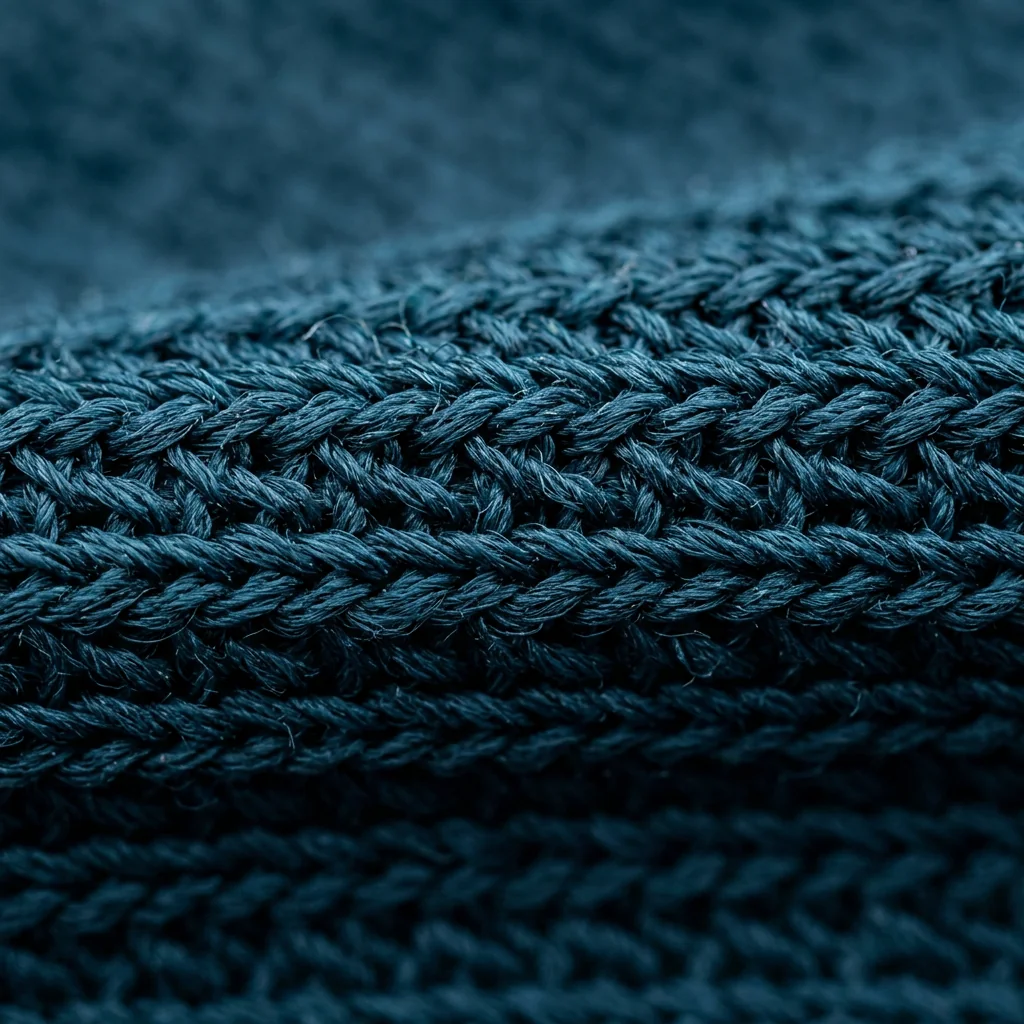
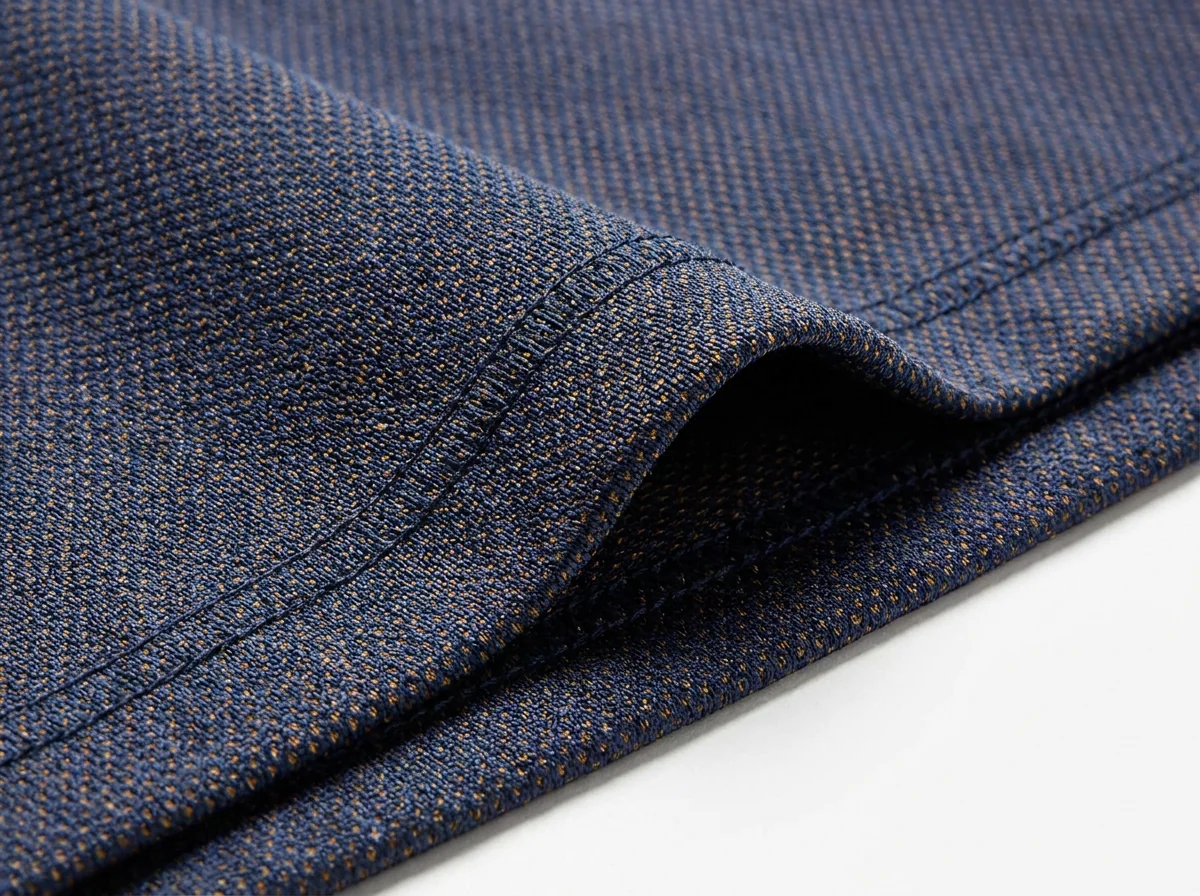
A UPF line is only UPF 50+ if the cloth under it is. Three build points matter across a sun-protection collection; the full fiber, weight and weave numbers live under fabric technology. (Factory-stated; confirmed on the sample.)

A tight-weave, dyed-in UV block that survives repeated wash; the default under every light-colored shirt, polo and hood in the line.

A thin, sweat-moving knit so a full-cover sun piece vents heat and dries fast instead of turning into a hot layer on a still day.

A heathered UPF knit that disguises dirt, salt and sweat marks for guides and dock crews who wear it hard, in about six heather colors — the reason the work group prints differently (below).
Full fiber, weight and weave numbers: fabric technology →
A sun-protection line splits into a light-colored group and a heather work group, and each takes print differently. Here's how color and a logo route across the collection; the decoration methods themselves are detailed under custom decoration.
Light UPF grounds take edge-to-edge dye-sublimation best — all-over graphics dyed into the fiber that can't crack or peel, ideal for full-print sun shirts and gaiters.
Heather fabric takes DTF transfers, best in mid-tone to light ink so a mark reads on a heathered ground; Heather Grey is the one heather that also runs dye-sublimation. One print method per order, matched to the group.
Where a spot color, a dark garment or a crisp left-chest mark is wanted, the piece routes to screen print, DTF or embroidery — point-named here, spec'd on your tech pack.

A set of fish silhouettes — marlin, tarpon, redfish, snook and more — to build a sleeve, back or gaiter design around across the line, or send your own art. Need help? See logo & artwork help.
The whole line grades on one American size system, so a mixed sun-protection order carries a real, consistent assortment. Full measurement tables are on the size charts; here's what's specific to sourcing the collection. (Factory-stated grading.)
Shirts, hoodies, polos and work shirts grade on one size run, so a Large is a Large whichever piece you pick across the collection.
The same UPF fabrics and fit system graded to women's (XS–3XL) and a youth run, so a family or a whole crew is covered in one order.
The face-and-hand pieces are one-size or universal-fit, so they pack-match any shirt size without a separate grid.
Spread the 100-pc per-style minimum across sizes, cuts and styles, so a first collection order is a real assortment. Full measurements: size charts.

The collection-side of how an order runs — mix pieces and sizes to the minimum, proof first, reorder clean. The full production timeline is on the home page.
Reach the minimum by spreading one style across sizes and cuts — and build the whole line as a companion set (shirt + hat + gaiter) so a first collection order is a real sun-protection kit, not 100 of one piece.
We send a print proof to review before production, with free graphic design on orders of 100+ and a physical sample (fee credited back against your bulk) in 7–10 days. Request a sample.
Cut, decorated by group (light → dye-sub, heather → DTF) and sewn to your approved proof, with a pre-shipment QC photo report against it.
A repeat runs against your logged patterns, fabric lots and print files, from about half the first-order MOQ — so batch two matches batch one across the line. Get a quote.
The questions buyers ask before ordering a whole sun-protection line.
Yes — the whole line is built to UPF 50+, rated to AATCC 183, so a mixed order blocks the same 98%+ across shirt, hood, gaiter and hat.
UPF 50 blocks about 98% (roughly 1/50th of UV through); 50+ is the top rating category, blocking 98% and up. This collection is all 50+.
Yes — mix across styles, sizes and men's/women's/youth cuts to hit 100 pcs per style, and build a companion sun-protection set. Reorders run from about half that.
Light grounds take dye-sublimation edge to edge; heather fabric takes DTF in mid-tone to light ink (Heather Grey also runs dye-sub). One print method per order, matched to the group.
No — it's built into the weave and dyed in, so it holds; how the fabric blocks UV and how we re-test it after washing is on fabric technology.
Yes — the hooded build adds hood, gaiter collar and thumb-cuff coverage; the full hood system is on sun hoodies.
Yes — the same UPF fabrics and fit grade to women's and youth patterns across the line; see the sizing notes above.

Send us the styles you want in the line, target quantity, color group and your logo — you'll hear back within 24 hours, in plain English.
Prefer to request a sample or get a quote first? request a sample · get a quote