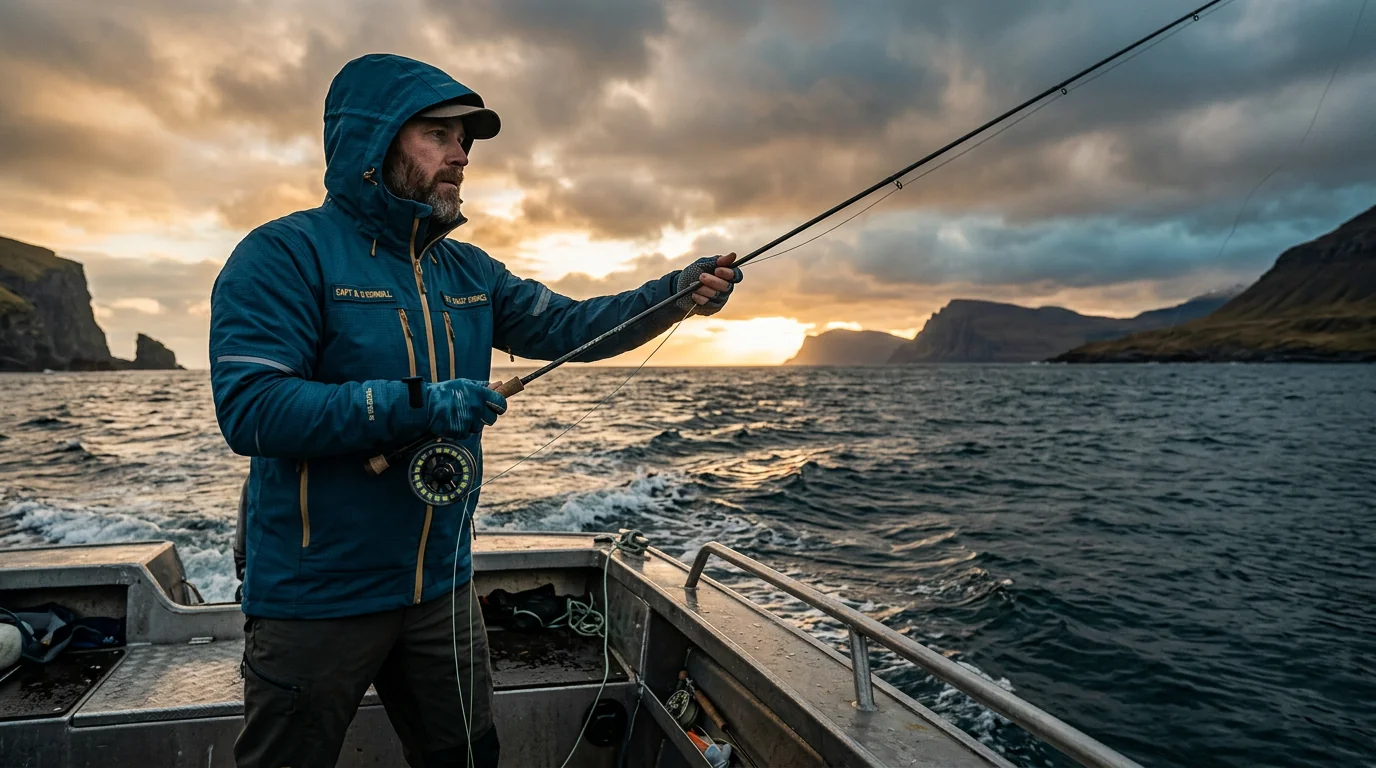
Custom Fishing Jackets, Built to Keep Weather Out.
Custom fishing jackets from a fishing-only factory — wind-blocking softshells, waterproof taped-seam rain shells, packable windbreakers and insulated outer shells that bead water off and seal the seams, zips and edges, decorated with your logo from 100 pcs per style.
The fishing jacket builds we make.
One outer layer, several builds — what changes is how much weather each blocks: wind, rain, spray or cold. Each is a weather shell, not a mid-layer; a fleece fishing sweatshirt is the warm layer you wear under it, and the full range of fishing shirts and fabric technology lives on their own pages.
 Cut away
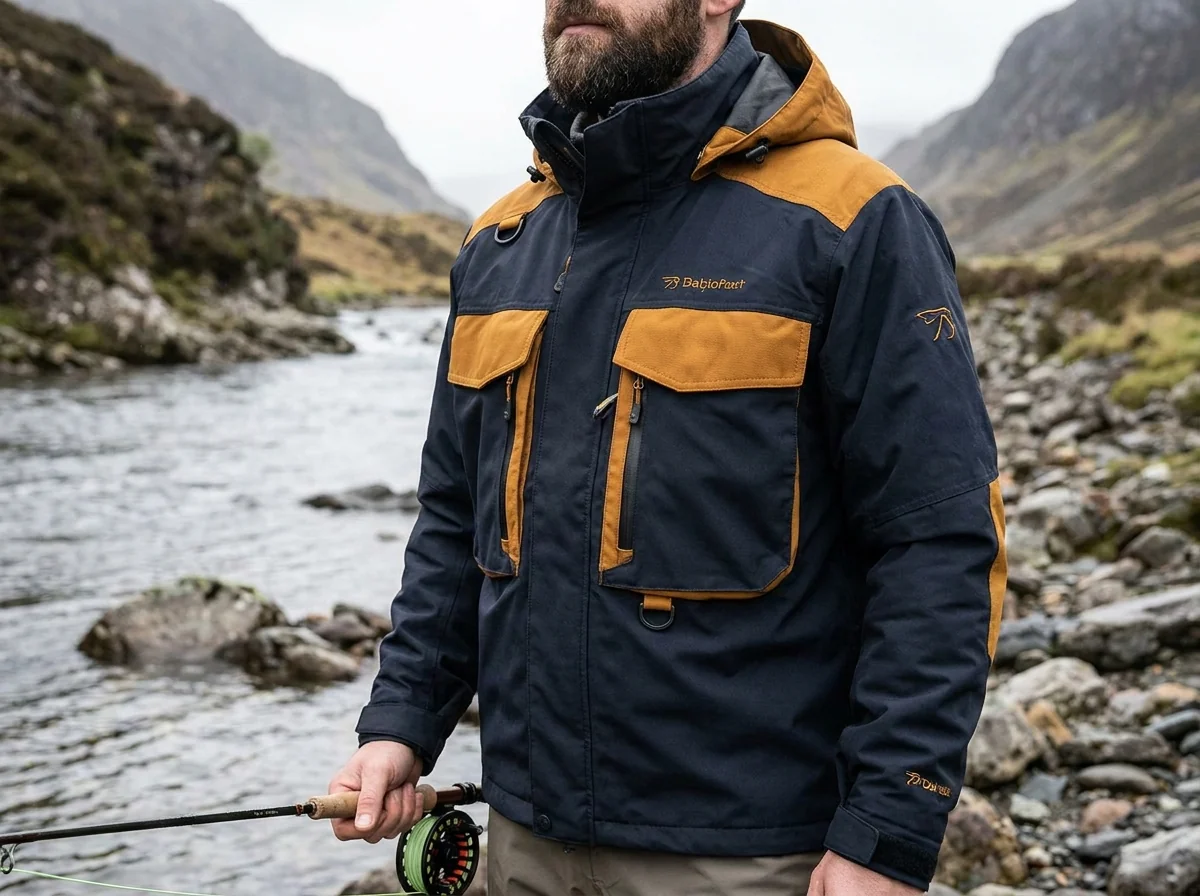
Softshell Jacket
A wind-resistant, water-repellent stretch shell that breathes — the dry-but-windy everyday on-water build.
 Cut away
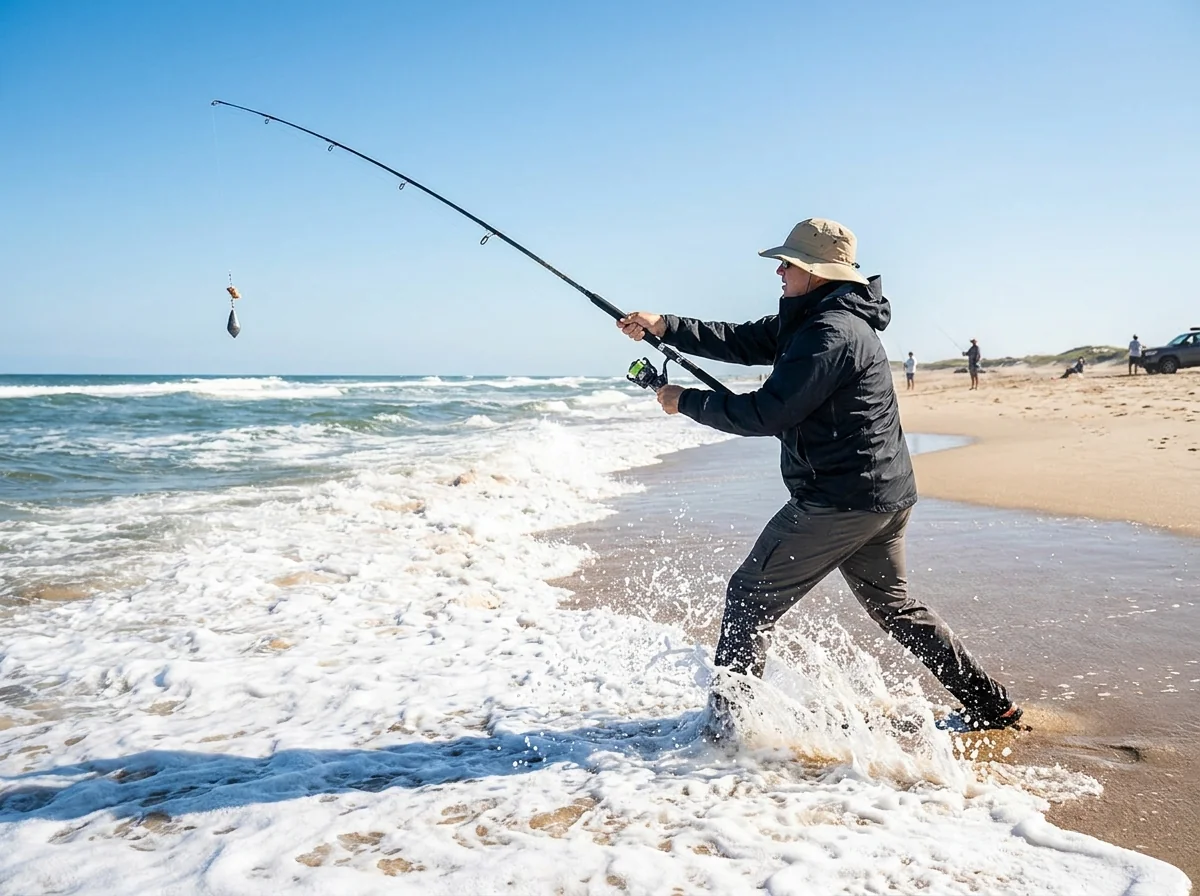
Waterproof Rain Shell
A membrane shell with taped seams and waterproof zips for driving rain and heavy spray — stays dry inside.
 Cut away
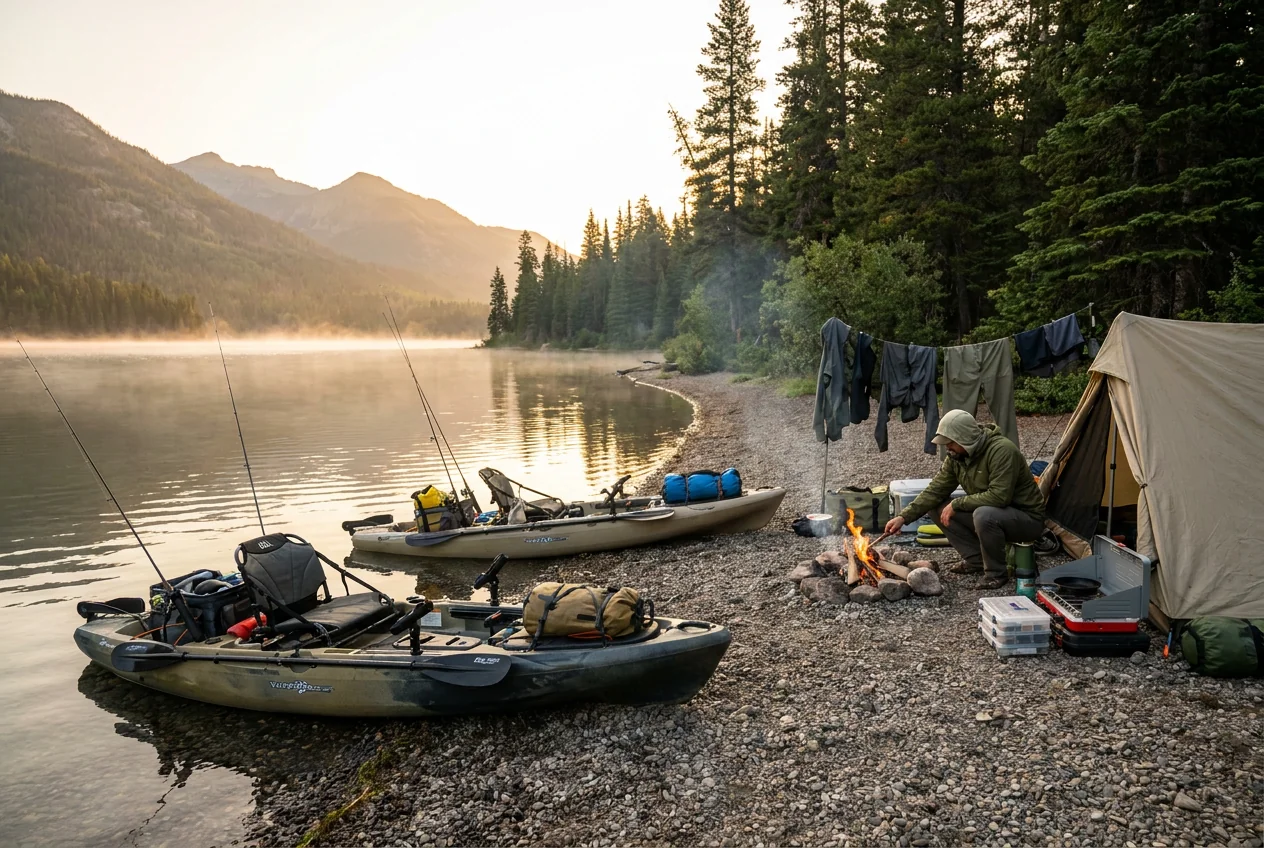
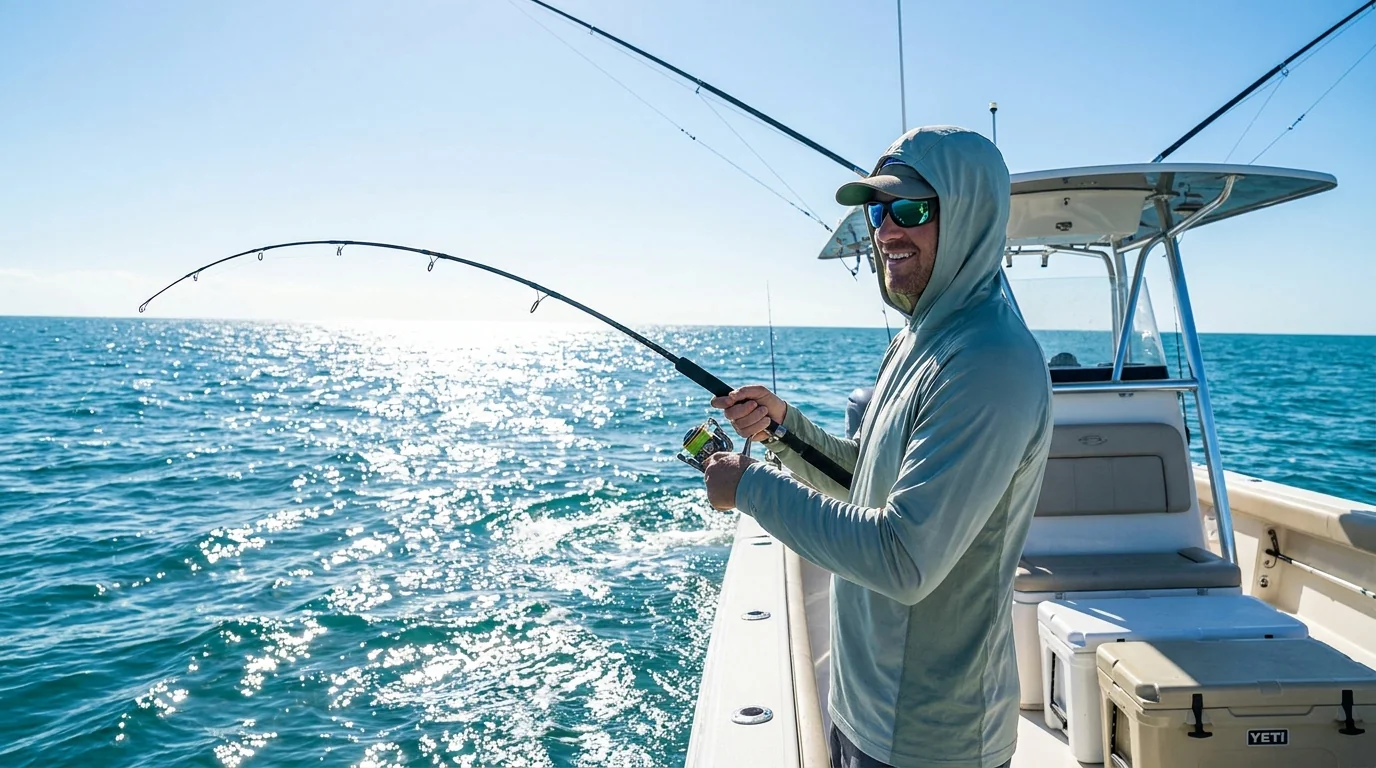
Packable Windbreaker
An ultralight wind shell that stuffs into its own pocket — the stow-it-in-a-bag, run-it-in-bulk build.
 Cut away
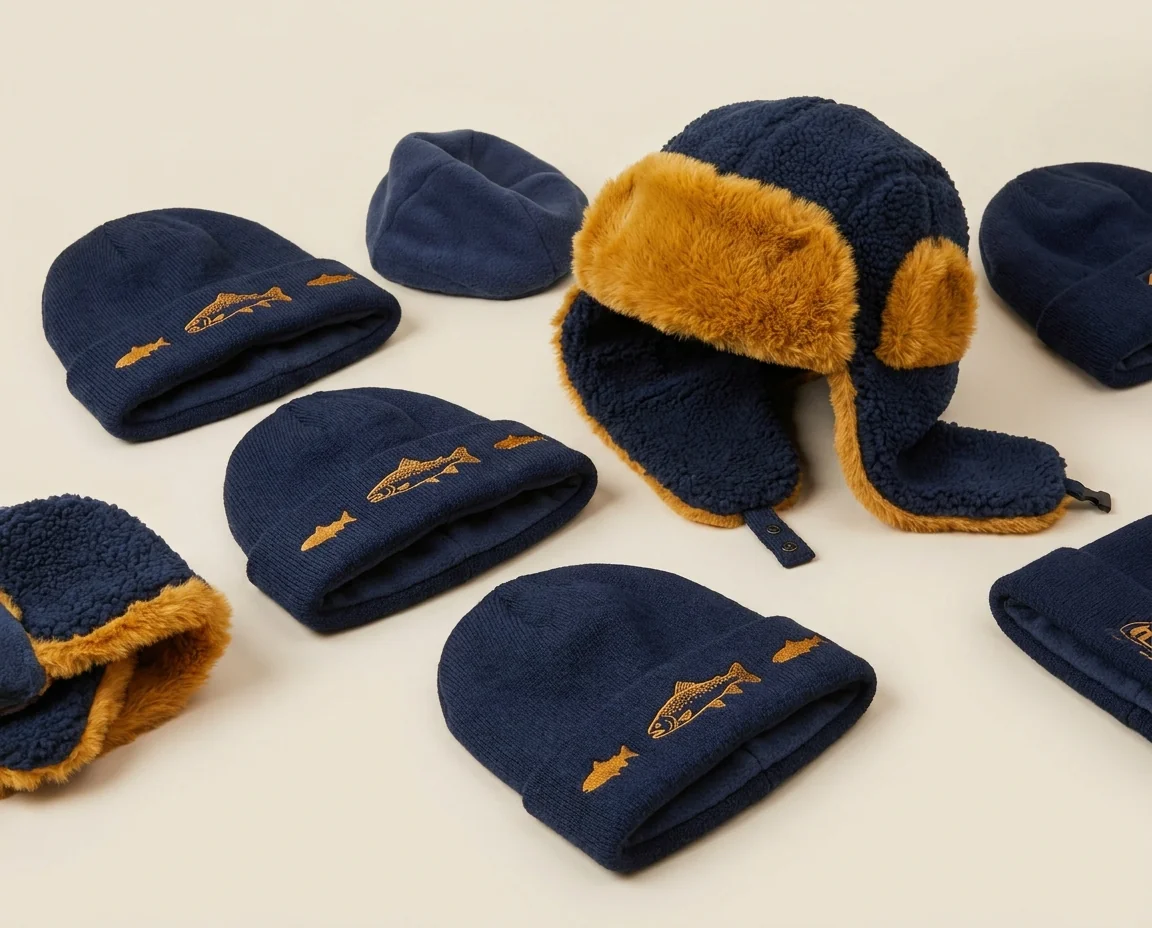
Insulated Shell
A wind-and-water shell with synthetic insulation built in for cold, open-water runs — a warm outer shell, not a fleece layer.
 Cut away
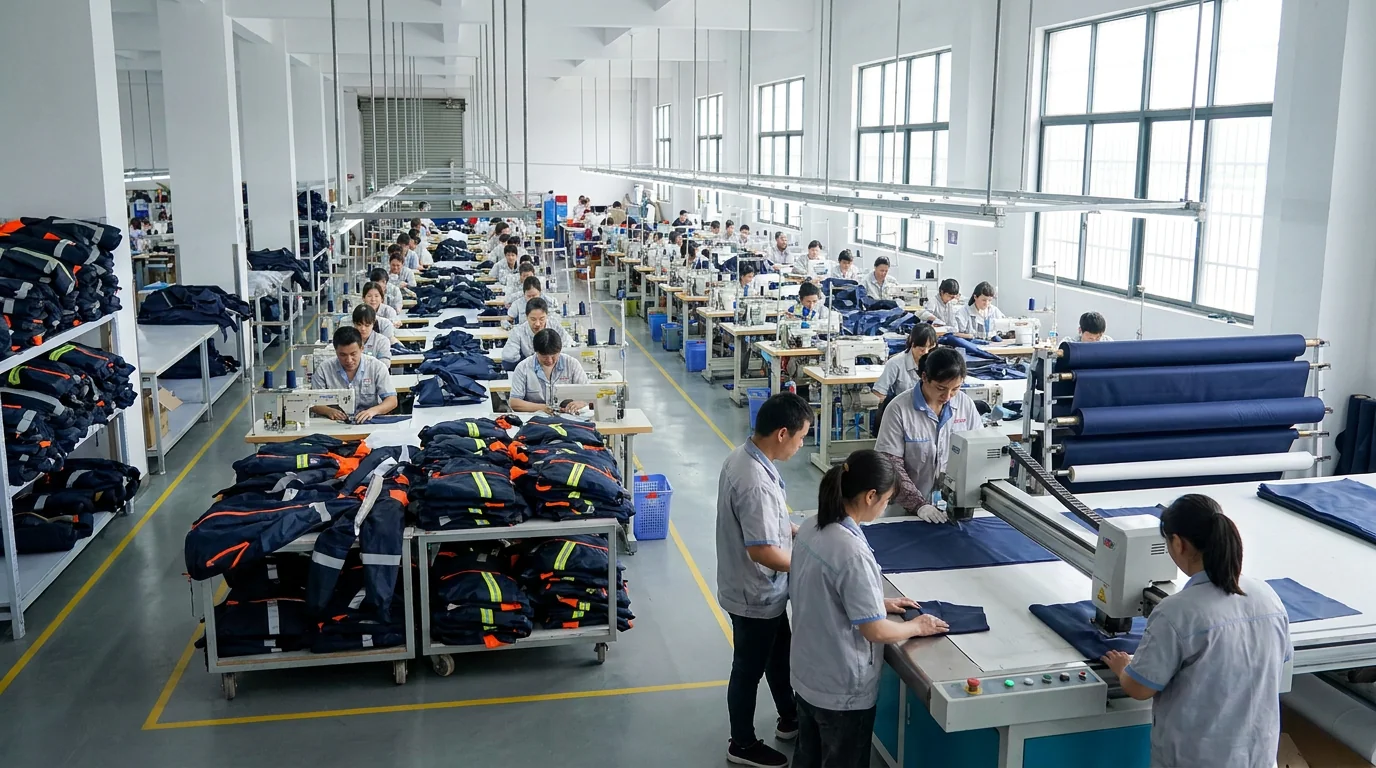
Fleece-Lined / 3-in-1
A weather shell with a zip-out liner, so one jacket covers a swing from wet-and-cold to just-wind. (the standalone fleece layer is a fishing sweatshirt.)
 Cut away
Women's & Youth Cut
The same weather shells graded to women's and youth patterns. See sizing →
What actually keeps a fishing jacket dry in wind and rain.
A fishing jacket isn't a windbreaker with a logo on it. What keeps weather out — and keeps it out at the seams, the zip and the edges where cheap shells fail — is how the shell is built. Here's what a jacket does, part by part. (Factory-stated construction; figures are representative.)
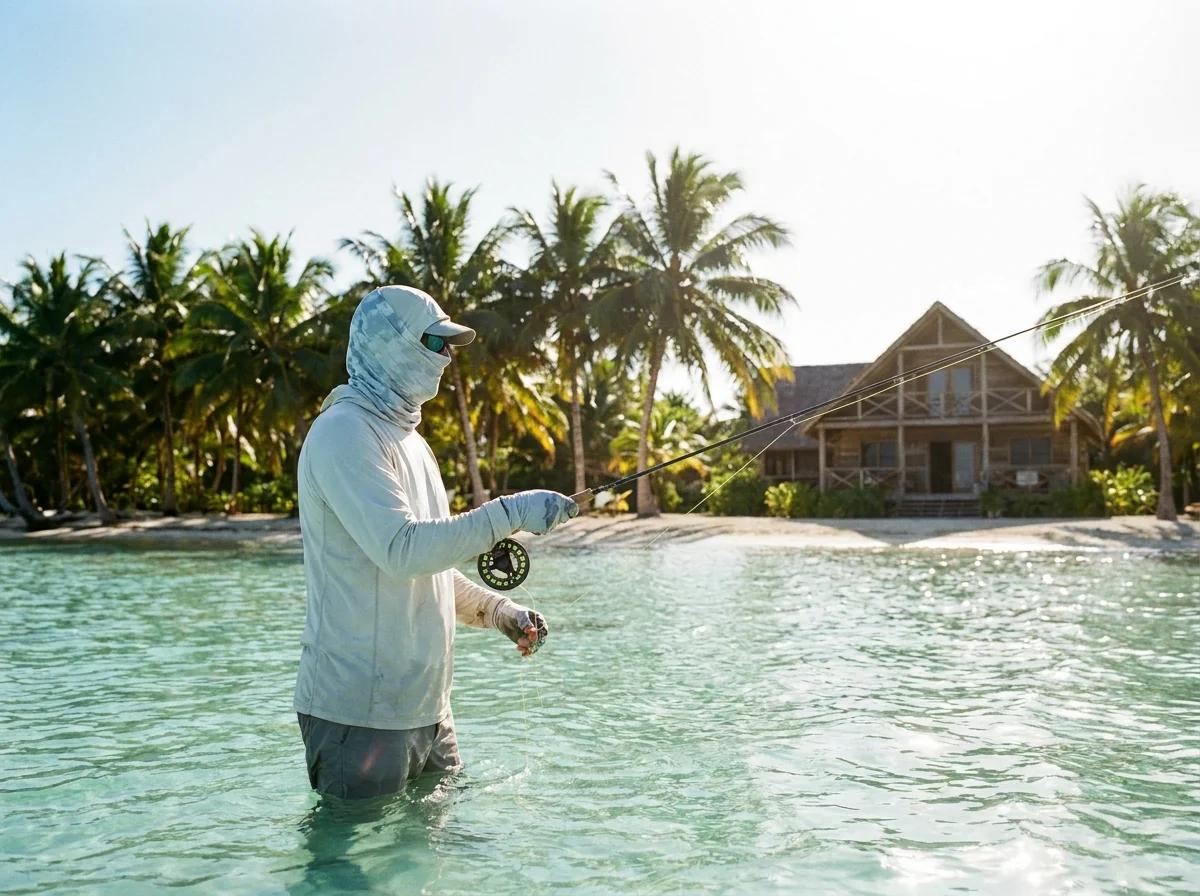 Dry inside
-
The weather shell face — wind is blocked, water beads off.
The outer fabric is a wind-blocking, water-shedding face — a softshell with a DWR finish or a waterproof-breathable membrane — so water beads up and runs off instead of soaking in. That shedding face is the whole point of an outer layer.
-
Taped seams — no leak at the stitch line.
On a waterproof build, the needle holes at the seams are where water gets in first; the seams are sealed with tape on the inside so a rain shell stays dry at the stitch line, where a plain-sewn jacket wets through. (this is seam-sealing for waterproofing — the mechanism, not a decorative seam.)
-
Waterproof zips and a storm flap — the front doesn't leak.
A water-resistant or waterproof zipper plus a storm flap and chin guard close the front without a leak path — the zip and placket are exactly where a cheap shell gives up in real rain.
-
Sealed hood, cuffs and storm hem — closed at the edges.
An adjustable hood, closable cuffs and a drawcord storm hem cinch the three openings so wind and spray can't drive in at the edges. (this hood seals against weather — sun-shade hoods are on the sun hoodies page.)
Every jacket build above is a weather shell first — you pick how much it blocks (wind, rain or cold); the sealed seams, zips and edges come standard on the waterproof builds.
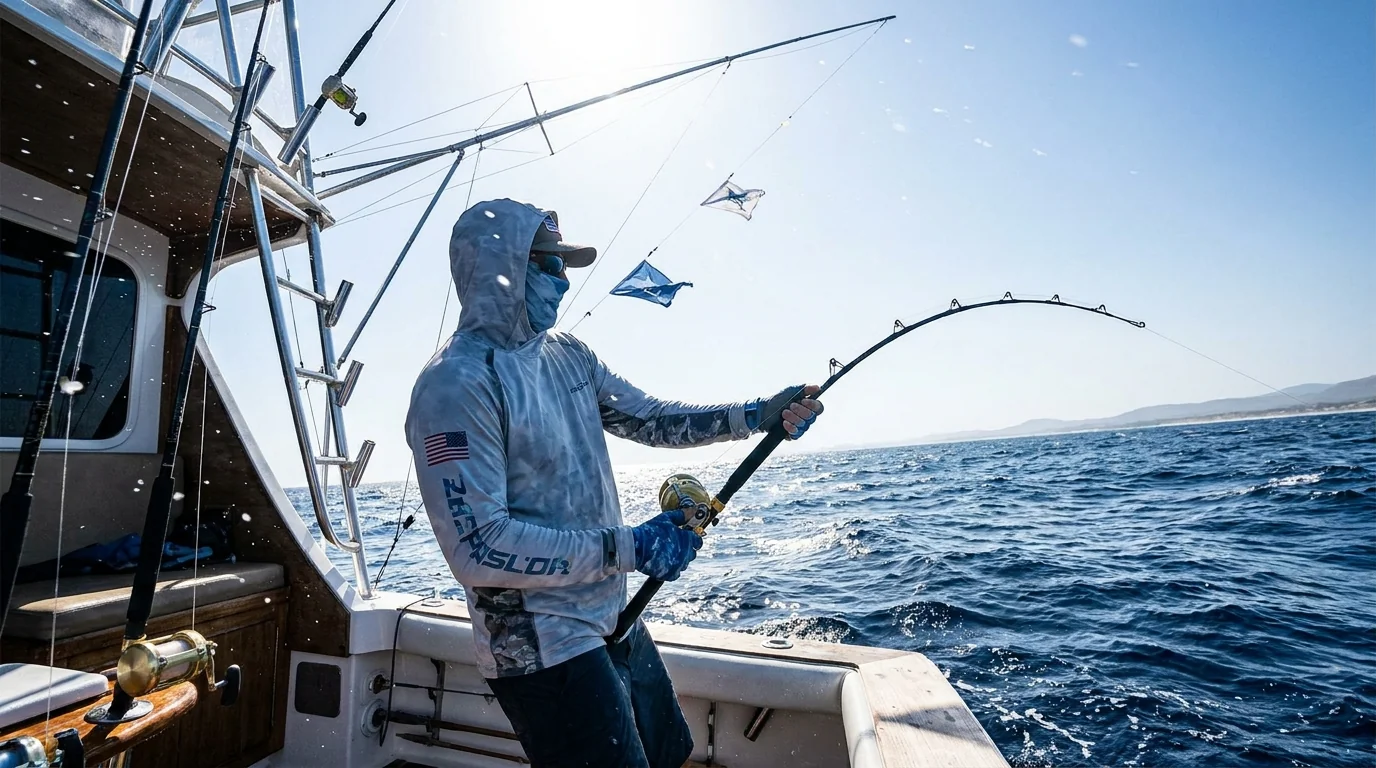
Which jacket to spec for the weather you fish.
The build above is the how. This is the which — pick the shell by the weather you actually face, not by the label. (Use-case, not construction — how the shell keeps water out is in the section above.)
Reach for a softshell.
A softshell blocks wind, sheds a splash and still breathes on a working day — the everyday on-water shell when it isn't actually raining.
Only a waterproof rain shell stays dry.
A rain shell with taped seams and waterproof zips is the only build that stays dry when it's really coming down or the bow is throwing water.
A packable windbreaker disappears.
A packable windbreaker stuffs into its own pocket and rides in the bag until the wind comes up — the cheapest, lightest build to run in bulk.
An insulated shell adds warmth.
An insulated shell blocks weather and adds warmth for a cold run; for a swappable warm layer under a shell, add a fleece fishing sweatshirt instead of a heavier jacket.
A 3-in-1 covers a day that swings.
A 3-in-1 shell with a zip-out liner covers a day that swings from wet-and-cold to just-breezy, so a crew carries one jacket instead of three. (the standalone warm layer under it is a fishing sweatshirt.)
The shell fabrics a fishing jacket runs on.
A weather shell only works if the face fabric does. Three build points matter for a jacket; the membrane structure, hydrostatic-head and DWR numbers live under fabric technology. (Factory-stated; confirmed on the sample.)
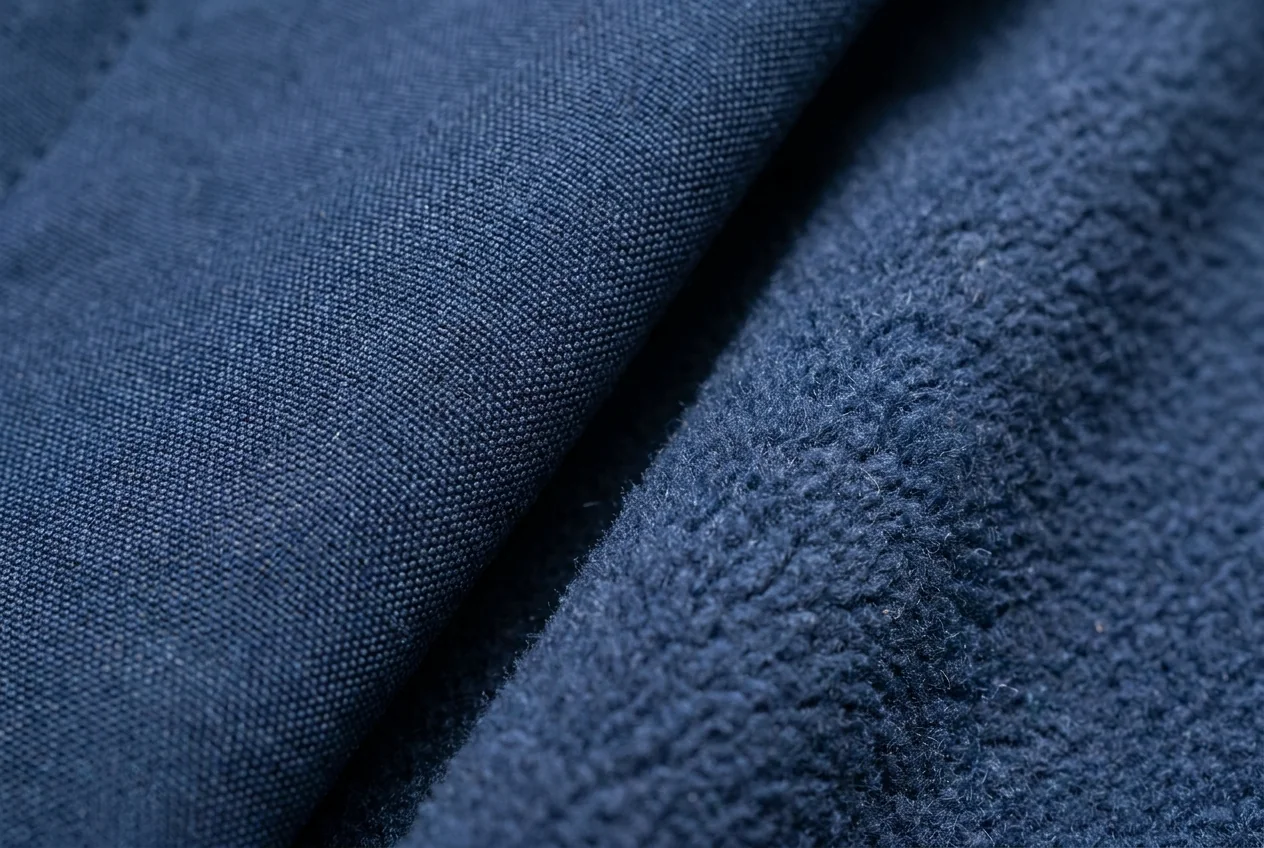
Softshell face + DWR
A wind-resistant, stretchy woven face with a durable water-repellent finish that beads off a splash and still breathes; the dry-day shell fabric.
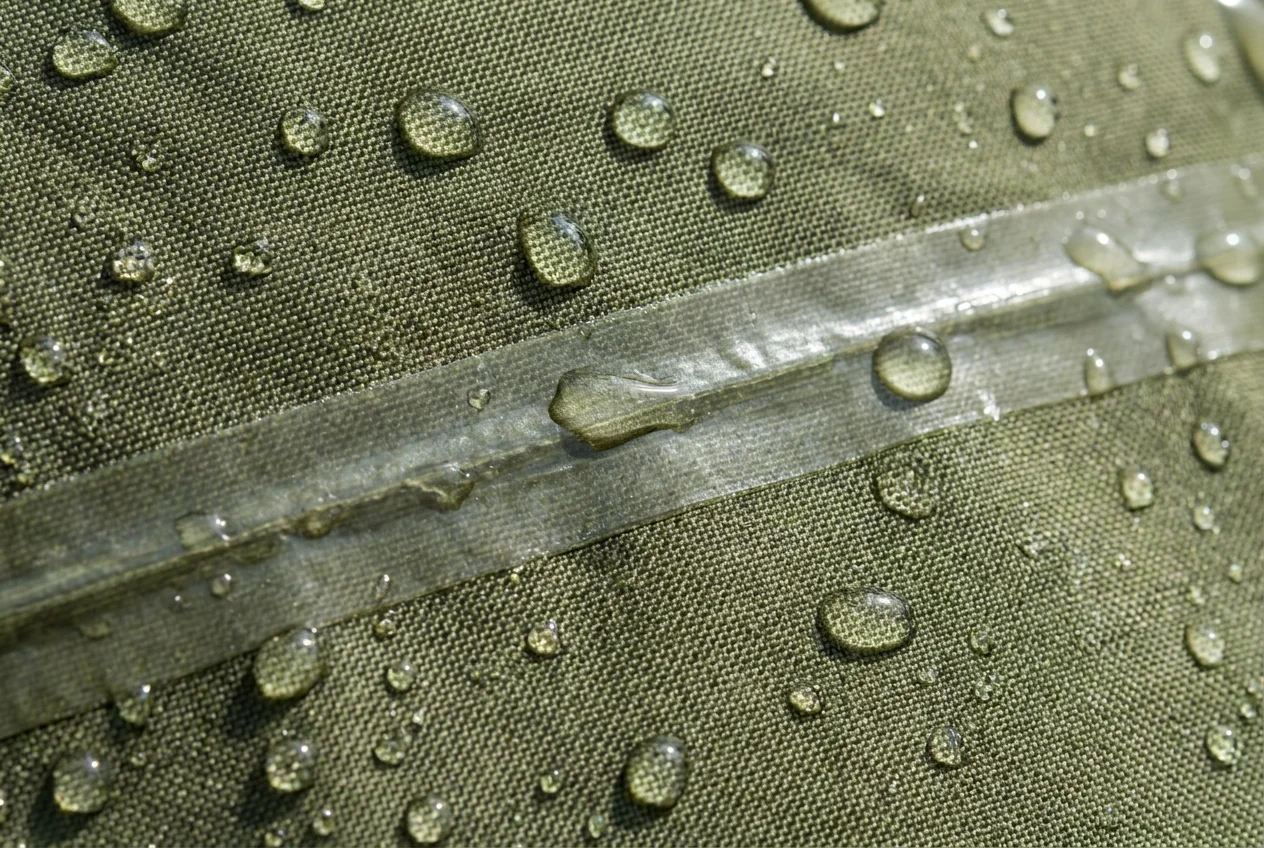
Waterproof-breathable membrane
A laminated membrane face that stops rain from getting in while letting sweat vapor out; the rain-shell fabric, run with taped seams. Structure and hydrostatic-head: fabric technology.
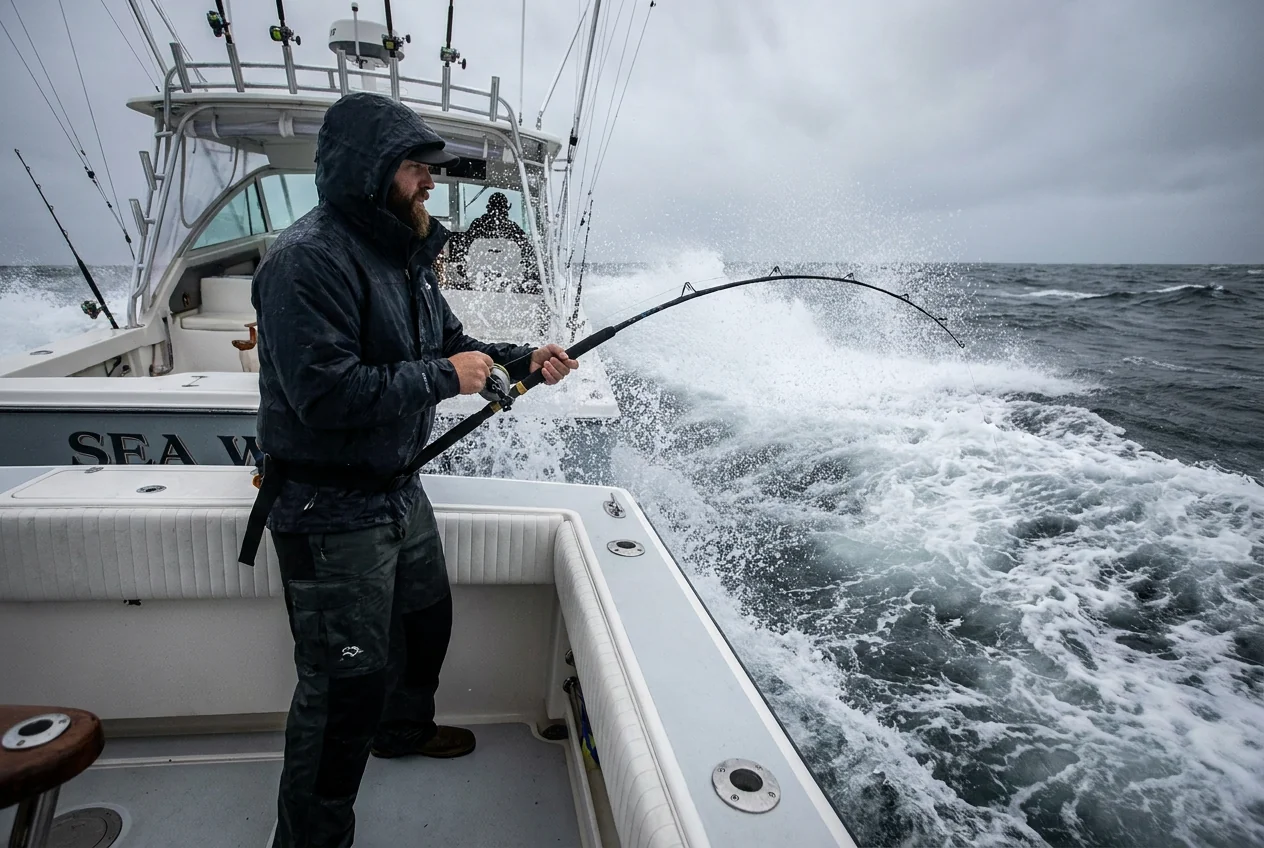
Synthetic insulation
A packable, quick-drying insulation fill for an insulated shell that keeps warming even when it's damp; the cold-run fabric. (A standalone fleece layer is on the fishing sweatshirts page.)
Where your logo goes on a fishing jacket.
A jacket carries a mark on the chest, the back and the sleeve — but a waterproof shell has one rule a shirt doesn't: keep the needle out of the membrane. Here's where a mark lands on a jacket; the decoration methods themselves are detailed under custom decoration.
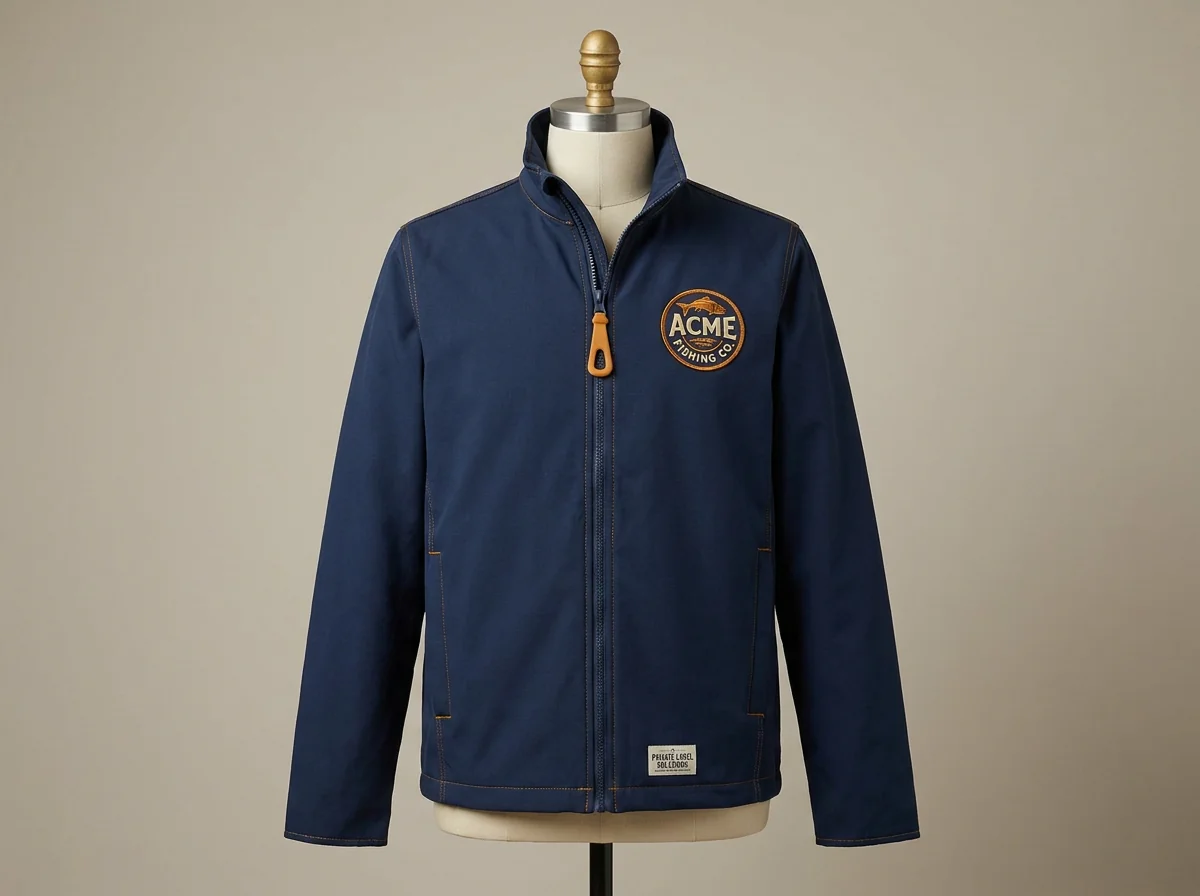 Left chest · signature
Back panel (sponsor)
Sleeve badge
Hood-back
Left chest · signature
Back panel (sponsor)
Sleeve badge
Hood-back
-
Jacket placement zones
Left chest, a full back panel (sponsor-ready), a sleeve badge and a hood-back hit; tell us the zone and size and we digitize and lock it to your file.
-
On a waterproof shell, protect the membrane
An embroidered mark punches needle holes, so on a taped-seam waterproof build we back the stitch or switch to heat-transfer or a printed patch, so branding doesn't become a leak path. This is the jacket-specific placement rule.
-
Method routed by shell & zone
A softshell or lined jacket takes embroidery, a waterproof membrane face takes heat-transfer or a welded patch, and a large back graphic takes transfer or print — point-named here, spec'd on your tech pack. (decoration methods: custom decoration.)
-
Free fish-artwork starting library
A set of fish silhouettes (marlin, tarpon, redfish, snook and more) to build a chest or back mark around, or send your own art.
Fishing jacket fit across men's, women's and youth.
A jacket has one fit note a shirt doesn't — it's the outer layer, so it's cut to wear over a mid-layer. Full measurement tables are on the size charts; here's what's specific to a jacket. (Factory-stated grading.)
Cut with layering room
The body and shoulders are graded to wear over a fleece or shirt without pulling, since a jacket is the outer layer, not a base layer.
Sleeve length set for reach
The sleeve is graded so it stays at the wrist through a cast and doesn't ride up when you reach, with cuffs that close over a glove.
Men's S–5XL, plus women's & youth
The same weather shells graded to women's (XS–3XL) and youth patterns, in the same fabrics.
Mix the grid to the minimum
Spread the 100-pc per-style minimum across sizes and all three cuts, so a first jacket order kits a whole crew. Full measurements: fishing apparel size charts.
Custom fishing jacket questions, answered.
The questions buyers ask before a first jacket order.
Start your custom fishing jacket order.
Send us the build, target quantity, fabric preference and your logo — you'll hear back within 24 hours, in plain English.
- Response within 24 hours (GMT+8)
- Sample fee credited back against your bulk order
- From 100 pcs per style, mixed sizes and cuts
- Worldwide shipping — DDP / DDU
Prefer to request a sample or get a quote first?