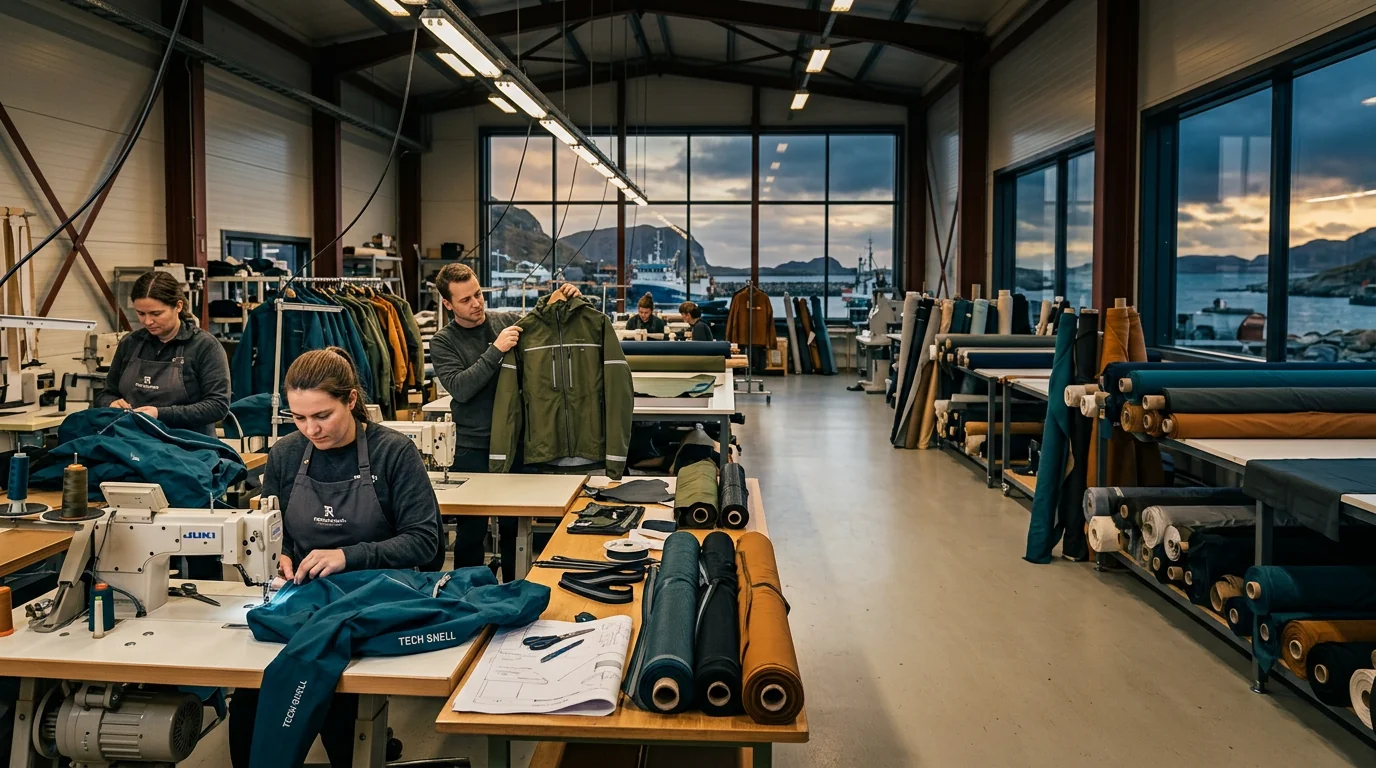
Fishing Apparel Manufacturing Services, In-House from Cut to Carton.
The full production capability of a fishing-only factory, station by station — cutting, in-line decoration, sewing, seam taping, QC and finishing all under one roof, so your order is built end to end without leaving the floor. Factory-stated capability; confirmed on your sample and PO.
Manufacturing services are the factory's raw production capability, station by station.
This is what the factory can physically build — the cutting, decoration, sewing, taping, QC and finishing stations themselves. Here's what that covers, where it sends you if you need the design service, the fabric or the branding instead, and who it's for.
If you want the fabric science, not the make
→ that's fabric technology: fiber build, gsm, weave, UPF and the performance mechanisms. Manufacturing is how the cloth becomes a garment; fabric technology is what the cloth is — this page doesn't re-spec gsm, it links there.
If you want us to design and manage the whole thing with you
→ that's the custom gear program: design collaboration, digital mockups, sign-off and a coordinated set delivered to you. That program wraps design and project management around this capability — manufacturing services is what the factory can build.
If you want your own retail brand labeled and packaged
→ that's private label fishing apparel: woven labels, hangtags, barcoded packaging and FBA/retail-ready cartons. Manufacturing services build and finish the garment; the branding layer lives on that page.
How an order routes through the factory, station to station.
The capability isn't a list of machines — it's a route. An order travels one continuous path across eight in-house stations, and because every station is on the same floor, the work doesn't ship out and back between steps. Here's the path, and where decoration branches by substrate. (Factory-stated; the day-by-day timeline is on the home page.)
A One work-order, one continuous path
Cut → Decorate → Sew → Bond & Tape → QC → Finish → Pack → Ship — one work-order card travels the whole line, stamped at each station before it advances.
B Decoration branches by substrate, then merges back
After cutting, panels route to the station the substrate calls for — poly to sublimation, cotton/blend to the print bay, logos to embroidery — then rejoin the sewing line as one order, so a mixed job isn't split across suppliers.
C Nothing leaves the floor between steps
Because cut, print, embroider, sew, tape, inspect, finish and pack are all in one building, there's no ship-out lag or handoff where a batch stalls or a responsibility gap opens — the failure point of a chain that outsources a station.
D One order, one traceable pass
Every station logs against your order, so a question at QC traces straight back to the cut, the print run or the line that sewed it — not to an outside workshop you can't reach.
Each station below is one stop on that route — what it does, the capability spec, and what you get from it.
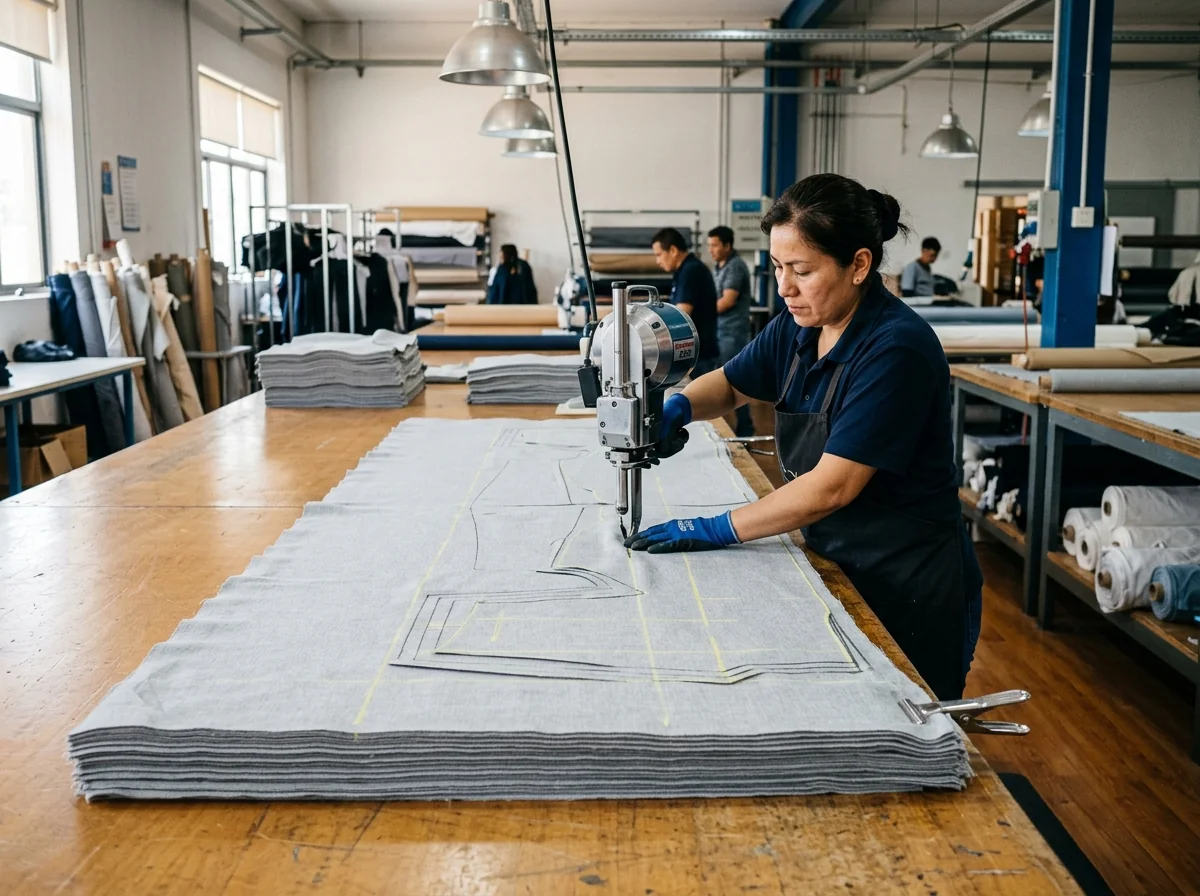
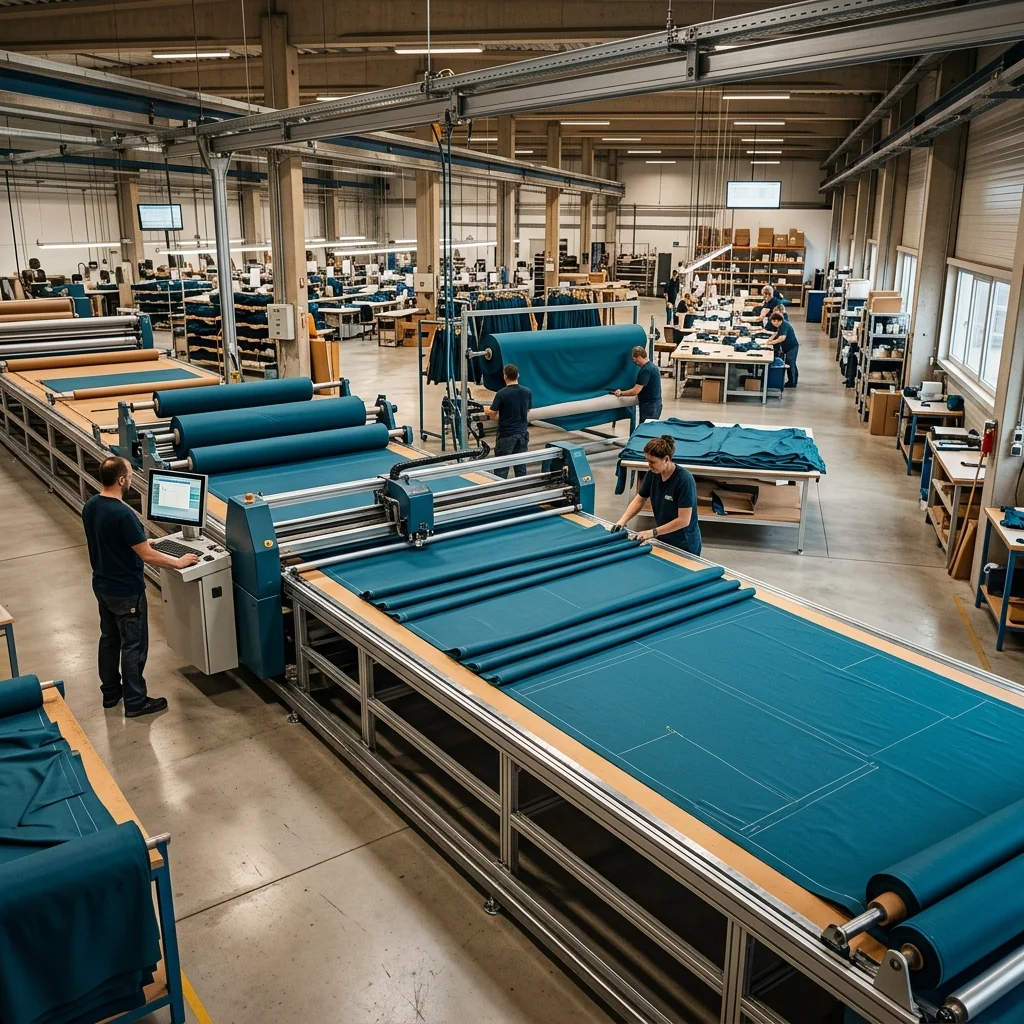
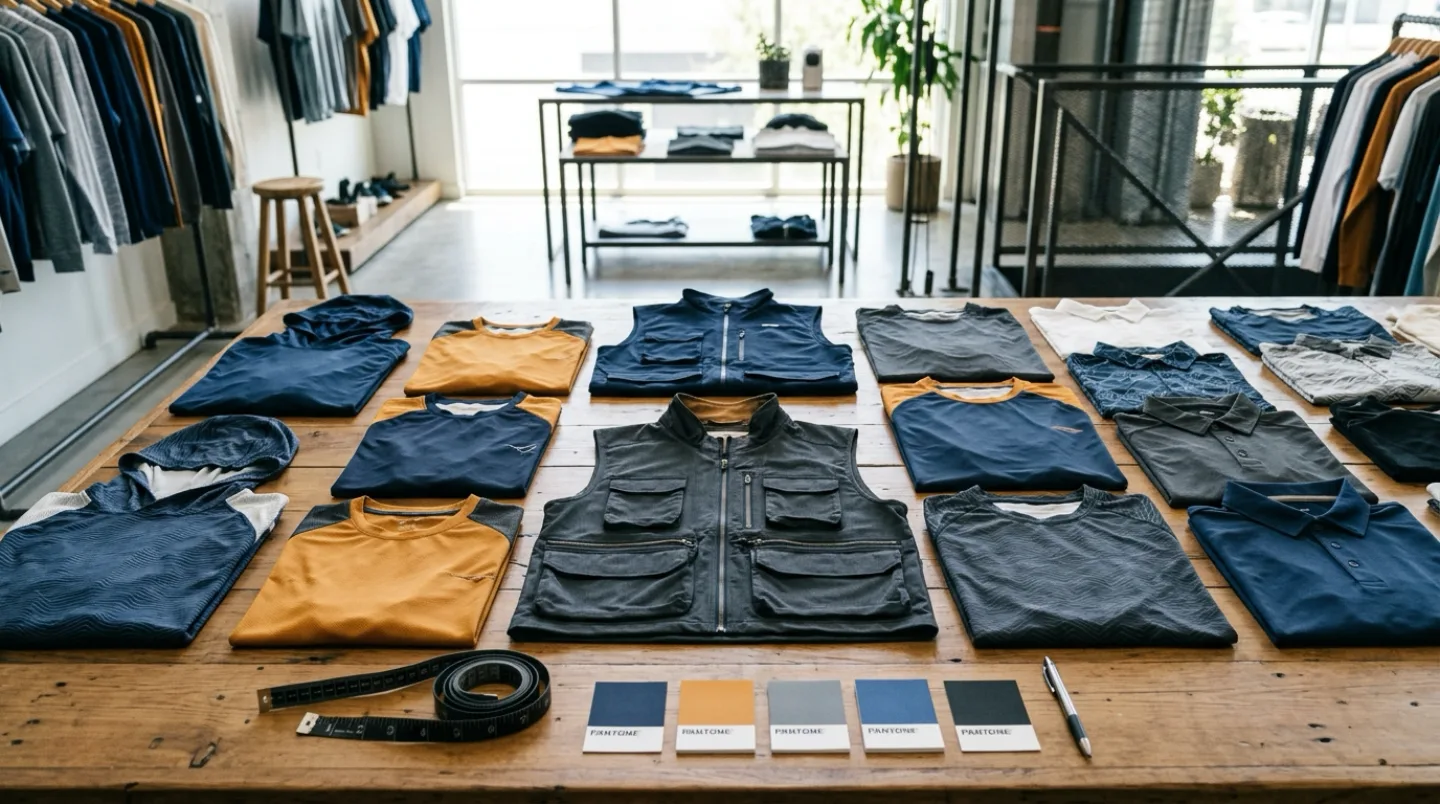
Cutting and prep: multi-ply spreading, nesting and panel accuracy.
Cutting is where unit cost and panel consistency are set before a single stitch. Here's how the factory lays, nests and cuts performance fabric — and why precision here decides whether a run sews clean.
Automated multi-ply spreading
An auto spreader lays performance knit and woven up to ~60 plies deep in an even, tension-controlled lay, so every panel in the stack cuts to the same dimension instead of drifting ply to ply.
Nested markers protect yield
Patterns are nested tight on the marker before cutting, because performance knits cost more per meter than cotton — a tighter nest is where fabric yield, and your unit cost, is won or lost.
CNC / straight-knife accuracy
A CNC-guided or straight-knife cutter tracks the nested marker holding roughly ±1–2 mm, so panels match at the seam and a graded size stays true across the run.
Prep for the route
Cut bundles are ticketed to the work-order and sorted for their decoration branch or straight to sew — the traveler card starts here. (Fiber, gsm and weave specs live on fabric technology.)
In-house decoration, routed by substrate and kept in sequence.
Decoration runs as a station on the route, not an outside job — the decorated panel never leaves the floor. Here's how print, sublimation and embroidery are sequenced and routed by substrate; the method-to-fabric map and color tolerance are detailed under custom decoration. (Factory-stated; this page covers the station, not the method.)
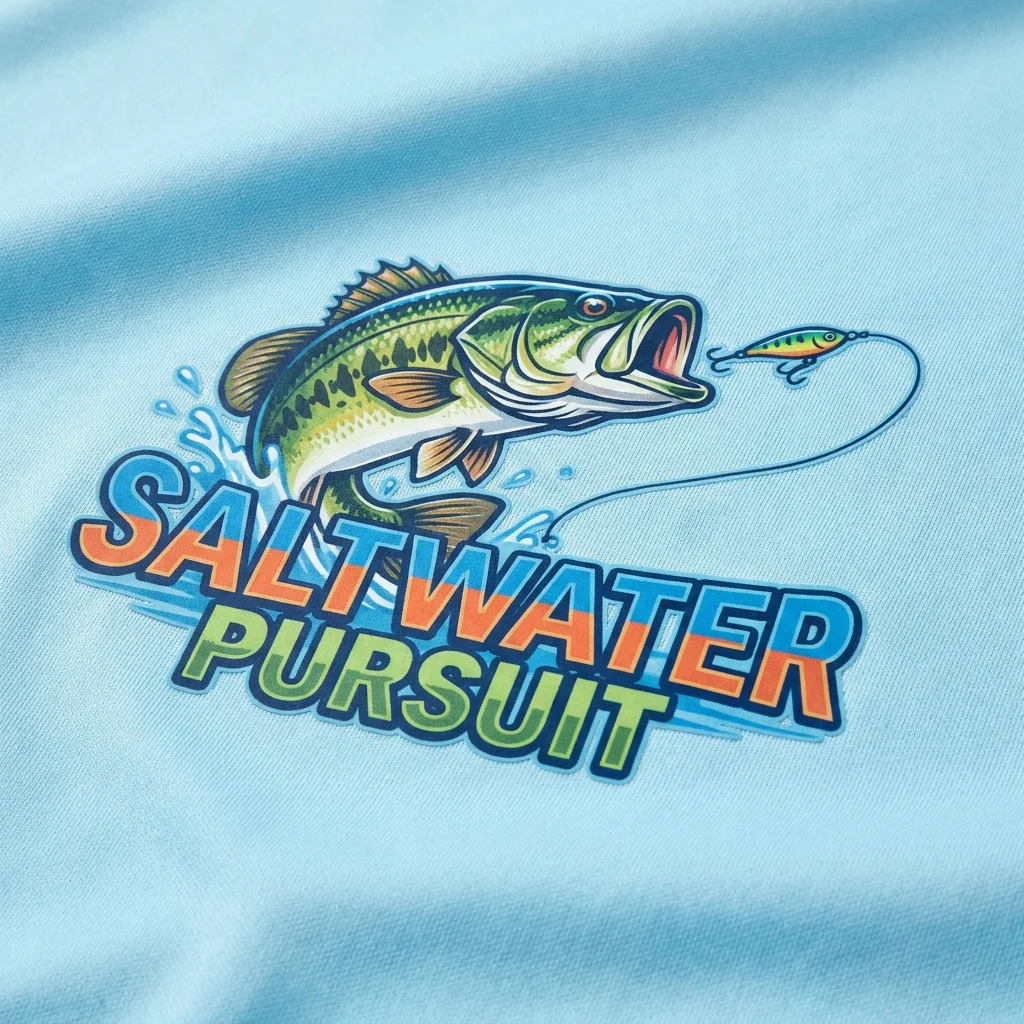
Continuous-roll sublimation, in-line
Wide-format printers feed a rotary calender press running continuous rolls, so poly panels are dyed edge-to-edge in-line and moved straight to sewing — no transfer-shop round trip.
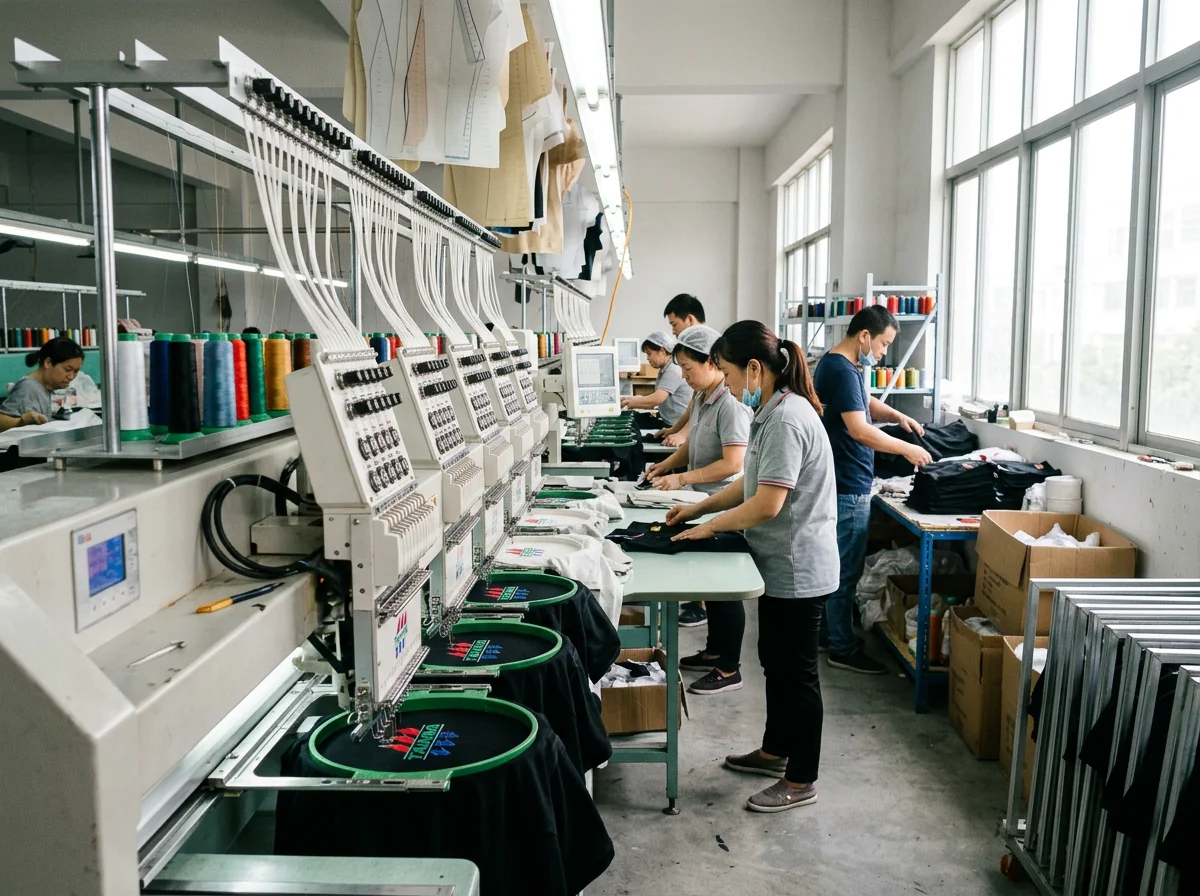
DTF, silkscreen and multi-head embroidery
A DTF and silkscreen bay handles cotton, blends and spot-color panels the calender can't take, and in-house multi-head embroidery stitches logos (up to roughly 12,000 stitches per mark) slotted between print and sew.
Both branches rejoin the same order. Each panel is decorated at its station and merges back into the work-order before sewing, so a mixed print-and-embroidery job stays one order on one floor — not split across outside shops.
Which method suits which fabric, wash durability and color tolerance are covered under custom decoration — this page covers the station in the line, not the method.
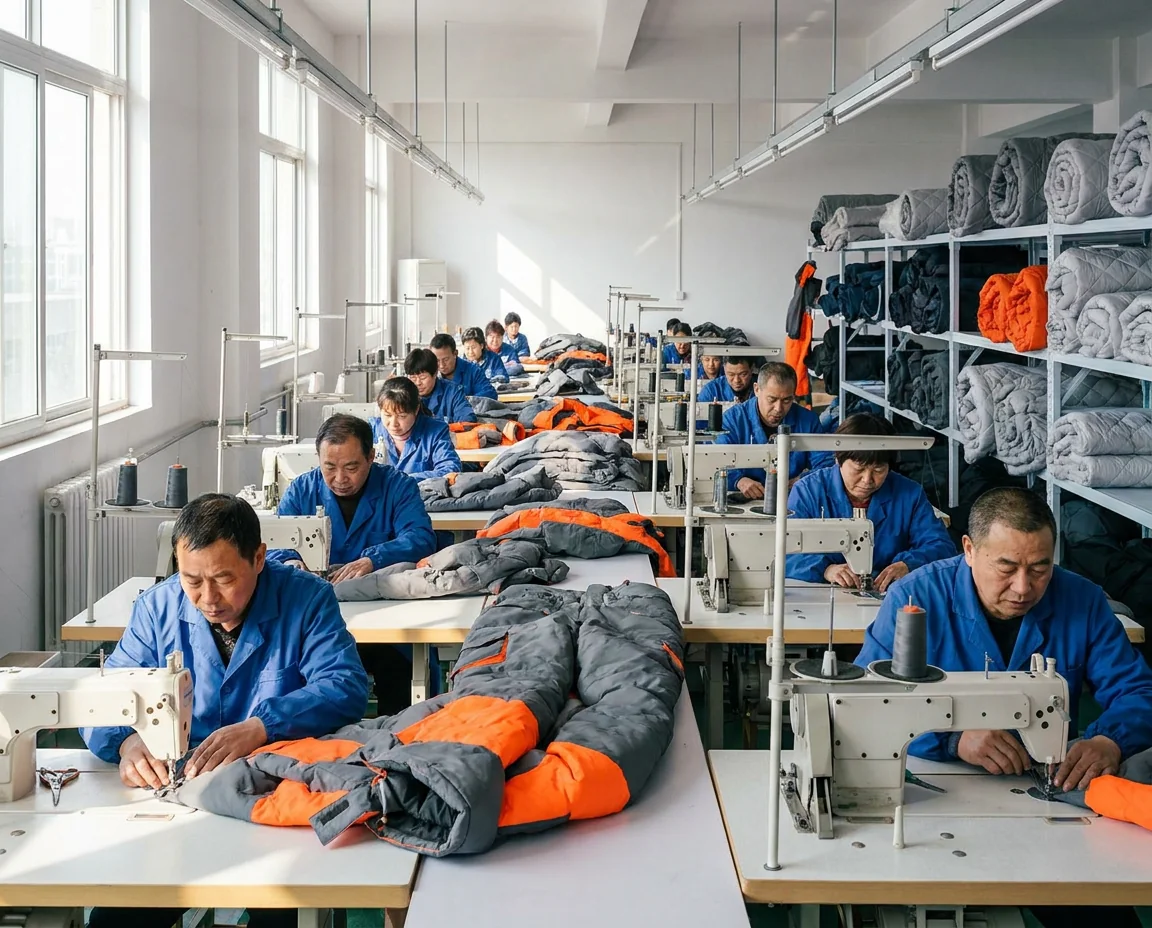
Sewing and seam construction: flat-lock, overlock and coverstitch lines.
Six sewing lines, each set up station-per-operation, run the seam types performance fishing wear needs. Here's the line configuration and the seam menu you can spec a garment to.
Six sewing lines of roughly 12 stations each, station per operation — a garment moves station to station on one line instead of hopping lines mid-build.
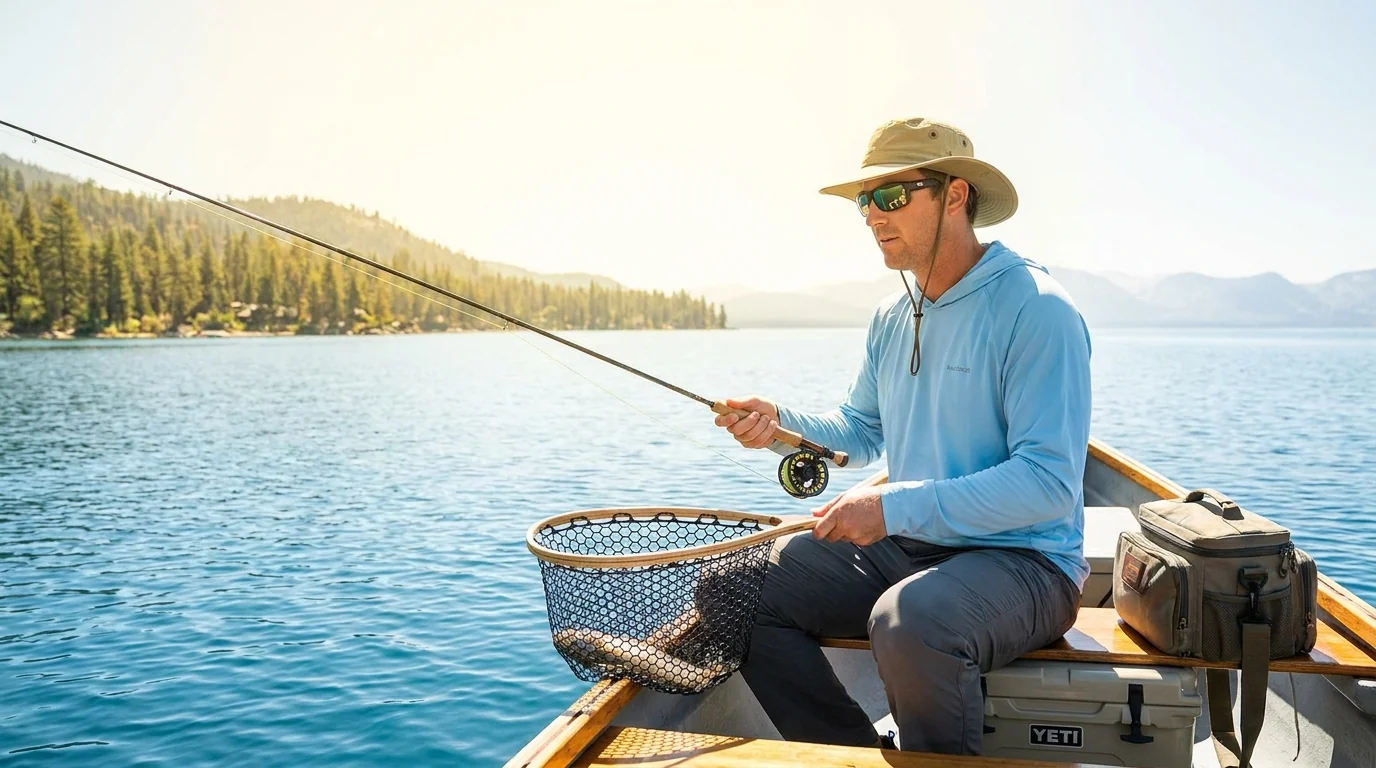
Seam bonding, taping and garment finishing.
Functional fishing gear — shells, rain layers, waterproof panels — needs seams a plain sewing line can't give, and every finished piece needs a proper press before it ships. Here's the taping, bonding and finishing capability most generalists skip. (Factory-stated capability.)
Heat-sealed seam taping
A seam-tape station heat-seals waterproof tape over stitched seams on shells and rain layers, so a needle-hole seam doesn't leak — the capability that makes a garment functionally waterproof, not just water-resistant.
Bonded / no-sew seams
For low-bulk, clean-finish panels we can bond seams without a stitch line, so a soft-shell or a stretch panel stays flat and doesn't chafe where a heavy seam would.
Steam finishing & de-threading
Every finished piece is steam-pressed, de-threaded and trimmed at a finishing station, so it lands crisp and retail-shaped — not creased out of the sewing line.
Final garment prep
Fold, tag-thread and any garment-side finishing to your spec, ready for QC and pack. (Branded labels, hangtags and retail packaging are on private label fishing apparel.)
In-line checks and AQL 2.5 pre-shipment inspection.
Quality isn't one look at the end — it's checks along the route and a sampling standard before the goods leave. Here's how the AQL 2.5 inspection actually runs, so "we inspect" has a method behind it, not a glance. (Factory-stated; the headline QC figures are on the home page.)
In-line checks at cut and mid-sew
Panels and half-built pieces are checked at the cut station and mid-line, so a fabric flaw or a stitch issue is caught while it's one piece — not discovered in a finished carton.
AQL 2.5 pre-shipment sampling
Before shipment, a random sample sized to the lot is pulled and inspected to AQL 2.5 — measured against your approved sample, with accept/reject thresholds applied, so the batch passes on a defined standard rather than a spot-check.
Measured, not eyeballed
Pieces are laid on a lit inspection table and measured against the size spec with tape and gauge, so a graded size is verified to tolerance, not judged by feel.
A photo report before it ships
Every PO ships with a QC photo report against the approved sample, and anything off-spec is reworked or remade before dispatch — the standard behind the numbers on the home page.
Production capacity, scheduling and export dispatch.
The last part of a capability is throughput — how much the floor runs, how a rush is scheduled, and how the finished goods leave. Here's the capacity behind the stations and the physical pack-and-ship station that closes the route.
Monthly throughput
Roughly 30,000–50,000 pcs/month across styles, so a wholesale or standing program has real capacity behind it — the shop-floor headline is on the home page.
Rush blocks against a booked calendar
Capacity is scheduled against a booked calendar, so a rush run can be blocked in ahead rather than queued behind other orders — a reserved production window for a season repeat.
Dispatch, DDP or DDU
Finished cartons ship DDP or DDU with commercial invoice, packing list and, on request, certificate of origin — landed responsibility agreed before the container moves. (The full brief-to-ship timeline is on the home page.)
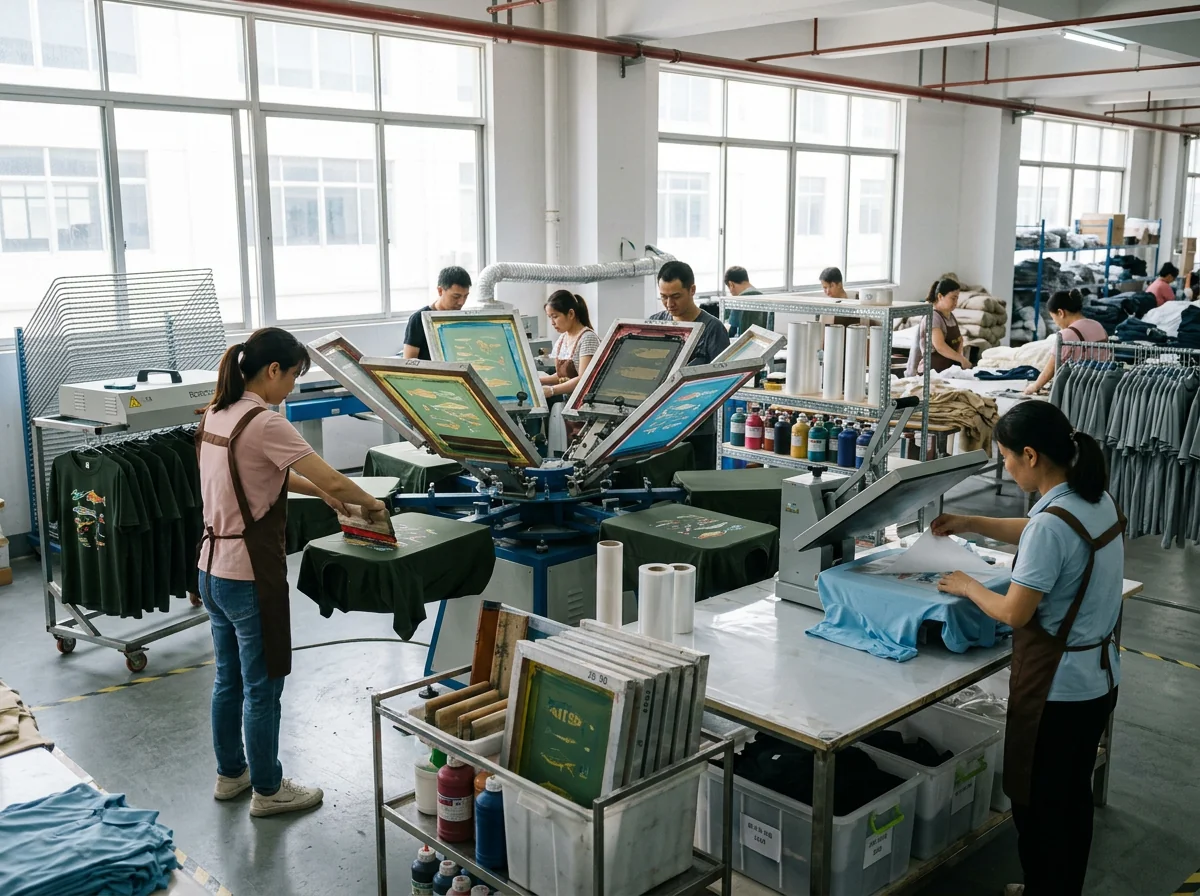
The pack-and-ship station
At the end of the route, pieces are folded, poly-bagged, cartoned and palletized to your spec — the physical pack station, not the brand packaging (woven labels, hangtags, barcodes and FBA cartons are on private label fishing apparel).
Get a manufacturing quote.
Send us your styles, quantities, fabric and any functional requirement (taped seams, specific decoration) — you'll hear back within 24 hours, in plain English.
- Response within 24 hours (GMT+8)
- All stations in-house — cut to carton
- AQL 2.5 inspection with photo report
- From 100 pcs per style, mixed sizes
- Worldwide shipping — DDP / DDU
Need the design service or a sample first? custom gear program · request a sample