Our Fabric Technology: UPF, Quick-Dry, Cooling and 4-Way Stretch Fishing Fabrics.
The four performance fabric families we knit, weave and test for fishing apparel — published with the fiber build, gsm and weave we actually run, so you can spec by number instead of taking an adjective on faith. Factory-stated specs; confirmed per order on the sample.
Why the fabric decides how a fishing garment performs.
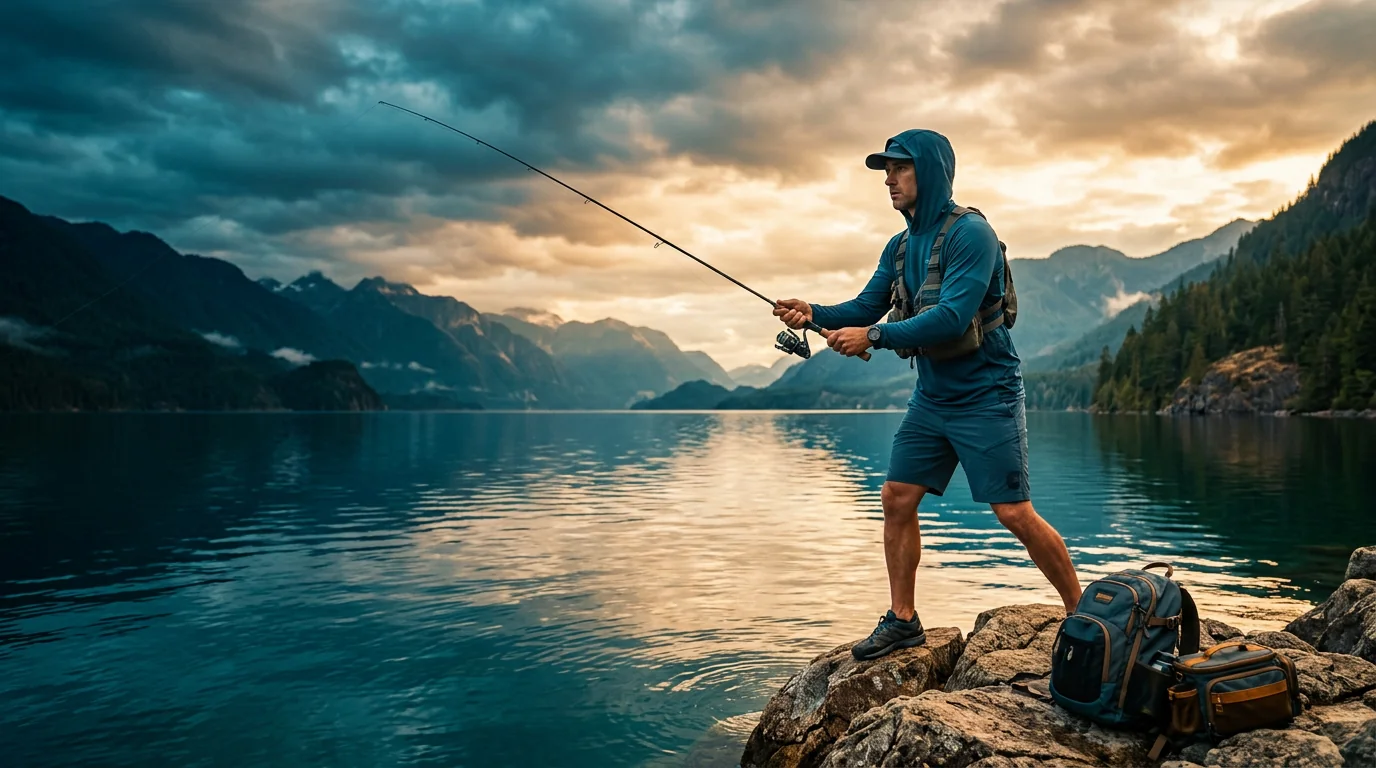
A fishing shirt is only as good as the cloth it's cut from — sun protection, dry time, cooling and stretch are all fabric properties, not sewing tricks. So this page zooms in: garment, to fabric face, to weave, to yarn, to the fiber and treatment that do the work. Everything below is that zoom, one property at a time — with the number that proves it.
The garment you see
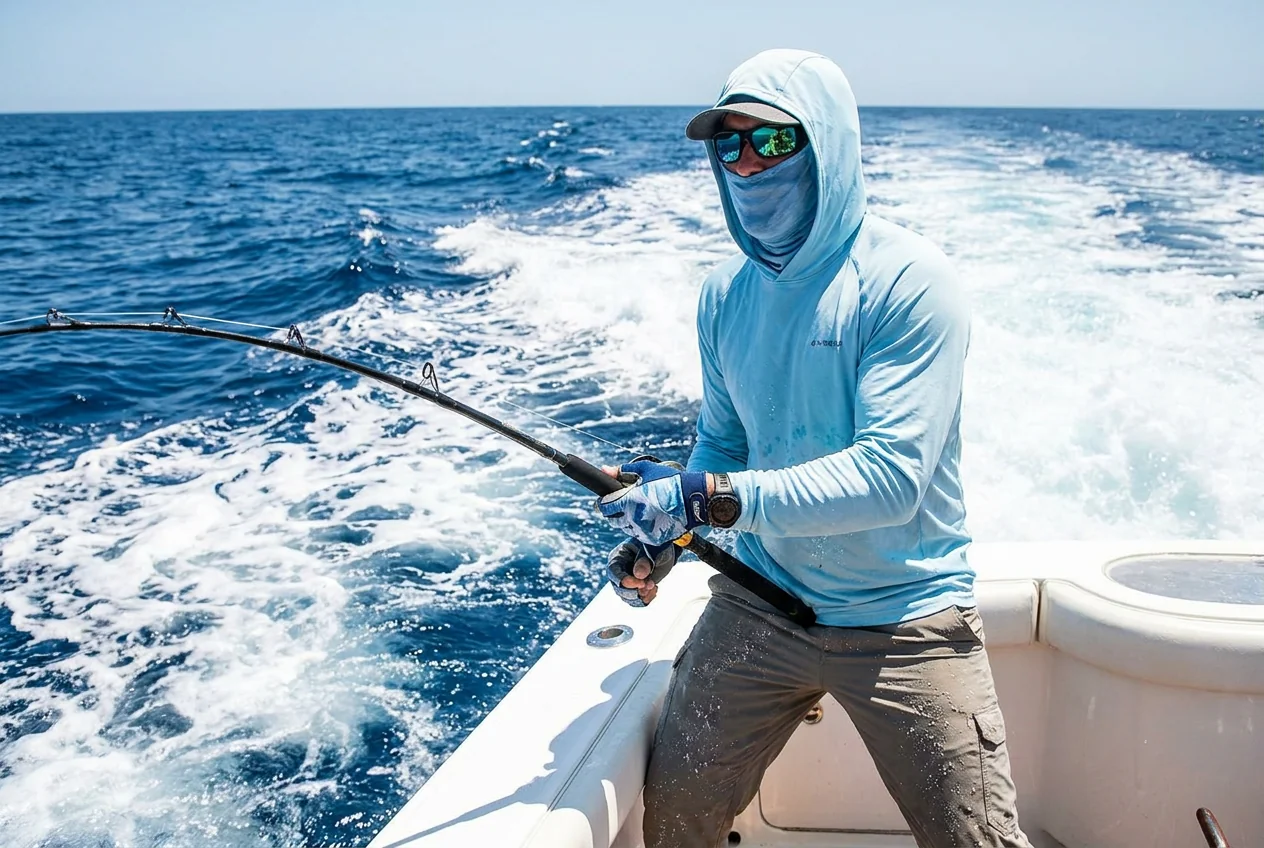
The collar, the seams and the fit are the last layer — they sit on top of a performance textile that was chosen first.
Where sun, sweat and salt hit
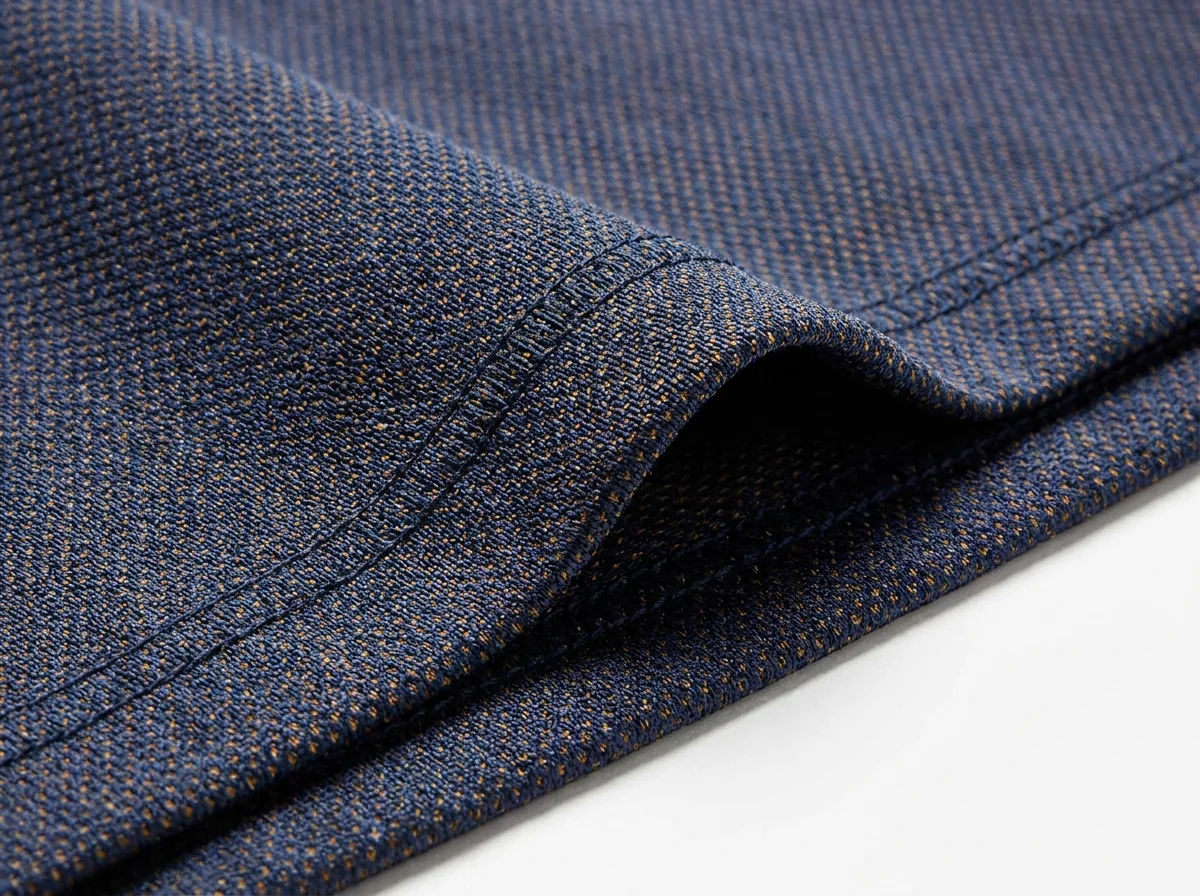
Weave density and finish decide what gets through and what's shed — the first line of defense on the water.
Single-jersey, interlock, mesh or woven
The weave structure sets weight, airflow, stretch and how tightly UV is blocked.
Polyester, nylon and elastane, by ratio
The specific blend and denier — plus a dyed-in or applied finish — are where UPF, wicking, cooling and recovery are engineered.
The four performance fishing fabric families, by the numbers.
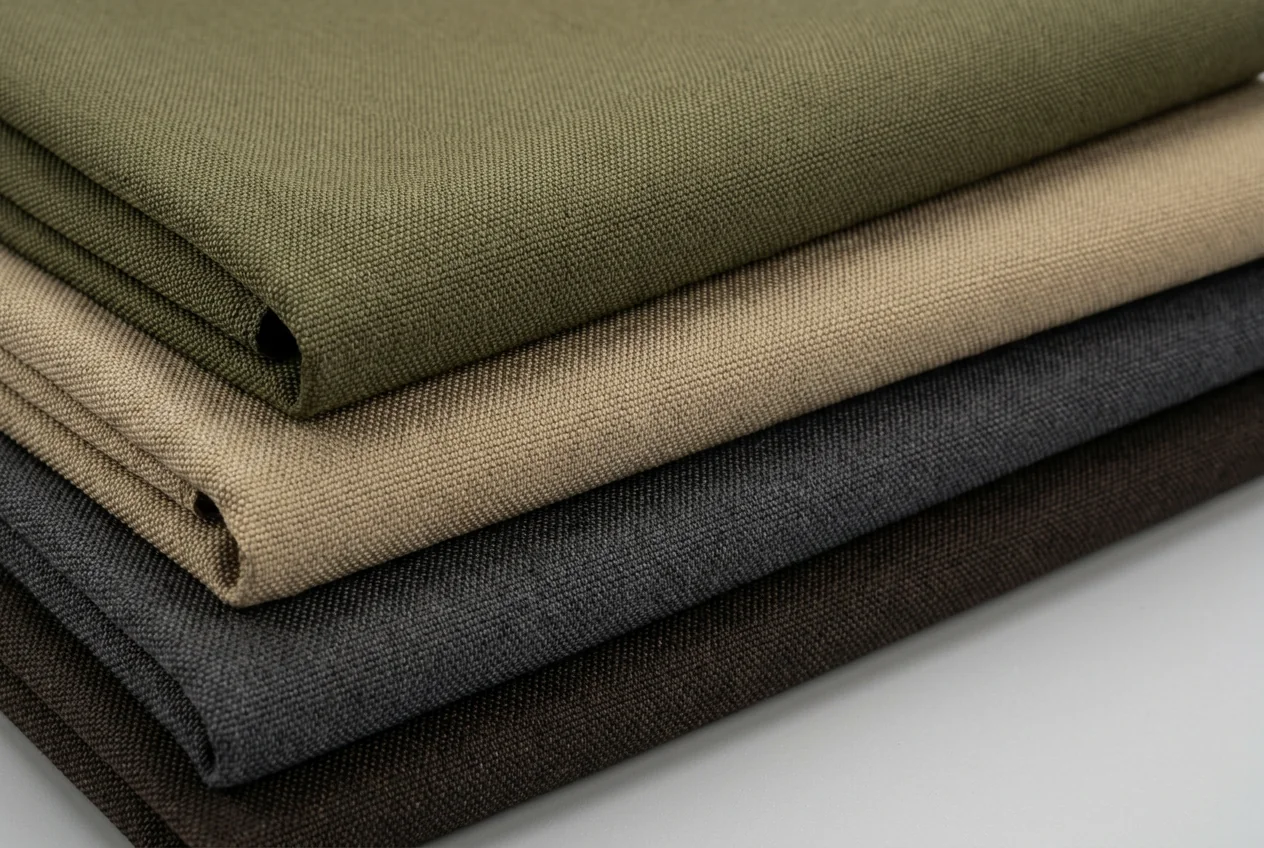
These are the four families the factory runs every day. Each carries our in-house family name plus the spec that matters — fiber ratio, gsm, weave and best-fit categories — so you spec the build, not a mood word. (Factory-stated; confirmed on the sample per order.)
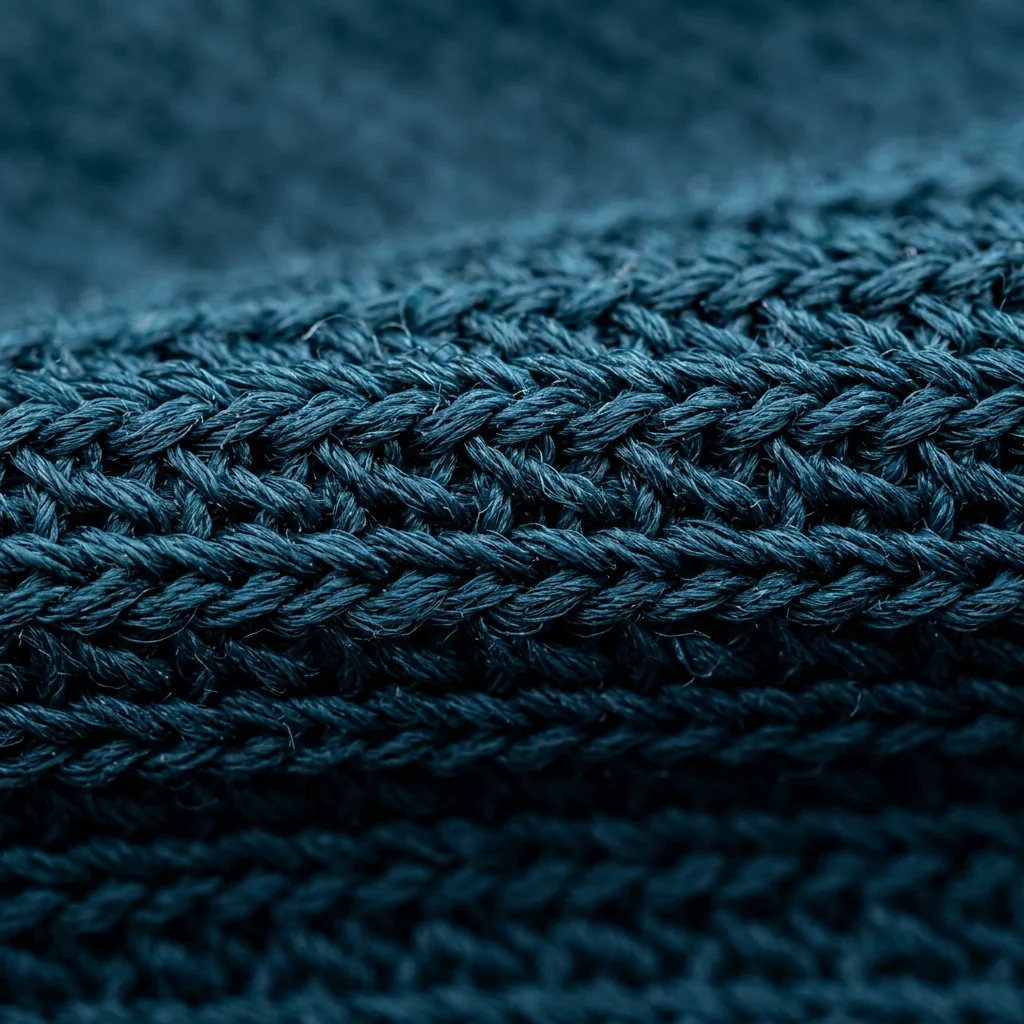
Tight-weave polyester/spandex (or nylon/spandex ~80/20), fine-denier yarn for a dense face. Runs on long-sleeve sun shirts, hooded gaiter shirts and neck gaiters.
How it protects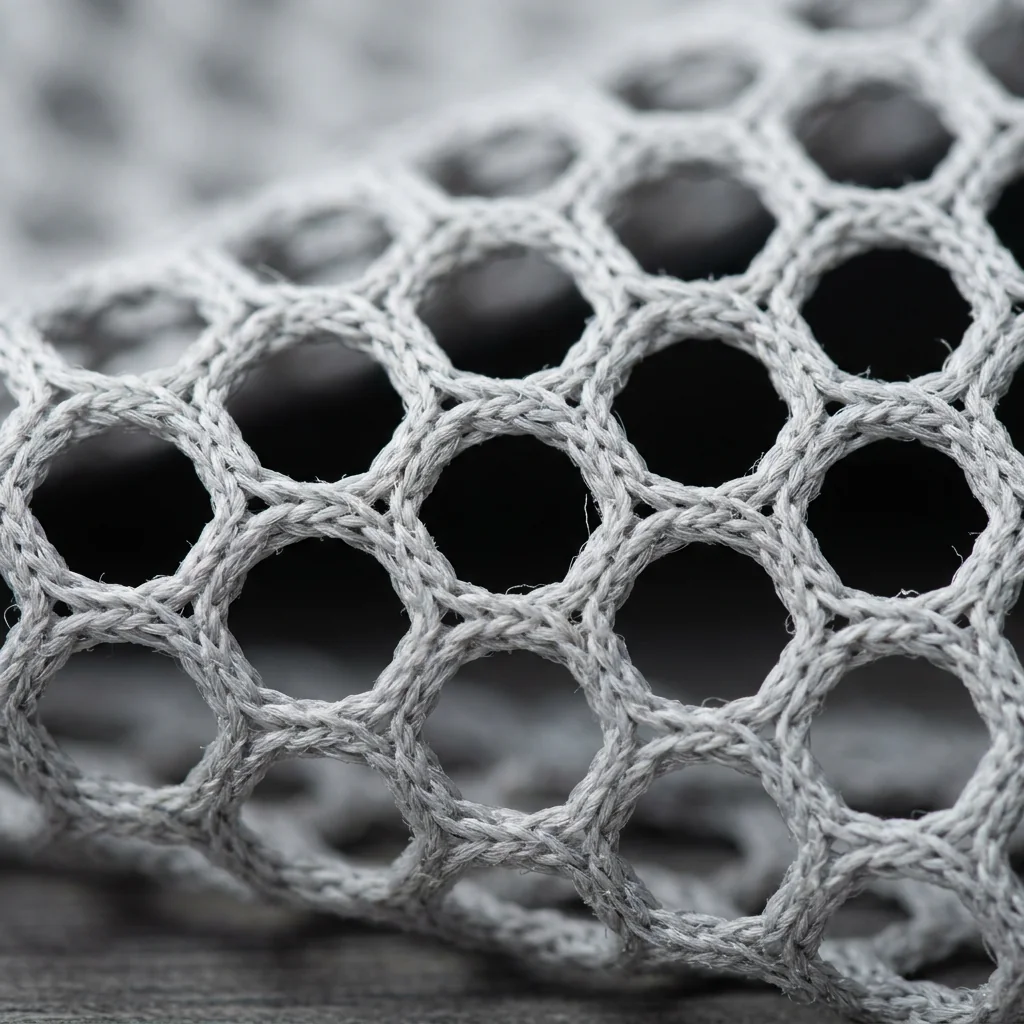
Poly micro-mesh with cold-touch nylon yarns in an open-structure mesh. Runs on back yokes, side vents and full tropical-run jerseys.
How it cools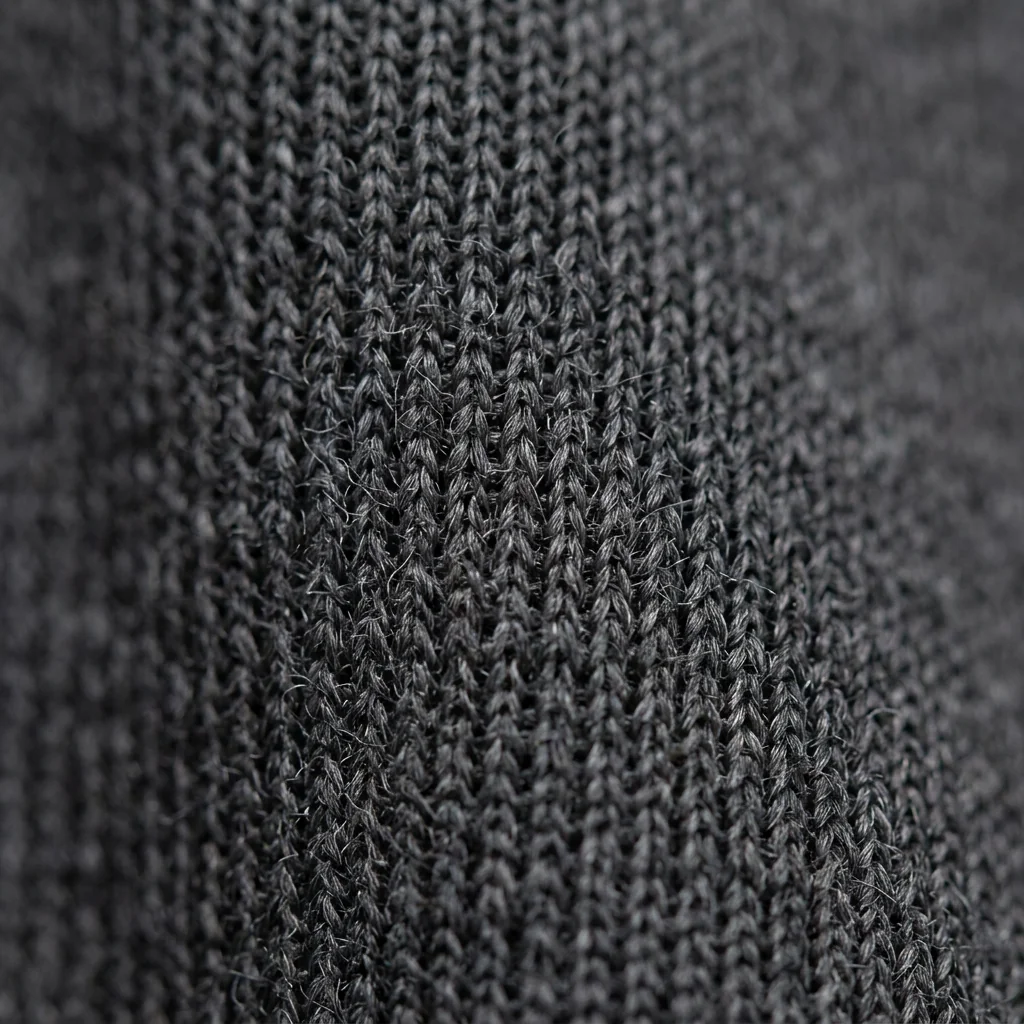
Textured wicking yarn in an interlock knit — the workhorse base for shirts, shorts and pants.
How it dries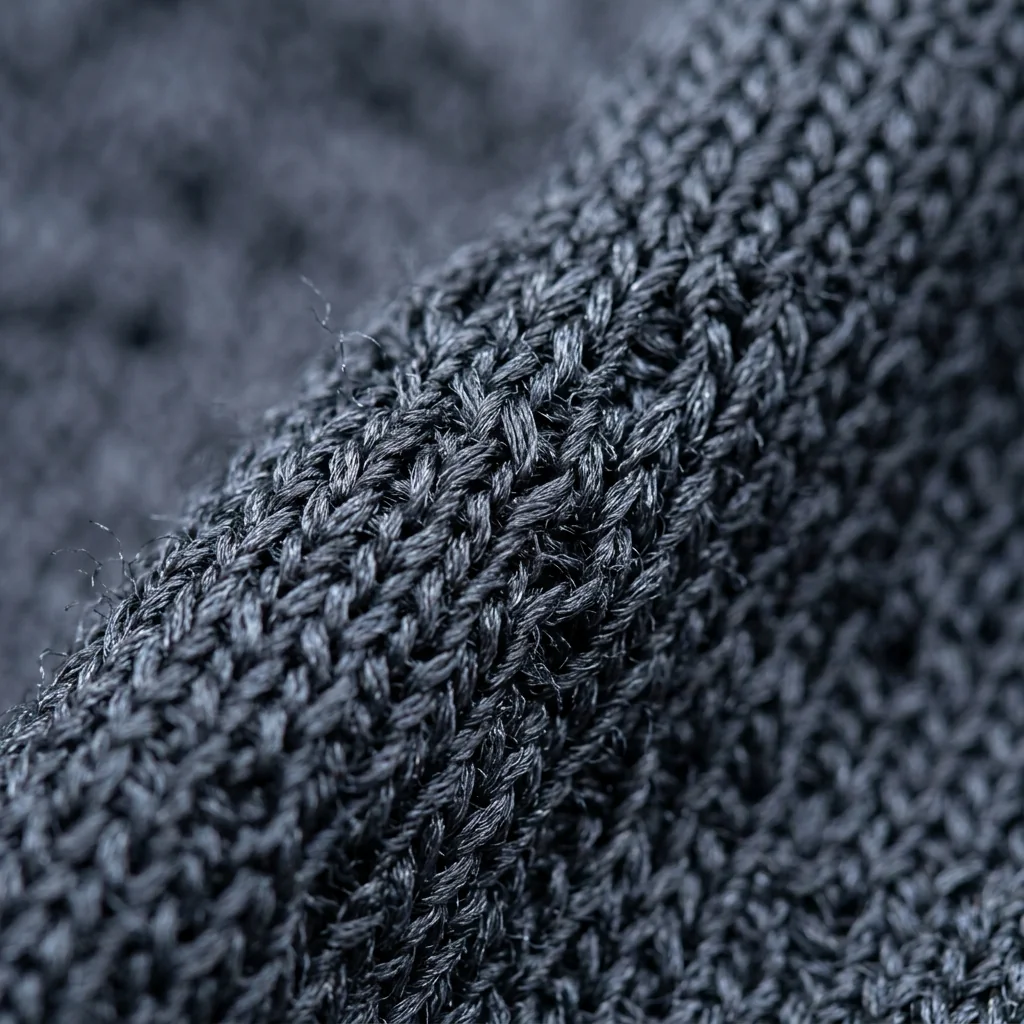
High-tenacity nylon with elastane for recovery (or poly/spandex ~88/12), heavier hand. Runs on technical pants, shorts and soft-shell panels.
How it movesThe same four families feed every custom fishing apparel category — you spec the build, we match the fabric and confirm it on your sample.
Performance spectrum — where each family is strong
Relative, factory-stated positioning across the five axes technical buyers weigh. Read across a row to see which fabric leads on that property.
UPF 50+ sun protection: how the fabric blocks UV, and how we test it (AATCC 183).
On the water there's no shade — UV comes off the sun and up off the surface. Here's the physical reason a SunGuard 50 face reads UPF 50+, and the method we hold it to, so the rating is measured, not assumed.
UPF 50+ means it lets through 1/50th of UV
Under 2% of UV radiation reaches the skin — blocking 98%+, the ceiling category a fabric can be rated.
The block is built two ways
First, weave density — a tight single-jersey/interlock face leaves fewer gaps for UV to pass, which is why a denser knit rates higher than a loose one. Second, a dyed-in UV treatment bonded during dyeing, not a surface spray.
Why it survives the wash
Because the protection is in the weave geometry and dyed in, not coated on, it doesn't rinse out — we verify UPF retention holds 50+ after 50+ home washes (see how we test), where a sprayed-on finish fades.
Poly vs nylon, briefly
Polyester blocks UV slightly better weight-for-weight and takes sublimation; nylon runs softer with a touch more stretch. We spec poly for jerseys and sublimated pieces (which is why decoration routes to in-house sublimation), nylon where hand-feel leads.
Quick-dry and cooling: how the fabric moves moisture and sheds heat.
Two different engines do two different jobs — one pulls water off your skin and flashes it dry, the other drops the contact temperature and moves air. Here's the mechanism behind each, kept apart because they're not the same thing.

Quick-dry & wicking
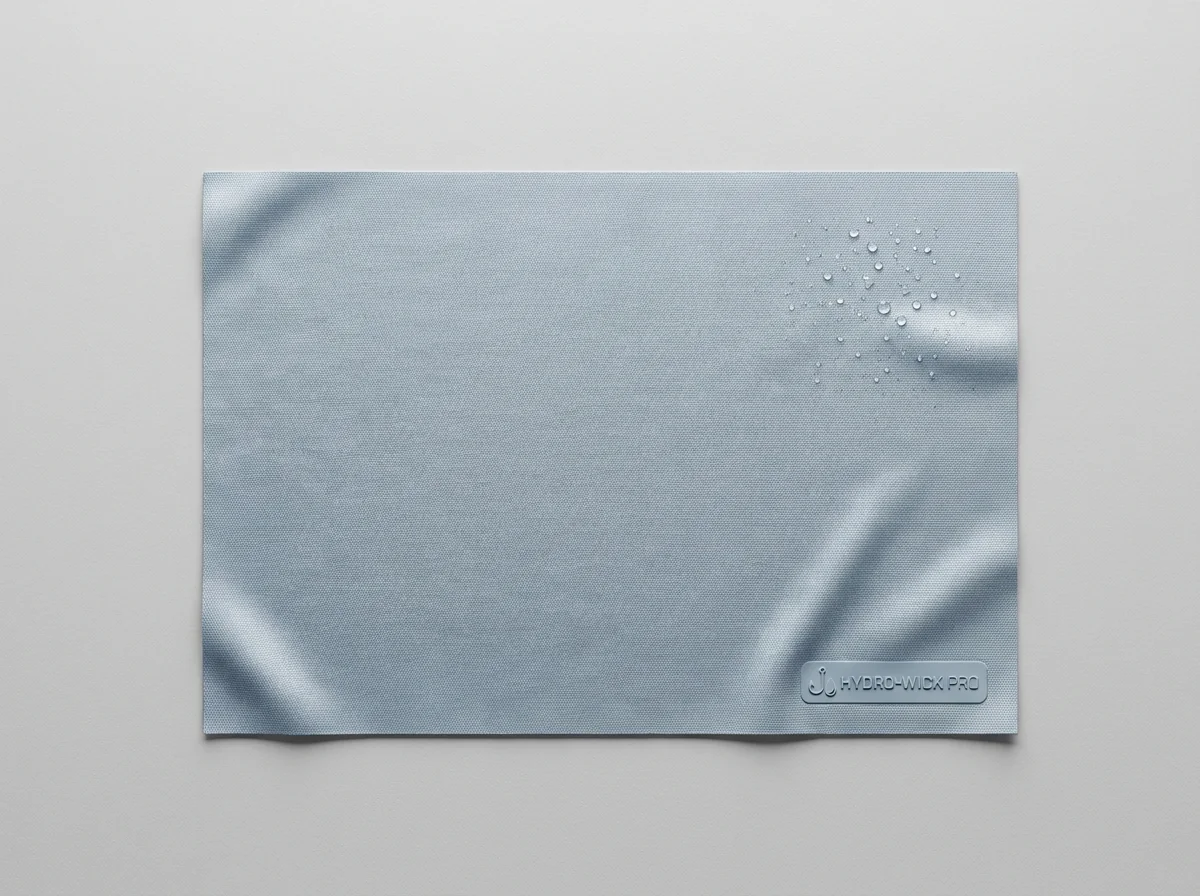
A capillary wicking structure — textured yarn plus a hydrophilic finish — pulls sweat and splash off the skin side and spreads it across the outer face, where the larger surface area flashes back dry in minutes instead of sitting heavy and cold. It's why a DryLine interlock feels dry on a run where a cotton tee stays soaked.
Cooling & ventilation
Two effects, stacked: cold-touch nylon yarn conducts heat away from the skin for an instant cool hand on contact (a lower Q-max reading = a cooler first touch), and the open birdseye / honeycomb mesh moves airflow so evaporation carries heat off. Placed at back yokes, side vents and full tropical jerseys where heat builds.
Wicking keeps you dry, mesh keeps you cool — spec DryLine where sweat-out matters, AirStream where heat is the enemy, or both in one garment.
4-way stretch and recovery: how the fabric moves and holds its shape.
Casting, reaching and bending all pull cloth in every direction — a fabric that stretches but doesn't spring back turns baggy by afternoon. Here's why FlexReach moves four ways and returns to shape.
Four-way, not two-way
4-way stretch gives across the grain and along it, so the panel moves with a full cast instead of binding on the diagonal that 2-way woven can't reach.
The stretch comes from elastane
The spandex/elastane share in the yarn (the ~18% in an 82/18 nylon build) is what opens and returns — more elastane means more give.
Recovery is the real spec
Stretch is easy; recovery memory — snapping back to the original dimension instead of staying stretched — is what keeps FlexReach from bagging at the knee and seat after hours on the water. We build it to return to shape after repeated flex, not just to stretch once.
Colorfastness and color control for sun and saltwater.
Fishing is the harshest place color lives — UV, salt spray and sweat all attack dye at once. Here's how we hold color on the water, graded on the scale buyers cite, so a garment doesn't fade to a ghost by mid-season.
Color change and staining are rated on the 1–5 grey scale (1 worst → 5 best). Our spec target is 4 or better on the fastness tests that matter for fishing.
Sun (light) fastness
Holding color under sustained UV — the number-one fade risk on open water.
Saltwater / water fastness
No bleed or dulling from salt spray and repeated wetting.
Perspiration fastness
Sweat is acidic — graded so collars and cuffs don't discolor.
Rubbing (crock) fastness
No color transfer from abrasion against gear, seats and packs.
Why dyed-in holds. Color dyed into the polyester — disperse-dyed and, for graphics, sublimated into the fiber — can't crack or peel the way a surface print does, which is also why sublimated jerseys hold color through 50+ washes.
Batch-to-batch color. Color is matched to your Pantone, and repeat consistency is held by our reserved fabric-lot logic — detailed under quality & workmanship — so batch two matches batch one on shelf and online.
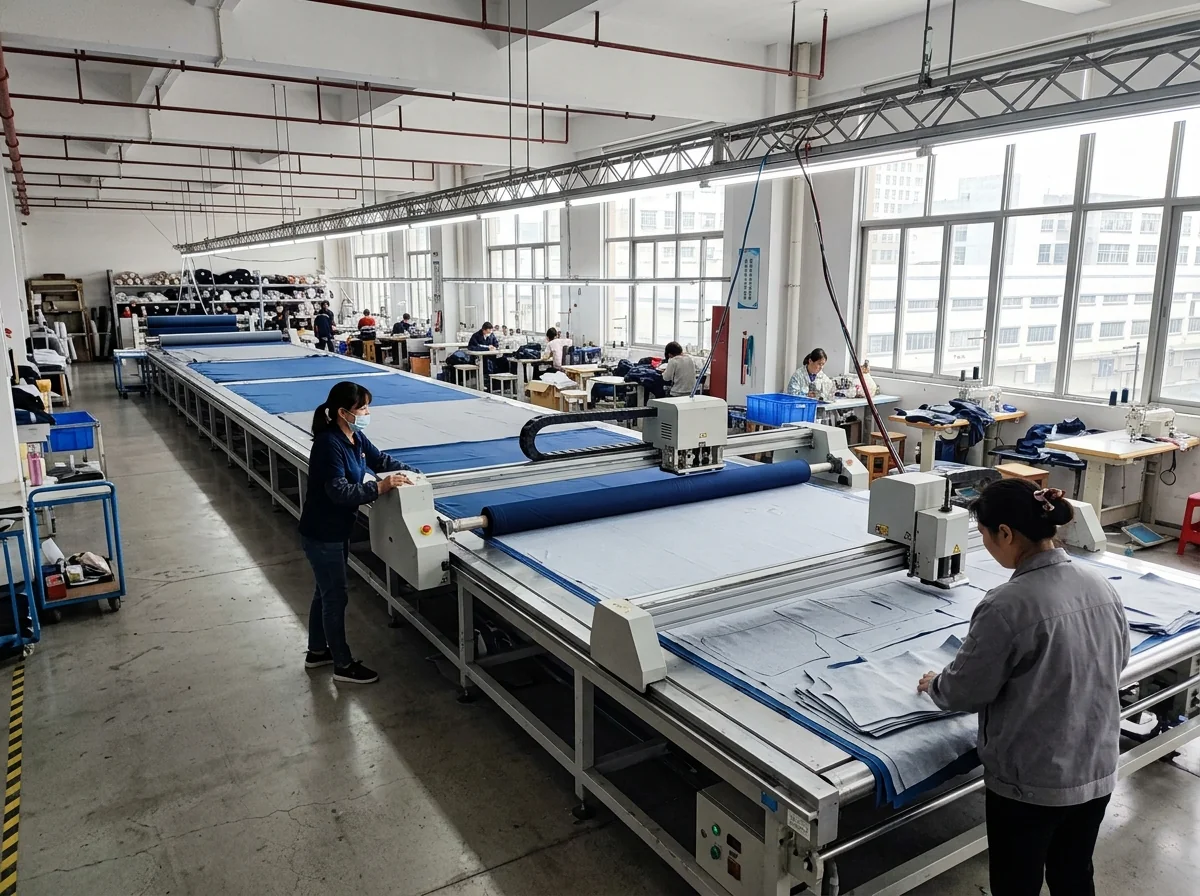
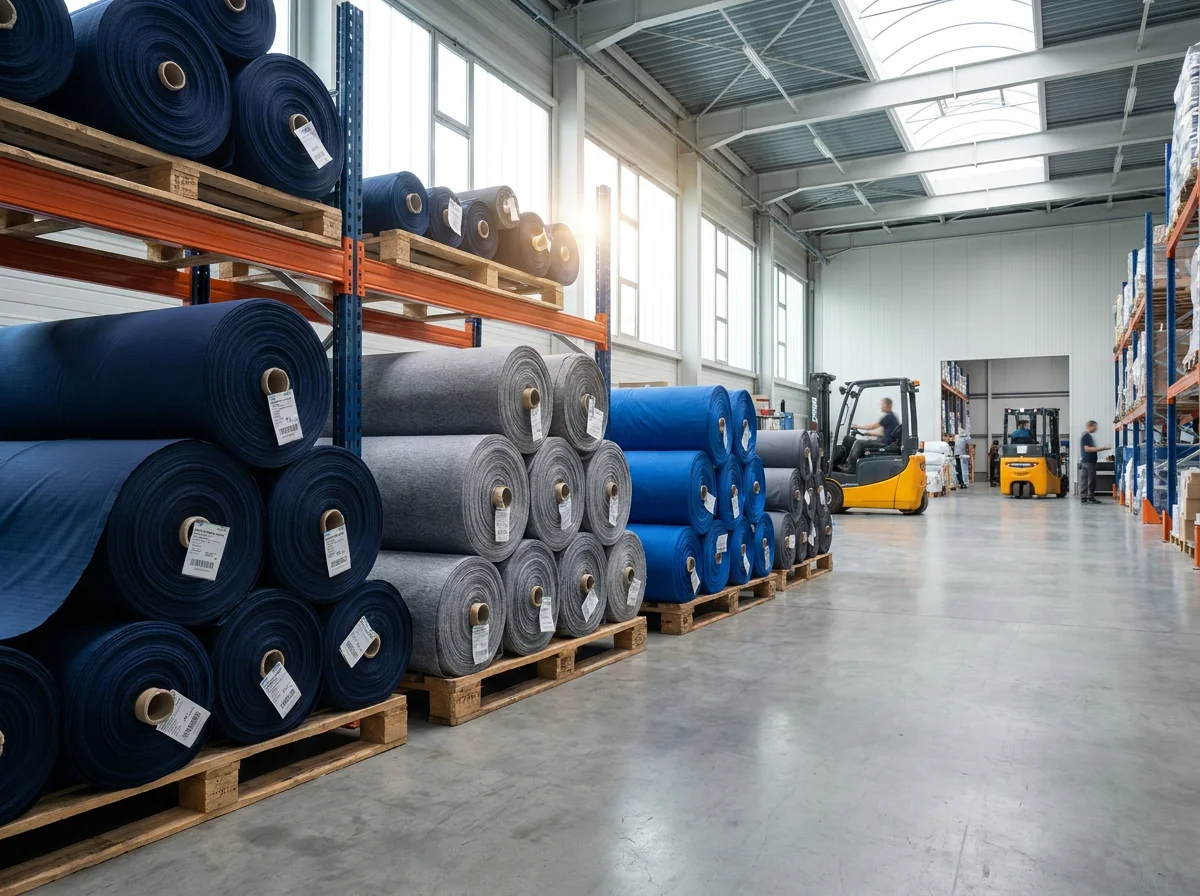
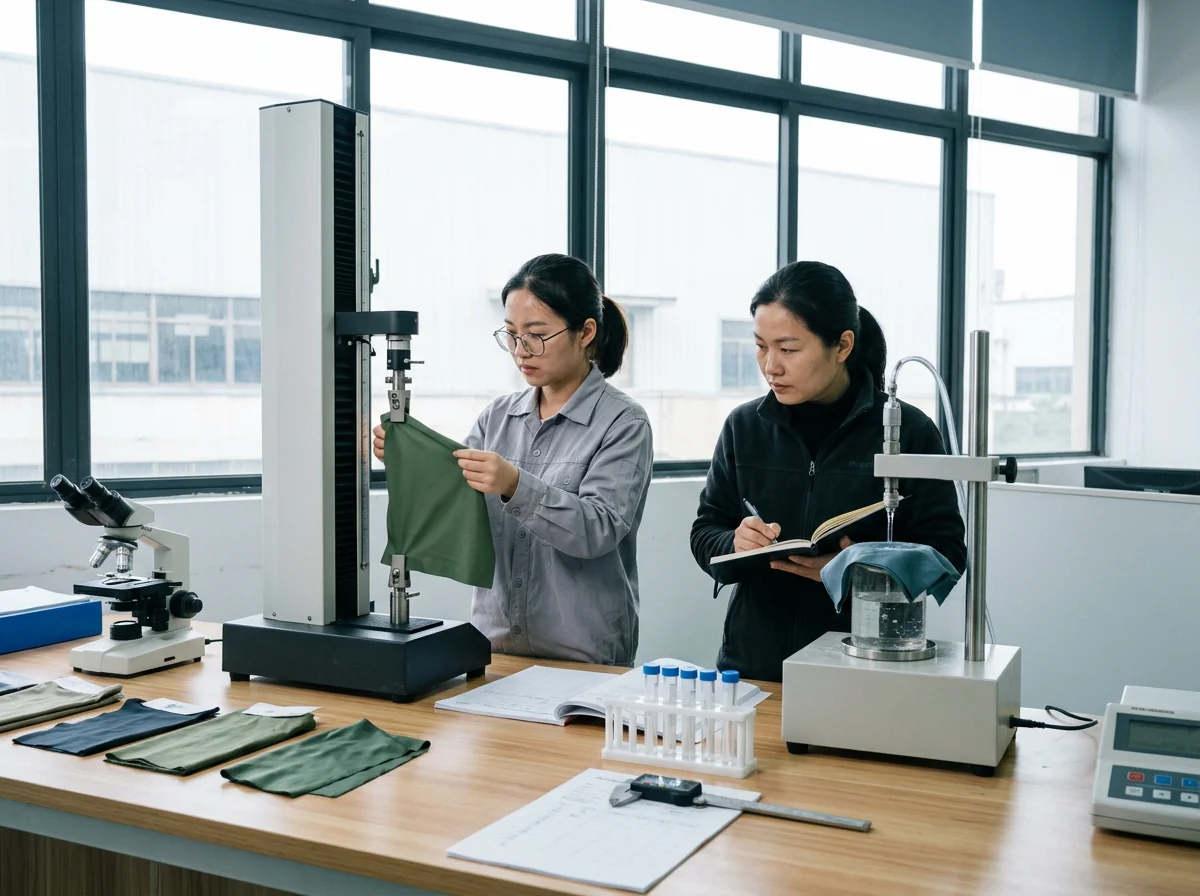
How we test every fabric performance claim before bulk.
A spec is only worth what it's verified against. This is the in-house bench behind the numbers on this page — the methods we run so a fabric claim is measured before your bulk, not assumed. (Factory-stated capabilities; accredited third-party reports arranged on request.)
UPF retention re-test
We wash a swatch 50+ cycles, then re-run AATCC 183 to confirm it still rates 50+ — so the sun number holds after a season, not just off the roll.
Colorfastness wash bench
Sun, saltwater, perspiration and crock tests graded on the 1–5 grey scale, targeting 4+ (the grades in colorfastness above), pulled before a color goes to bulk.
Cooling & wicking bench
A cold-touch (Q-max) contact check on AirStream mesh and a wick/dry-time pull on DryLine, so "cooling" and "quick-dry" have a bench reading behind them.
Seam, snag & abrasion
Stretch-panel seam strength, snag resistance and an abrasion pull on FlexReach woven — the failure points a fishing garment actually meets.
Third-party, on request
For an accredited lab report — UPF rating, fiber composition, restricted-substance screens — we submit the material against your market's standard and pass the report to you. The export document set lives under compliance and the documents you ship with.
Material safety and fabric certification readiness.
Some markets and buyers ask what's in the fabric, not just how it performs. Here's the material-safety standard the fabric can be built to — flagged at fabric pick, not discovered at customs.
OEKO-TEX Standard 100 ready
Performance fabrics can be specified to OEKO-TEX Standard 100 where a program requires a tested-for-harmful-substances textile — declared up front so the right material is ordered from the start.
Youth & kids compliance
Kids and youth styles can be built to CPSIA / Prop 65 requirements for the US market — flagged at fabric pick, not left to chance.
Restricted-substance screens
For buyers with an RSL, we submit the material for restricted-substance screening against your market's list, on request.
The export documents and market-side certificates that travel with your goods are covered under compliance and the documents you ship with — here we make sure the fabric itself is specified to the right standard first.
Fabric care: how to keep the UPF, color and stretch alive.
Performance fabric holds up if it's cared for right — and a few habits quietly kill it. Here's the care we spec on the label and why each rule protects a specific property.
Wash cold, gentle, inside out
A cold gentle cycle protects the elastane and the dyed-in color; inside-out protects any print.
Why: heat and abrasion are what age recovery and shade fastest.Skip fabric softener and bleach
Softener coats the fibers and fills the weave — which kills wicking and can dull UPF; bleach attacks the dye.
Why: wicking and UV block live in the fiber surface and weave, and softener buries both.Hang dry or tumble low
Air-dry or a low tumble keeps the spandex recovery intact; high dryer heat relaxes stretch into bagging.
Why: recovery memory is heat-sensitive.No hot iron on prints or panels
Skip direct high-heat ironing on sublimated or stretch panels.
Why: it can scorch fiber and distort a printed graphic.Every garment ships with a care label matched to its fabric family, so the buyer's customer keeps the performance they paid for.
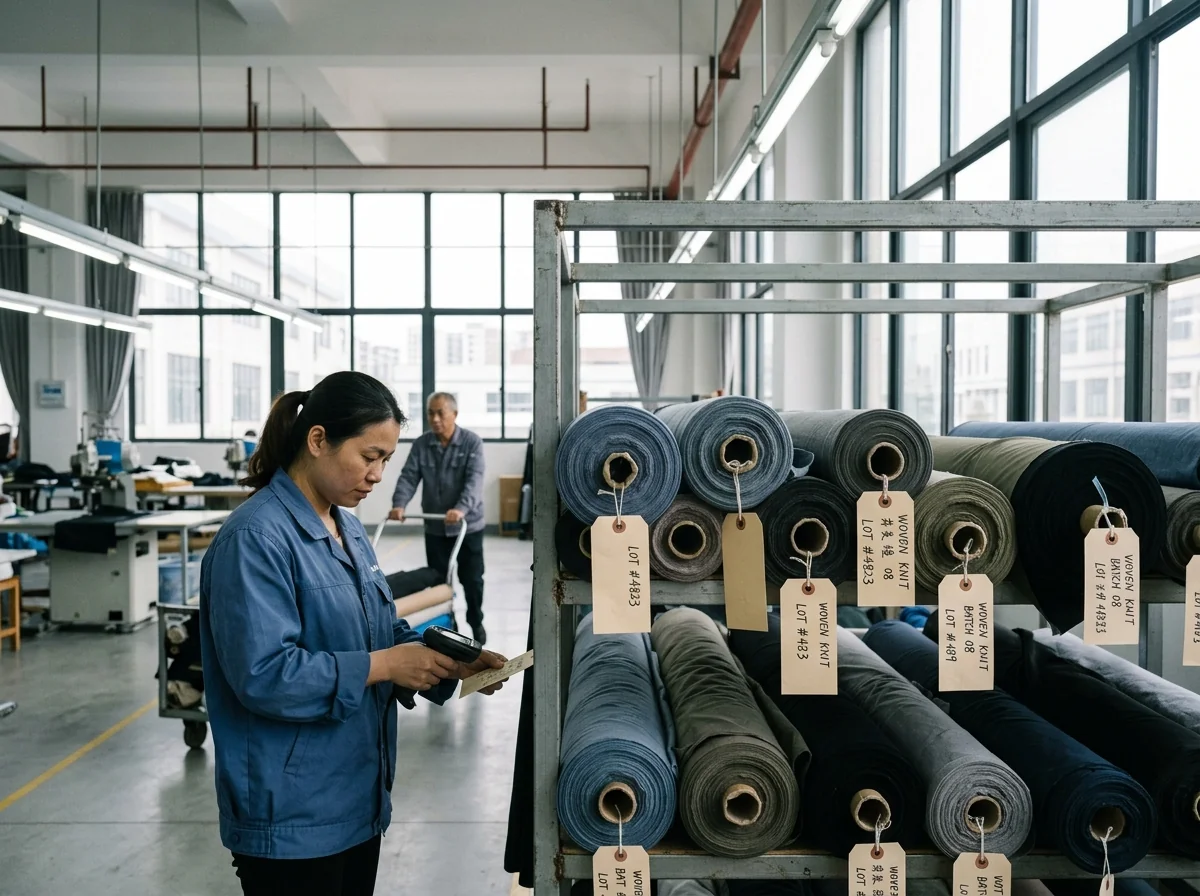
How to spec your fishing fabric with us — by number, not adjective.
Now that the families are on the table, speccing is simple: pick the build, name the number, and we confirm it on your sample. Or bring a fabric we don't run and we'll develop it.
Spec from the four families
Tell us the family (SunGuard 50 / AirStream / DryLine / FlexReach), the gsm and any composition preference — or the garment and end-use, and we'll match the build.
Swatches on request
We send a physical swatch card of the family before you commit, so hand and color are real, not a screen — request fabric swatches.
Custom fabric development
Need a weight, blend or finish we don't stock? We develop a bespoke knit or weave to your spec; a custom lot carries a higher minimum than a stock family.
Confirmed on the sample
Every published spec is confirmed on your physical sample before bulk — the number on this page becomes the number on your reference sample.
Ready to spec it? Get fabric swatches and a quote →
Fishing fabric technology FAQ.
The technical questions buyers ask before they spec a fabric.
Get fabric swatches and spec your program.
Tell us the garment, the performance you need and your target quantity — we'll send swatches and the matching spec, and reply within 24 hours in plain English.
- Physical swatch card on request
- Every spec confirmed on your sample
- Custom fabric development available
- Response within 24 hours (GMT+8)
Prefer to request a sample or get a quote first? request a sample · get a quote