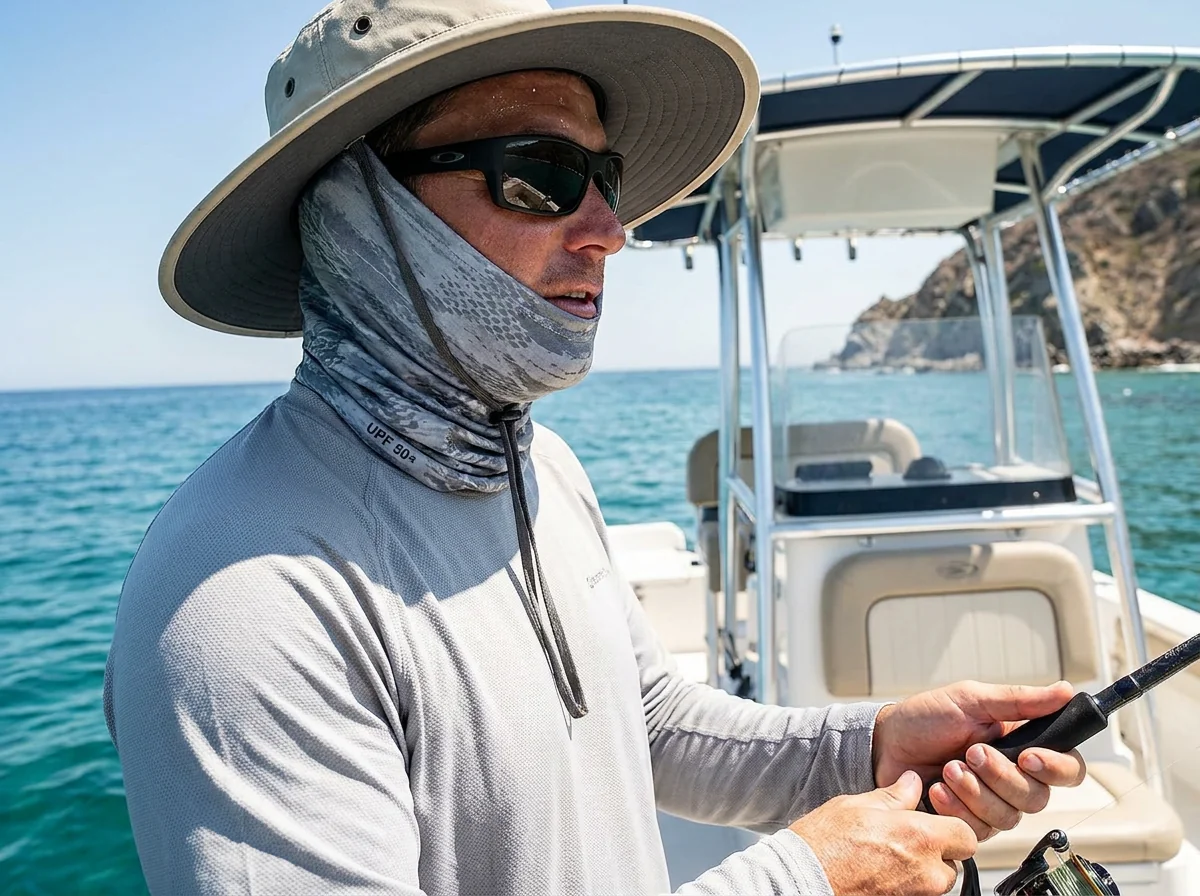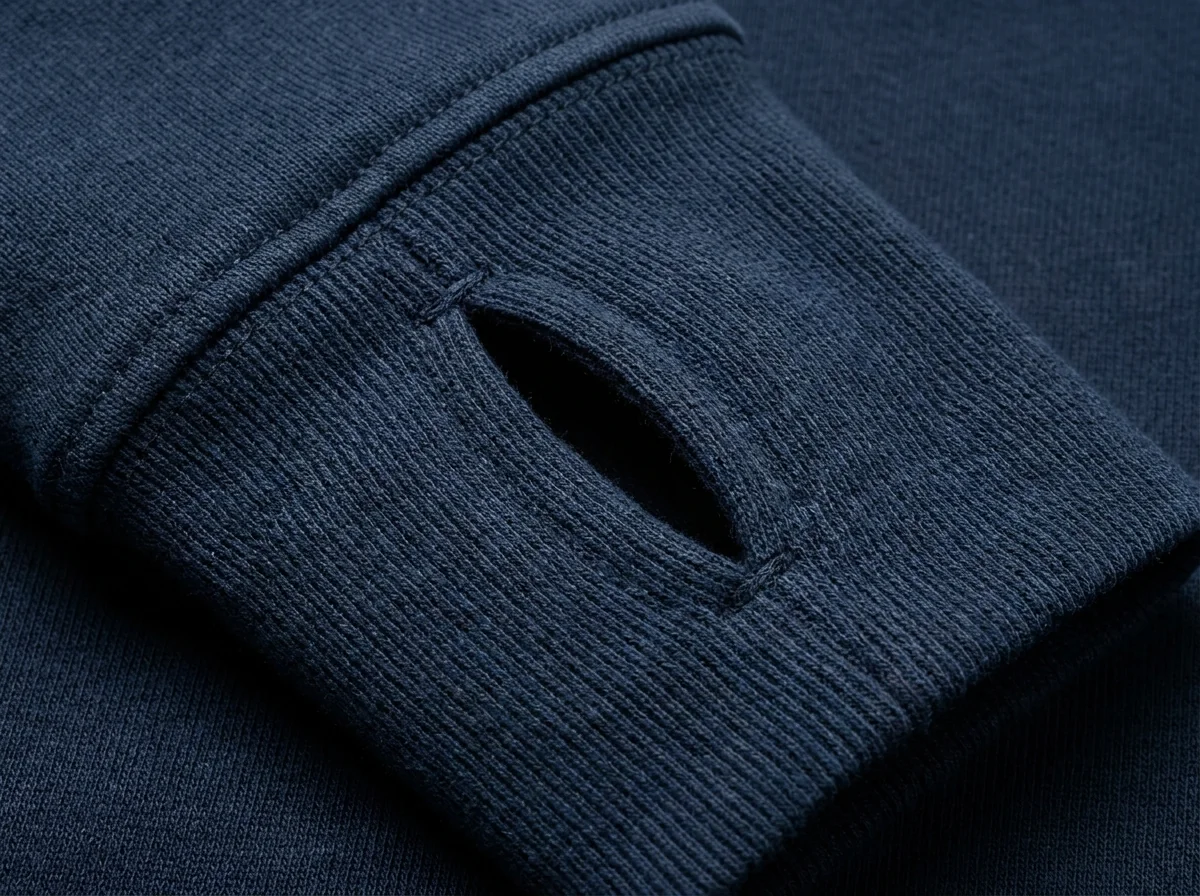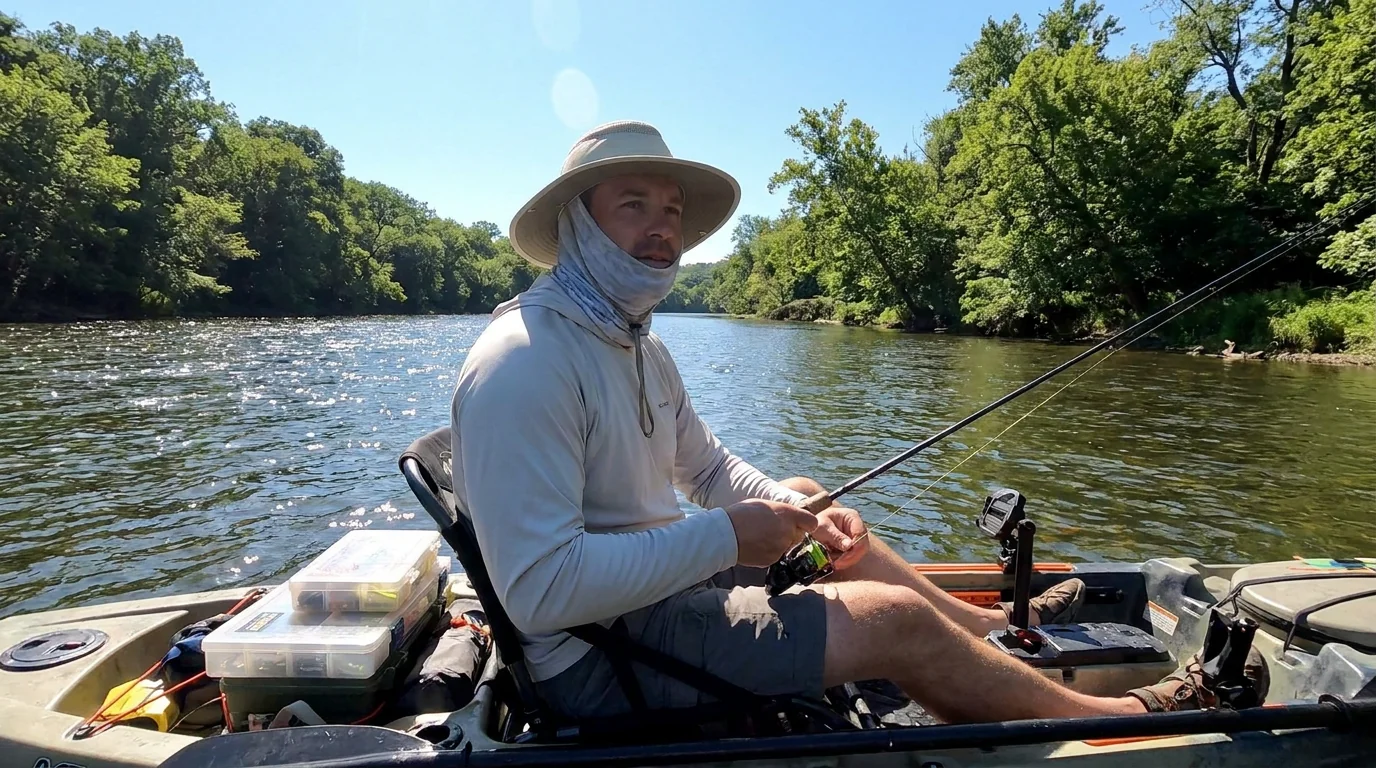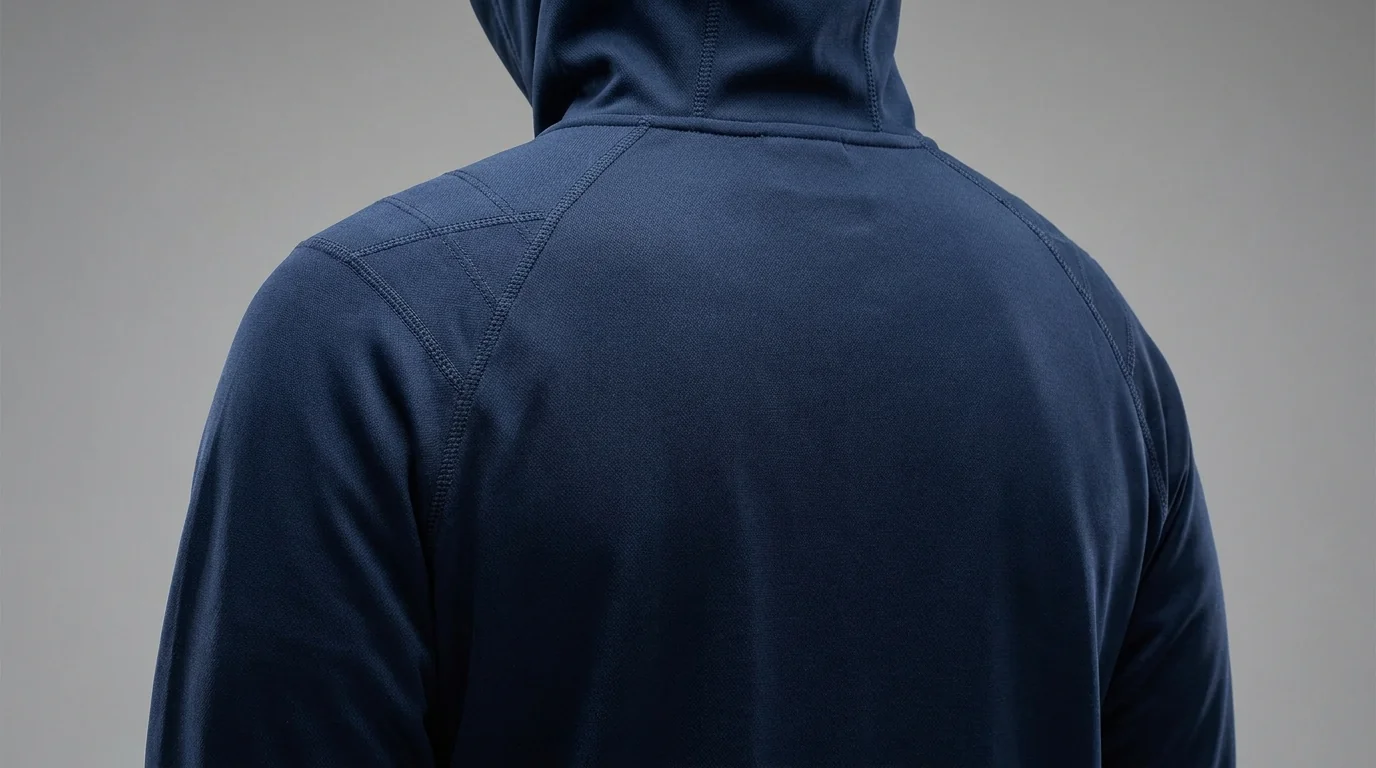
Long-sleeve hooded fishing shirts from a fishing-only factory — an integrated hood, a gaiter-ready collar and thumb-hole cuffs that cover scalp, face, neck and hands, in a lightweight UPF 50+ knit, decorated with your logo from 100 pcs per style.
Part of our custom fishing shirts range →One sub-style, several builds — what changes is the hood and the fabric line, not the coverage logic. Each build runs on the same UPF 50+ knit and QC discipline; the full range of non-hooded fishing shirts lives on the fishing shirts page.

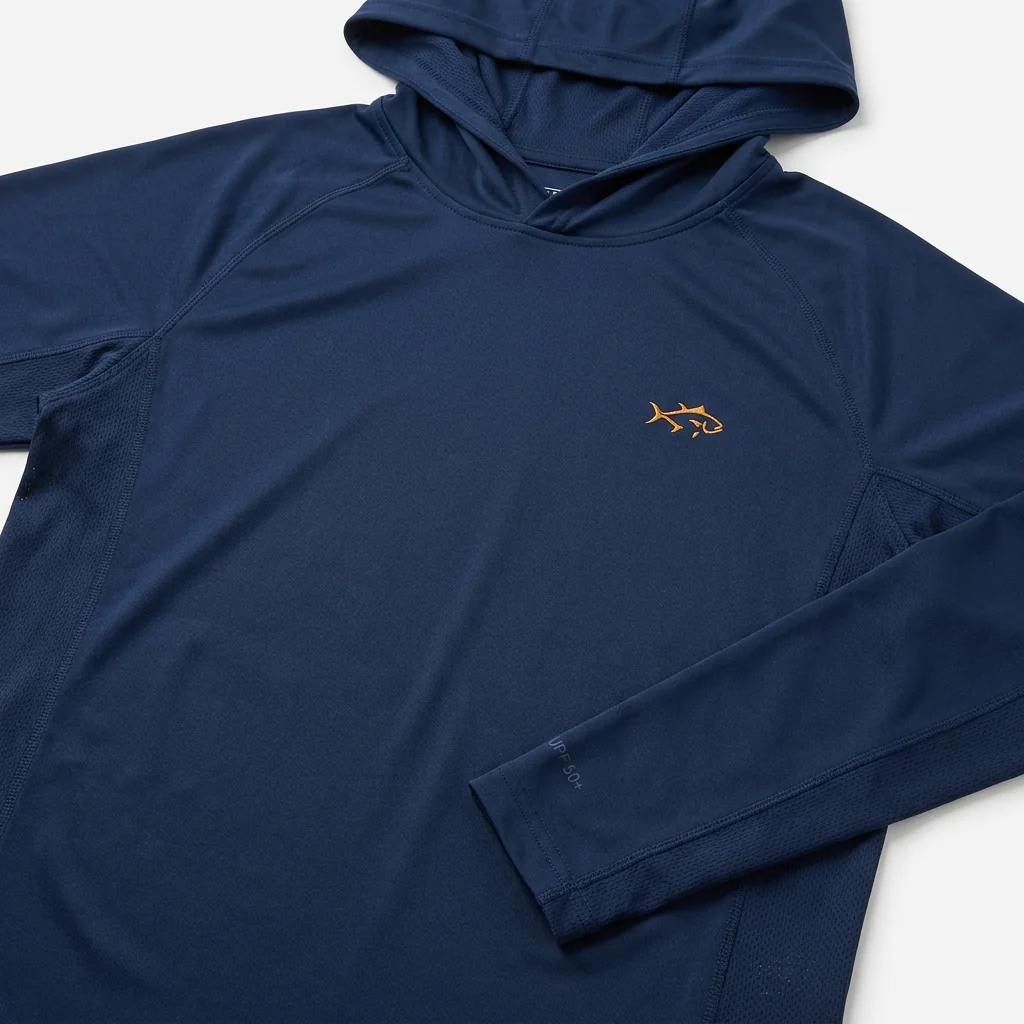
A fitted 3-panel hood over a stand collar — the flats-and-kayak everyday build.
3-panel hood
Hood plus an integrated gaiter collar that pulls up over the face — maximum face-and-neck cover in one piece.
Gaiter collar
The thinnest sun-protection knit line for tropical, high-heat days where a hood still has to breathe.
Thin knit line
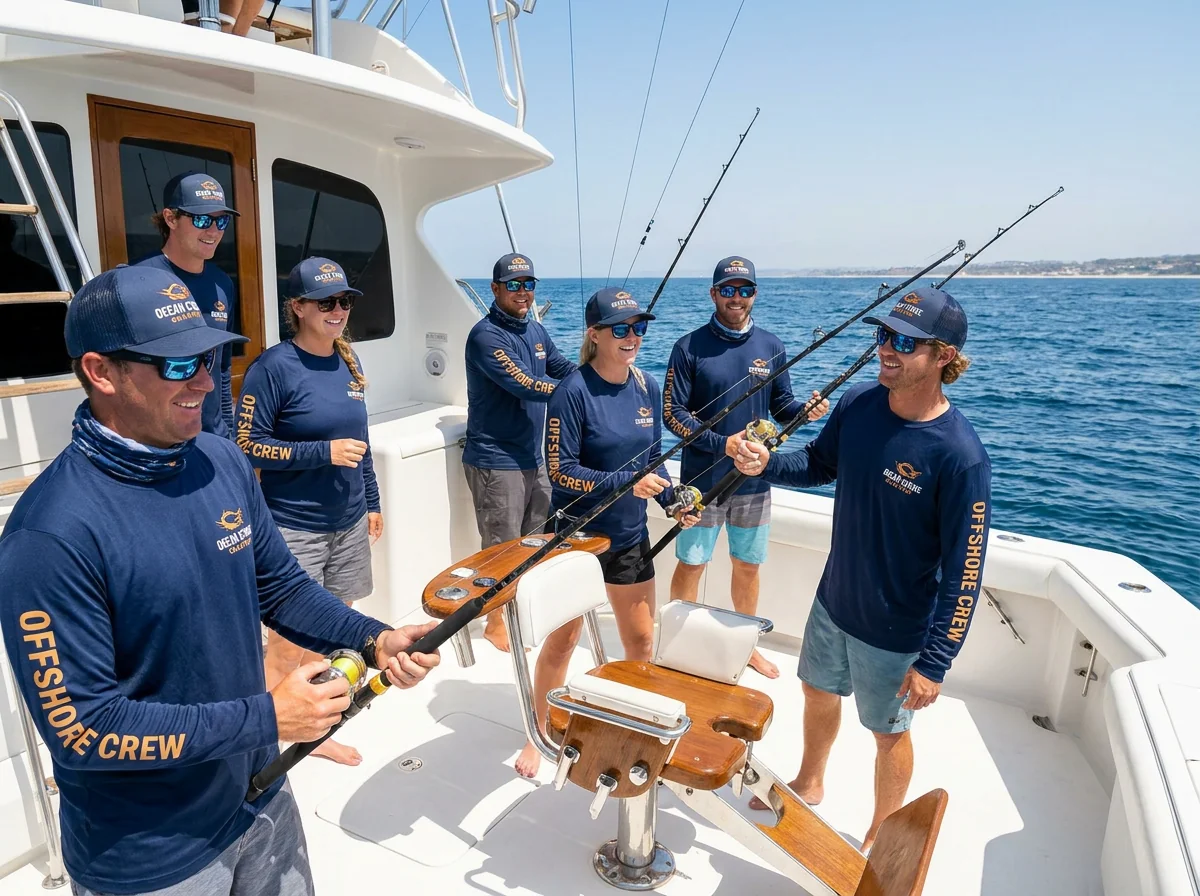
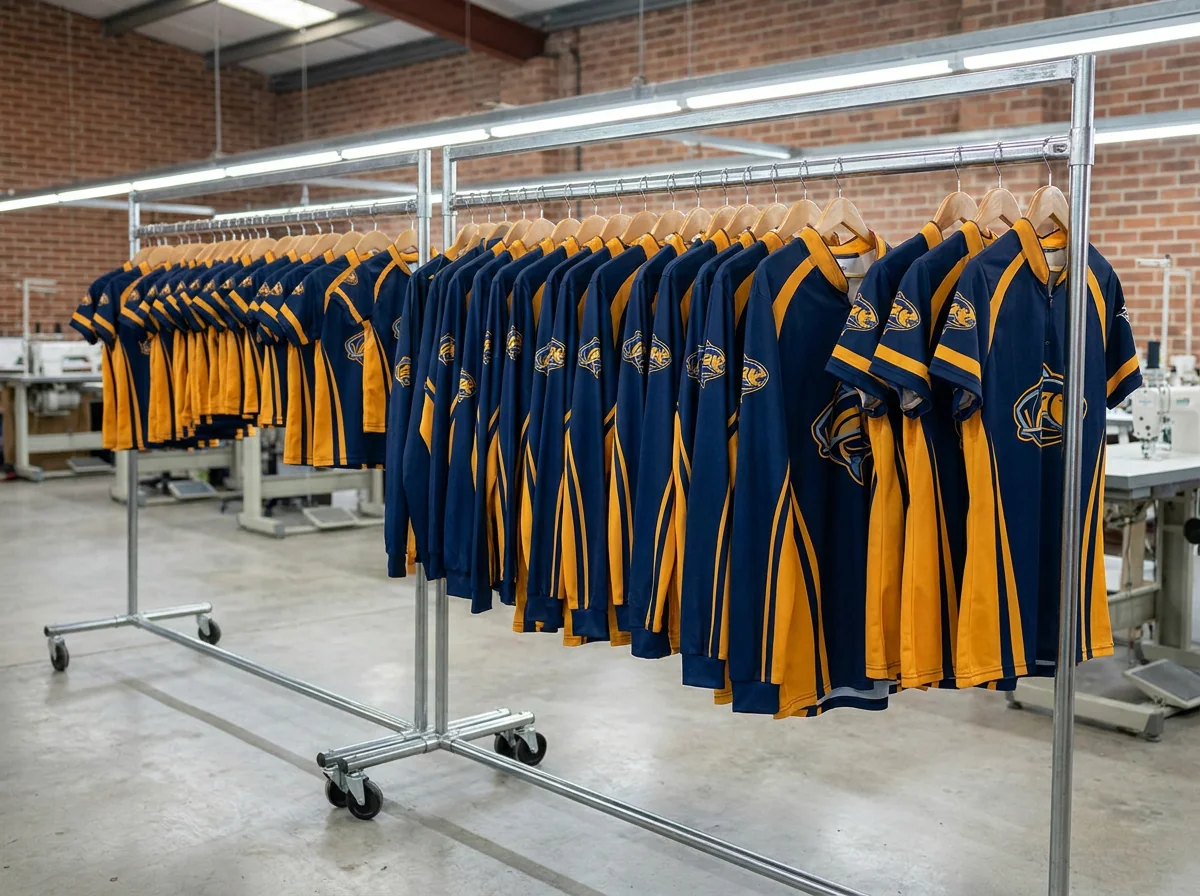
Full-body dye-sublimation with sponsor-zone panels on the sleeves and back, for tournaments and teams.
Team panels
A woven or button-front shirt body with a lightweight packable hood, for guide-style wear.
Packable hood
The same hood, gaiter and thumb-cuff system graded to women's and youth patterns (see sizing below).
Graded patternsA sun hoodie isn't a long-sleeve with a hood sewn on for looks. It's a coverage system: the hood, the collar, the cuffs and the sleeve length work together to close off the exact skin anglers burn first. Here's what each part covers, and how. (Factory-stated construction; coverage figures are representative.)
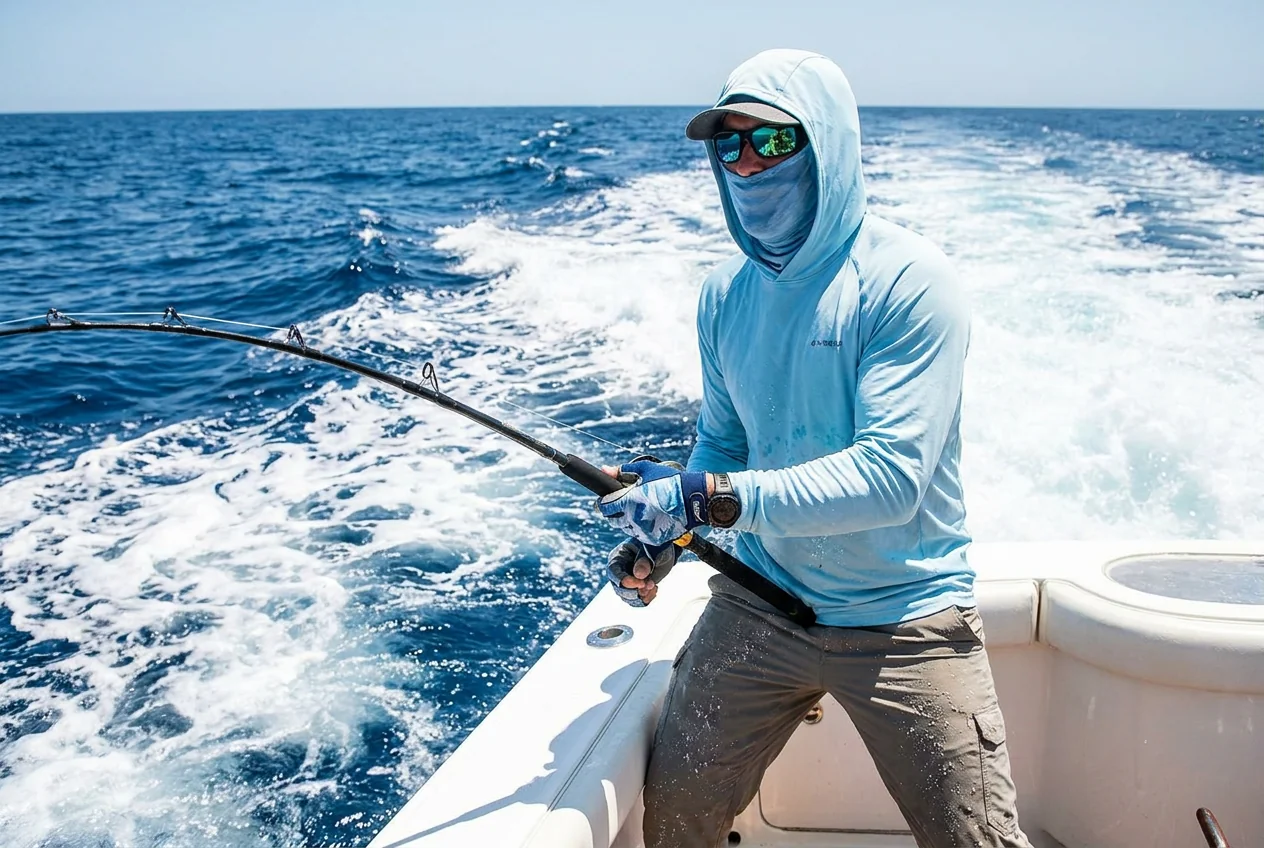
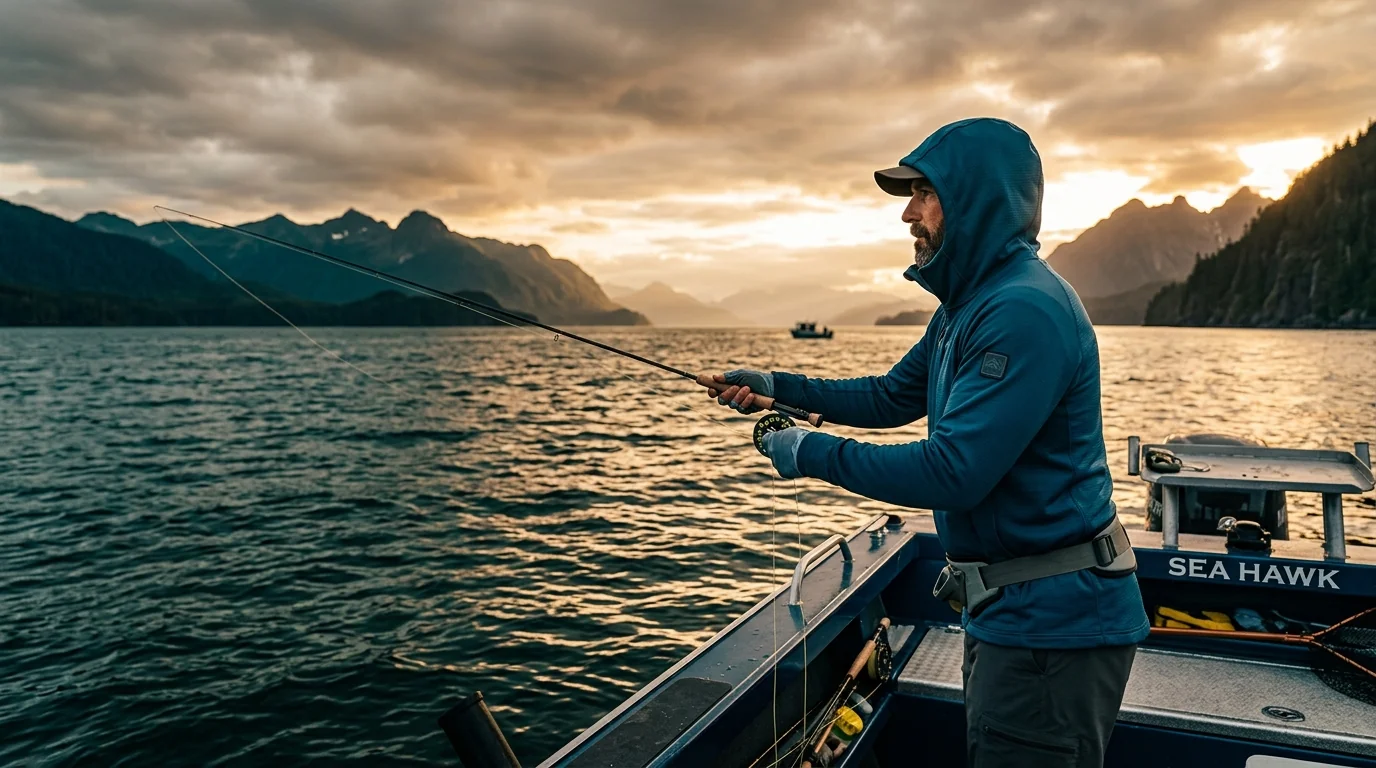
Hood up, collar up, thumbs looped — representative ~98% of standing exposed upper-body skin, versus a cap-and-tee that leaves scalp, ears, nape, face and both hands bare.
A fitted 3-panel hood sits over a ball cap or a mesh-back trucker without collapsing, and holds its shape in a running-boat wind instead of flapping down. It shades the scalp, the ear tops and the back of the neck — the three spots a cap alone leaves burning the moment you turn away from the sun.
A tall stand collar (or a one-piece gaiter tube on the gaiter build) pulls up over the chin and the bridge of the nose on a run into the sun, and folds back down at anchor — so one garment covers the face without a separate neck gaiter to lose overboard.
A cuff loop holds the sleeve down over the back of the hand while you're holding a rod — the patch of skin that catches the most direct UV on the water — instead of the cuff riding up the forearm every cast.
The sleeve runs unbroken to the wrist so there's no forearm gap above the thumb loop, and a longer back hem stays down when you reach for the net, so there's no strip of exposed back.
With the hood up, the collar up and thumbs looped, the only skin left open is a slot of the face — representative ~98% of standing exposed upper-body skin, against a cap-and-tee that leaves scalp, ears, nape, face and both hands bare.
Closing off that much skin only works if the fabric breathes — so every build runs on a lightweight, moisture-wicking UPF 50+ knit, which is why a hood over the head vents heat rather than trapping it. The full fiber, weight and weave specs are on fabric technology.
Hood — scalp & nape
Collar — face & throat
Cuff — back of hand
The coverage above is the what. This is the why — the on-the-water reasons buyers spec a hooded build for their range instead of a standard long-sleeve sun shirt. (Use-case, not construction — how it covers is in the section above.)
Sight-fishing the flats, poling or working a low dawn/dusk sun means the light hits your face and eye-line for hours — a hood shades the face and the sunglasses line a cap brim can't hold when the sun drops.
On a kayak, a flats skiff or an offshore deck the garment is the shade — so a build that closes off scalp, face and hands does the job a bimini top isn't there to do.
A physical sun-protection layer doesn't sweat off between casts or wash off in spray the way lotion does, so a crew isn't stopping to re-coat hands and neck all day.
The hood is cut to sit over a ball cap and around sunglasses arms, so it adds coverage instead of fighting the headwear anglers won't take off.
Hood down and collar folded at first light, both up through the midday burn — a single sun hoodie covers the temperature and UV swing of a full fishing day without a second garment.
A hood only works if the fabric under it is light enough to wear over the head all day. Three build points matter for a sun hoodie; the full fiber, weight and weave numbers live under fabric technology. (Factory-stated; confirmed on the sample.)
A tight-weave, dyed-in UV block that survives repeated wash rather than washing out — the reason the hood, collar and body all block sun, not just shade it. See the full UPF apparel line.
A thin, sweat-moving knit so a layer over the head vents heat and dries fast instead of turning into a hot cap on a still day.
An open-structure knit for hood linings, side panels and the tropical builds, where airflow matters most under full coverage.
A hooded build has placement zones a plain tee doesn't — the hood back sits in view when it's down, the sleeves face out on a rod. Here's where a mark lands on a sun hoodie; the decoration methods themselves are detailed under custom decoration.
Left/right chest, left/right sleeve, upper back, the hood back (visible when the hood is down) and the collar band — tell us the zone and size and we digitize and lock it to your file.
A poly hoodie body takes dye-sublimation edge to edge, cotton/blends and dark garments take screen or DTF, and a clean chest or hood-back logo takes embroidery — point-named here, spec'd on your tech pack.
A set of fish silhouettes (marlin, tarpon, redfish, snook and more) to build a sleeve or back design around, or send your own art.
Dye-sublimation dyes into the fiber, so a hood that gets pulled up and down all season doesn't crack or peel the graphic. Durability mechanism detailed under custom decoration.
A hooded build has two fit notes a plain shirt doesn't — the hood and the thumb-cuff sleeve. Full measurement tables are on the size charts; here's what's specific to a hood. (Factory-stated grading.)
Cut to sit over a cap across the size run, so it doesn't scale down to a useless hood on a small or gape open on a 4XL.
The sleeve is graded so the thumb-hole cuff reaches the base of the thumb without pulling the shoulder, per size.
The same hood, gaiter and cuff system graded to women's and youth patterns, in the same fabric.
Spread the 100-pc per-style minimum across sizes and all three cuts, so a first hoodie order is a real assortment. Full measurements: sun hoodie size charts.
The questions buyers ask before a first hooded order.
From 100 pcs per style, and you can mix sizes and men's/women's/youth cuts to reach it. Reorders run from about half that.
Yes — the hood is a fitted 3-panel cut sized to sit over a ball cap or a mesh-back trucker across the whole size run, and it holds shape in wind rather than flapping down.
Yes — the gaiter-hood build has a one-piece collar that pulls up over the face and neck; the classic build has a tall fold-up stand collar. Pick per style.
No — UPF 50+ comes from weave density plus a dyed-in treatment (tested to AATCC 183), so it survives repeated wash rather than washing off, across the hood and body alike.
Yes — dye-sublimation runs on poly hoodies edge to edge; cotton, blends and dark garments route to screen print or DTF, and a clean chest or hood-back logo takes embroidery.
Yes — the same hood, gaiter and thumb-cuff system grades to a true women's cut and a youth run in the same fabric; see the sizing notes above.
A first hoodie order runs roughly 5–8 weeks brief-to-ship; repeats are faster. The step-by-step timeline is on the home page.

Send us the hood build, target quantity, fabric preference and your logo — you'll hear back within 24 hours, in plain English.
Prefer to request a sample or get a quote first? request a sample · get a quote