You launched a fishing apparel brand, and now you're staring at zero traffic wondering why "just post on Instagram and run some ads" advice isn't working. Anglers don't shop like typical apparel buyers. They live in tight-knit forums, trust a handful of YouTube channels more than any billboard, and ignore generic sportswear ads.
To generate traffic for a brand that serves such a specific, skeptical audience, you need a fishing apparel SEO strategy and outdoor lifestyle brand promotion tactics built for this niche — not recycled ecommerce playbooks.Many brands start with custom fishing apparel to build a recognizable product identity.
I'll explain which channels deserve 80% of your effort in the first 90 days, what each costs to start, and the traffic growth you can expect — the sequence that works when your budget is tight and your audience is this particular.
Angler Community Engagement (Reddit, Facebook Groups, Fishing Forums)
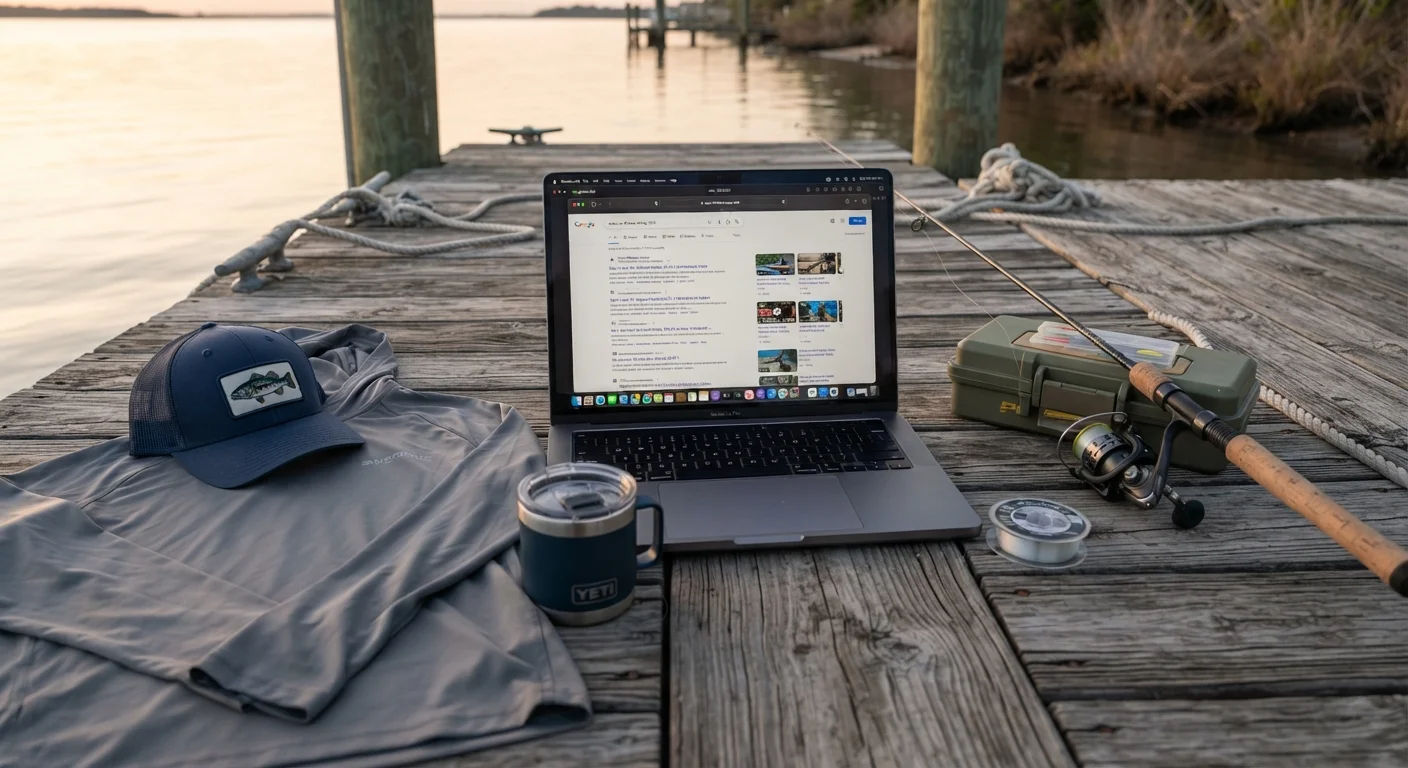
Put 80% of your first effort here. Angler communities are the cheapest and most effective channel for a new fishing apparel brand. Here's where to show up and how.
Reddit: Fast Reach, Zero Ad Spend
Start with r/Fishing . One source calls it a "massive, global space" — 2.5M+ members post daily about fishing reports, technique, gear, and personal stories. r/flyfishing is smaller but sharper, roughly 290K members, where fly anglers hang out.
Budget is $0 — just time. Spend the first two weeks answering questions, not pitching. Comment on gear threads. Share a photo from your own trips wearing your apparel, naturally, not as an ad. A fishing apparel manufacturer can help brands turn community feedback into better product designs.Reddit punishes obvious promotion and rewards genuine participation.
Facebook Groups: Where Local Loyalty Lives
Facebook is still the default home for regional and species-specific fishing communities — local lake groups, bass clubs, saltwater crews. Groups like "Let's Talk Fish" and Bass Fishing Tips & Techniques (120K+ members) run on daily Q&A, event posts, and peer discussion.
This channel converts best to repeat customers because these groups skew toward local, recurring anglers, not tourists browsing once.
Forums: Slower, But Deeper
Traditional forums — TackleTour , World Sea Fishing Forum , Texas Fishing Forum , Ontario Fishing Community , FishingMagic , Ausfish — attract anglers who want long-form gear comparisons and trip reports. Fewer members, higher intent. Someone debating waders on a forum thread is closer to buying than someone scrolling Instagram.
How To Actually Engage
Search "[your region] + fishing" to find active local groups first.
Browse and use the search bar before posting anything.
Join niche sub-communities matching your product — fly fishing, kayak bass, saltwater.
Ask real questions: conditions, bait, what's biting.
Move to DMs only once trust is established.
Expected result over 90 days : 15-25% of your total new site traffic, plus a small but loyal repeat-buyer base that no paid ad can replicate at this budget.
Micro-Influencer & Fishing YouTuber Collaboration
Niche micro-influencers average 7.2% engagement , compared to 1.4% for macro influencers in the same space. For a fishing apparel brand, that gap is your growth lever.
Why Micro Beats Macro in Fishing
Skip the 500K-subscriber fishing channels. Target creators with 10,000–50,000 subscribers — this is where inventory is deepest (5,864 YouTube channels sit in this exact band) and engagement is highest. YouTube micro creators pull 1.63% engagement per upload versus 0.37% for channels above 1M subs. Some analyses put niche micro engagement even higher, at 4–7% .
Micro campaigns average 184% ROI with a cost-per-engagement of $0.18 , versus 129% ROI and $0.52 CPE for macro deals.Private label fishing shirts give niche brands more control over their outdoor collections.On YouTube, micro creators returned 180.2% ROI in recent campaign data — nearly 50 points higher than macro.
The Collaboration Playbook
Build a shortlist of 50+ candidates. Filter by geography (US/Canada saltwater, EU carp, AU barramundi) and gear category.
Pilot with 5–10 creators. Each package: one 10–20 minute integration video, one YouTube Short, and a unique promo code with tracking link.
Set budget expectations. Plan $500–$3,000 per creator for testing; strong 30K–80K sub channels can command $3,000–$6,000 for a full package with usage rights.
Run for 30 days. Track CTR, conversions, and revenue per creator before scaling.
Double down on top 20–30%. Move winners to quarterly packages and negotiate affiliate boosts over flat-fee increases.
Expected result : With a $10,000 test budget across 10 creators, target 170–190% ROI and 2–3% conversion on tracked links — performance no generic influencer platform delivers for a niche this specific.
Fishing-Specific SEO & Content Engine
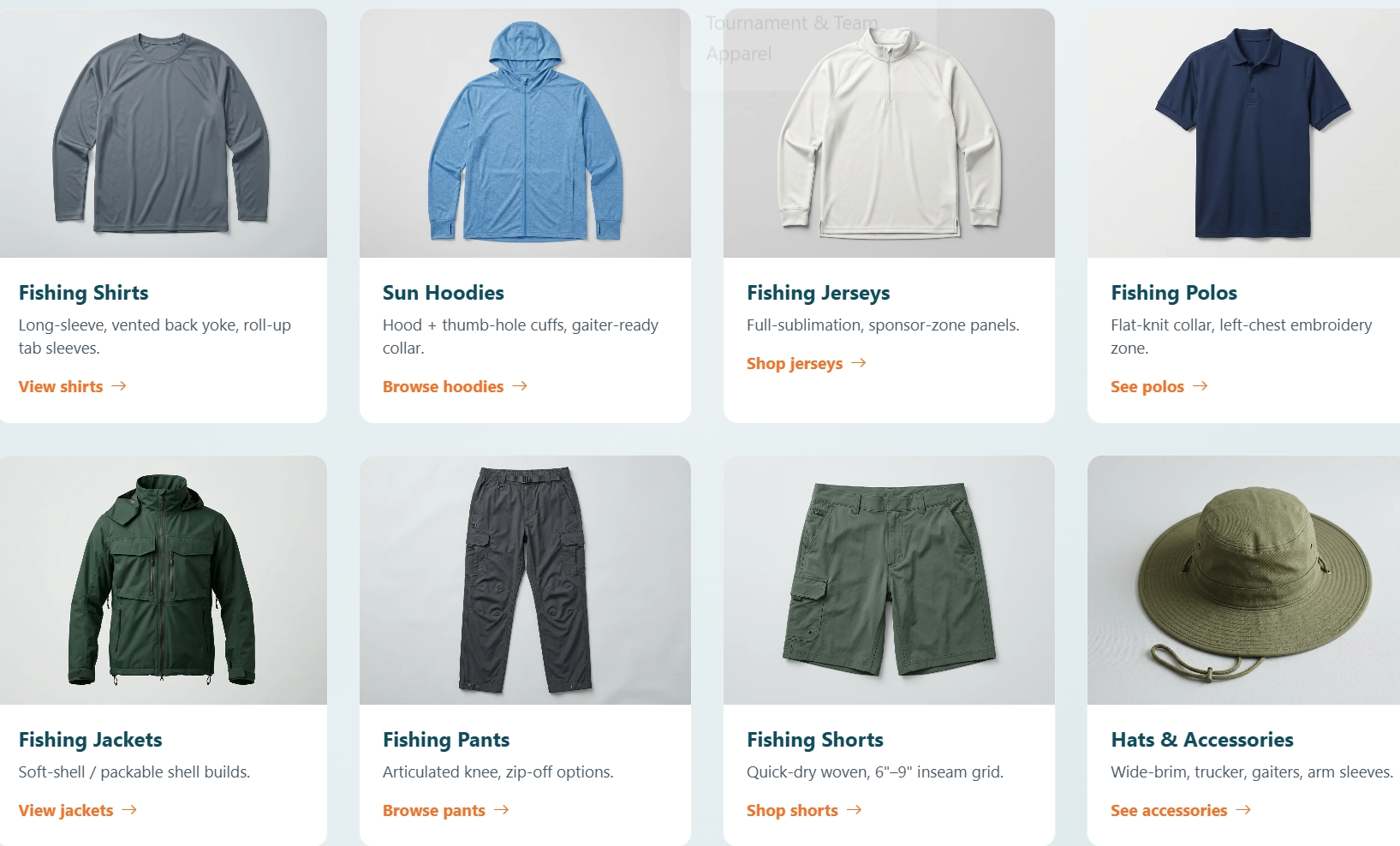
Search traffic for a fishing apparel brand comes from ranking for the hundreds of specific, obsessive queries anglers type into Google every day — the same queries that used to only benefit charter captains and guides. Steal their playbook, apply it to apparel, and you've got a fishing apparel SEO strategy that actually converts.
Build a Keyword Spine Anglers Actually Search
Skip generic apparel terms. Build clusters around,Working with a fishing clothing supplier helps brands expand seasonal product lines faster:
Species + gear intent : "best sun shirt for redfish fishing," "UV hoodie for bass fishing Texas"
Technique + apparel : "what to wear fly fishing in cold water," "topwater bass fishing gear"
Location + season : "spring crappie fishing gear guide," "winter steelhead layering tips"
Booking/buy intent : "best fishing apparel brand for saltwater," "fishing shirts near me"
Engine rule : build 50–200 keywords per species/location cluster, then map each to a dedicated page or blog post. You're owning "kayak bass fishing shirt." That's how niche apparel brand growth compounds.
Fishing Reports: Borrowed Format, Apparel Payoff
Charter operators use fishing reports to stay fresh in Google's eyes. Apply the same template, but make your apparel the hero:
Title : "Lake Travis Bass Report – March 2026 – What Anglers Wore in 70°F Chop"
Intro (50–100 words): conversational bite summary
Conditions block : weather, water temp, clarity
Tips block : lures used, presentation — plus which layer/fabric held up
Photos : 2–5 images, alt text like "angler in [brand] UV shirt holding 6 lb largemouth"
CTA : link straight to the product page, UTM-tracked
Publish 4–12 reports monthly across your priority fisheries, 400–800 words each. This is fishing brand content marketing that doubles as SEO fuel and product placement.
On-Page SEO That Matches Angler Search Behavior
Title tags: 60–70 characters, keyword near the front ("Destin Fishing Shirts – UV Protection for Offshore Trips")
Meta descriptions: 120–160 characters with buying intent
One H1 per page, H2/H3 for species, seasons, FAQs
Alt text: species + location + product context, never just "fishing shirt"
Cluster Model + Cadence
Pillar page ("Bass Fishing Apparel Guide") supported by weekly reports, gear breakdowns, and seasonal "what to wear" posts — all internally linked to build topical authority. Run this quarterly: audit rankings, refresh keyword lists, publish 2–4 how-to/gear articles per cluster monthly, add 2–5 fishing-directory backlinks.
A properly built content engine drives 20–30% of total sportswear ecommerce traffic by month four, with compounding returns as reports and guides age into evergreen rankings.
Instagram & TikTok Fishing Niche Targeting
TikTok's fishing niche runs at 2.8–3.7% average engagement, nearly double Instagram's 0.5–1.7%. That gap dictates your split: TikTok for discovery, Instagram for conversion.
TikTok: Top-of-Funnel Discovery Engine
The audience skews male, 18–30, with the largest segment at 18–24 (38%). They watch 265 videos a day. Your job is to win the first 1–2 seconds with a hookset, a big fish, or chaos on the water.
Use 9–15 second vertical clips, include species/spot keywords in captions, and direct viewers to Instagram ("DM 'LURE' for the setup list").
Use 1–2 broad tags (#fishing, #bassfishing, #kayakfishing) and 3–5 micro tags (#carpfishing, #flyfishing, #bankfishing). Track Creative Center's view-growth data to catch trending formats like "POV fishing" or "slow-mo hookset."
Target ER is 4–8%, above platform baseline. Nano creators (1K–10K followers) hit 7.5% ER, ideal for authentic UGC product tests.A fishing shirts factory supports consistent production for influencer-driven launches.
Instagram: Where Discovery Becomes a Sale
Instagram's sweet spot is 18–34, 52.5% male. Reels now eat 50% of all time spent on the platform, so lead there with hookset clips repurposed from TikTok, tackle carousels, and "top 5 lures" lists.
Post 2–3 Reels, 1–2 carousels, and daily Stories covering water conditions and promo codes each week.
Target ER on Reels is 2–4%. Micro influencers (10K–100K) average 3–5% ER, making them cost-effective anchors for your fishing influencer collaboration push.
Run TikTok for reach, Instagram for the close.
Local Tournament & Fishing Club Sponsorships
Sponsorship money moves fast in local fishing circles, and it's cheaper than most founders assume. Perry Rotary's tournament structure runs Platinum $2,750, Gold $1,000, Silver $550, Bronze $275 — every tier gets social media, website, and weigh-in recognition, plus a post-event newspaper ad. Platinum also includes four team entries and eight raffle tickets. Lake Worth charges $1,000 for official sponsor status with free tournament entry, and its 2025 event paid out over $10,000 in cash and prizes , all proceeds to local charity.
Where to Spend First
Target bait/tackle shops within 30 miles , then boat dealers, outdoor retailers, restaurants/breweries for in-kind swaps, and waterfront real estate agents. Set your ask by dividing total event costs by sponsors needed. Skip cash entirely where you can. Trade product for exposure instead. Donate apparel to big-fish pots, raffles, and door prizes (Wellsys Tackle has given away $700,000+ in tackle since 2007 this exact way).OEM/ODM fishing apparel services allow brands to customize fishing clothing for tournament teams.
The Pitch and the Follow-Through
Build a one-pager: event identity, angler count, email/social reach, tier table, past results, clear CTA. After the season, send sponsors an end-of-year report with page views and email opens, then re-invite early. Tag winners wearing your gear in every post.
Small-Budget Paid Ads (Search & Retargeting)
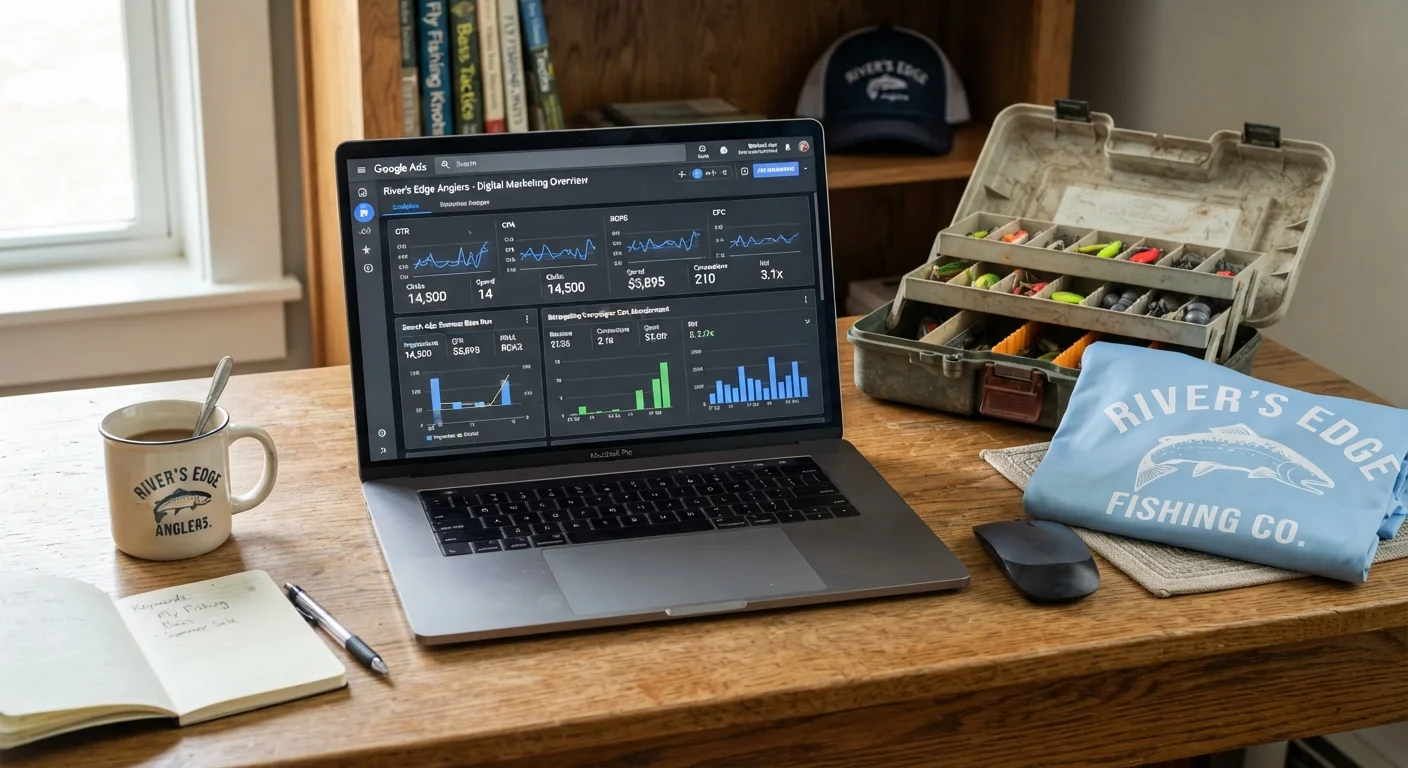
Paid ads round out the mix once community and content are already pulling weight. Save this channel for last, and keep the budget tight. Cap retargeting at 10–40% of spend. Everything else goes to high-intent search.
The $400/Month Split That Works
Search gets $260 at roughly $1.60 CPC. Spend it on brand terms plus your 5–15 top-converting non-brand keywords. That gives you about 162 clicks, a 4% conversion rate, and 6–7 conversions.
Retargeting gets $140 at roughly $1.00 CPC. Show ads to cart abandoners and product-page visitors only, within 24–72 hours. That gives you about 140 clicks, a 7.5% conversion rate, and 10–11 conversions.
The blend delivers 16–18 total conversions at $22–25 per conversion. That's far cheaper than cold prospecting alone.
Why Retargeting Punches Above Its Weight
Retargeted display gets roughly 10x the click-through rate of standard display (0.7–1.2% vs 0.07%). Retargeted visitors convert 70% more often. RLSA (search retargeting) pushes CTR to 5.2% with CPCs 15–22% lower than standard search. Only turn RLSA on once your list hits 1,000+ users. Below that, Google can't optimize delivery.
Frequency and Timing Discipline
Cap display at 3–7 impressions per user per week to avoid burning budget on the same eyeballs. Prioritize audiences in this order: cart and form abandoners (7–14 day window), then high-intent page visitors, then all site visitors (only if CPMs stay near $6–8). Use responsive display ads. They see 32% higher engagement than static banners.
Treat paid ads as a precision tool, not a growth engine. They amplify the traffic your fishing apparel SEO strategy and community work already generate. They don't replace it.
Conclusion
For a new fishing apparel brand starting from zero, you only need two channels executed relentlessly, not six. Your first 90 days should live almost entirely inside angler communities and micro-influencer partnerships. That's where trust already exists, and trust converts faster than any ad ever will. Layer in a lean fishing apparel SEO strategy in the background, and you've got a growth engine that compounds instead of resets every month.Brands can compare custom fishing clothing wholesale price options before scaling fishing apparel production.
Everything else—tournament sponsorships, paid ads, TikTok—earns its spot on your calendar later, once you've proven demand and have data to spend smarter.
Pick one Reddit thread, one Facebook group, and two micro-influencers this week. Message them today.