The rod bends. The reel screams. And in the back of your mind, you're already picturing that $120 fishing shirt turning into a stiff, salt-caked wreck after just six trips offshore.
I've been there. Most serious saltwater anglers have.
The real problem isn't how you fish. It's what your gear is made of — and whether that fabric was ever built to handle saltwater punishment. We're talking about:
Relentless UV exposure
Brine soaking into every fiber
Repeated wet-dry cycles that wear fabric down fast
Hardware that corrodes from the inside out
This guide cuts through the marketing noise. You'll get a material-science breakdown of how the most common custom saltwater fishing fabrics perform under real conditions — so you stop replacing gear every season and start making one smart choice that holds up long-term.
How Saltwater Destroys Fabric — And Which Materials Survive It
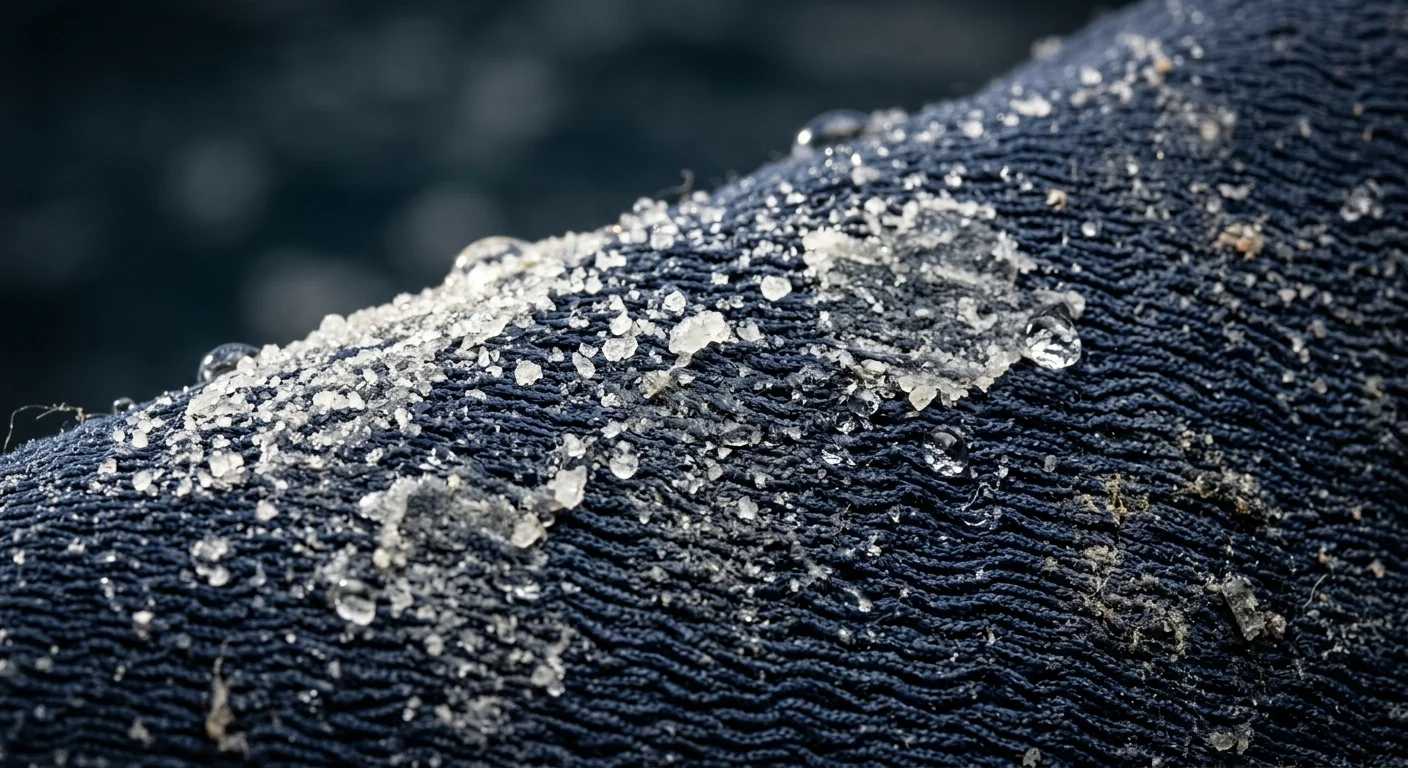
Salt doesn't just sit on the surface of your gear. It works its way in.
A wave breaks over the gunwale. Sweat soaks through your shirt. Dissolved sodium chloride starts pushing into the fiber structure. The fabric dries. Those crystals expand. Do that fifty times across a season, and a once-flexible, breathable shirt becomes a stiff, degraded shell. Knowing why this happens at the material level is what separates a smart buying decision from a wasted one.Brands can access custom saltwater fishing apparel fabrics through specialized OEM/ODM fishing apparel services.
Here's how the four main fabric categories hold up under serious saltwater exposure.
Polyester: The Workhorse That Earns Its Rating
Polyester's biggest saltwater advantage comes down to one number: moisture regain of 0.4–0.8% . That's the percentage of water a fabric holds at equilibrium humidity. Cotton sits above 7% by comparison. That gap isn't cosmetic. Polyester sheds brine faster, gives salt crystals fewer pathways to penetrate, and resists the hydrolysis that breaks down weaker fibers over time.
In ASTM B117 salt spray testing , high-quality polyester composites with mineral oxide coatings scored a corrosion rating of 10/10 at 96 hours — zero detectable degradation. Tensile strength retention held above 90% . After three years of outdoor exposure, fabrics in this category still carried 84% of their original strength and 80% waterproofing performance .
Solution-dyed polyester tells an even better story. UV and salt spray combined produced color retention ≥80–85% (colorfastness Grade 4–5). Conventionally dyed versions showed significant fading under the same conditions. Adding TiO₂ particles or using a high-density weave keeps mechanical strength loss under 5–10% , even under combined UV and salt stress.
Practical weight ranges for saltwater use:
- Quick-dry sun shirts and face guards: 115–170 g/m² solution-dyed or high-density knit
- High-abrasion pants and outer shells: 160–220 g/m² woven polyester (taffeta, Oxford) with fluorocarbon or mineral coating
Durability rating: S-tier — the benchmark for saltwater fabric performance.
Nylon: Stronger Out of the Box, More Vulnerable Over Time
Nylon's toughness reputation is well-earned on paper. Gram for gram, woven nylon delivers higher initial breaking strength and tear resistance than polyester under ASTM D5034 grab testing. High-molecular-weight nylon 66 outperforms standard nylon 6 in salt spray environments. Corrosion rate drops by 30% , and tensile retention improves across testing cycles.
But nylon has a structural weakness polyester doesn't: moisture regain of 4–8% . That's five to ten times higher. In saltwater conditions, nylon holds brine against the fiber longer. That gives chloride ions more time to push through coating micropores and attack the amide bonds in the polymer chain. The fabric doesn't fail at once — it loses integrity gradually.
The coating system is critical here. Standard PU laminates exposed to combined chloride and humidity above 80% at 70°C can lose up to 40% of bonding strength after just 168 hours of aging. That's the hidden failure point most anglers miss. The face fabric looks fine on the outside. The laminate delaminates underneath.
There is a solution: high-molecular-weight nylon 66 with fluorocarbon or plasma-modified coatings pushes nylon into "very high" corrosion resistance territory. It achieves a corrosion grade of 1 in 72-hour salt spray — better than conventional PVC-coated fabrics.
Best applications:
- Reinforcement panels at knees, seat, and pack bases: 300D–600D nylon Oxford or taffeta
- Heavy-duty waterproof bibs and shells: 420D–1000D nylon Oxford — but pair it with hydrolysis-resistant PU and high-solids coatings
Durability rating: A-tier — exceptional strength ceiling, but coating quality is everything.
Polyester/Nylon/Spandex Blends: The Performance Balance
Push polyester content to ≥50% , and the blend picks up most of polyester's salt-shedding and UV resistance. The nylon component raises the tear and abrasion ceiling. Spandex at 5–12% adds 15–25% four-way stretch — essential for overhead casting, crouching at the bow, or fighting a fish from an awkward angle.
Real-world durability testing backs this up. Premium spandex blended with polyester or nylon — cared for with cold wash and air-dry protocols — holds ≥90% elastic recovery after 100 wash cycles across a 3–5 year lifespan. High-density knit construction also creates a physical barrier. Salt crystals can't reach the elastic core as easily. That slows both spandex hydrolysis and nylon coating breakdown.
Best applications:
- Performance sun shirts: 160–220 g/m² high-density poly-nylon-spandex knit — you get UPF protection, salt resistance, stretch, and durability in one construction
- Boat fishing pants: poly/nylon outer with spandex integration for cast-after-cast range of motion — no salt-induced stiffening
Durability rating: A+-tier — best all-around choice for high-movement saltwater fishing.
Cotton and Viscose: Just Don't
Cotton absorbs and holds saltwater. That's the entire problem.
High moisture regain means salt crystals embed straight into the cellulose fiber structure during drying. Each wet-dry cycle accelerates oxidative embrittlement, permanent deformation, and microbial growth. Cotton and bamboo viscose saltwater apparel shows severe fading, fabric hardening, and structural fatigue within just a handful of offshore trips .
Industry material testing is blunt: natural fibers in salt-humid environments deliver "poor quality," "extremely poor moisture management," and "permanent deformation."
Durability rating: D-tier — not viable as a primary saltwater fishing fabric, full stop.
Quick-Reference Durability Comparison
Fabric | Moisture Regain | Salt Spray Rating | Strength Retention | Durability Tier |
|---|---|---|---|---|
Coated Polyester | 0.4–0.8% | 96h / Grade 10 | ≥90% | S |
Nylon 66 (FC-coated) | 4–8% | 72h / Grade 1 | ~85–90% | A |
Poly/Nylon/Spandex Blend | ~1–3% | Comparable to polyester base | ≥90% (elastic recovery) | A+ |
Cotton / Viscose | 7–12%+ | Not rated | Fails fast | D |
These numbers aren't marketing claims. They come from ASTM B117 protocols and textile aging research. A fabric that can't show meaningful strength retention after standardized salt spray exposure has no business being sold as saltwater fishing apparel.
Core Anti-Salt & Physical Performance Comparison — With Offshore Trip Lifespan Projections
Numbers cut through opinion faster than anything else. So before we get into what to buy or avoid, here's what standardized salt spray testing and real ocean exposure data show — fabric by fabric, failure mode by failure mode.
All salt spray figures below reference 5% NaCl solution at 35°C under GB/T 10125 / ISO 9227 neutral salt spray protocol — the same benchmark used for marine-grade industrial materials. A fishing fabric that can't survive this test in decent shape won't survive your offshore season either.
What the Salt Spray Numbers Mean
Standard SBR/nylon composite fabrics are the workhorses of mid-range saltwater apparel. They hold up through 500–720 hours of continuous salt spray exposure before tensile strength starts to drop. With moderate offshore use and regular freshwater rinse-downs, that's 40–70 trips — a realistic lifespan of 2–3 seasons .
Premium-formula nylon composites take things further. These use optimized crosslinking systems and high-performance antioxidants like Irganox 1010. Bayer's high-end SBR/nylon samples hit 1,000–1,200 hours of salt spray exposure and still held 91.3% tensile strength at the 1,000-hour mark. In real terms: 60–90 trips and 3–4 years of serious offshore use.
The real standout is graphene oxide–modified coating systems. A professional saltwater fishing apparel fabric factory can develop advanced anti-salt textile solutions.Adding just 3 wt% GO to an SBR coating cuts chloride ion permeability by 67% . Salt crystals can't get into the fiber structure as fast. Salt spray endurance climbs to ≥1,500 hours . After 24 months of ocean exposure, fluorocarbon-modified nylon variants held 78% tensile strength — with biological fouling at just 12% , versus >30% for unmodified fabrics. This is the ≥70-trip tier — the material standard for anyone fishing hard, year-round.
Full Performance Comparison Table
Performance Metric | Standard SBR/Nylon | Premium Formula Nylon | GO/Nano-Enhanced Coating |
|---|---|---|---|
Salt Spray Endurance | 500–720 h | 1,000–1,200 h | ≥1,500 h |
Tensile Strength Retention | <90% at 1,000 h | ≥91.3% at 1,000 h | 78% at 24-month ocean exposure |
UPF Rating | 40–50+ (dense weave) | 50+ (TiO₂/ZnO composite coating) | 50+ (equivalent UV block) |
80% Dry Time | 18–22 min | 18–22 min | ≈15–20 min (fluorocarbon surface) |
Tear Strength (Elmendorf) | ≥50 N | ≥55 N | ≥55 N (<10% decline after 1,000 h salt spray) |
Taber Abrasion | 7,000–8,000 cycles | ≥8,000 cycles | ≥10,000 cycles |
Biofouling Rate (24 mo.) | >30% | ~20–25% | 12% |
Projected Offshore Trips | 40–70 trips | 60–90 trips | 70+ trips |
Realistic Lifespan | 2–3 seasons | 3–4 seasons | 4–5+ seasons |
One detail worth flagging on UPF: fabric type alone doesn't determine the protective ceiling. Dense weave construction paired with TiO₂ or ZnO microparticle coatings is what pushes nylon-based fabric into UPF 50+ territory — blocking ≥98% of UV radiation . A loosely woven nylon shirt with no UV treatment gets nowhere near that. The label doesn't change the chemistry.
The Hidden Degradation Mechanism Most Buyers Miss
Salt spray ratings measure surface resistance . The failure mode that catches most anglers off-guard happens underneath — at the laminate interface.
Standard PU coatings exposed to chloride ions combined with humidity above 80% at 70°C can lose up to 40% of bonding strength within 168 hours of accelerated aging. The face fabric looks fine. But the coating has already started pulling away from the base fiber. You won't notice it until the garment starts absorbing water instead of shedding it — often around trip 30 of what should have been a 70-trip investment.
The fix is straightforward. Hydrolysis-resistant PU binders, high-solids coating systems, or fluorocarbon-modified interfaces keep the laminate bonded through real marine conditions. So check the coating chemistry — it matters just as much as the base fiber itself.
Fabric Selection Matrix: Match Your Budget and Fishing Style Before You Buy
Most gear mistakes happen before you ever step on a boat. They happen at the buying decision — someone picks a fabric built for casual beach days, then takes it offshore thirty times a season.
The matrix below cuts that problem at the root. Four budget tiers. Four distinct fishing contexts. Each comes with specific fabric specs and procurement checkpoints. Use this to lock your decision in under two minutes.
Tier 1 — Entry-Level Coastal (Occasional Angler, Shore & Nearshore)
Core fabric: 100% high-density plain-weave polyester, 120–140 g/m² , solution-dyed construction. Skip post-finish UV coatings — they wash out. Solution-dyed UPF holds through 30+ wash cycles.
Panel detail: Underarm and center-back mesh inserts, 70–90 g/m² , pore diameter ≥1 mm. You stay comfortable during long shore sessions. No need to overbuild the garment.
Hard performance targets:
- UPF ≥40+ (solution-dyed minimum); target UPF 50+ retention post-30 washes
- Surface moisture drop to 20%: <15 min at 25–30°C with natural airflow
- Air permeability: ≥250 mm/s (seated fishing threshold); moisture vapor transmission ≥8,000 g/m²·24h
- Taber abrasion: ≥6,000 cycles — handles rock contact and repeated casting without pilling ahead of schedule
- Finished garment weight: 300–350 g
Hardware note: No exposed metal buttons. Use resin snap buttons or nylon injection closures. For stitching, specify polyester-core wrapped thread (Poly-wrapped) . It cuts salt-environment thread breakage by 30–40% compared to all-cotton thread. Main seam thread count: 40S/2. At high-stress points, push stitch density to 3–3.5 stitches/cm.
Tier 2 — Mid-Range Performance (Regular Saltwater Angler, 1–3 Trips/Month)
Core fabric: 65/35 polyester-nylon blend , 150–170 g/m² , with 8% four-way spandex built in. The nylon raises abrasion and tear resistance. The spandex gives you 18–22% elongation. That covers overhead casts, bow crouches, and hard fish fights — the fabric moves with you, not against you.
Reinforcement panels: Knees, seat, and gunwale contact zones use 300D high-density nylon . Tear strength targets 60 N — well above the 45 N baseline for the main fabric.
Hard performance targets:
- UPF 50+ , solution-dyed preferred; verify "UPF 50+ post-30 washes" on the spec sheet
- 80% dry time: ≤14 min (nylon-polyester blend + hydrophobic finish hits this)
- Tear strength (warp/weft): ≥45 N main body; ≥60 N reinforcement zones
- Elastic recovery: ≥90% after 30 stretch cycles; residual deformation <5%
- Moisture vapor transmission: ≥10,000 g/m²·24h ; air permeability ≥400 mm/s
Construction details that matter here:
- Dual-layer moisture management: the hydrophilic inner surface pulls sweat off your skin; the hydrophobic outer surface pushes it away
- PFC-free DWR finish , Grade 0–4 — handles sea spray and light rain without chasing extreme waterproofing
- DWR retention: ≥70% effectiveness after 20 wash cycles
- 3D contour shoulder-sleeve cut; curved piecing replaces straight shoulder seams to stop water from pooling
Procurement checkpoint: Ask for CNAS or accredited lab test reports covering UPF, tear strength, and moisture vapor transmission. UPF 50+ labels often test out at UPF 15–20. Check the actual number before committing.
Tier 3 — Professional Offshore (Multi-Day Trips, Open Ocean, High Salt Exposure)
Core fabric: 420D high-tenacity nylon Oxford , 200–240 g/m² . This build beats both 210D and 300D on tear resistance and abrasion. Seal all seams with a hydrolysis-resistant PU coating . Hydrostatic pressure baseline: ≥2,000 mm . Target 3,000–5,000 mm for brand differentiation. Apply seam tape at 18–22 mm width across all needle penetrations.
Inner layer: Polyester antibacterial lining — silver ion or organic antimicrobial finish — keeps odor under control on multi-day trips.
Hard performance targets:
- UPF 50+ (mandatory — open-ocean UV plus surface reflection is unforgiving)
- Tear strength: ≥60 N across main fabric panels
- Salt spray cycling: ≥75 cycles before seam peel strength drops below 80% of initial value
- Hydrostatic pressure: ≥2,000 mm (design target: 3,000–5,000 mm)
- Surface dry time: 15–20 min despite multilayer construction
Structural details:
- Double placket with integrated drainage channel; waterproof flap over the front zipper blocks headwind spray
- Underarm zip vents give you controlled airflow without breaking the waterproof shell
- Total jacket + pants system weight: 900–1,200 g
Procurement certification requirement: Specify fabrics with both "Salt Fog Resistance" and "Hydrolysis Resistant PU" dual certifications. This stops coating powdering or surface blocking within 1–2 years of marine use.
Optional performance upgrades for brand lines:
- Silver ion antimicrobial: inhibition rate ≥99%, with clear odor reduction on extended trips
- Phase-change material (PCM) finish: active thermal buffering in the 28–32°C range — cuts heat fatigue under long sun exposure
Tier 4 — Ultralight Technical (Fly Fishing, Wade Fishing, High-Mobility Freshwater/Saltwater Crossover)
Core fabric: Ultra-fine denier polyester knit, 110–120 g/m² , solution-dyed with a high-density knit structure. You get UPF 50+ at the lowest possible weight.
Construction method: Laser-cut seamless splicing removes needle holes and thread paths — both are salt infiltration points on standard builds. A hydrophobic micropore structure (pore diameter 0.5–1 mm) lets the fabric shed water and breathe at the same time.
30-Second Decision Summary
Angler Type | Trips Per Year | Recommended Fabric | Weight | UPF | Dry Time |
|---|---|---|---|---|---|
Casual / Shore | <20 | 100% Polyester plain weave | 120–140 g/m² | ≥40+ | <15 min |
Regular Saltwater | 20–40 | Poly/Nylon 65/35 + 8% Spandex | 150–170 g/m² | 50+ | ≤14 min |
Professional Offshore | 40+ / Multi-day | 420D Nylon Oxford + PU seam seal | 200–240 g/m² | 50+ | 15–20 min |
Fly / Wade / Ultralight | Variable | Ultra-fine denier polyester knit | 110–120 g/m² | 50+ | <12 min |
The fabric that fits your budget is not always the fabric that fits your fishing. Start with your actual trip frequency and exposure conditions. Then work backward to saltwater fishing clothing price.
The Hardware Blind Spot That Destroys Saltwater Fishing Apparel
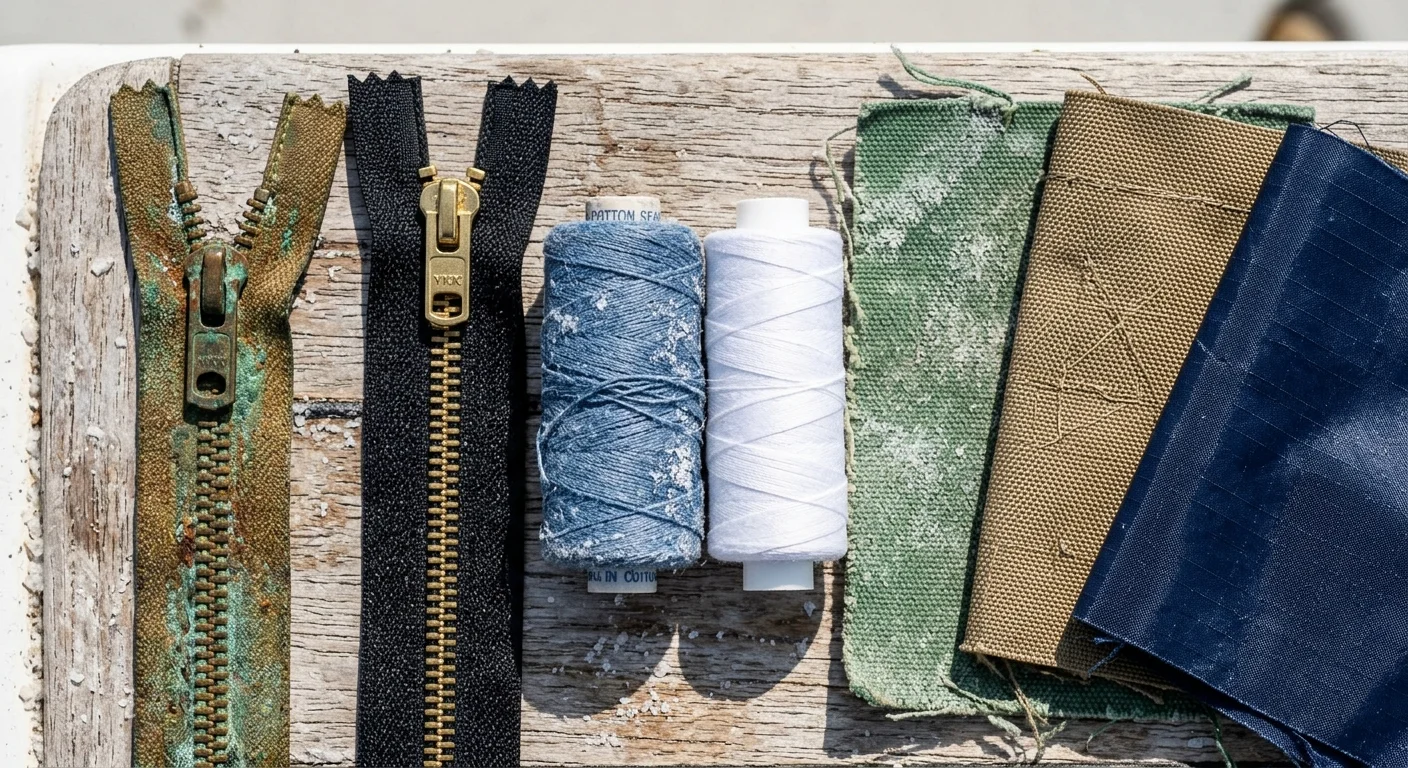
Most anglers scrutinize fabric specs down to the denier count — then ignore the zipper holding the whole garment together.
That's where real degradation starts. Salt doesn't care that your shell fabric passed a 1,500-hour spray test. It finds the zipper head cavity. The seam fold. The edge of a peeling seam tape. Three failure mechanisms drive nearly all hardware corrosion on saltwater fishing apparel: gap salt accumulation , poor drainage geometry , and hydrolysis or embrittlement of organic materials . Fix all three, and your hardware outlasts your fabric. Miss one, and trip 20 looks like trip 200.
Zippers: The Gap Corrosion Problem Nobody Talks About
Standard metal zipper teeth create the kind of crevice geometry that speeds up corrosion in chloride-rich environments. Salt solution wicks into the gap between tooth and tape. Oxygen gets depleted. Localized attack starts — often from the inside out, with no visible warning.
The material answer is 316L stainless steel . Its low-carbon makeup resists corrosion better in high-chloride, high-temperature marine conditions than most standard alloys. Where 316L feels like overkill, engineering-grade plastic tooth chains — YKK Vislon or equivalent — cut the electrochemical corrosion risk by removing metal from the equation.
Structure matters as much as material. Zipper pulls, slider cavities, and the junction between tape and stop are the highest-risk salt buildup points. Redesign these toward open, drainable geometry wherever construction allows. Salt that rinses out can't corrode.
Seam Thread: The Failure You Feel Before You See
A blown seam on a multi-day offshore trip isn't a comfort issue. It's a structural failure.
Standard cotton thread — and basic polyester filament — breaks down through a predictable pattern under repeated saltwater exposure. Salt crystals embed in the fiber gaps. Wet-dry cycling expands and contracts those crystals. The thread weakens from the inside, losing tensile strength well before it frays on the surface.
The fix is clear: use polyester-wrapped core thread (Tex 50–70) for primary stress seams. At the highest-load junctions — crotch seams, shoulder seams, armhole stitching — spec aramid-reinforced thread . Both hold up through the salt-crystal stress cycling that destroys standard thread.
Construction geometry is the other half of the equation. Deep folds, blind seams, and overlapping layers that trap moisture act as salt reservoirs built right into the garment. The right seam architecture: flat-lock plus bound edge plus secondary reinforcement , with the exposed thread line shielded from direct salt spray contact wherever the structure allows. Protected seam construction also removes crevice exposure — that's what amplifies both corrosion and cracking risk at thread-film contact zones.
Seam Tape: When the Waterproof Layer Becomes the Salt Channel
Seam tape fails in a specific, frustrating sequence. The adhesive layer ages. A small edge lifts. That edge gap becomes a closed, poorly-drained cavity — the exact geometry that traps salt and speeds up both adhesive breakdown and base fabric degradation underneath.
For saltwater apparel, specify high hydrolysis-resistant tape systems . In sustained wet-heat conditions — which covers every multi-day offshore trip — standard tape formulations soften, bubble, and peel away. Once that starts, the tape stops sealing and starts concentrating salt instead.
Bonding temperature is a detail most Saltwater Fishing Apparel manufacturers miss: keep lamination at or below 130°C . Higher process temperatures damage both the base fabric and the adhesive layer, cutting the bond's long-term resistance to moisture breakdown. Minimize the exposed tape edge wherever possible — every millimeter of free edge is a potential delamination start point.
Ask your vendor this straight: Can you show a salt spray test result confirming no bubbling, no delamination, and no adhesion loss after the defined cycle? Marine hardware testing treats this as a standard check. Saltwater apparel tape should meet the same bar.
Quick-Reference: Salt-Resistant Hardware Specification Checklist
Component | Avoid | Specify Instead |
|---|---|---|
Zipper teeth / slider | Standard brass or aluminum | 316L stainless steel or engineering plastic (Vislon) |
Zipper tape | Cotton base tape | High-density polyester woven tape |
Primary stress thread | Cotton or standard polyester filament | Polyester-wrapped core thread, Tex 50–70 |
High-load seam thread | Any natural fiber thread | Aramid-reinforced thread (shoulder, crotch, armhole) |
Seam tape adhesive | Standard PU tape | High hydrolysis-resistant system, ≤130°C bonding |
Storage / shipping | Unprotected metal hardware | VCI anti-rust paper wrap + dry isolation |
Active hardware maintenance | Nothing | Microcrystalline wax or fluorocarbon anti-corrosion wax on pulls and sliders |
One last point on storage and transit: holding saltwater apparel inventory or shipping assembled garments? Wrap metal hardware components in VCI (vapor-phase corrosion inhibitor) paper . It gives direct protection against salt-humidity corrosion during warehousing. It takes two minutes and prevents the kind of surface oxidation that makes a brand-new garment look like it's already seen a season offshore.
The fabric gets the attention. The hardware decides the lifespan.
Standardized Care Protocol: Extending the Life of Your Saltwater Fishing Apparel
Even the best fabric — 420D nylon, solution-dyed polyester, graphene-coated composite — breaks down on a predictable schedule if you care for it wrong. The material science gets you 60% of the way. What you do after every trip covers the rest.
Here's the protocol, broken into stages.
The 4-Hour Rule: Post-Trip Rinse
Salt crystals don't need long to harden inside a fiber. Rinse within 4 hours of coming off the water — before the brine dries and locks in.
Water temperature: ≤30°C (cold or room temperature) . Hot water breaks down coatings and wears out elastic fibers faster.
Turn the garment inside out . Rinse both sides well. Pay extra attention to armpits, collar, crotch seams, and leg folds — these are the spots where salt and sweat build up most.
Use gentle press-and-release to drain water — no wringing or twisting. Wringing puts stress on seam tape bonds and laminate layers.
Heavy salt load? Soak for 10–15 minutes , but stop at 30. Too long in the water adds weight that pulls at the stitching.
Here's what the lifespan data shows: saltwater apparel that gets a cold rinse right after each use holds 80%+ elasticity and color retention through 50–100 wash cycles . Skip that first rinse past 24 hours more than once, and the salt crystal buildup alone can eat up 10–20% of the garment's total functional lifespan per serious delay.
Machine Wash: Parameters That Protect the Coating
Detergent: Stick to pH 6.0–7.5 neutral or lightly acidic technical fabric wash — Nikwax Tech Wash, Granger's Performance Wash, or a similar product. No chlorine bleach. No standard laundry powder. No detergents with enzymes or optical brighteners.
Here's why it matters: high-alkaline wash conditions break down the ester and amide bonds in polyester and nylon fibers. Regular detergent used over time can cut the working life of waterproof fishing apparel by 30–40% .
Machine settings:
- Front-loading drum machine is the better choice. Top-loaders with agitators create concentrated high-force stress that damages seam tape and elastic fibers.
- Delicate / gentle cycle only
- Spin speed: ≤600 rpm — higher RPM puts direct physical stress on taped seams and bonded membranes
- Rinse: run at least 1–2 full rinse cycles to flush out all detergent residue. Detergent left sitting in the fabric eats away at DWR performance over time.
Fabric softener: never. Silicone and quaternary ammonium compounds in softeners lay a hydrophobic film across the fiber surface. This blocks moisture-wicking channels and speeds up DWR failure. Water stops beading and starts soaking straight in.
Drying: Temperature Is the Variable That Matters
Air dry in a shaded, ventilated space — no direct sunlight, no dryer heat unless the care label says it's fine.
Hang on a wide-shoulder hanger (≥5 cm shoulder width) or lay the garment flat. Narrow hangers put concentrated fold stress on the shoulder seam.
For heavy waterproof shells: dry inside-out for 8 hours , then flip and keep drying for 12–24 hours until every seam zone is dry to the touch.
Check the care label first. If it allows dryer use, low-to-medium heat for 20–30 minutes can actually work in your favor — controlled heat re-aligns the DWR coating. Use this on purpose, not as a shortcut.
For ironing: medium-low setting (≤110°C), no steam, use a pressing cloth over reflective tape and bonded zones. Iron only once the garment is bone dry.
Quarterly Deep-Salt Purge + DWR Restoration
Schedule this every 10–12 fishing trips or once per quarter , whichever comes first.
Deep-salt soak:
1. Fill a basin or tub with 40–50 L cold water
2. Add a textile desalting agent or 1:40 white vinegar solution — the weak acid breaks down leftover salt and sweat mineral deposits
3. Submerge the garment and soak for 15 minutes . Work the armpits, collar, and crotch zones by hand.
4. Drain, then rinse with clean water for 5–10 minutes until there's no foam or odor left
5. Press-drain — no wringing
DWR reactivation (do this once water stops beading — usually after 3–5 uses or 20 wash cycles ):
1. Complete the deep-salt soak and rinse above first. Zero detergent residue is a hard requirement before you start.
2. Spread an eco-certified DWR spray or wash-in DWR treatment across the full outer shell in an even layer
3. Activate with dryer at medium heat for 20–30 minutes , or iron at medium-low setting with a pressing cloth for ~20 minutes
Done right, DWR restoration brings back 80%+ of original water-repellent performance — the gap between gear that sheds spray and gear that soaks it up.
Anglers who lock this quarterly cycle into their routine extend effective garment lifespan by an estimated 50–70% compared to no-maintenance use. Fish 40+ days a year? That's the difference between replacing a $200 shell every two seasons or getting five years out of it.
Storage Checklist
Temperature: 15–25°C, dry environment
Hang in a ventilated space — avoid sealed packaging for more than 12 months
Keep away from: trunk heat, oil or solvent contact, and hard abrasive objects that can scratch coated surfaces
Quarterly inspection: check all seams for fraying threads, look at seam tape edges for lifting, test zipper pulls for corrosion — catch small problems early, before they turn into full failures out on the water
Conclusion
After years of watching good gear fail in bad salt, the pattern stays the same — it's never just the fabric. The zipper seizes on trip four. The bonded seam delaminates by summer's end. The polyester looks fine until the UV damage catches up with it.
Here's what matters: quick dry saltwater fishing clothes built for the ocean aren't defined by a single material. Every component has to handle cumulative salt stress together. That's what separates gear that lasts from gear that doesn't.
Three steps make the difference:
- Choose your base fabric using performance data, not the hang tag
- Pair it with YKK Aquaguard hardware
- Rinse everything within two hours of leaving the water
Do those three things without fail, and you stop replacing gear every season.
Building a custom Saltwater Fishing Apparel line or making a big purchase? Go back to the fabric comparison matrix. Let the salt-spray ratings make the call. Your wallet will thank you — and so will your next offshore run.