You've stared at two fishing shirts on the same product page — both tagged "moisture-wicking," both tagged "quick-dry" — and wondered if those labels mean anything different, or if some marketing team just ran out of synonyms.
They're not synonyms.
One pulls sweat away from your skin using capillary action in the fabric. The other speeds up how fast that moisture leaves the material. Two different jobs. Two different results.
On a brutal August afternoon casting from a sun-baked pier, that difference matters. It's the gap between feeling damp-but-bearable and feeling like you're wearing a wet paper bag for six hours straight.
This guide cuts through the branded performance language. You'll walk away with three practical tools:
A real-world scenario matrix
Dry-time benchmark data
A tiered product shortlist
So you know which fabric technology fits your fishing environment — no guesswork needed.Many brands compare these fabrics before choosing a custom fishing shirts manufacturer .
Fabric Dry-Time Benchmark & Evaporation Rate Data
Here's what the lab numbers say — and what they mean standing on a boat at 11 a.m. with a wet shirt stuck to your back.
Textile engineers measure fabric drying performance using two main metrics. First is evaporation rate — how fast moisture leaves the fabric, measured in g/m²·h. Second is full evaporative cycle time — how many minutes before a soaked swatch returns to "dry." Tests run at 25°C, 65% relative humidity, and a light 1 m/s airflow. That's about the same as a mild breeze on a calm fishing morning.Reliable test data also helps buyers evaluate a professional fishing apparel supplier.
The results across four common fishing shirt fabrics tell a clear story:
Fabric Type | Evaporation Rate | Full Dry Cycle Time |
|---|---|---|
Standard polyester mesh (uncoated) | ~150–250 g/m²·h | 25–40 min |
Microfiber nylon-polyester blend | ~250–350 g/m²·h | 15–30 min |
Hydrophobic-treated woven/knit (DWR) | ~300–450 g/m²·h | 10–20 min (surface); 20–35 min (inner face) |
Mechanical capillary wicking polyester knit | ~350–500 g/m²·h | 10–25 min |
That gap between 40 minutes and 10 minutes isn't a footnote. A shirt that dries in 10 minutes recovers between casts. One that takes 40 minutes stays damp from the first hour of fishing until you load the truck.
What the Numbers Mean on the Water
A few things worth knowing before you use this table as a shopping checklist:
The hydrophobic-treated shirt has a split personality. Its outer surface sheds spray in under 3 seconds. Droplets bead and roll before they soak in. But the inner face often lacks capillary structure. Your sweat has nowhere to go. The shell looks dry while you stay clammy underneath. That's not a quick-dry shirt. That's a water-resistant shirt with a moisture problem it can't solve.
The mechanical capillary wicking knit works from the inside out. Engineered yarn channels pull sweat away from your skin first. Then they spread it across a wider outer surface area. From there, it evaporates. Look for wicking height benchmarks above 100 mm — that's the line between performance fabric and marketing fabric. The inner face dries within 10–25 minutes after a hard sweating episode. That matters on a long casting day. Your body gets steady evaporative cooling instead of building up heat against a wet layer.
Moderate casting effort pushes 200–500 g/h of sweat across your upper torso. A fabric rated at ≥350 g/m²·h can keep pace with that output in mild conditions. You stay near thermal balance instead of heating up through the day. Standard polyester mesh at 150–250 g/m²·h can't match that rate. You'll feel the difference by midday.
For most fishing use, two fabric types stand out:
High-MVTR microfiber blends targeting 10,000–12,000 g/m²·day
Mechanical wicking polyester knits hitting 12,000–15,000 g/m²·day in premium builds
Both deliver solid real-world performance. The hydrophobic shell still has a role — but only in a two-layer setup, paired with a wicking inner layer. It doesn't replace one.
Fishing Scenario × Fabric Priority Decision Matrix
Six anglers. Six different fishing environments. Six different sweat profiles, wind exposures, splash frequencies. One fabric decision.
That's the problem with general advice like "get a moisture-wicking shirt." It assumes your fishing looks like someone else's fishing. It doesn't.
The matrix below cuts through that. This decision matrix is also useful when planning OEM/ODM services for fishing shirts.It maps six real-world fishing scenarios against fabric priority — wicking first, quick-dry first, or balanced — plus the specific fabric specs that move the needle in each environment.
The Matrix
Scenario | Priority | Fabric Spec You Need | What You Feel On the Water |
|---|---|---|---|
Tropical offshore (open boat, strong sun, consistent wind) | Quick-Dry first , wicking second | 100% polyester or 70%+ poly blend, UPF 50+, DWR-treated, vent panels + mesh back | Spray dries within minutes. Shirt stays cool in deck wind. Mild clamminess under pack straps. |
Humid inshore mangroves (low wind, high humidity, slow movement) | Wicking first , quick-dry second | High-wick polyester knit, 90–95% poly / 5–10% elastane, ~120–150 g/m² gram weight, anti-odor finish | Less slick skin feel under arms and lower back. Shirt stays damp overall but doesn't suffocate. |
Cold-water boat deck (chilly wind, repeated splash, layered setup) | Quick-Dry first , then wicking | Nylon-face outer with polyester inner or liner, DWR finish, wind-blocking weave | Less icy when splashed. Outer dries fast in wind. Inner stays a bit damp but not soaked. |
Kayak rigging / hard paddling (continuous torso rotation, intermittent spray) | Wicking first , quick-dry second | Tight-knit ≥90% polyester base layer, 4-way stretch (5–12% spandex), high CFM breathability, UPF 30–50 | Skin stays dry longer into the paddle. Less salt-crust itch. Reduced under-PFD rash. |
Freshwater bank fishing (walking, mixed shade, variable humidity) | Balanced — wicking-biased in summer | Versatile polyester jersey 140–180 g/m², UPF 30–50, wicking finish + quick-dry knit structure | Comfortable across changing conditions. Doesn't feel heavy after bank hikes. Recovers fast between spots. |
Multi-day tournament (back-to-back long days, limited garment changes) | Wicking + anti-odor first , quick-dry close second | 100% poly engineered wicking channels, permanent antimicrobial finish (silver ion / Polygiene), UPF 50+ | Tolerable across several days. Less sour smell buildup. Garment resets after an evening hang-dry. |
The Three Variables That Shift Every Row
Every matrix needs a decision rule behind it. Here are three field variables that override everything else:
Humidity (H)
- H ≥ 70%: Air is saturated. Evaporation slows to a crawl. Wicking priority rises. Moving sweat off skin is the main relief available. The fabric surface can't dry fast regardless.
- H ≤ 60%: Evaporation is wide open. Quick-dry priority rises. Moisture that reaches the fabric surface leaves fast — more so with airflow.
Wind exposure (W)
- High wind (open water, running offshore): Quick-dry dominates. Polyester microfibers shed surface moisture fast. You'll feel cooler than in heavier weaves.
- Low wind (mangroves, back bays, tree canopy): Wicking dominates. No wind means no evaporation. Your fabric's surface-dry speed becomes almost irrelevant.
Activity level / sweat output (A)
- High A (kayak, hard casting, working a trolling spread): Wicking is primary. Sweat load is continuous. The fabric must pull moisture off skin fast — not just clear it from the surface.
- Low-to-moderate A with external water exposure: Quick-dry becomes primary. Your comfort problem is rain, spray, and livewell splashes — not sweat volume.
The Field Decision Rule
Before you open a product page, run through this three-variable filter:
H high + W low + A high → prioritize high-wick polyester knit with capillary construction and anti-odor finish. Quick-dry is a bonus, not the lead feature.
W high + external water frequent (regardless of humidity) → prioritize quick-dry surfaces — tight-weave polyester or nylon shell with DWR — then add a wicking underlayer.
A moderate + conditions vary day to day (tournament circuits, multi-session weeks) → pick a balanced fabric with solid wicking, fast dry, UPF 50+, and durable odor control. Use layering to tilt toward wicking or quick-dry as the daily forecast demands.
Anti-odor acts as a tiebreaker when two fabrics look equal on wicking and dry time. In multi-day tournaments, humid inshore sessions, and kayak paddles under a PFD, it's the feature that separates a shirt you can wear again tomorrow from one you're hanging outside the truck window on the drive home.
Entry-Tier Performance Options ($25–$40)
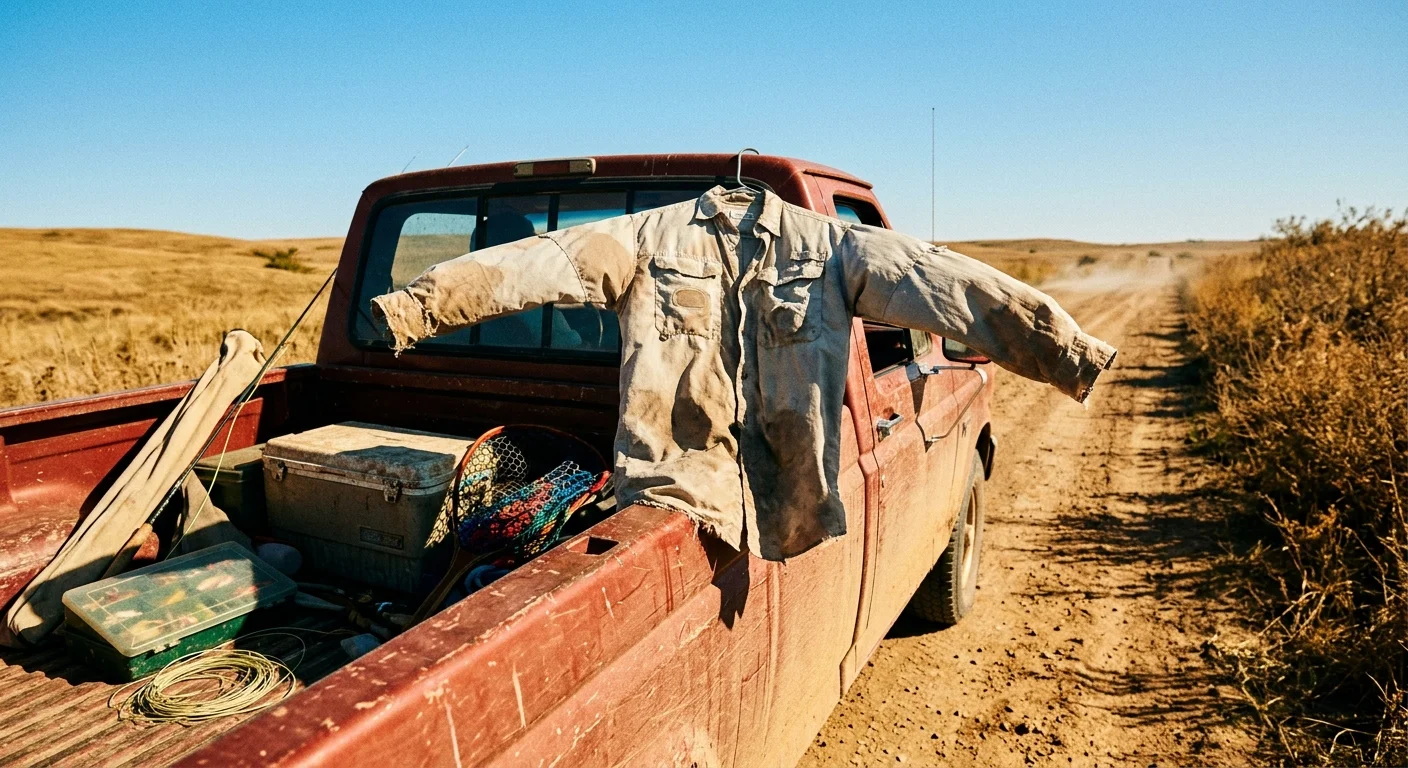
Thirty dollars buys you a fishing shirt. It does not buy you a fishing shirt that keeps pace with you.
That's the honest summary of this tier — and it's not a dismissal. The right angler on the right schedule gets solid value from a $25–$40 synthetic shirt. It covers the basics. It skips features you'll never use. The key is knowing where the trade-offs fall.Retailers often compare this tier before stocking wholesale fishing shirts.
The Two Shirts Worth Knowing
KastKing Solarflare (~$22) is the most common entry point in this band. You get standard polyester knit, UPF 50+ blocking, and basic moisture-wicking with quick-dry claims. Fabric weight runs 170–200 GSM — heavier than mid-tier options — with minimal stretch under 8%. It pulls sweat off your skin. It does not dry fast. Plan for 25–35 minutes to full recovery after a heavy sweat in humid air.
For weekend lake trips, occasional inshore outings, or short sessions under four hours, it holds up. Past 40 trips , UPF retention and color fastness start dropping. Many shirts at this price point lose real sun protection within 10–15 wash cycles .
Magellan (~$25) , Academy's house brand, runs hotter and dries slower than lighter-built shirts. Independent comparisons put anglers 5°F cooler in lighter-weight options. Dry time lands in the 20–30+ minute range after full saturation. That works for a half-day session. A full tournament day in coastal humidity is a different story.
Who This Tier Fits
Fishing fewer than 20 days per year ? Budget tier makes sense. The performance gaps are real, but they're tolerable at low frequency. Cost-per-use sits around $0.55–$0.63 per day — fair value for a shirt that sees eight weekends and spends the rest of the year in the garage.
Go past 20 days per year, and the math shifts. A mid-tier shirt at $55 worn 150 times runs closer to $0.30 per day — cheaper per trip, clearly better in humidity, and built to hold UPF 50+ through 100+ wash cycles.
Stretching Entry-Tier Performance
Staying in this price range? One layering move adds real comfort:
Wear the entry-tier shirt as an outer layer over a lighter 4.0–4.5 oz/yd² poly–elastane long sleeve underneath. The inner layer handles wicking. The outer layer handles UV. You get moisture-wicking and quick-dry synergy without paying mid-tier prices for one garment.
Keep total fabric weight under ~5 oz/yd² across your torso. Go above that, heat builds and dry time climbs — once air temperature crosses 75°F , this compounds fast.
Add UPF arm sleeves and a neck gaiter instead of layering heavier shirts. More coverage, less bulk, better airflow.
Entry-tier synthetic fabric is a starting point — nothing more. For casual anglers, it's enough. For hard fishing in high humidity or back-to-back days on the water, this tier will show its limits by midafternoon.
Mid-Tier Custom & Tech Blends ($40–$70)
Spend $55 on a fishing shirt and something changes. Not in a dramatic way. Not anything you'd notice standing in a store. But six hours into a humid inshore session — your entry-tier shirt is plastered to your lower back, and the guy next to you looks fresh off the rack. That's where the gap shows itself.
This price band is where fabric engineering starts doing actual work.
What the Fabric Is Doing Differently
Mid-tier shirts in the $40–$70 range are built on 130–160 GSM microfiber polyester . That's lighter than the 170–200 GSM weight you find in most budget options. The weight difference isn't about looks. Lighter fabric moves air. It dries faster. It doesn't trap heat against your torso three hours into a flats wade.
These fabrics also combine two separate mechanisms that entry-level shirts rarely put together:
Mechanical capillary wicking — engineered yarn cross-sections and knit patterns that pull sweat away from skin and spread it across a wider surface area
Chemical wicking finish — a surface treatment that lowers fabric surface energy, speeding up moisture release once it hits the outer layer
That combination is the difference between a shirt that feels damp-but-manageable and one that keeps the skin-fabric interface dry during continuous casting.Advanced moisture management is becoming a standard feature in private label fishing apparel. Entry-level polyester handles one or the other. Mid-tier tech blends handle both at once.
Anti-microbial treatments at this tier — silver-ion or quaternary-based finishes — hold 70–85% of original moisture transport performance through 20 wash cycles . That drops to around 50–60% by cycles 40–50. Budget shirts often lose their functional finish by cycles 15–25. After that, you're left with basic quick-dry behavior and nothing more.
The Construction Difference Nobody Talks About
Fabric gets most of the attention. Construction matters just as much — it just doesn't get the press.
Mid-tier shirts move seams out of your way:
Raglan or forward-rotated shoulders shift seam bulk away from the acromion — the exact spot where reel handles and pack straps grind during overhead casts
Flatlock or cover-stitch seams at underarms and side panels remove the friction ridge that builds up during jerkbait retrieves and kayak paddle rotations
Bar-tack reinforcement at shoulder yokes, sleeve cuffs, and hem vents stops seam creep after thousands of casting motions
Entry-level shirts use standard tubular construction with set-in sleeves. The seam sits right on the acromion. After a full day of casting, you feel it.
Specs by Use Case
Use Case | GSM Target | Key Spec Priority |
|---|---|---|
Charter/tournament uniforms | 140–160 GSM | Full sublimation, UPF 50+, odor control rated 30–50 wash cycles |
Warm-water inshore retail | 130–145 GSM | Lighter hand-feel, hood option, high airflow |
Kayak/PFD-heavy fishing | 130–150 GSM + 3–5% spandex | 18–22% multi-directional stretch, flatlock seams, anti-odor finish |
Tropical flats and reef | 120–135 GSM short sleeve | Low cling, high airflow, rapid dry after spray |
The spandex upgrade matters for anyone doing repetitive overhead casts or jigging. Base mechanical stretch from knit structure runs 8–15% horizontal . Add 3–5% spandex and you get 18–25% multi-directional stretch . That's enough to feel the difference across a full casting session. It doesn't compromise sublimation print stability either.
What You're Paying For
At $55, the cost-per-use math flips. A mid-tier shirt worn 150 times runs around $0.30–$0.37 per day . That's cheaper per trip than a $25 entry shirt worn 40 times before UPF retention and color fastness start to fade.
Sublimated graphics on 140–160 GSM tech fabric hold >90% color density past 50 wash cycles . Entry-level prints on 110–120 GSM fabrics fade well before that mark.
The mid-tier is not a luxury tier. It's the tier where the shirt stops being a liability on long fishing days — and starts being a tool.
Premium Tournament-Grade Apparel ($70+)
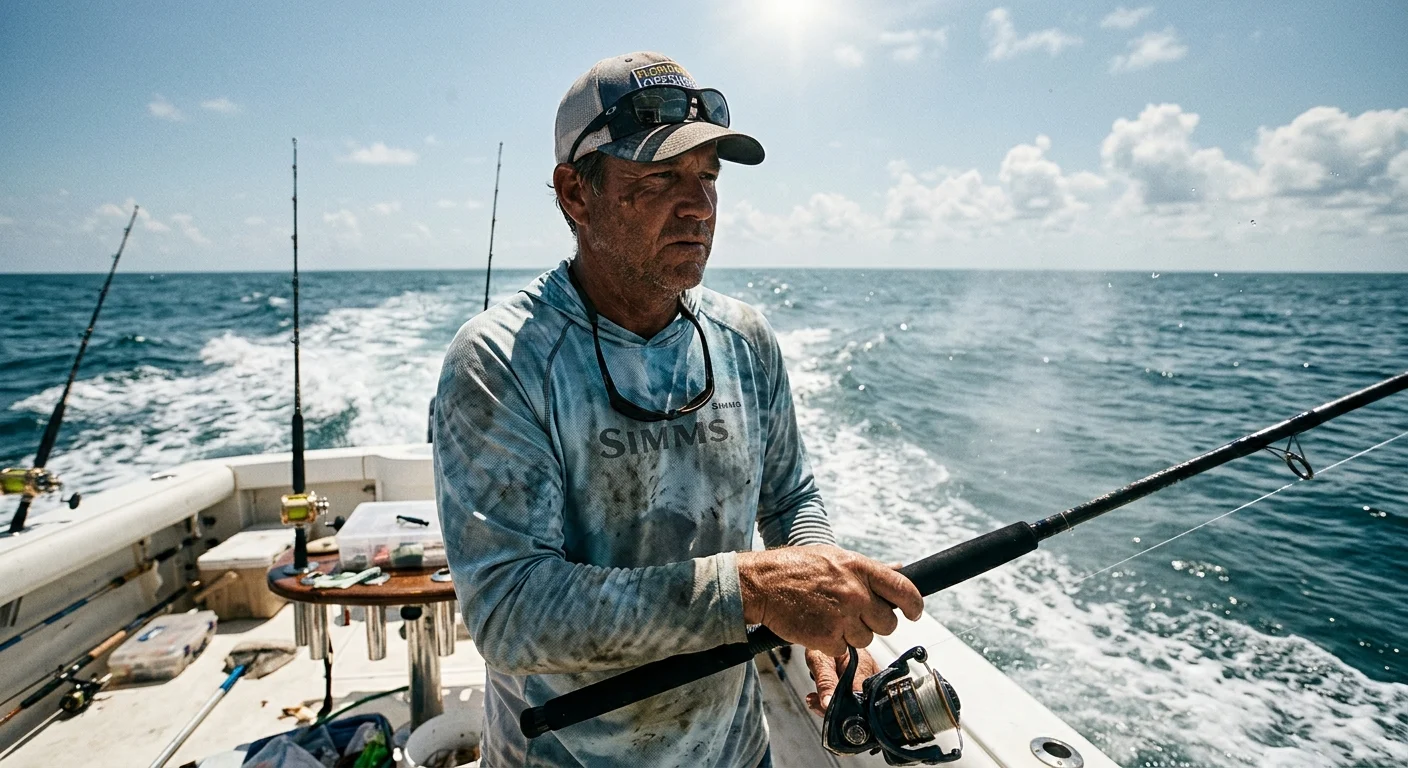
Day two of a three-day tournament. Hour ten. Running hard between offshore waypoints. That's the moment your shirt stops being clothing and becomes a problem. This tier exists to fix that.
At $70 and above, you're not paying for a shirt. You're paying for a system.A capable fishing apparel factory can reproduce many of these premium fabric technologies.
What the Fabric Does Differently
Start with 130–155 GSM . That's the weight range for premium tournament knits and stretch wovens. It runs about one-third the weight of a standard cotton tee. It's also noticeably lighter than the 160–200 GSM polyester in mid-tier options. That weight gap isn't just a number. Lighter fabric moves air. It sheds moisture faster. After eight hours of hard casting in 90°F coastal humidity, it keeps your skin surface temperature 1–3°C cooler than a heavier mid-tier shirt under the same conditions.
Two construction categories define this tier:
Tournament Sun Hoodies (AFTCO / Huk benchmark, $70–$100 range):
- Micro-denier polyester knit with cross-channel yarn architecture — pulls sweat off your skin and spreads it across a wider evaporation surface
- Xylitol-based cooling treatments that drop fabric touch temperature by ~1–2°C when wet
- Silver-ion or zinc anti-odor treatments built for multi-day tournament wear
- 12–20% stretch for casting, jigging, and gaff work — no shoulder binding
- Full sweat-load dry time: under 30–40 minutes in moving air
Offshore Tech Shirts (Simms / Grundéns benchmark, $80–$120 range):
- Dual-denier body fabric — tougher face yarn handles rod belt and harness abrasion, softer inner yarn sits against your skin
- Laser-cut vent panels at upper back and side body, using 90–110 GSM mesh for airflow
- Phase-change microcapsules (PCM) in the yarn finish that buffer 1–2°C temperature swings as sun and cloud cycles shift through a tournament day
- Lab wicking height: 10–15 cm per 30 minutes — that's 3–5× the spread rate of mid-tier woven blends
- AATCC-tested colorfast dyes rated for 100+ simulated UV hours without shoulder or hood fade
The Seam Architecture Nobody Talks About
Premium shirts move seams away from your body's high-friction zones. Most anglers don't realize how much this matters until they've worn one.
Flatlock or bonded seams at the shoulder and side panels remove the friction ridge that standard overlock construction puts right under PFD straps and fighting harnesses. Forward-rotated shoulder seams and gusseted underarms push bulk away from the acromion — the spot that absorbs thousands of small impacts across a full casting day. Pre-curved sleeve geometry stops forearm fabric from twisting on reel handles during long trolling or jigging sessions.
The result: under harness load on days two and three, salt-crystal abrasion drops sharply . Mid-tier shirts with standard seam placement pool sweat at the lower back and chest. That saltwater dries against overlock seam ridges and creates friction points. Those friction points are where the raw spots come from.
Why the $70+ Price Tag Makes Sense Over Time
The durability gap is where premium apparel earns its price:
UPF retention : Premium shirts use yarn cross-section and tight weave density — not just surface treatments — to reach UPF 50+. That rating holds past 30–50 wash cycles . Mid-tier chemical UPF treatments start breaking down around cycles 10–20.
Color integrity : Solution-dyed polyester and high-grade disperse dyes hold >90% color density past 50 washes . Dark tournament colors on offshore shirts are tested to 100+ simulated UV hours without fade.
Odor control longevity : Premium anti-microbial treatments keep 70–85% moisture transport performance through 20 wash cycles . That's the range where a shirt still works on back-to-back tournament days — not just technically wicking, but performing.
The Performance Case for Long Tournaments
Dry time matters on long runs. Premium shirts dry in under 40 minutes versus 60–90 minutes for mid-tier. That cuts evaporative chill at speed and reduces heat stress when the boat stops. Stable skin temperature from PCM finishes and solid moisture transfer means your body produces less sweat overall. Less sweat means less electrolyte loss across a 12-hour day. In the final hours of a tournament, that difference shows up in your focus and reaction time.
Overnight recovery gets better too. Less skin irritation and more stable core temperatures mean you wake up on day two closer to full capacity — not already behind from day one's heat load.
What to check on the spec sheet before buying:
130–155 GSM knit or stretch woven — pass on anything heavier for hot-weather saltwater use
UPF 50+ with wash-cycle durability spelled out, not just a hang-tag claim
10–20% stretch with articulated shoulder patterning and gusseted underarms confirmed
Dry-time metrics and wicking height data published by the brand — no data means no proof
Multi-day odor control with wash-cycle rating, flatlock or bonded seams, and DWR or C6 finish for salt and stain resistance
A shirt at this price point should answer all five points on its product page. If it can't, you're paying for the logo — not the fabric.
Angler-Focused Quick-Decision Purchase Flowchart
Five variables. One shirt. Run through them in order.
Start with your environment. Move to humidity and wind. Then activity level. Then fabric type and GSM. Then budget tier. Finish with a comfort-trigger check before you buy. Each step cuts the options down. At the end, you have a specific fabric type, a GSM target, and a budget tier. Not a category. A decision.
Step 1: Name your environment.
Hot / humid inshore, marsh, tropical bank → wicking priority
Hot / dry desert lake, open reservoir, high plains → quick-dry priority
Mixed coastal (humid mornings, dry afternoons) → dual-layer approach
Cooler / windy offshore or large lake → quick-dry shell + wicking base
Step 2: Classify your humidity and wind.
Condition | Fabric Direction |
|---|---|
RH ≥ 60%, low wind | Internal sweat transport first — moisture-wicking knit |
RH 40–60%, moderate breeze | Balanced — wicking finish + quick-dry structure |
RH ≤ 40%, high wind / open water | Surface evaporation first — DWR-treated quick-dry |
Step 3: Match your activity output.
Kayak / active casting all day → lighter GSM (100–150), wicking-forward, close athletic fit
Offshore / surfcasting / spray-heavy → mid GSM (140–180), quick-dry face fabric, relaxed fit
Static bank or dock → GSM 130–160, balanced wicking and dry, regular fit
Step 4: Lock your GSM.
Daytime temps above 82°F + high activity → 100–130 GSM , wicking priority
Mixed temps 72–86°F, varied activity → 130–160 GSM , balanced
Mild or windy, expect to layer → 160–200 GSM outer, paired with 90–130 GSM wicking base
Step 5: Drop into your budget tier.
Fishing fewer than 20 days/year → Tier 1 entry polyester, UPF 30–50, basic wicking
Regular angler, mixed climates → Tier 2 engineered knit, DWR finish, vented construction
2–3 days/week, multi-day trips → Tier 3 mapped wicking, multi-denier yarn, odor control rated for 30+ wash cycles
Final check — your comfort trigger.
Answer one question before you confirm the buy:
"Does your main discomfort come from overheating inside the shirt — or from the shirt staying wet on the surface?"
Overheating / sweaty feel inside → confirm fabric says "moisture-wicking" or "cooling," GSM ≤ 150, close-to-body fit
Wet surface / damp sleeves → confirm fabric says "quick-dry," "DWR," or "water-repellent," GSM ≥ 140, regular or relaxed fit
Both are a problem → go hybrid: high-wicking base (100–140 GSM) under a quick-dry shell (150–190 GSM). Stick to Tier 2–3 — that's where both functions are built into the same system and tested to hold up
That's the full chain: environment → humidity/wind → activity → GSM → budget tier → comfort trigger. Each step answers one question. Together, they point to the shirt that works for the way you fish.
Conclusion
Here's what matters most: you were never confused about fabric — you were confused about your own fishing conditions.
Moisture-wicking moves sweat away from your skin. Quick-dry gets the shirt dry fast. One solves comfort during the grind. The other solves recovery between casts. Most anglers need both — but which one to prioritize depends on where you fish, not which brand shouts louder on the hang tag.
Wade-fishing a humid Georgia creek at 7 a.m.? That's a different body than the guy soaking spray on a Gulf charter at noon. The hydrophobic fabric technology in a $70 tournament shirt isn't marketing padding. But it's not worth $70 if you're fishing three Saturdays a year.
Pick your scenario. Match the matrix. Buy the shirt that fits the water, not the hype.
The fish don't care what you're wearing. But you will — three hours in.The same fabric principles apply when developing custom fishing shirts for your own brand or team.