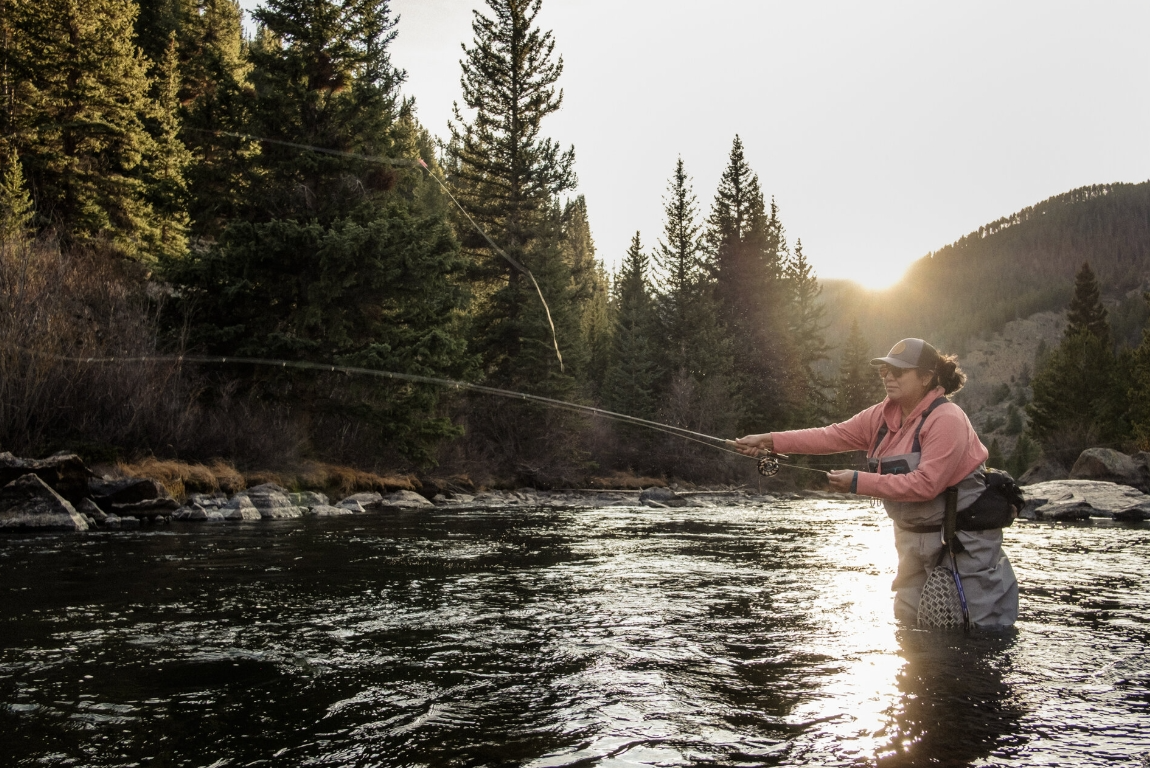
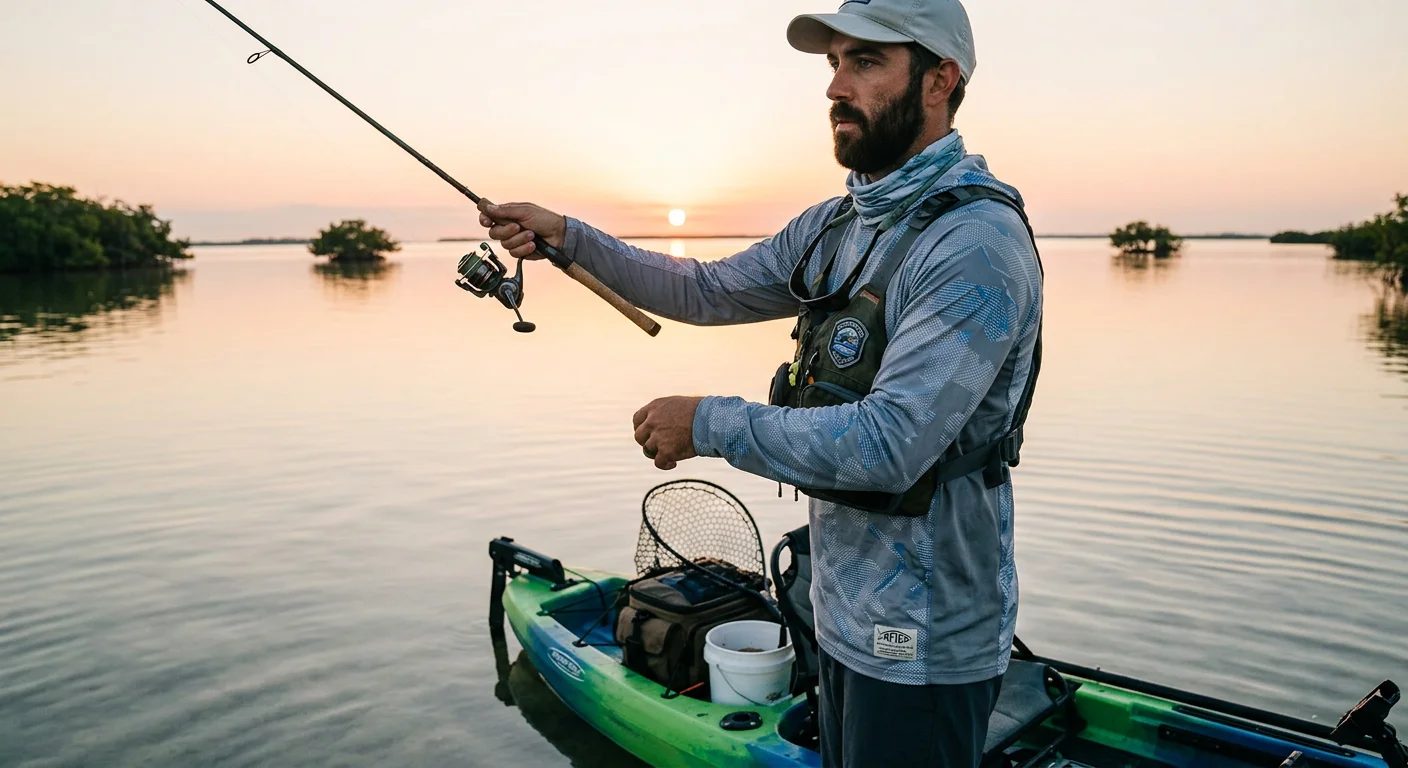
Every fishing apparel buyer hits the same painful moment: you've locked your Q3 budget into one sleeve length, and the sell-through data tells a story you didn't see coming. The long sleeve vs short sleeve decision isn't just a product preference call — it's a margin protection strategy hiding inside a wardrobe choice.
Get the ratio wrong, and the damage is real. You're either stuck with slow-moving UPF 50+ sun protection shirts through peak season, or turning away customers because your short-sleeve rack ran dry in week two.
This guide is a data-backed procurement framework built for retailers, wholesalers, and e-commerce sellers.Many buyers also use this data when evaluating a reliable fishing shirts manufacturer. You'll find concrete stocking ratios, regional demand curves, and real profit benchmarks — not another consumer-facing product review.
Functional Comparison & Fishing Shirt Fabric Technology Breakdown
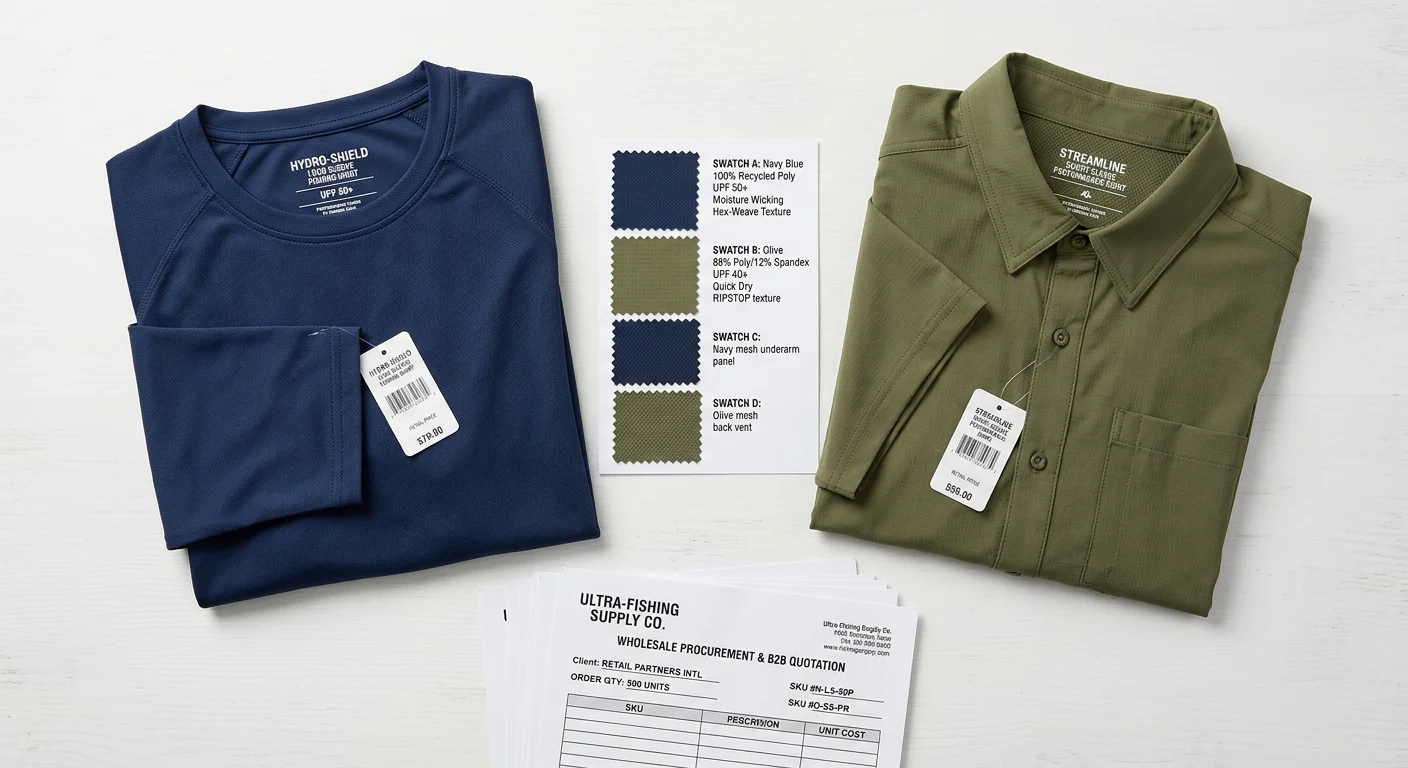
Sleeve length isn't a style decision — it's an engineering decision. Knowing the fabric technology behind each option is what separates buyers who stock with confidence from buyers who guess and get burned.
Here's the core reality: long-sleeve performance fishing shirts cover 85% of the upper body (torso, full arms, shoulders) and deliver UPF 50+ protection that blocks 98%+ of UV rays. Short-sleeve designs cover around 45% — torso only — and most budget poly-cotton short-sleeve shirts sit at just UPF 15–30 . That's not a minor gap. That's a different product category.Fabric specifications directly influence the fishing shirts wholesale price across different markets.
Side-by-Side: What Wholesale Buyers Need to Know
Feature | Long Sleeve (Wholesale) | Short Sleeve (Wholesale) |
|---|---|---|
Upper Body Coverage | ~85% (torso + full arms + shoulders) | ~45% (torso only) |
UV Protection Standard | UPF 50+, blocks 98%+ UV | UPF 15–30, blocks ~93–97% UV |
Thermal Performance | Cools better above 85°F via larger evaporative surface + solar blocking | Better for short, high-intensity bursts; higher direct solar load on bare arms |
Fabric Weight | 110–140 GSM (3.2–4.1 oz/yd²) | 90–120 GSM (2.6–3.5 oz/yd²) |
Typical Composition | Polyester/nylon blend + 10–15% elastane | Polyester-dominant knit + 5–8% elastane or less |
Wash Durability | 50+ wash cycles with stable UPF and minimal pilling | Budget blends can thin or snag after just 5–10 washes |
The durability gap has a direct impact on your return rates. More on that in the margin analysis section.
The Fabric Technology Shift That Changed the Long Sleeve Argument
For years, short sleeves dominated casual fishing markets for one simple reason: airflow. Bare arms feel cooler right away. That logic was hard to argue against.
Modern performance fabric technology broke that logic.
Today's long-sleeve UPF 50+ shirts use engineered micro-mesh ventilation systems — laser-cut underarm perforations, back yoke vents, mesh-panel back sections. These features cut heat buildup by up to 40% compared to non-vented shirts. Lab-tested vented designs drop perceived core temperature by 2–4°F versus a standard cotton shirt during peak sun hours.
This mechanism matters for how you pitch these products to buyers:
Long sleeves create a fabric microclimate. The shirt blocks radiant solar heat while still letting moisture vapor escape. Net result: cooler skin than bare arms in direct sun above 85°F.
Larger evaporation surface = more efficient cooling. A long-sleeve shirt has more surface area to push moisture out. Short sleeves concentrate sweat into smaller zones. Those zones saturate fast and lose cooling efficiency.
Polyester-dominant blends wick moisture 3× faster than cotton and cut dry time by 60%. On top of that, they maintain UPF protection when wet — cotton loses much of its effective UPF once saturated.
Quick-Dry Performance & Fabric Weight: The Numbers That Matter at the Buying Desk
Here are the benchmarks worth knowing before you place wholesale orders:
Performance fishing shirts use fabrics under 4.5 oz/yd² with micro-channel constructions for fast moisture transport.
Long-sleeve UPF 50+ models at 3.2–4.1 oz/yd² hit the sweet spot. Dense enough to block UV, but engineered knit zones keep them breathable.
Short-sleeve quick-dry tops at 2.6–3.5 oz/yd² maximize airflow and packability. The trade-off: lower fabric density reduces inherent UPF unless the fabric has been treated with a UV-blocking chemical finish. That finish washes out over time.
Quality moisture-wicking synthetics dry 5–7× faster than cotton . You can expect them to feel dry again within 15–20 minutes after heavy sweating.
The bottom line for procurement: Short-sleeve shirts win on airflow and lower unit cost. Long-sleeve performance shirts win on UV compliance, durability, thermal regulation above 85°F, and wash-cycle lifespan. Retailers targeting guide outfitters, offshore anglers, or tropical markets with sun protection requirements will find long-sleeve SKUs far easier to justify technically — and that technical edge translates into smoother sales conversations at higher price points of fishing shirts.
Regional Climate & Seasonal Fishing Gear Demand Analysis
Climate doesn't just influence what anglers wear — it dictates what you order, when you order it, and in what ratio.
The biggest procurement mistake specialty retailers make is treating sleeve length as a seasonal binary: short sleeves in summer, long sleeves in fall. Real demand is far more nuanced. Get this wrong and you're either leaving margin on the table or sitting on dead inventory at the end of the season.
Here's the regional breakdown that matters for your buying decisions.
Temperate Markets (Northeast US, UK, Northern Europe)
Spring UV intensity is the data point most buyers miss. At air temperatures of 45–60°F , solar UV reflection off water surfaces adds 10–25% UV load . Residual snow reflection pushes that number to 85% . Your UPF 50+ long-sleeve SKUs are necessary before it ever feels like "sun protection weather."
Demand pattern for temperate climates:
Long-sleeve UPF 50+ shirts work as a year-round base layer. Anglers wear them under wind shells in spring and fall, then standalone during the summer peak.
Short-sleeve tops fill the role of warm-peak promo drivers (June–August) and end-of-season clearance movers.
Short-sleeve sell-through drops an estimated 40–60% from summer peak into Q4 as layering picks back up.
Tournament culture in these regions drives long-sleeve demand. Serious anglers competing in multi-day events need high collar + extended back hem coverage for dock and weigh-in exposure.
Recommended stocking ratio — Temperate North:
SKU Type | Recommended Volume Share | Primary Window |
|---|---|---|
Long-sleeve UPF 50+ technical | 70–80% | March–October (core); Nov–Feb (layering base) |
Short-sleeve quick-dry | 20–30% | June–August peak; clearance Sept–Oct |
Order timing: standard 45–60 day manufacturing lead times mean your main tournament shirt PO should drop in March–April to hit the May–August demand window.
Tropical & Southern Markets (Florida, Gulf Coast, Southeast Asia, Caribbean)
In high-heat, high-humidity markets, the picture flips — but not all the way.
Short sleeves dominate casual and recreational volume. Baseline comfort drives that. Still, the premium long-sleeve UPF segment carries outsized margin. Offshore charter captains, flats guides, and serious tournament anglers in these markets follow a "full coverage first" principle — a long-sleeve UPF 50+ shirt paired with a gaiter, wide-brim hat, and sun gloves. That's a $150+ outfit built around your technical long-sleeve SKU as the anchor piece.
Recommended stocking ratio — Tropical/Southern:
SKU Type | Recommended Volume Share | Positioning |
|---|---|---|
Short-sleeve lightweight quick-dry | 60–70% | Everyday fishing, lifestyle, boat wear |
Long-sleeve UPF 50+ technical | 30–40% | Premium "guide/pro-grade" tier, higher ASP |
For color mix: stock light colors (whites, pale blues, light greys) across at least 60–70% of your long-sleeve offshore volume . Heat reflection isn't a marketing talking point here. It's a functional requirement — anglers ask for it by name.
High-UV Markets (Australia, Rocky Mountain West, Coastal Middle East)
These markets run on a different standard. UPF 50+ isn't a premium feature — it's the floor. Any technical fishing shirt rated below UPF 30 belongs in your lifestyle or clearance assortment, not your core range.
Procurement rule for these regions: ≥80% of technical fishing shirt SKUs should carry UPF 50+ certification . Focus on long-sleeve styles with roll-up tabs or convertible sleeve options and mesh ventilation panels in the 100–130 GSM fabric weight range . That keeps the shirt light enough for extreme heat and structured enough to hold UV integrity wash after wash.
Short sleeves fill a narrow role in these markets: night fishing, low-sun sessions, or sponsor-placement tournament rules. They won't drive your volume.
Reorder Cadence: The Operational Framework
Knowing the ratios isn't enough. Execution timing is where the margin actually lives.
Long-sleeve UPF 50+ core SKUs : run a 30–45 day rolling reorder review during peak season. Keep safety stock covering at least one full tournament cycle (4–8 weeks of sell-through) .
Short-sleeve SKUs : front-load inventory before summer. Then start aggressive markdowns in late August across temperate markets — demand won't come back until the following June.
Spring striped-bass and early-season tournament fisheries (March–June in the Northeast) create a secondary demand spike. Most buyers under-stock for it. Build a dedicated UPF 50+ long-sleeve allocation for this window alone.
Angler Persona & Use-Case Preference Mapping
Five distinct buyer types walk into fishing apparel stores. Each one has a different sleeve preference, a different fishing shirts price ceiling, and a different reason opening their wallet. Stock without knowing who they are, and you're guessing.
Here's how to match your long sleeve vs short sleeve inventory to the people buying it.
The Five Segments — and What They Want
Offshore & Tournament Anglers
These are your highest-value customers. Full-day offshore runs mean 6–12 hours of direct UV exposure, salt spray, and blood/bait contact. Long sleeves dominate this segment. Specialty retailers run 70–85% long-sleeve SKUs in their core saltwater performance range. Price tolerance sits at $65–$110 retail . At that price point, buyers expect UPF 50+ certification, stain-release finishes, and at least 1–2 seasons of heavy use without pilling or seam failure.
Freshwater & Recreational Bank Anglers
This segment drives your foot-traffic volume. Sessions run 2–6 hours, often mixed with camping or backyard activities. Short sleeves dominate — not because anglers don't care about sun protection, but because comfort, casual aesthetics, and versatility matter more. Price bands cluster at $25–$50 . Graphic tees and basic quick-dry performance shirts drive the bulk of transactions. Plan for promotion-driven buying: BOGO deals and endcap displays move more units than technical spec sheets.
Professional Guides & Outfitters
This is your most reliable B2B revenue stream. Guides buy in cycles of 20–50 units per order . They need consistent sizing across seasons and treat apparel as operational equipment — not fashion. Their sleeve split lands at 70% long / 30% short . Long sleeves cover sun-exposed captains and deckhands. Short sleeves fill shop staff and shoulder-season roles. Logo placement and reorder reliability matter more than seasonal colorways.
Cross-Border E-commerce & Dropshippers
Short sleeves win on ad performance — higher click-through rates, lower displayed price, easier design iteration. Long sleeves win on Average Order Value . Bundle a UPF 50+ performance shirt with a gaiter and cap, and you've built a "pro kit" offer. That bundle converts aspirational anglers at 2–3× the short-sleeve ticket price.
Youth & Entry Segment
Short-sleeve graphic tees at $15–$30 are the entry point. The long-term play is the upsell. Once a young angler hits their second or third season — guided trips, junior tournaments, fishing camps — they're ready for long-sleeve performance gear. Retailers who capture that transition own a customer with high lifetime value.
Persona Mapping: A Quick-Reference Grid
Segment | Sleeve Lean | Price Band (Retail) | Purchase Mode | Key Decision Driver |
|---|---|---|---|---|
Offshore / Tournament | 70–85% Long | $65–$110 | Individual / Team kits | UPF 50+, durability, brand |
Freshwater / Recreational | 60–75% Short | $25–$50 | Individual / Promo-driven | Comfort, value, versatility |
Pro Guides & Outfitters | ~70% Long | $45–$85 | Bulk (20–50 units/cycle) | Reorder reliability, logo placement |
E-commerce / Dropship | Short for ads, Long for AOV | Variable | Small-batch / On-demand | ROAS, visual contrast, bundling |
Youth / Entry | Short → Long over time | $15–$50 | Parent-driven / Program | Sun safety, graphics, price |
The procurement takeaway: your shelf mix should reflect the segment you're serving — not an average of all five. A coastal saltwater shop and a big-box inland retailer both sell fishing shirts. Their ideal long sleeve vs short sleeve ratio should look nothing alike.
Profit Margins, Pricing Tiers & Return Rate Benchmarks
The numbers behind fishing shirts surprise most retailers. The sleeve-length split hits your margin stack harder than it looks.
Here's how it breaks down from cost to realized margin. List margin and take-home margin are two very different things in performance apparel.
The Baseline Pricing Structure
Standard wholesale apparel follows a predictable multiplier chain: COGS × 2.0–2.5 to wholesale, then wholesale × 2.2–2.5 to retail . In practice, a fishing shirt that costs $20 to produce should wholesale at $40 and retail at $88 .
Your margin targets look like this:
Wholesale/brand-level gross margin: 50–60%
Retail/DTC gross margin: 55–70%
DTC pricing multiplier: COGS × 3.5–5.0, targeting 65–80% gross margin before operating costs
Those numbers look strong on paper. The real problem sits between list margin and realized margin.
Where Long Sleeve vs Short Sleeve Split Apart
Long-sleeve performance fishing shirts carry a $4–$6 higher base wholesale cost . That's driven by 15–25% more fabric content. To cover that cost and hit your margin targets, you need an ASP that runs 20–30% higher than short-sleeve styles.
That's a reachable target. The UPF 50+ certification, strong wash durability, and technical features — ventilation panels, stain-release finish, stretch fabric — give you solid price justification at the buying counter. Technical buyers don't push back on price the way casual shoppers do.
Here's how the two SKU types stack up as margin-planning tools:
Metric | Long Sleeve (Technical) | Short Sleeve (Standard) |
|---|---|---|
Typical Wholesale Cost | $24–$32 | $18–$26 |
Target Retail ASP | $65–$110 | $25–$55 |
List Gross Margin (Retail) | 58–68% | 52–62% |
Estimated Return Rate | 5–8% | 9–12% |
Realized Margin (Post-Returns) | ~50–60% | ~42–52% |
Annual Inventory Turns | 3–5× | 5–7× |
Most buyers skip right past the return rate gap. That's the number that eats into profitability over time.
The Return Rate Problem (and Why Long Sleeves Win Here)
Online apparel returns average 24–40% of orders . That's close to double the all-ecommerce average of 17%. For mid-market fishing shirts across a mixed category, a working benchmark is 12–18% returns .
The long sleeve vs short sleeve split within that range matters a lot.
Long-sleeve technical shirts return at 5–8% . The purchase is research-driven. Customers buying a UPF 50+ performance shirt for offshore fishing know what they want. They've read specs. They've compared certifications. That level of intent cuts down on impulse returns.
Lower-priced custom fishing Short-sleeve shirts — , casual-positioned SKUs in particular — land in the 9–12% return range . The buy is more impulsive. Fit issues, color disappointment, and "not quite what I pictured" returns show up far more often.
Here's what that does to realized margin. A style listed at 55% gross margin can drop to 42% net once return shipping, inspection labor, and markdown recovery get absorbed. That math gets worse for short-sleeve high-velocity SKUs during clearance windows.
Planning rule: model your short-sleeve SKUs at realized margin ~10 percentage points below list. Model long-sleeve technical SKUs at ~8 points below list. That gap compounds across a full season's volume.
MOQ Tiers & Cost Reduction Strategy
Your margin floor depends on how you buy, not just what you sell.
Standard wholesale breakpoints land at 50 / 150 / 500 units . At 300+ units, an 8–12% cost reduction is a fair negotiation target. That's not a small number. On a $26 wholesale shirt, you recover $2.08–$3.12 per unit . You'll need that cushion for seasonal promotions or end-of-rack clearance on short sleeves in late August.
Practical MOQ strategy by sleeve type:
Long-sleeve core SKUs: commit to 150–300 units per colorway on your proven UPF 50+ performers. The lower turn rate (3–5×) means cost efficiency needs to be locked in before the season starts.
Short-sleeve high-velocity SKUs: front-loading at 300–500 units works well for the summer push. Build your markdown calendar before you place the PO. Demand won't come back until the following June in temperate markets.
The Bottom Line on Margin Planning
Healthy fishing apparel retailers net 10–20% per item DTC and 8–15% at wholesale — before elevated return rates take their share. To protect those numbers across a mixed sleeve-length assortment:
Price long-sleeve technical SKUs at a 20–30% ASP premium over comparable short-sleeve styles. The spec justification supports the price.
Model returns on the conservative side: 5–8% for long sleeves, 9–12% for short sleeves. Adjust your realized margin projections to match.
Use MOQ tiers as a margin tool — negotiate cost reductions at 300+ units to protect promotional headroom.
Don't let slow inventory turns on long-sleeve SKUs mislead you. Lower turns with higher per-unit margin and fewer returns often beats high-turn short-sleeve volume on a net margin basis across a full fiscal year.
Short sleeves move faster. Long sleeves earn more per unit and come back less often. A smart assortment puts both to work — on purpose.
Data-Driven Inventory Allocation Ratios by Market
Most fishing apparel retailers set their long sleeve vs short sleeve split based on gut instinct. That's how you end up with 800 units of the wrong style sitting in your warehouse in October.
Here's the framework that cuts out the guesswork.
The Core Rule Before Anything Else
Cap your initial seasonal purchase at 60% of your total apparel budget . Hold the remaining 40% in reserve. Use that reserve within 30 days of season start. Put it straight into your top 3 SKUs based on which ones are selling fastest out of the gate.
Why 60/40? Climate-based demand moves in a clear direction — but the size of that demand is hard to predict. You know a tropical market leans short sleeve. You don't know how hard that demand spikes in week three of peak season. The reserve budget is your safety net. You get the direction right, and the reserve covers you if the volume surprises you.
Climate-Based Allocation Ratios (The Actual Numbers)
Stop applying one ratio across every market you serve. Lock your long sleeve vs short sleeve split to climate — not category instinct.
Market Type | Long Sleeve | Short Sleeve | Primary Driver |
|---|---|---|---|
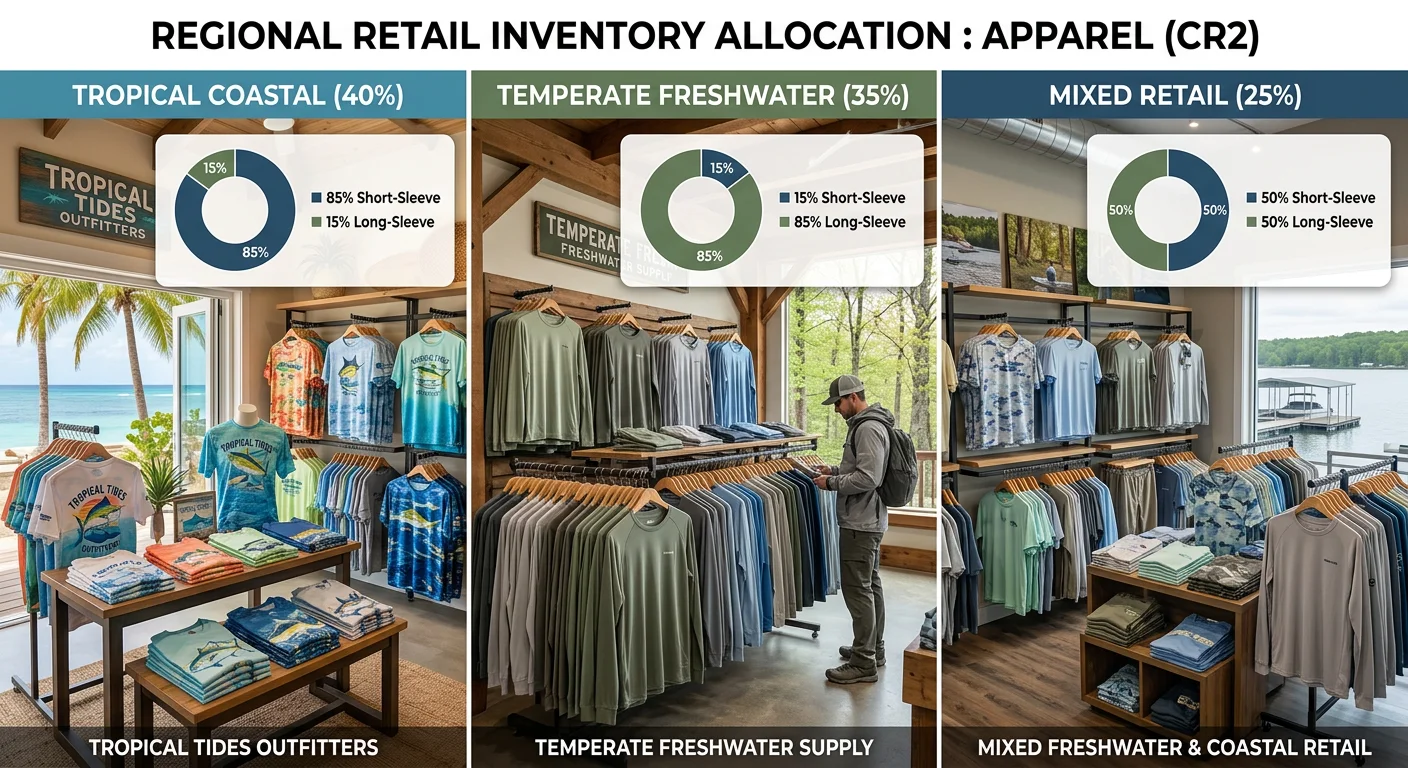
Tropical / Subtropical | 40% | 60% | Heat comfort, casual volume |
Temperate / High Seasonality | 70% | 30% | Shoulder-season layering, guide outfitter demand |
Mixed Freshwater / Lakes | 55% | 45% | Balanced UV + warm-weather recreational traffic |
New Retailer / General E-commerce | 60% | 40% | Safe default; captures UPF migration without over-committing |
These numbers aren't random. The temperate 70/30 long-sleeve lean exists for a clear reason. UPF 50+ sun protection shirts work as year-round base layers in those markets. They're not just summer gear. The tropical 40/60 flip tells a different story. Short-sleeve quick-dry styles dominate casual recreational volume there. But premium long-sleeve moisture-wicking fishing apparel still drives your high-ASP guide tier.
The 30-Day Reorder Decision Rule
Your reserve budget needs a trigger, not a calendar date.
Pull your top 3 SKUs by sell-through at the 30-day mark. Then run them through this decision ladder:
≥90% sell-through → Raise reorder by 25–40%. Pull from reserve budget first.
75–89% sell-through → Small increase, 10–15%. Use a matching share of reserve.
60–74% sell-through → Reorder at current levels. Don't push it further.
<60% sell-through → No reorder. Mark it as excess-risk and keep your reserve intact.
This rule guards your seasonal fishing gear investment from the most common profit killer in outdoor apparel: restocking slow SKUs because you're anxious about running out of the fast ones.
Color Mix Allocation
Use an 85/15 split across your initial buy:
85% in core rotation colors — navy, olive, earth tones, camo patterns, white/light neutrals. These are your A/B inventory items. High review frequency, highest stock depth.
15% in impulse/social-commerce colors — electric blue, bright orange, regional neons. Tie these to your promotional calendar. They move on content, not shelf placement.
For a $100K seasonal budget at 10,000 units, the numbers break down like this:
Initial forward buy: $60,000 → 6,000 units deployed across climate markets
Reserve: $40,000 → 4,000 units held for 30-day reorder
Core colors: 5,100 units | Impulse colors: 900 units
Split that 6,000-unit initial buy by demand forecast — 40% to tropical, 35% to temperate, 25% to mixed freshwater. Then run the climate ratios inside each group. The result is a unit plan that matches climate demand, stays color-disciplined, and keeps your budget protected before a single shirt hits the floor.
Real B2B Retailer Stocking Experience & Turnover Tactics
Three retailers. Three markets. Three different sleeve ratios — all profitable. Here's what their actual POS data showed.
Case 1: Gulf Coast Tackle Chain — When the Data Overrules Your Gut
A multi-store regional chain on the Gulf Coast started with a clean 50:50 split. Seemed logical. After two full seasons of SKU-level POS analysis, the data told a different story.
Summer walk-in traffic — the volume that pays the rent — picked lightweight short-sleeve styles over 60% of the time . The fix was simple: shift the April–September mix to 35:65 long:short .
The results after one year:
Apparel inventory turnover up ~20–25%
Q4 dead stock on warm-weather tops down ~15–20%
The tactic: run POS pulls every week. Flag the bottom 10% of velocity SKUs for bundling or markdown. Protect the top 20% revenue drivers from stockouts at all times.
Case 2: Upper Midwest Freshwater Outfitter — The 75:25 Year-Round Hold
Cold mornings and shoulder seasons shift buying behavior hard. This guide-heavy operation held a 75:25 long:short ratio year-round — no exceptions.
Margin protection came from two moves:
Bundle integration: Long-sleeve technical shirts went into spring rod/reel "early-season walleye kits." Apparel moved alongside fast-turning hardgoods instead of sitting alone on the rack.
Guide fleet contracts: Fixed seasonal minimums of 20–40 garments per boat per season built a steady B2B baseline. Walk-in traffic didn't need to carry the load.
Results over the trailing 12 months: apparel gross margin held at ~50–52% , return rate stayed under 5–7% , and reorder timing became predictable — not reactive.
That last point matters more than most retailers recognize. A solid B2B baseline protects your open-to-buy. A cold, rainy June can kill walk-in traffic for three weeks straight. Your guide contracts keep you from blowing your budget in response.
Case 3: EU/UK Cross-Border E-commerce — Long Sleeves as Hero, Short Sleeves as Add-Ons
This operator rewrote the standard e-commerce approach. Short-sleeve SKUs didn't lead as primary products. Instead, ultra-lightweight moisture-wicking long sleeves became the Q2–Q3 hero product . Short sleeves dropped to low-priced bundle add-ons — not standalone revenue drivers.
Forecasting ran on rolling 13-week demand models . Data came from three sources: marketplace POS data, historical sell-through, and online search signals.
Results:
Technical top inventory turnover: ~3–4× per year — near the top of the specialized apparel benchmark range
Repeat purchase rate within 12 months: ~40–45%
Slow colors and odd sizes cleared through two routes: bundled with bestsellers, or moved through limited-time "last chance" campaigns. No broad discounting on core SKUs.
The Operational Framework That Ties All Three Together
These aren't three separate success stories. They're three runs of the same underlying system.
Govern your SKU mix with a fixed cadence:
Weekly: Check A-item stockout status. Confirm guide/charter backorder coverage.
Monthly: Run SKU-level velocity review. Recalculate long:short ratio by climate segment. Act on any aged stock flagged at 90+ days.
Quarterly: Reset planograms. Renegotiate guide contract terms. Adjust open-to-buy for the next peak window.
Hit these benchmarks — or find out why you're not:
KPI | Target |
|---|---|
Apparel inventory turnover | 3–6× per year (push toward 4×+) |
Carrying cost as % of inventory value | <20% |
Long-sleeve return rate | <7% |
Short-sleeve return rate | <12% |
Run markdown discipline like a step function, not a panic move:
Reposition price first if you're above market on tech long sleeves
Target markdowns on aged seasonal stock — short sleeves past 120 days heading into fall
Keep core technical long-sleeve SKUs off broad discounting
Clear slow colors and sizes through limited-time bundles, not sitewide sales
Retailers hitting 50%+ apparel gross margin aren't doing anything unusual. They run POS reviews on a fixed schedule. They bundle dead stock before it piles up. They lock guide contracts before peak season hits. That's the whole system.
First-Order Sourcing Checklist & Margin Safeguard Framework
Your first fishing shirt order will either build a profitable category — or cost you a painful lesson. One thing separates those two outcomes: structure before you put money down.
Here's the framework that keeps your margin protected from day one.
Cap your initial SKU count at 13 core styles: 8 long-sleeve, 5 short-sleeve.
All 8 long-sleeve styles must carry UPF 50+ certification. Lab test reports must be attached — no exceptions. Short sleeves follow the same standard. Start with solids and micro-patterns. Skip all-over graphics until you have sell-through data to support them.
Your size baseline: S/10%, M/30%, L/35%, XL/20%, XXL/5%.
Shift ±5–7% per size based on your regional sales history. Offshore high-UV markets pull heavier toward L/XL. Hot inshore flats markets shift toward M/L.
The margin floor is fixed: target SKU-level gross margin of ≥45%. That keeps your blended portfolio at ≥40% after mix effects.
Build your landed cost from scratch:
Materials, labor, freight, duties
Inspection and carrying costs
Expected return logistics
Then add marketplace fees (3–15% of ASP). Also factor in a markdown buffer — 10–20% of units at 20–40% discount. Do all of this before you confirm the order.
Most first-time buyers cut corners on Fishing Shirts supplier qualification. Don't.
Get written lead-time commitments of ≤45 days
Require sample turnaround under 7 calendar days from spec lock
Structure payment as 30% deposit / 70% on completion — tied to a third-party pre-shipment inspection, not a verbal promise
Keep your initial PO value at 15–25% of your 6-month conservative category revenue forecast.
That ceiling guards your working capital while you test demand. Pull your 30-day sell-through data first. Let it confirm your top-performing SKUs. Then put your reserve behind those — not a gut call.
Conclusion
The long sleeve vs short sleeve debate isn't a debate at all. It's an inventory math problem you've been solving with gut feelings instead of data.
Here's what the numbers show: long sleeve UPF 50+ sun protection shirts lead year-round revenue in sun-belt and coastal markets. Short sleeves move faster in volume during peak summer windows. Neither style wins alone.
The retailers beating their competition aren't picking sides. They split their stock by season. They adjust ratios based on real data. And they protect margins by stocking the right moisture wicking fishing apparel at the right depth.
Your next move is straightforward:
Pull your regional climate data
Map it against the inventory ratios and angler personas in this guide
Place your first order with actual numbers behind it
Stop guessing. Stock with a plan.
The retailers who get this right first don't just sell more shirts. They become the Long Sleeve Fishing Shirts wholesaler and Short Sleeve Fishing Shirts supplier their customers keep coming back to.