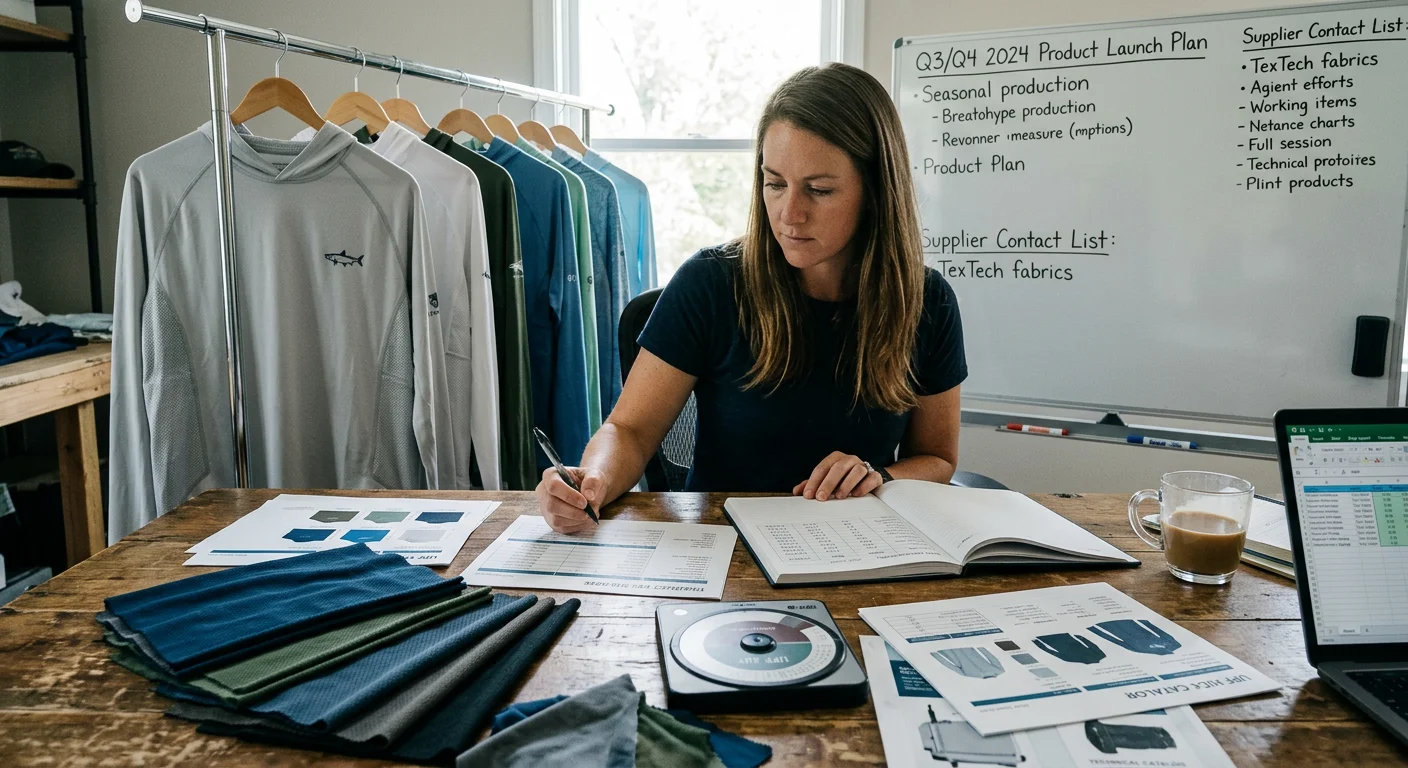
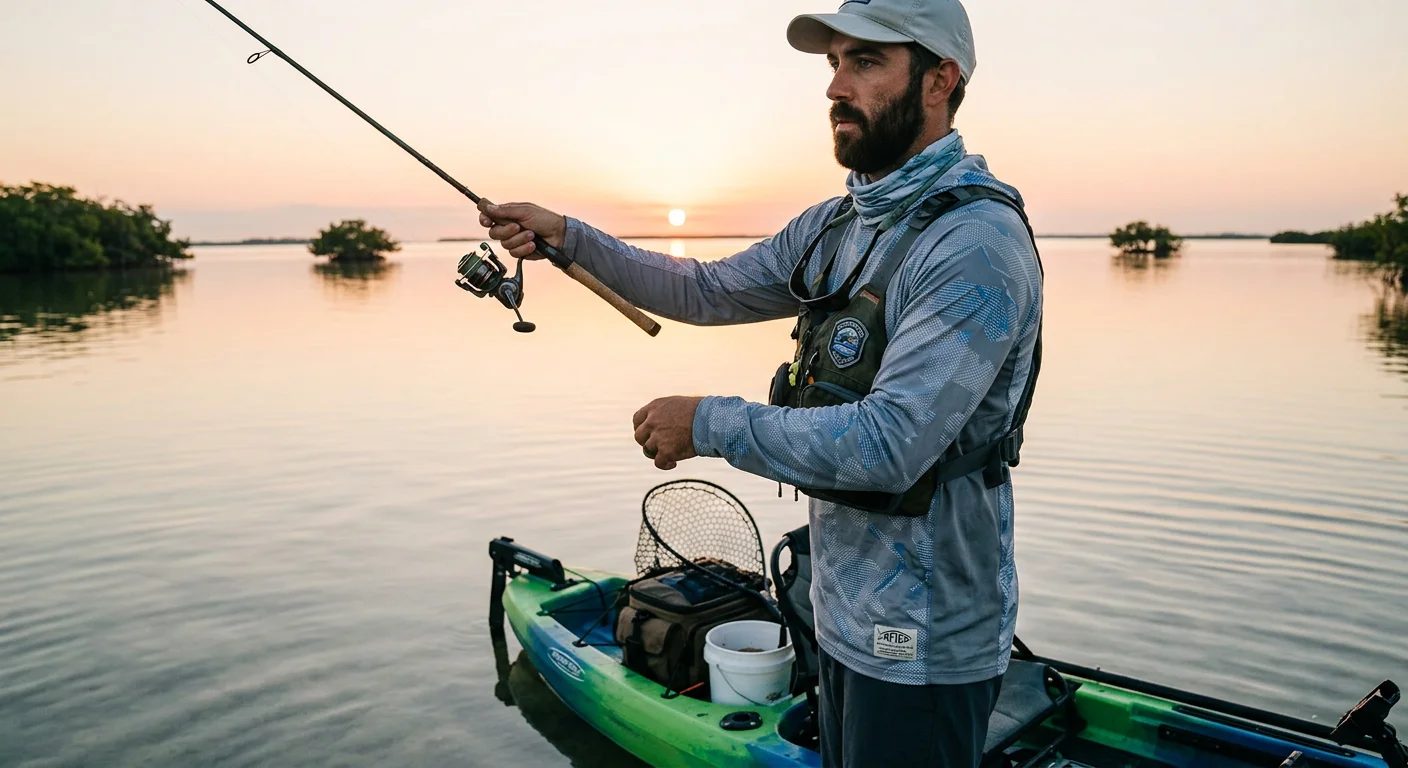
You've watched some guy on YouTube sell out a hoodie drop in six hours. You've seen Salt Life stickers on every tailgate at the boat ramp. And you've thought: I could do that with my own fishing brand... if I had any idea where to start.
You don't need a design degree, a warehouse, or $10k sitting in a business account. You need a Tuesday afternoon, $500, and a plan that doesn't skip steps.
The exact week-by-week path — from your first print-on-demand test shirt to your 100th real customer — is built only for custom fishing apparel, by someone who's actually cast the line first.
Week 1: Launch a Fishing Apparel Brand for Under $500 Using Print-on-Demand
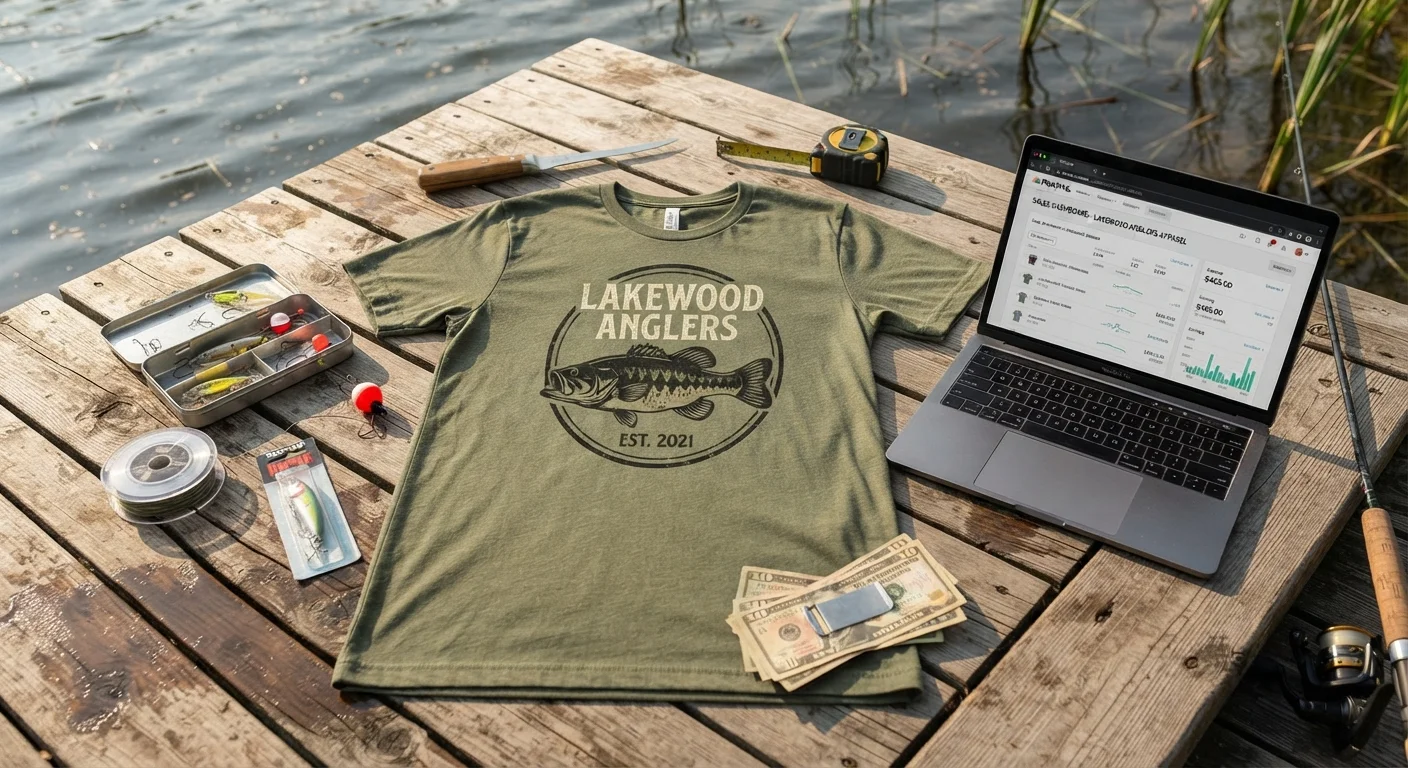
Your first fishing shirt doesn't need inventory, a warehouse, or a business loan. It needs a print-on-demand platform and $500 you're willing to test with. That's it.
Pick Your POD Partner (Test All 3, Commit to None Yet)
Run this side-by-side before you spend a dime:
Platform | Base Cost | UPF Performance | Shipping | Week 1 Verdict |
|---|---|---|---|---|
Printful | $12–$18 | UPF 50+ options available, strong for "performance fishing" branding | 3–7 days | Best print quality, tighter margins |
Printify | $9–$15 | UPF not always guaranteed, check every supplier spec | 7–10+ days | Cheapest way to stay under $500 |
CustomCat | $18–$25 all-in | No explicit UPF guarantee, good for logo-only jerseys | 3–5 days | Best for early logo testing |
Order 2–3 blanks from each. That's 6–9 samples for roughly $100. This tells you which supplier is honest about UPF ratings before your customers find out.
Your $500 Broken Into Real Numbers
Category | Budget | What It Buys |
|---|---|---|
Design | $50 | 2–3 fishing logos (bass silhouette, redfish tail) via Canva or Fiverr |
$100 | 6–9 test shirts across all three platforms | |
Reserved for wholesale fishing apparel | $200 | Untouched until you hit 50 orders |
Promotion | $150 | $15–$25/day ads for 6–10 days |
Active spend: $300. The remaining $200 stays locked until Phase 2.
Build 3 Mockups, Not 30
Skip the temptation to launch a full catalog. You need exactly three:
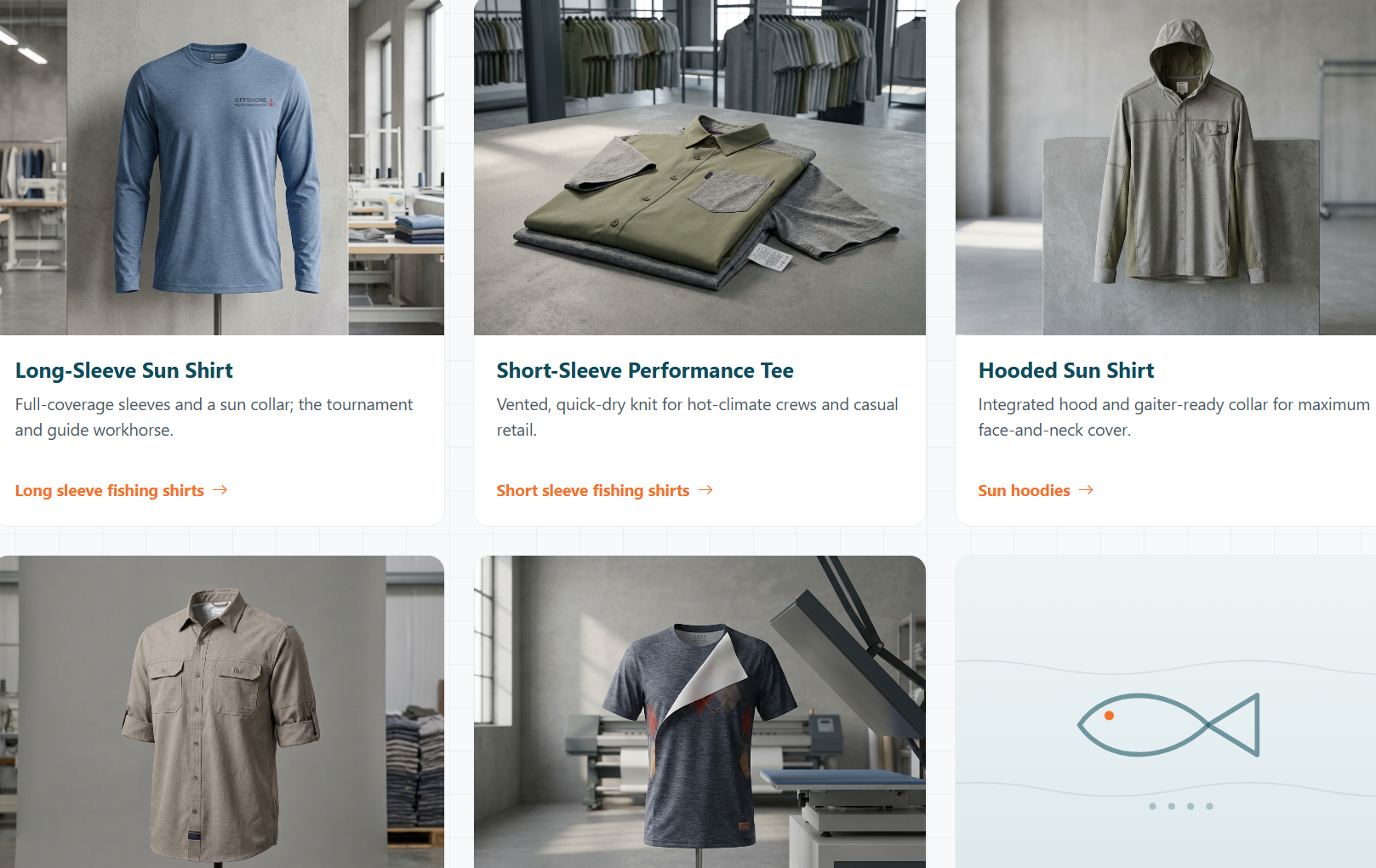
Hooded sun shirt: UPF-style, solid color, chest logo.
Long-sleeve performance tee: sleeve print, species graphic.
Short-sleeve casual tee: for the boat-ramp crowd.
Upload these to a free storefront (Bear Grips Pro Shop costs $0 until someone orders) or spend $150 on Shopify if you want your own domain from day one.
Start Selling Before You've "Launched"
Gift 3–5 shirts to key contacts like charter captains and tournament regulars. Post in bass fishing forums and local tournament Facebook groups, not generic Instagram hashtags. Run $15–$25/day ads targeting "bass fishing" and "saltwater fishing apparel" interests.
Fifty orders at $10–$15 profit each puts $500–$750 in your pocket and tells you exactly which SKU deserves your reserved $200 for a real small-batch run.
Week 2–3: Source Three Verifiable Fishing-Specific Fabric and POD Suppliers with Selection Criteria
Six thousand dollars. That's what one Etsy seller lost after a "UPF50+" supplier shipped shirts with zero actual sun protection. Customers found out mid-July, and refund requests buried the brand before it launched. Don't be that seller. Here's how to vet real fishing apparel manufacturers before you wire a dollar.
Supplier #1: Runfish Apparel (Guangzhou, China)
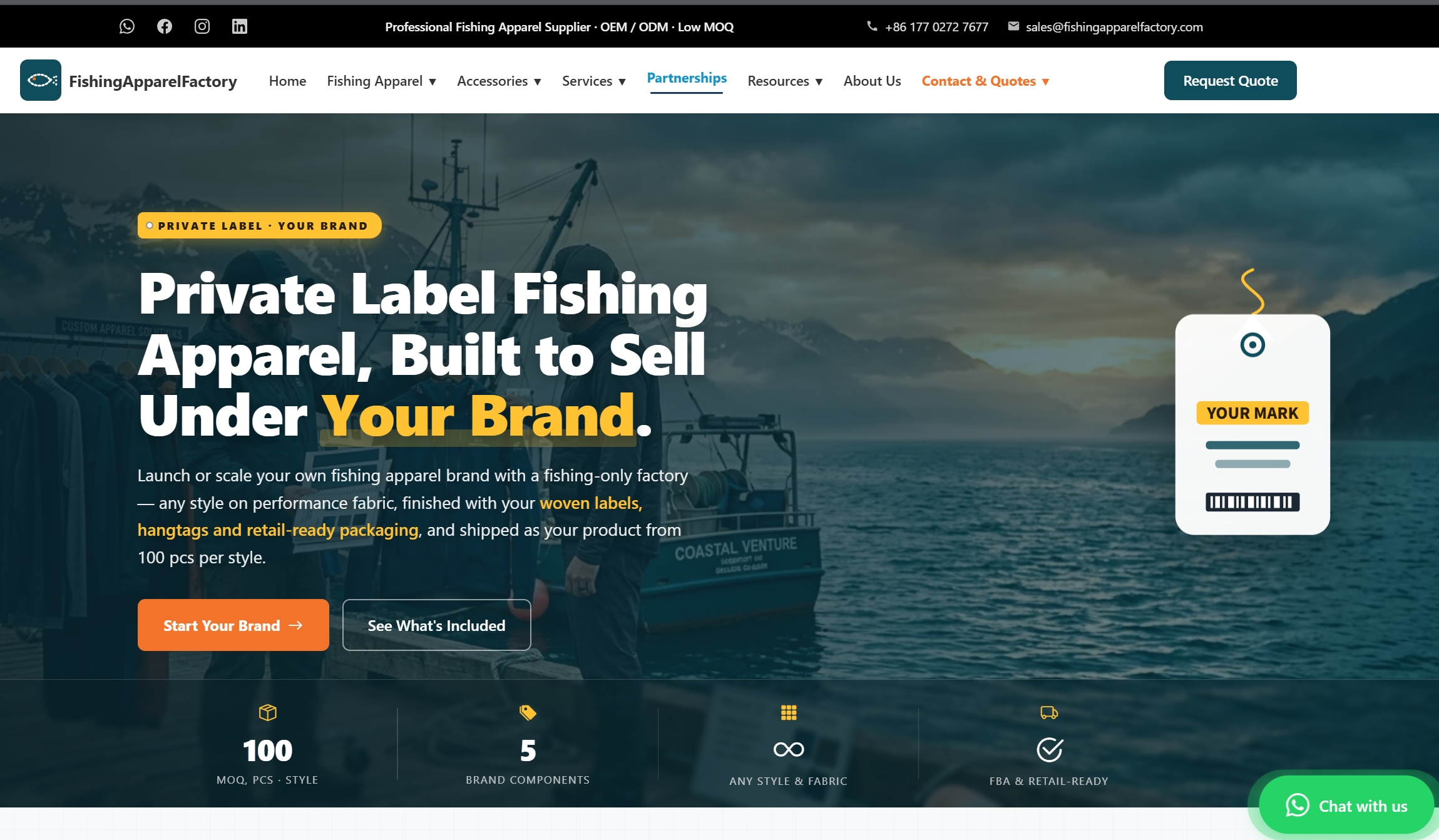
This is a legit fishing gear branding partner, not a print shop. They hold ISO 9001, OEKO-TEX Standard 100, and BSCI certifications. Every fabric roll ships with mill certification plus re-tested UPF transmission data.
Demand a UPF50+ lab report before ordering. Spectrophotometry, not a marketing claim. Request 180–220 g/m² poly-rich blends — the sweet spot for quick-dry fishing shirts. Trial MOQ is 100–200 pieces per design at $6.50–$10.50 for sublimated shirts. Sampling runs $50–$80 each. Contact [email protected] or +86 177 0272 7677, Mon–Sat, 9–6 GMT+8.
Supplier #2: The Factory That Only Makes Fishing Apparel
Fishing-only means fishing-fluent. They stock performance blends tuned by weight and finish for saltwater, freshwater, and cold-immersion use.
Standard MOQ is 100–300 units, but you can negotiate a 24–36-unit micro-batch with a 20–40% surcharge. Check their client history — guides, charter companies, other fishing brands. Search BassResource forums for seam and print-longevity feedback. Confirm capabilities: sublimation, laser-cut vents, odor-control finishes.
Supplier #3: Alibaba Verified Listings
Two listings work for a custom fishing apparel supplier search:
Feature | Sublimation Shirt Supplier | Performance Polo Supplier |
|---|---|---|
MOQ | 100 pcs | 200 pcs |
$6.50–$9.00 | $7.00–$10.50 | |
UPF | Verify via label + reviews | Request explicit rating |
Lead Time | 15–20 days | 18–22 days |
The Non-Negotiable Checklist
UPF50+ lab report or mill certificate, not a product description claim.
100% polyester or poly-rich blend, 180 g/m² or heavier.
ISO 9001, OEKO-TEX, or BSCI certifications preferred.
Reorder rate of 30% or higher, on-time delivery of 95% or higher.
Always order a pre-production sample. Wash it, sweat in it, sun-bleach it — before your logo ever touches it.
Month 2: Get Your First 100 Customers by Targeting Fishing Forums, Facebook Groups,YouTube Micro‑Reviewers
Zero followers. Fifty orders already banked from Week 1. The real test is turning that momentum into 100 paying customers without a marketing budget or an audience. Most first-time apparel founders quit here — they post on Instagram, hear crickets, and assume the brand's dead. Fishing customers live in forums, Facebook groups, and tackle-review videos.
Fishing Forums: Help First, Sell Second
Forums like BassResource, TexasFishingForum, and WalleyeCentral punish self-promotion and reward genuine participation. Target boards with 10k+ members and active "Apparel" or "Member Projects" sections.
Post a story-driven thread:
Title: "I started a fishing apparel brand on $500 — here's my first UPF 50+ sample."
1–2 lines on your own sunburn story.
Product specs: UPF 50+, 140–170 gsm, quick-dry.
2–3 real photos — stitching, label, the whole shirt.
Ask: "What would you change on this sample?"
Offer: 10% off with code FORUM10 , free shipping for the first 10 replies.
In a 10k–50k member forum, a solid thread pulls 300–800 views, 20–60 replies, 5–20 click-throughs . Run 3–5 threads across different forums and you're looking at 20–40 customers . Cap it at one promo thread per forum per month. Spend the rest of your time answering gear questions and posting your own catch photos.
Facebook Groups: Trade Samples for Trust
Target 2–4 groups with 15k–50k members — gear-review groups, bass/tournament communities, inshore or kayak groups.
DM the admin: "I'm a new fishing apparel brand, no experience, just a passion. I'd love to send 5 UPF 50+ shirts in exchange for honest feedback — no strings attached." Budget $75–$100 for those samples, then ask for a group-wide discount code ( GEARREV10 , BASSTIPS10 ) and a pinned post.
Follow with 2–3 value posts, like sun-protection tips and sizing guides, each ending in a soft CTA. A 25k–40k member group returns 50–150 reactions, 20–60 comments , and 20–40 site visitors across a month of posts. At 3–5% conversion, that's 5–15 customers per group .
YouTube Micro-Reviewers: Small Channels, Real Trust
Skip the big names. Target 1,000–5,000 subscriber channels reviewing tackle and gear, with a comment-to-view ratio of 1–2% or higher . Email 20–30 of them with a simple pitch offering a free UPF 50+ shirt in their size, shipped to their address, with no script required.
Expect a 15–30% acceptance rate . Call it 3–9 reviewers. Each video pulls 300–1,000 views , with 1–5% CTR on a pinned link. That's 5–20 customers from this channel alone, plus long-tail SEO value if reviewers mention terms like "fishing gear branding strategy" or "outdoor apparel startup guide" in their descriptions.
Local Tournaments: Cheap Sponsorship, Real Faces
Find local tournaments with 20–100 anglers and sponsor a table for $50–$100 . Bring 10 logo hats ( $60–$100 total). Add a QR code linking to a tournament-exclusive discount. Expect 10–30% scan rates , which brings 5–15 customers from one or two events, plus repeat buyers who saw your hat on the water.
Stack all four channels and you'll get a realistic 50–120 customers , built on trust alone.
Month 3: Sidestep the Three Beginner Traps – Fake UPF Claims, Logo Infringement,MOQ Scams
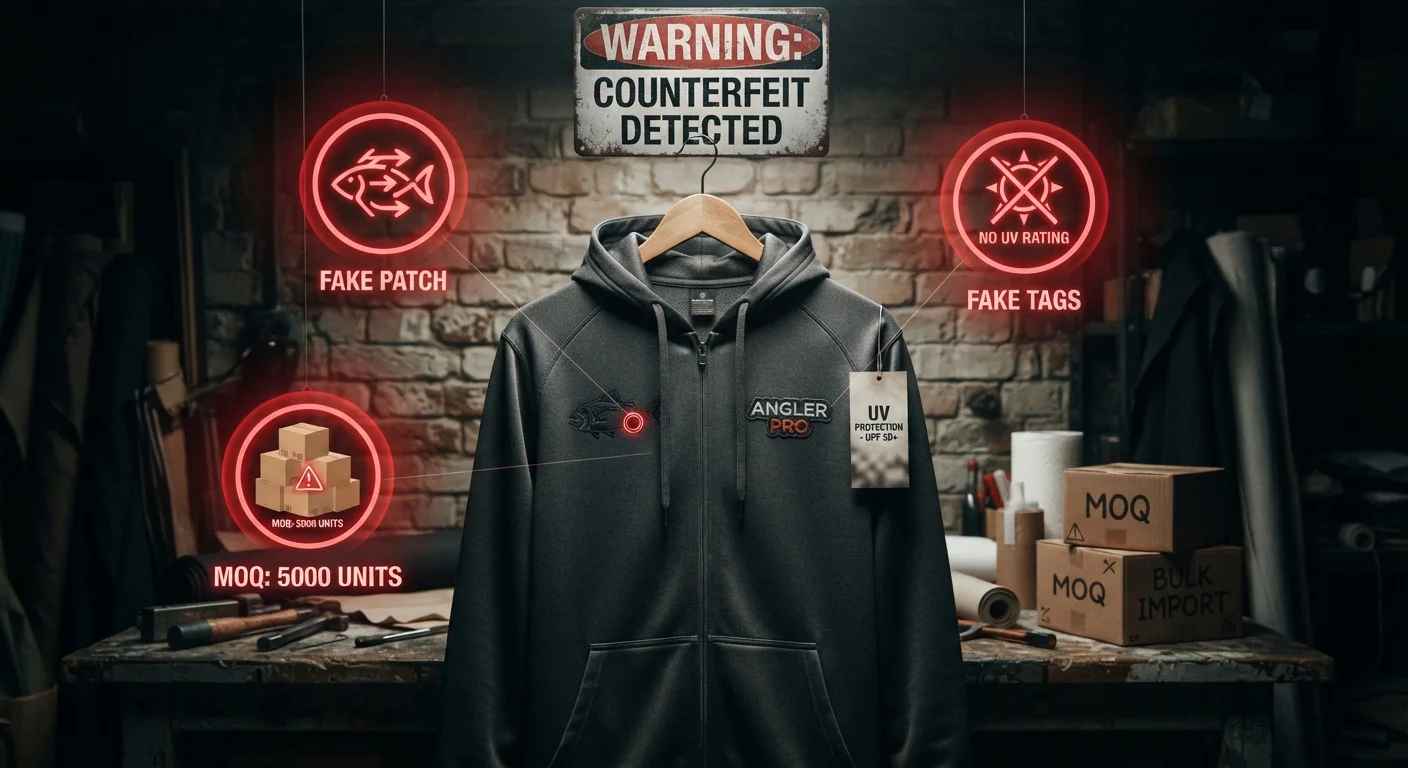
The traps that kill fishing apparel brands don't show up until Month 3, right when you’re feeling confident. Three things wreck new brands faster than anything else. Let’s make sure none of them touch yours.
Trap #1: The “UPF 50+” Lie
“UPF 50” and “UPF 30” get slapped on shirts constantly. Real ones are tested against AATCC TM 183 (USA) or AS/NZS 4399:2017 (Australia/NZ). Fake ones print a number and hope you don’t ask questions.
UPF 40–50+ blocks 97.5%+ of UV. UPF 25–39 is “very good.” Anything under 15 barely counts. And polyester alone tells you nothing; the same fabric can test anywhere from UPF 15 to UPF 50+ depending on dye and weight.
Ask for the test method (AATCC 183 or AS/NZS 4399), the lab name (Intertek, SGS, UL), and a certificate ID you can actually verify.
If you can’t get a straight answer, walk. Testing runs $50–$100 per fabric with a 3–7 day turnaround — cheap insurance against a summer full of refund requests.
Trap #2: Copying a Logo That Isn’t Yours
“Bass Pro Shops” is a registered trademark. So are countless stylized marlin silhouettes and shield-plus-fish logos you’ve scrolled past on Instagram. Swap the font, keep the frame — that’s still infringement.
Before printing anything, run your brand name and taglines through USPTO TESS, search design marks under “fish,” “marlin,” “hook,” and commission original art with a written work-for-hire agreement. Keep the invoice.
Once you’ve sold 100–200 units and know the name sticks, file your own Class 25 trademark for roughly $250–$350. Not before. Early legal spend eats your clothing brand budget for nothing.
Trap #3: The 24-Unit MOQ That Costs You Double
A “small batch” screen printer quoting 24 units sounds friendly — until you do the math. Setup runs $20–$30 per screen. Three screens (2-color front, 1-color back) means $90 in setup alone. Add $8 blanks and $4 prints. 24 shirts cost $378 total, or $15.75 each. Bump that setup fee to $200, and you’re at $22–$25 a shirt.
Compare that to DTG POD, which has no setup, no MOQ, and costs $12–$16 per unit. Stick with POD until a design proves itself at 50–100 orders. Then quote screen printing at 100, 150, 200 units. Setup drops to $0.90 per unit at volume, not $3.75. That’s when small-batch actually makes sense.
Conclusion
You don't need a warehouse, a design degree, or 10K followers to start a fishing apparel brand. You need $500, one solid print on demand Fishing Shirts supplier , and the guts to post your first mockup in a fishing forum before it feels "ready."
That's all it takes.
Your fishing gear branding strategy lives in the DMs you send to bass tournament organizers, the comment sections of YouTube gear reviews, and the honest UPF testing you do before you ever claim "sun protection" on a label.
Stop researching. Pick one supplier from your shortlist and message them today. Your first sale is waiting for you to hit send.