5:47 AM, and I'm zipping up a base layer I'll be cursing by 11 AM. The same trip that starts with frost on your cockpit can leave you sunburned and sweat-soaked before lunch, and you're stuck making every adjustment while balancing a paddle stroke.
I've logged enough dawn launches to know exactly where generic "wear three layers" advice falls apart on the water.For brands developing custom Kayak Fishing Apparel, these layering details are critical for real-world performance. This is the actual outfit I wore last Tuesday, broken down hour by hour, temperature by temperature, plus the three kayak-specific details (sleeve cuffs, seat friction, PFD compression) that wrecked my comfort before I figured them out. Grab your log, because by the end you'll have a layering timetable you can screenshot and follow tomorrow morning.
The 10-15°C (50-60°F) Cold Morning Launch: Three-Layer Blueprint for Dawn Departures
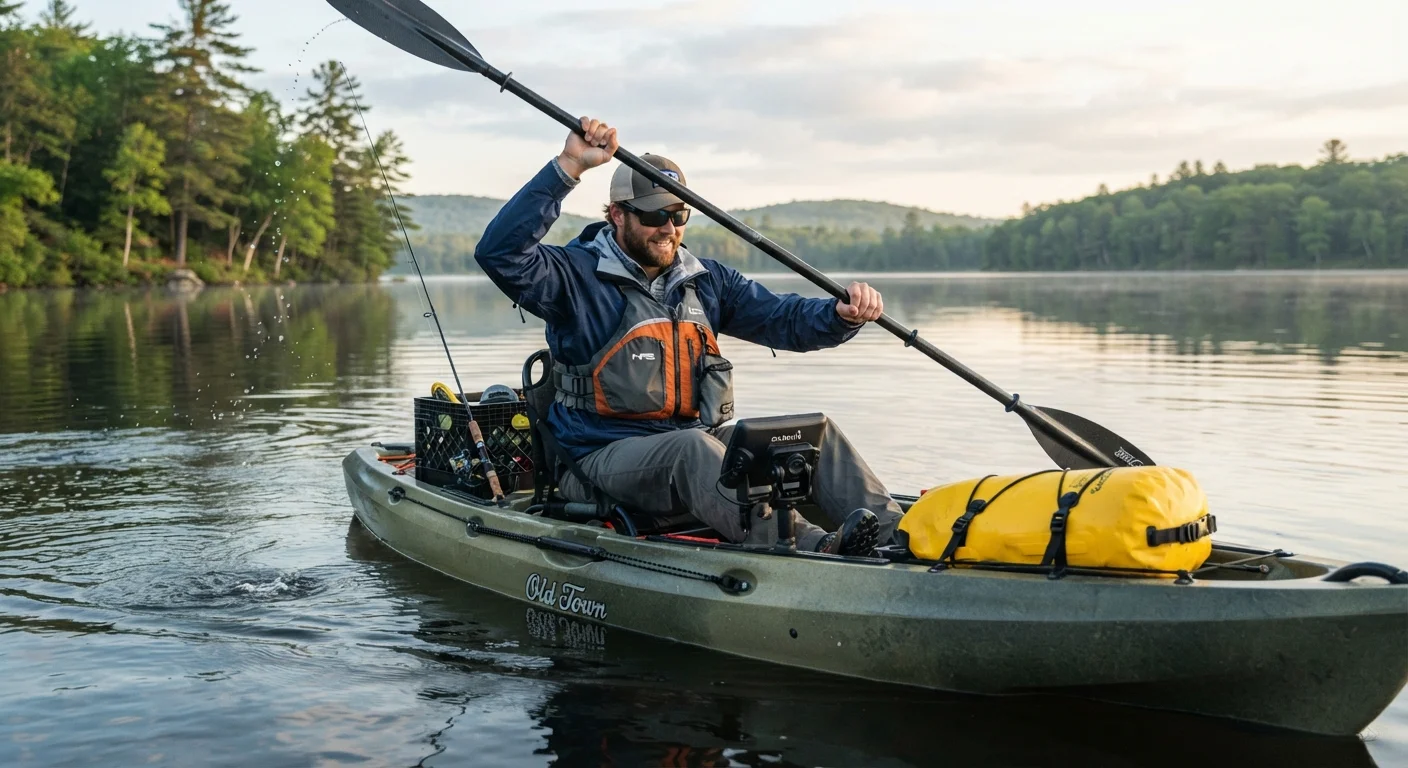
Dress like it's 10-15 degrees warmer than your phone says. You'll generate heat fast once you start paddling — your core temp climbs within the first 5-10 minutes of stroke work, and if you're bundled for the actual 10°C reading, you'll sweat through your base layer before clearing the marina.
The three-layer blueprint I stick to:
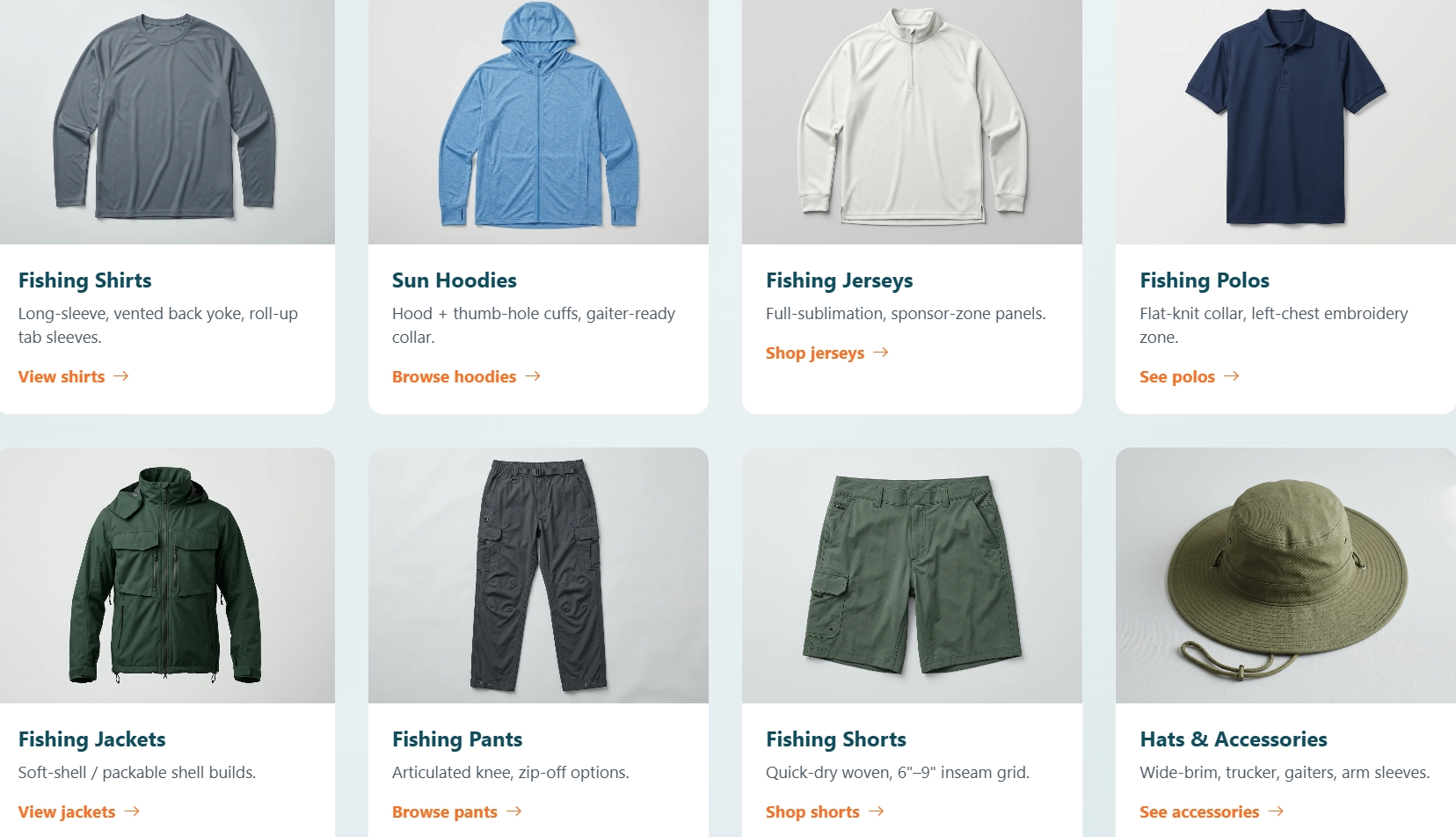
Base layer: A fitted, moisture-wicking merino or synthetic top. Cotton holds sweat against your skin and turns clammy the second the wind picks up.
Mid layer: A light grid fleece or insulated vest. Only needed if it's windy or you're launching before civil twilight. It should be thin enough to move under a PFD without bunching.
Outer layer: A packable windproof or lightweight waterproof fishing jacket. I keep mine unzipped or stuffed in the hatch until wind or spray makes it necessary.
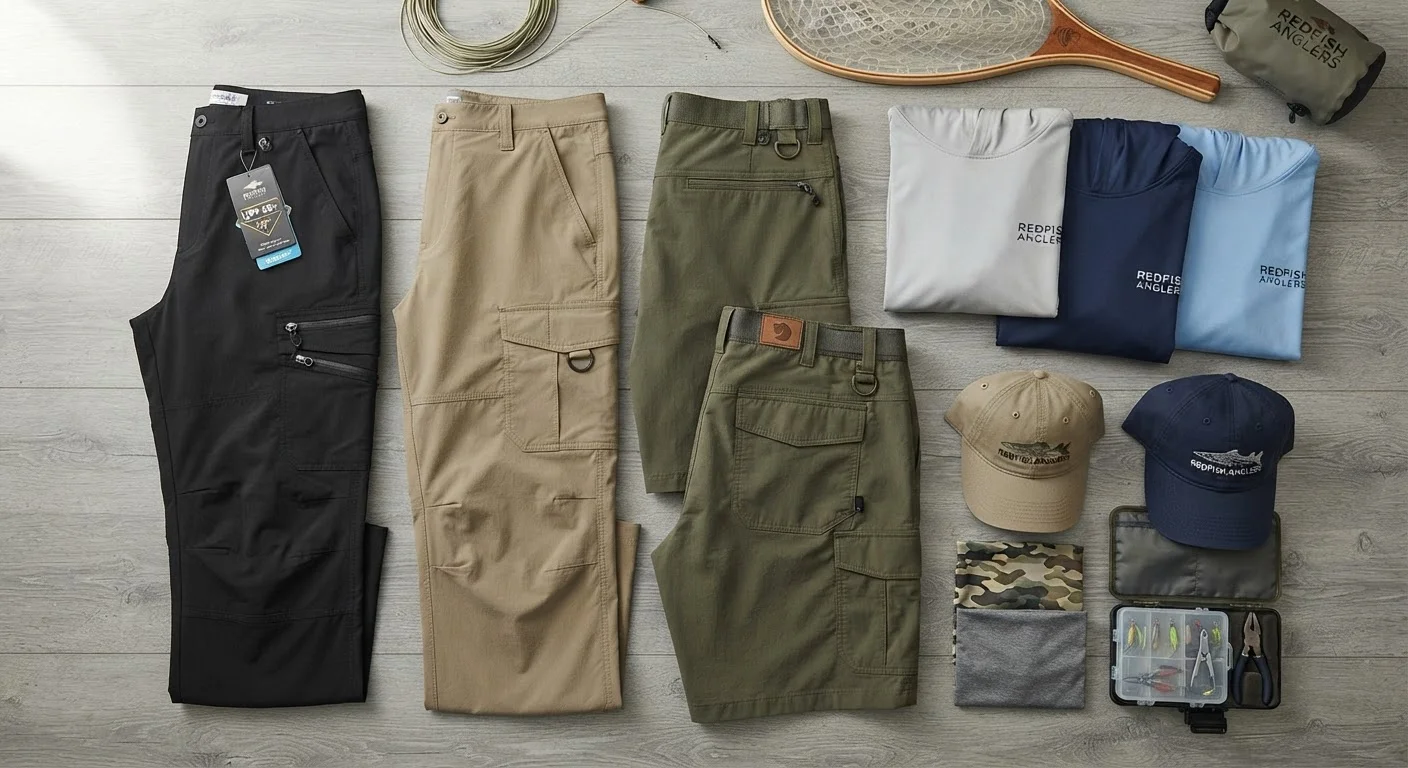
For bottoms, breathable fishing pants or light tights beat shorts at this temperature band, especially with a breeze off the water. A professional fishing apparel manufacturer uses fabric mapping to balance warmth, stretch, and mobility.I run shorts when I know I'll warm fast; light tights when the forecast has wind gusts past 10 knots.
Hands and head matter more than most anglers admit. Thin windproof gloves and a headband solve the "why can't I feel the reel handle" problem that shows up around 6 AM. A neck gaiter is optional, but it saved me twice when spray came over the bow before sunrise.
If you feel comfortable standing at the launch, you're overdressed. You should feel slightly cool for the first 5-10 minutes of paddling. That's the sign you layered correctly for what's coming once your body heat catches up.
If the forecast sits between two temperature bands, dress for the warmer one and add a single accessory layer for wind — gloves or a headband. That one adjustment has kept more of my dawn launches comfortable than any specific jacket or base layer fishing brand I've tried.
The 15-20°C (60-68°F) Mid-Morning Transition: How to Remove Layers Without Docking
By 9:30 AM, the sun's doing the work your mid-layer was doing an hour ago. This is where most anglers make the mistake — they either paddle to shore to strip down, or they just tough it out sweaty. Neither works when you've got a rod in the water and fish moving.
Build your morning outfit so the mid-layer comes off without beaching the kayak.Many outdoor brands work with a Kayak Fishing Apparel supplier to develop functional layering systems.
Stick to full-zip, not pullover. A quarter-zip fleece or a front-zip overshirt lets you shed insulation one-handed while seated, PFD still buckled, paddle across your lap. Pullover hoodies force you to unclip the PFD to get them over your head — that's a two-minute production you don't have time for when the bite's on.
Removal order matters. Mid-layer comes off first, always. That fleece or grid hoodie you wore for warmth at dawn is now trapping heat you don't need. Your base layer — the same moisture-wicking merino or synthetic tee from the cold launch — stays on. It's still managing sweat, just without the extra layer choking airflow underneath.
Pack for what you're removing. I keep a dry bag clipped to the tankwell sized for one balled-up fleece. If your storage can't fit the layer you just stripped, you'll end up wearing it tied around your waist, which turns into a snag risk the second you're casting or netting a fish.
Watch the wind, not just the thermometer. If you're fishing an exposed flat with any breeze, keep the packable windproof outer layer on even at 18°C. The number on your phone means less than what's hitting your skin at 12 knots across open water.
The 25-30°C (77-86°F) Midday Heat: Sun Protection Without Overheating
By noon, the sun is directly overhead. The water throws its own glare back at you. Your biggest problem is UV exposure plus heat you can't paddle off. Some anglers strip down to a tank top, thinking less fabric means less heat. It doesn't. Bare skin in direct sun for four hours does more damage than a properly chosen layer ever will.
My midday stack, tested and repeated,OEM Inshore Fishing Apparel programs help brands customize sun protection and lightweight performance fabrics.:
Base: A light moisture-wicking tee or tank, same category as the dawn layer but thinner weave.
Outer: A loose-fitting sun protection shirt, UPF 30 minimum. I've moved to UPF 50+ after realizing it blocks over 98% of UV rays compared to a standard UPF 30 hoodie.
Bottom: Breathable fishing pants, light-colored, never denim. Denim traps heat and takes forever to dry once splashed.
Head/eyes: Wide-brim hat with at least 3 inches of brim for actual neck shade, plus polarized sunglasses.
Skin: Sunscreen on ears, forearms, and the back of my neck. My hoodie's collar never covers that spot.
Color and fit matter more than most anglers admit.ODM fishing apparel solutions allow companies to create unique fits without starting every design from zero. Light colors reflect heat; dark ones absorb it. Loose cuts let air move and sweat evaporate instead of pooling against skin.
A snug, non-flared cuff on a sun hoodie prevents fabric from catching your rod guides or line during a cast.Brands can evaluate custom wholesale price options of fishing apparel when scaling performance fishing collections. I learned that the hard way when a looser sleeve snagged mid-hookset.
Skip the mid-layer here. Minimal layering is the whole point once you're past 25°C.
The 5°C Drop: Late-Afternoon Wind Chill Re-Layering Protocol
Five degrees doesn't sound like much until wind gets involved. Drop from 20°C to 15°C with a 20 km/h breeze coming off the water, and your body reads it closer to 11°C. That's the wind-chill math working against you right when you're tired, slower to react, and least likely to notice you're getting cold.
My rule: layer up the moment I stop paddling, strip it the moment I start again. Sitting still to work a lure or wait out a slow bite is when heat loss accelerates. I keep a packable windproof shell and a thin fleece mid-layer rolled tight in the tankwell dry bag for this exact window — not the heavier insulated fishing jacket I'd wear at dawn, just enough to block wind without cooking me during the next cast.
What goes back on, in order:
Mid-layer first — a thin merino or synthetic fleece, never cotton. Cotton stays damp from the day's spray and pulls heat off your skin.
Shell second — a waterproof fishing jacket or wind-resistant softshell earns its space in your hatch. If spray's still coming off the water at dusk, this layer isn't optional.
Hands and head — a hat covering your ears and thin gloves matter more here than at dawn, because you're not generating fresh heat from active paddling anymore.
Insulated footwear helps too, especially if your feet got wet earlier and never fully dried.
The 3 Kayak-Specific Layering Details That Generic Fishing Articles Miss
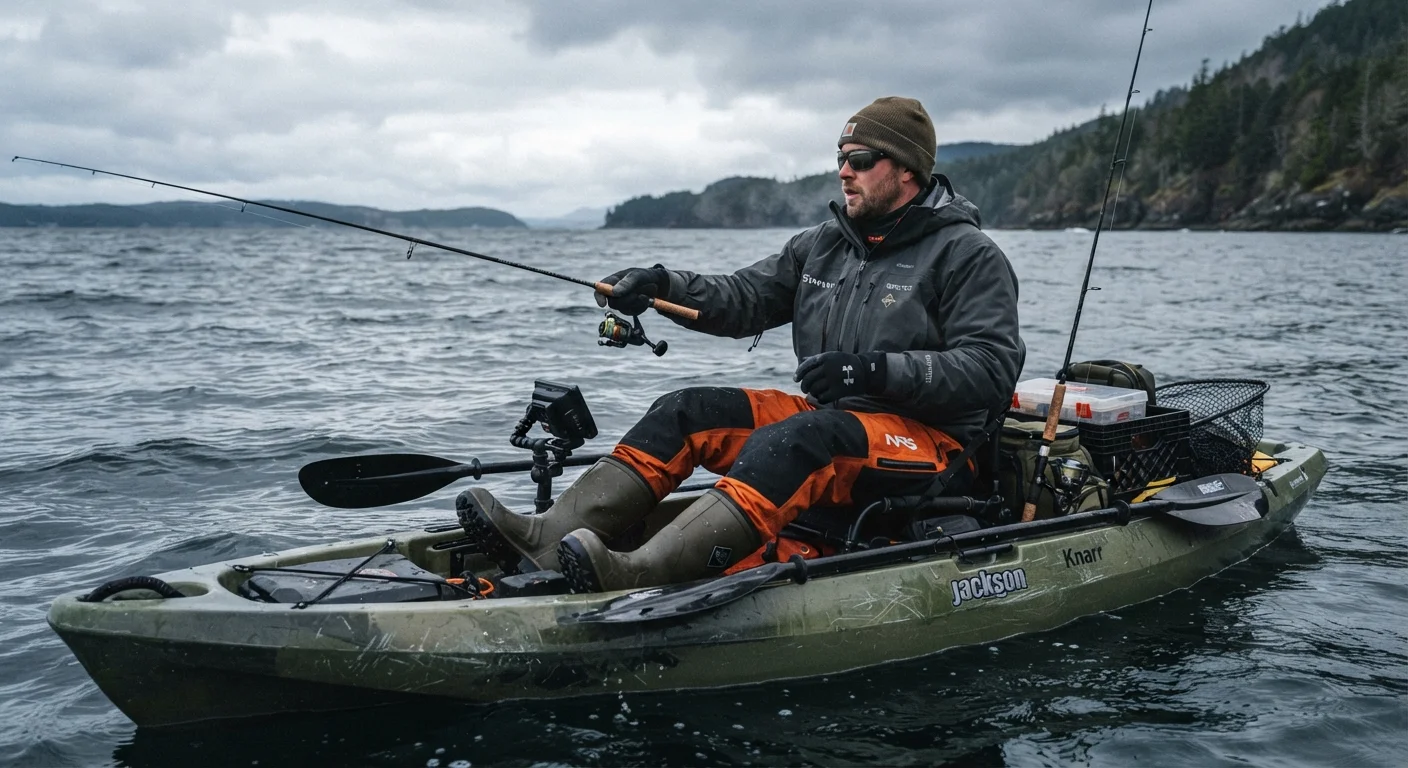
Most fishing apparel guides never mention water temperature. That's the gap. Your kayak sits on water that's often colder than the air above it, and the "120 rule" exists for this reason: if air temp plus water temp adds up to under 120°F, you dress for immersion, not comfort. A wetsuit or dry suit under your regular layers is the difference between a bad afternoon and a genuine emergency if you flip.
Detail #1: Sleeve cuffs decide whether your cast works. A flared or loose cuff catches line, catches guides, catches your paddle grip on the recovery stroke. I run snug, non-flared cuffs on every layer that touches my forearm — base layer included. Baggy sleeves look fine standing at the dock. They're a liability the moment you're stripping line at speed.
Detail #2: Seat friction is a layering problem, not a seat problem. Hours seated on wet fabric creates chafing most anglers blame on the kayak seat. It's usually the layer underneath. A base layer around 150–200 g/m² polyester or merino, snug through the seat and thighs, moves with you instead of bunching. Cotton fails here twice — it holds moisture and it bunches. Kayak guides are blunt about it: don't wear cotton under anything.
Detail #3: Your PFD limits how many layers you can actually wear. This is the one nobody warns you about until you're mid-launch, arms pinned. Windrider's guidance — PFD over your rain jacket, not under — solves half the bulk problem. The other half is choosing thin insulation over thick. A base layer, 100–200 weight fleece, and a shell beats a single heavy sweatshirt every time, because bulk kills paddle mobility long before it improves warmth.
What to Wear If You Flip
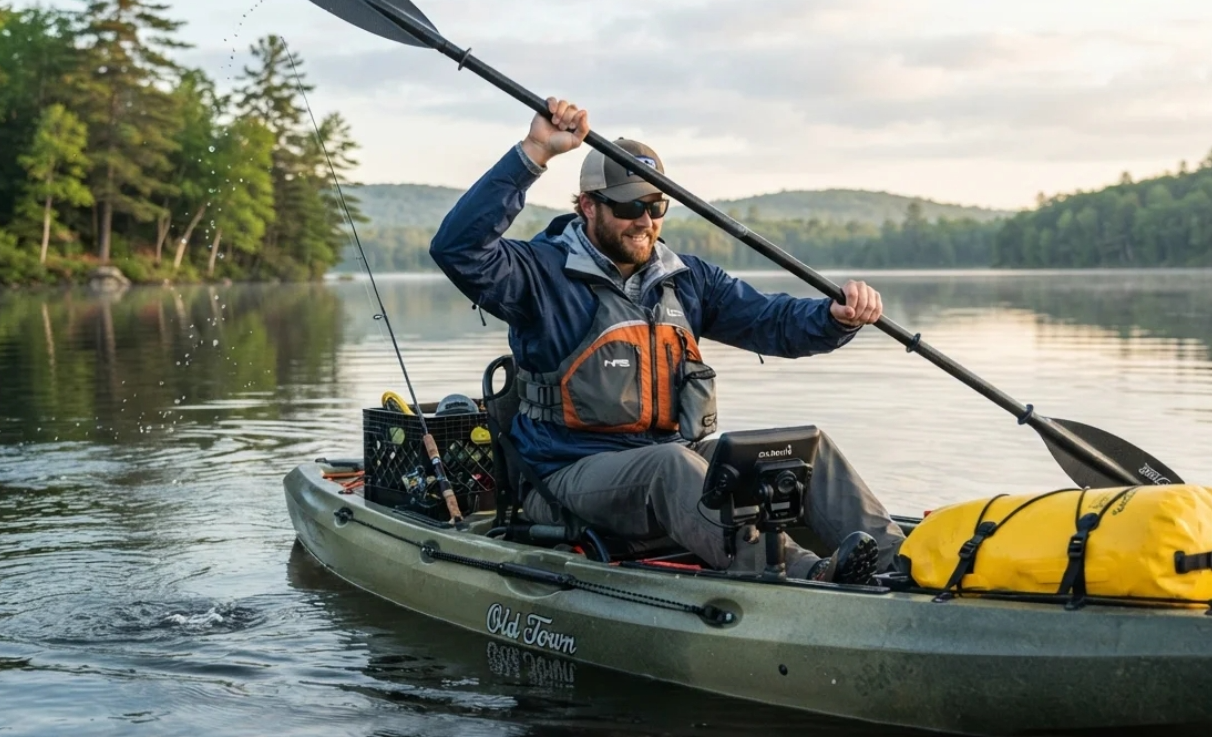
Nobody plans to flip. That's why the four layers that could save you need to be on your body before you launch, not in a dry bag you can't reach once you're in the water.
I learned this the hard way on a January trip when a wake caught me sideways near a channel marker. Air was 14°C, water was colder. The 120 rule I mentioned earlier wasn't theoretical anymore — it was the difference between a rough five minutes and a real problem.
The four layers that matter when you're actually in the water:
Base layer: Polypropylene or synthetic long underwear, never cotton. Cotton holds water against your skin and speeds up heat loss instead of slowing it.
Mid layer: A synthetic shirt or thin sweater. Its job is trapping warm air while still pushing moisture outward, even when soaked.
Insulation layer: A synthetic puffy vest or wool fleece, not down. Down collapses and stops insulating the moment it's wet. Synthetic keeps some loft even soaked through.
Shell layer: A wind-resistant or waterproof fishing jacket. It blocks wind chill the second you surface, which matters more than most anglers realize — wet skin plus wind is where hypothermia accelerates fastest.
Beyond the four layers, these small additions changed outcomes for me:
A beanie or thin hat stays clipped to my PFD, not in a hatch. Heat loss through your head and neck is disproportionate to its size.
One pair of gloves, minimum. I've started carrying two: a light pair for paddling, an insulated backup for after an unplanned swim.
A neck gaiter doubles as instant face protection against wind once you're back in the boat, soaked.
Wool socks, always a spare pair sealed in a dry bag. Wet feet in a kayak cockpit stay wet for hours.
The goal is having the right materials on your body before the water decides you need them.
Conclusion
Kayak inshore fishing apparel layering is about knowing exactly what to peel off at 9am and throw back on by 4pm without ever stepping off your kayak. That's the whole game.
After dozens of dawn launches and a few unplanned swims, the pattern is dead simple. You wear three layers below 15°C, strip to a UPF fishing shirt once the sun climbs, and always keep a quick-dry layer within arm's reach for that inevitable wind shift or splash. The cuff snags, the seat friction, and the PFD bulk are the details that actually wreck a trip.A reliable Kayak Fishing Apparel wholesaler understands these details before production begins.
Screenshot the timeline from this article, tape it inside your kayak hatch, and stop guessing every morning. Your next all-day trip should be about the fish, not fumbling with a jacket zipper mid-cast.