Three years ago, launching a private label fishing gear brand meant swallowing a $50,000 minimum order and hoping your custom rod design didn't get buried under a dozen other "exclusive" listings that looked exactly like yours. The math no longer holds up. If you've been eyeing an OEM fishing tackle supplier's catalog wondering whether now is the right moment, the numbers say yes.
I've spent the past few months digging into Amazon category growth data, ICAST sourcing trends, and talking to brands who have already made the leap from reselling to owning their SKUs. I found a structural shift in how fishing gear gets manufactured, minimum order quantities are set, and gear gets sold. I will share the real data behind the surge, two founder case studies worth stealing tactics from, and a self-assessment that tells you whether you are ready to move.
The Real Market Numbers: Why Private Label Fishing Is Accelerating Now
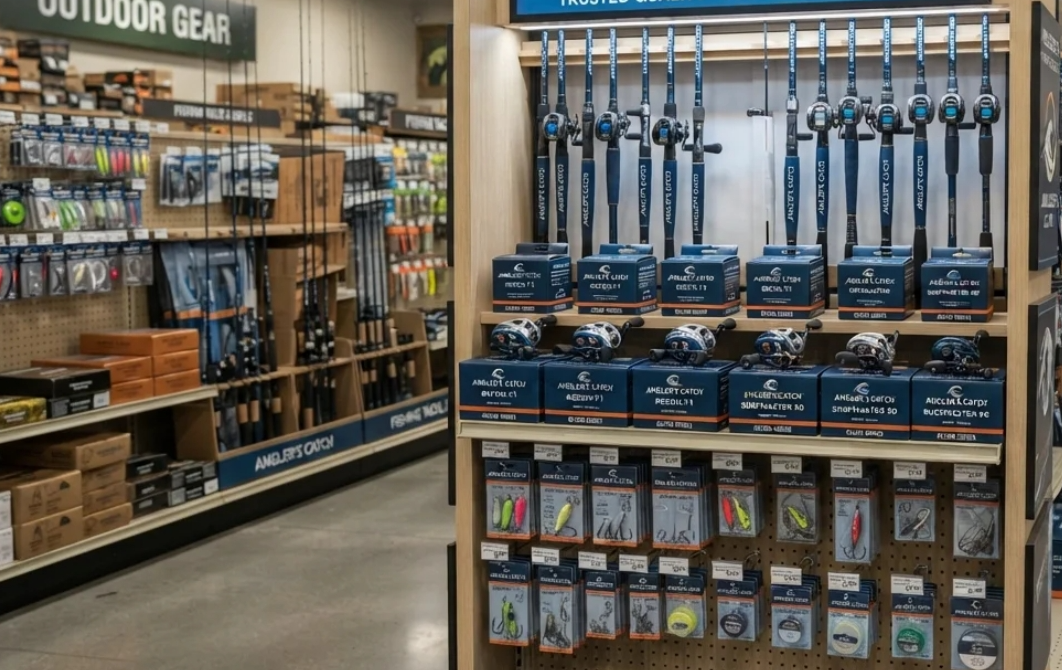
Retail data doesn't lie, and right now it's telling a clear story. U.S. private label fishing apparel sales across all consumer packaged goods hit $282.8 billion in 2025, up 3.3% year-over-year. National brands managed only 1.2% growth in the same window. Private label's dollar share has climbed from 19.1% to 21.3% over five years. This is a structural shift in how retailers allocate shelf space, marketing budgets, and vendor relationships.
Fishing gear sits right in the middle of this shift, and the category math backs it up.
Category Growth
Sports fishing equipment overall is projected to grow from $14.52 billion in 2025 to $18.11 billion by 2032. The growth breaks down across three segments:
Fishing rods: $1.17B → $1.71B (4.87% CAGR)
Fishing reels: $5.1B → $7.9B (4.5% CAGR)
Fishing lures: $3.57B → $5.46B (5.46% CAGR)
Every hardware segment is growing faster than the general retail average. That means more volume for anyone sourcing from a fishing tackle wholesale manufacturer.
The Gap That Makes This Opportunity Real
Private label reels hold only about 5% market share, while the top three branded players (Shimano, Daiwa, Abu Garcia) control roughly 55%. Compare that 5% to grocery private label share at 21-24%. Fishing tackle is years behind where it should be, given how private label performs everywhere else in retail. That gap is your opening.
Search demand and Amazon sales for private label fishing gear rose roughly 30% year-over-year. Demand peaks twice a year, in August and January, aligned with reel and rod purchasing cycles.
Lures: The Clearest Margin Play
Lures prove that low MOQs and high margins can coexist. Wholesale fishing apparel manufacturer pricing runs $0.39-$2.00 per unit, with MOQs as low as 1-10,000 pieces. Retail pricing for quality unbranded lures sits at $4.15-$25.99. DTC Shopify stores selling custom-branded lures report 65-85% profit margins, compared to 30-40% for mass-market Amazon listings.
Companies like American Tackle now explicitly market "dominant OEM & private label" rod programs. They supply blanks, guides, and finished custom branded fishing rods to retailers building house brands from scratch. The infrastructure to launch fast, without six-figure minimums, already exists.
Low-MOQ Revolution: How Supply Chain Barriers Have Collapsed
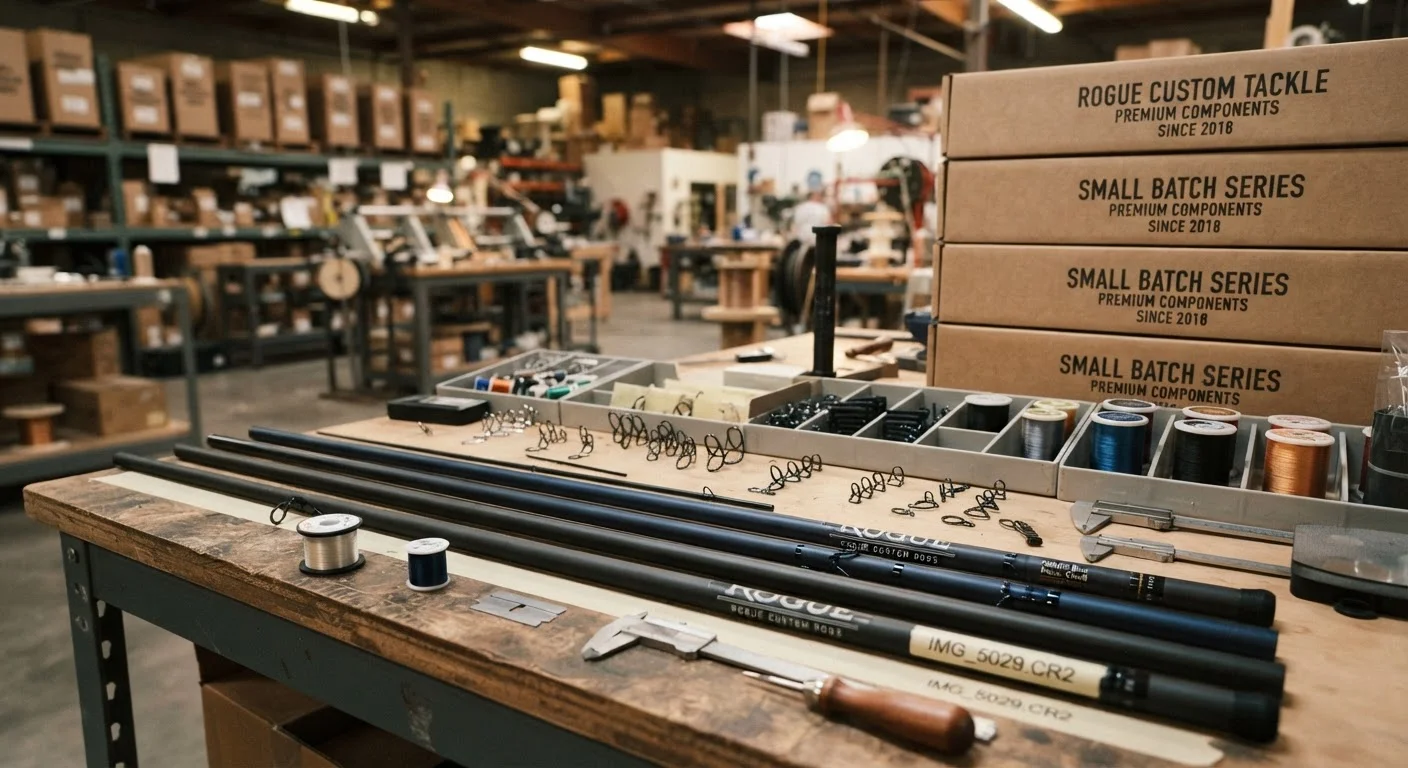
MOQs that used to sit at 3,000-10,000 units per SKU now run 50-1,000 units across most private label categories. In China manufacturing, anything under 100 units per SKU is now considered low, with some suppliers offering 10-30 units on simplified products like basic tackle accessories.
Do the math on what that means for your bank account. With the old model, 3,000 units at $3-10 per unit locks up $9,000-$30,000 before you've sold a single rod or reel. With the new model, 50-500 units at that same cost range means $150-$5,000, often under $2,000 for a first test run. It's a different business model.
What's Driving the Collapse
Flexible Chinese manufacturing, digital printing, and small-batch production models drive this shift. Digital packaging workflows, for example, have pushed custom packaging MOQs down to 100-500 units. They eliminated the paperwork and setup overhead that used to make short runs unprofitable for factories.
The Trial-Order Playbook
If you're sourcing from a fishing gear sourcing agent or working directly with a China fishing tackle factory, the sequence goes like this.
Validate demand with Google Trends or Amazon search data before spending a dollar. Shortlist 5-8 suppliers filtering for "Low MOQ" and "Private Label" on Alibaba or 1688. Order 2-3 samples across different factories. Ask specifically for a "first order trial" MOQ — factories routinely drop from 500-1,000 down to 100-300 units for new clients. Then place a first order of 200-500 units to validate fulfillment and defect rates.
Garment and hardware factories still absorb higher per-unit setup costs at 50-100 unit runs. That stress can show up as pricing volatility at the ultra-low end, so plan for it.
Category Deep Dive: Where Private Label Creates the Biggest Advantage
Not every fishing category has the same private label potential. Some product lines are ready for a store-brand takeover. Others will fight you every step of the way.
In general retail, office fishing apparel supplies hit 42% private label share. Tools and home improvement sit at 30%. Home and garden lands at 35%. These categories share standardized specs, low emotional brand attachment, and easy side-by-side comparison. Fishing tackle accessories fit that profile.
Terminal tackle — hooks, swivels, weights, leaders — behaves like office supplies. Nobody feels brand loyalty to a swivel. Nobody compares R&D claims on a sinker. Private label gains share fastest here because manufacturing is commoditized and the retailer’s brand does all the work.
Tackle bags, boxes, and storage mirror the home & garden pattern. Design and functionality drive purchase decisions. A fishing gear sourcing agent can source these SKUs at low MOQs because production specs are simple and factories already run them at scale for other industries.
Beauty and electronics retailers see private label volume under 10%. Consumers won’t risk switching on high-performance, high-R&D products. Premium reels behave the same way. Shimano and Daiwa owners aren’t trading down for a store brand on their $300 baitcaster. That’s the electronics problem, transplanted into fishing.
McKinsey research shows private label products can deliver roughly 2x the gross margin of national brands. Reselling typically nets 10-20% margins. Private label runs 40-60%, sometimes higher. For outdoor sporting goods, build your opening price point around commoditized accessories. Reserve premium branding for categories where you control formulation or design. Avoid competing against decades of brand loyalty.
Case Study: From Zero to Brand – Two Private Label Fishing Launches
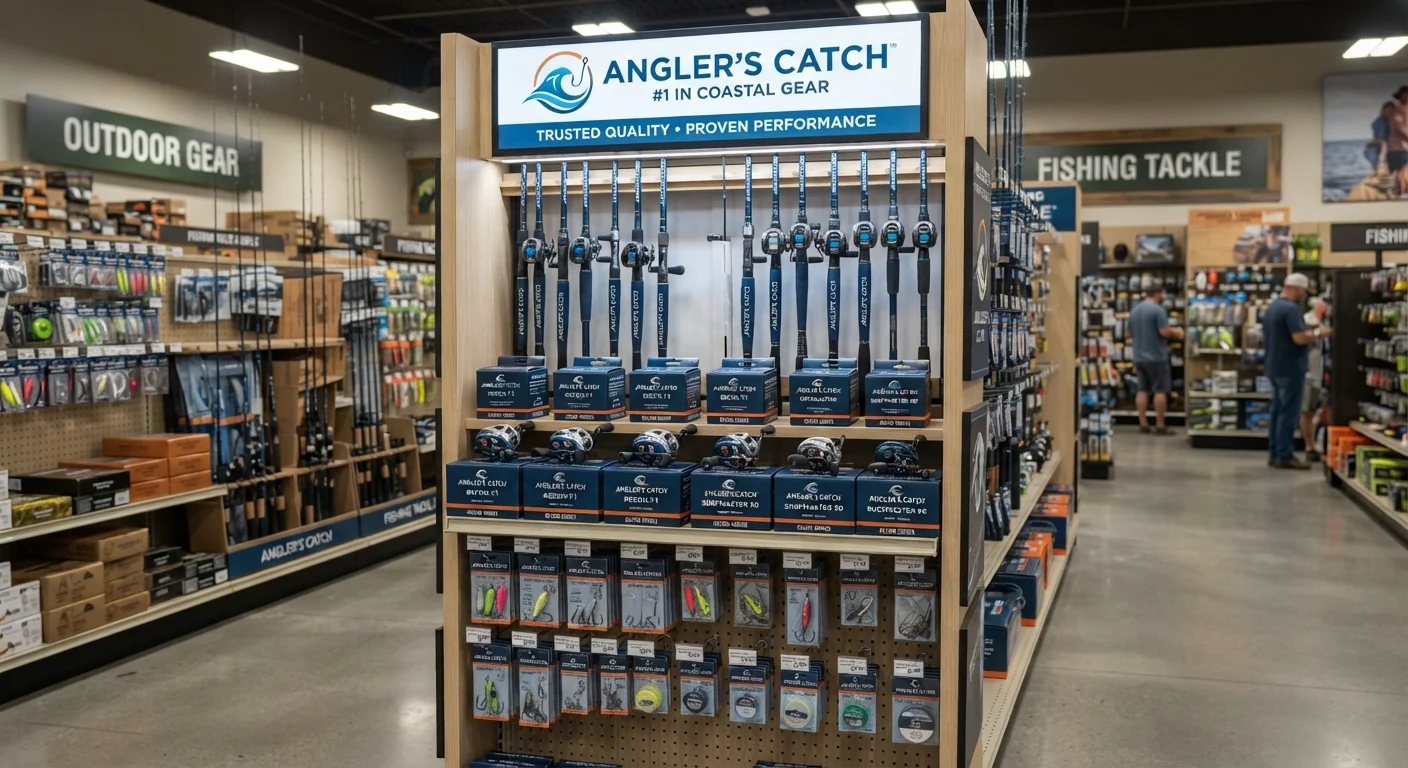
Numbers show the opportunity exists. To execute, look at two retailers who turned struggling private label fishing lines into brands anglers actually seek out.
Academy Sports + Outdoors: H2O XPRESS Becomes H2OX
Academy had a problem. Their private label fishing gear, sold under H2O XPRESS, felt outdated. It read as "store brand" in the worst sense — generic, uninspired, easy to skip past on the shelf.
Instead of discontinuing it, Academy rebuilt it from the ground up. They shortened the name to H2OX — tighter, more technical, easier to work into logo design and packaging. Then they treated the relaunch like a full brand build, not a facelift.
They repositioned the brand around performance benefits. They created a new visual identity with a logo, typography, and color system. They developed brand guidelines to keep packaging and signage consistent across rods, reels, and line. And they overhauled visual merchandising — endcaps, shelf talkers, in-store signage designed to compete with national brands.
Academy runs 260 stores across the Southern U.S. That's real foot traffic, and H2OX was built to convert it. Packaging and merchandising matter more than price for shelf sales.
Motonet's Wataya: Rebrand Instead of Retire
Finnish retailer Motonet had already decided to kill Wataya, their private label fishing brand since 2011. Stock was set to sell through, then the line would disappear.
They pivoted instead. Motonet split their fishing offering into two brands. Wataya was repositioned around "supporting dreams and experiences for the amateur fishing enthusiast." MTX Fishing aimed at technical, performance-driven anglers.
Wataya's rebrand leaned hard into Nordic identity. Packaging, messaging, and visuals all tied to Finland's outdoor culture. That local grounding set it apart from generic imported gear.
Segment by angler type before you segment by product. Amateur and performance buyers respond to different stories; specs are secondary.
The Decision Framework: A Self-Assessment Checklist for Your Fishing Brand
Grab a pen before you read further. This is a binary checklist. Every box needs a "yes" before you greenlight a private label launch.
Financial Readiness
- Do you have a cash buffer covering 6+ months of fixed costs: rent, salaries, web hosting, insurance?
- Can you commit to initial inventory of 500-2,000 units for apparel, or 2,000-10,000 units for lures and tackle, depending on price point?
- Are you targeting break-even within 12-24 months through gross profit?
Margin Benchmarks
- Wholesale accounts: are you pricing for keystone margin (50% retail markup)?
- DTC apparel: does your model support 60-65% gross margin?
- Hard baits and lures: can you hit 50-55% margin after landed costs?
If any core product line falls below 40% margin, mark it yellow. Redesign before launch.
Distribution and Marketing Baseline
- Do you have 3-10 committed retail accounts, or DTC traffic strong enough to hit first-year revenue targets alone?
- Pre-launch email list: 1,000+ subscribers?
- Social baseline: 2,000-5,000 followers with real engagement?
Operational Capacity
- Can your team execute this consistently, season after season, without burning out?
- Score yourself honestly. Anything scoring 2 or below on operational sustainability gets postponed.
Private Label Sourcing Models Compared: OEM, ODM, White Label, and Hybrid
Four acronyms, one confused founder. That's the usual state of mind when you first start asking a fishing tackle wholesale manufacturer which sourcing model fits your brand. They're not interchangeable, and picking wrong costs you months and margin.
White label fishing apparel is the fastest way in. The factory already made the product. You slap on a logo, maybe pick a color. MOQ runs 100–300 units on Alibaba, sometimes lower. Margins land 40–55%. Switching risk is low because the same item sells to a dozen brands, but so is differentiation.
ODM fishing apparel hands you a base design you can tweak. Branding plus minor modifications, not a full rebuild. MOQ sits around 100–500 units, sampling takes 5–7 days at faster suppliers. Margins run 55–65%. But your design stays tied to that factory's platform.
OEM fishing apparel flips ownership to you. You supply the tech pack, the factory builds to spec. Tooling runs $2,000–$20,000+, timelines stretch 60–90 days minimum, sometimes 4–6 months. Margins climb to 65–80%. This is where custom branded fishing rods with proprietary guide layouts or blank tapers actually happen.
Private label sits in between. Ownership depends entirely on your contract, not the label itself. MOQ can be as low as 50–100 units through a low-MOQ fishing gear sourcing agent, though 500–1,000 shows up in broader benchmarks. Margins run 55–70%.
Hybrid starts from a factory base, then pushes toward brand-owned specs over time. Useful when you want ODM speed now and OEM control later.
Model | Design Owner | MOQ | Lead Time | Margin |
|---|---|---|---|---|
White label | Factory | 100–300 | 2–4 weeks | 40–55% |
ODM | Factory (licensed) | 100–500 | 4–8 weeks | 55–65% |
Private label | Negotiated | 50–1,000 | 6–10 weeks | 55–70% |
OEM | Buyer | 100–300+ | 12–20 weeks | 65–80% |
Pick white label to test demand cheap. Pick OEM when the product is your competitive edge.
Conclusion
The private label fishing window won't stay this wide open forever. Right now, you've got sub-$5 per-unit costs, MOQs as low as 500 units, and a market that rewards niche brands over legacy giants. That combination rarely lasts more than 18-24 months before competition drives costs back up.
If you've made it through the self-assessment checklist and your numbers pencil out, pick one category (lures or reels tend to have the fastest path to profitability), request samples from two or three OEM fishing apparel and tackle suppliers this week, and run a $500 test batch before committing to anything larger.
The brands winning right now are the ones who moved first. Your fishing brand launch strategy starts with a single sourcing conversation.