The difference between DDP and DDU determines whether you get a clean, predictable landed cost or a container sitting in customs while storage fees pile up daily. I've watched importers get blindsided by this scenario because their fishing apparel supplier quoted a "great price" that quietly excluded who's responsible for clearing customs and paying import duties and taxes. If you're comparing quotes right now, or you've gotten burned once already, you need more than a textbook definition. You need the real cost breakdown, the risk transfer point that matters, and a decision framework built for clothing and fabric shipments—not generic freight advice. That's what we break down below.
The Real Cost Gap: What DDP vs. DDU Actually Means for Your Apparel Order
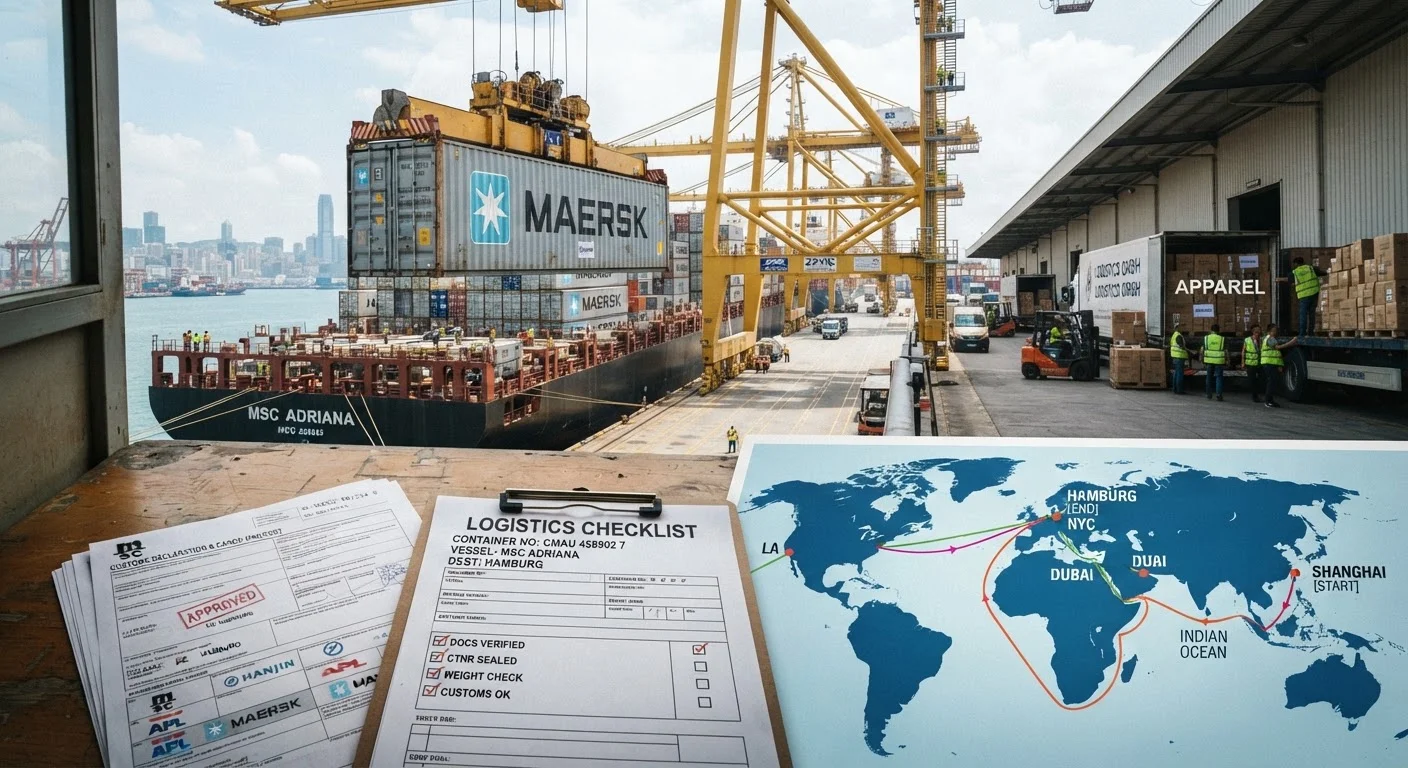
Here's the split you need to understand before you sign anything. DDP (Delivered Duty Paid) means the seller covers export handling, international freight, import customs clearance, duties, and taxes, and delivers it to your door ready to unload. DDU (Delivered Duty Unpaid) means the seller ships to your destination, but you're on the hook for import duty, VAT/GST, customs clearance, and often local delivery.
One thing trips up almost every new importer: DDU isn't even a valid Incoterm under Incoterms 2020. Modern contracts use DAP for that same "unpaid" structure. If your fishing apparel supplier's paperwork still says DDU, flag it. That's outdated terminology that can cause confusion during customs clearance.
Why This Matters More for Apparel
Clothing carries both import duty and VAT/GST at destination. That combination is why a DDU quote often looks cheaper on paper, then balloons once taxes hit.
Buyer-side charges under DDU:
- VAT and import duty
- Import clearance documentation fees
- Unloading charges
- Inland transport after arrival
Seller-side charges under DDP:
- Transportation
- Customs clearance fees
- Duties and taxes
- Insurance through final delivery
Which Fits Your Order
DDP works better for e-commerce sellers, smaller fishing clothing wholesale orders, or first-time importers who want a predictable landed cost. No surprises at the border.
DDU/DAP makes more sense if you already have an import entity, a customs broker, and want control over duty recovery.
Never compare quotes on FOB price alone. Always calculate landed cost—duty, VAT, brokerage, and handling included—to see the real number.
Step-by-Step: Who Does What Under DDP vs. DDU (With Apparel-Specific Examples)
The handoff points are where most apparel importers get tripped up.
DDP: The Seller's Checklist
Under DDP, the supplier owns almost every step:
Export packaging and labeling
Inland transport at origin
Export clearance
International freight
Destination port charges
Import clearance
Import duties and taxes
Final delivery to your named address
Your job as the buyer is to receive the goods and unload if that's specified in the contract. You're not touching duty or VAT under standard DDP terms.
DDU: The Buyer's Checklist
Under DDU, the seller stops at delivery to the named destination. They handle packaging, export costs, and main freight. Everything import-side lands on you:
Customs clearance filing
Import duties
VAT/GST
Unloading charges
Local transport after port arrival
Brokerage and documentation fees
A Real Apparel Scenario
A fishing garment supplier in Bangladesh ships 5,000 cotton T-shirts to a retailer in Germany.
Under DDP: the supplier quotes one landed price. They pay export paperwork, ocean freight, German import duty, VAT, and arrange delivery straight to the retailer's warehouse. The retailer only signs for a pallet.
Under DDU: the same 5,000 T-shirts arrive at the German port, but now the retailer has to pay import duty and VAT, file the customs entry, and arrange pickup before that inventory ever reaches the warehouse. If paperwork or funds aren't ready, those shirts sit.
Apparel buyers with tight margins default to DDP for e-commerce and small-batch replenishment orders because predictability wins. DDU shows up more when the buyer already runs their own customs brokerage and wants direct control over duty handling and import timing.
The Landed Cost Calculator: A Template You Can Copy-Paste for Your Next Order
Numbers tell the whole story when you're deciding between DDP and DDU. Use this formula:
Landed Cost = Product Cost + Freight + Insurance + Customs Duty + Import Tax (VAT/GST) + Brokerage/Customs Fees + Port/Handling + Inland Delivery + Other Import Costs
Divide that total by your quantity, and you get Landed Cost per Unit —the number that tells you if this order makes money.
Build Your Spreadsheet With These Fields
Copy these columns straight into Excel or Google Sheets:
SKU/product name, destination port, fishing apparel supplier name
Incoterm (FOB, CIF, DDP, DAP)
Invoice currency + exchange rate
Quantity, unit price, total goods value
Freight quote, insurance premium (no quote yet? Use 0.15% of CIF value as a placeholder)
HS code, duty rate %, VAT/GST rate %
Brokerage fees, port handling, inland transport, misc. charges
A Worked Example
Say you're importing apparel at FOB $3,500 . Freight runs $900 . Insurance at 0.5% of the $4,400 subtotal adds $22 , bringing your CIF to $4,422 . Duty at 10% of CIF equals $442.20 . Add $250 in customs fees and $150 in miscellaneous charges, and your total landed cost hits $5,264.20 —that's 50% higher than your original FOB quote.
One Critical Check
Confirm whether freight and insurance are already baked into your supplier's price before adding them again. Double-counting is the fastest way to misquote your own margin.
3 Real-World Traps Apparel Importers Fall Into (With Money-Losing Examples)
Getting the Incoterm right on paper doesn't protect you from every mistake in the shipping process. I've seen apparel importers nail their DDP vs. DDU decision and still lose thousands because of gaps that have nothing to do with who pays duty. These three traps hit clothing and fabric buyers hardest, with real dollar amounts attached.
Trap 1: Chasing the Lowest Price, Landing Unsellable Goods
Cheap fishing apparel suppliers often mean weak fabric, sloppy stitching, color bleeding, shrinkage after the first wash, or batch-to-batch inconsistency. Defective inventory can cost $2,000–$20,000 per bad order. Overordering dead stock traps another $5,000–$50,000 in unsold goods.
Before bulk production, request a golden sample, verify GSM, check stitching strength, test shrinkage and wash performance, confirm size chart tolerances, and inspect labeling.
Trap 2: Skipping MOQ and Lead Time Math
Approving terms without checking minimum order quantity, fishing apparel factory capacity, or inspection windows backfires fast. Ignore MOQ and you're stuck with higher unit costs and fewer color options. Underestimate lead time and you get missed launches with rushed, risky approvals.
Build your timeline around sampling, approval, bulk production, and inspection, not just the fishing clothing factory's promised ship date.
Trap 3: Under-Budgeting the Full Landed Cost
This is where customs clearance responsibility really bites. Wrong HS classification can trigger duties between 0–48%, plus penalties. Skipping landed cost calculation creates 20–50% cost overruns. Missing documents cost $50–$250 per day in delays.
One cotton apparel importer from India was told the goods weren't quota-restricted. Customs disagreed. The shipment sat in bond until they found a third-country buyer—a costly, avoidable mess.
Reserve a 5–10% contingency budget and treat packaging, samples, and labeling as part of landed cost, not extras.
When to Choose DDP: Decision Checklist for Clothing Importers
Not every apparel order needs DDP. But certain situations make it the smarter play almost every time.
Pick DDP when:
- You want one landed price with zero duty/VAT surprises, ideal for e-commerce and consumer-facing shipments.
- You have no local customs team or import experience in the destination country.
- Your volume is low. One logistics source pegs the breakeven at under 4 containers per year or shipments below $10,000. Below that, brokerage setup costs eat the DDP premium.
- You're shipping time-sensitive apparel where customs delays would blow a retail launch or seasonal drop.
- You're sending free samples or low-value warranty replacements where simplicity beats optimization.
- You lack an import license, local entity, or broker at destination.
Skip DDP when:
- You want direct control over HS classification and duty strategy. DAP/FOB fits better if you already run your own brokerage.
- The forwarder won't name the Importer of Record and customs broker upfront.
- You're moving large FCL volumes without proven destination-clearance capability.
- The quote doesn't itemize freight, duties, VAT/GST, and exception charges separately.
DDP Quote Checklist
Before signing, confirm the quote covers:
Origin pickup, export handling, freight mode, transit estimate
HS code per SKU, declared value method, country of origin
Named Importer of Record and broker
Duties, import VAT/GST, and fees like MPF/HMF
Exclusions for inspections, storage, or redelivery
Final delivery scope and unloading responsibility
Documents You'll Need
Commercial invoice with HS code and value
Packing list with weights and dimensions
Certificate of origin
Bill of lading or air waybill
Region-specific approvals, including SABER for Saudi Arabia and TDRA for certain UAE apparel imports
Use DDP when speed and cost certainty matter more than customs control. Use DAP/FOB once you've got the infrastructure to manage duty strategy in-house.
When to Choose DDU: Decision Checklist for Clothing Importers
DDU makes sense for the buyer who wants control. If you've got a broker on retainer and you're tired of paying suppliers a markup to manage duties you could handle cheaper yourself, this is your lane.
Pick DDU/DAP when:
- You already work with a local customs broker or are set up as importer of record in your destination market.
- You want product cost and landed import cost separated for cleaner margin tracking.
- Your volume is high enough that you can negotiate faster duty and VAT clearance locally than your supplier could from overseas.
- Your goods are heading to a named warehouse or depot, not a seller-managed final delivery.
Skip DDU/DAP when:
- You have no import registration, broker relationship, or customs experience.
- Your destination country has volatile apparel duty rates or unpredictable VAT/GST cash flow demands.
- You'd rather pay more for one clean, all-in delivered price.
Before You Sign: Confirm These Points
Contract says DAP , not vague "DDU" language.
You're clear on who covers duties, VAT/GST, and clearance fees—under DDU/DAP, that's you.
Delivery point is specified: port, depot, or door.
Your broker is authorized to file the import entry.
You can pay duties before customs releases the shipment. No payment, no release.
HS codes, invoices, and packing lists are ready before the container lands.
Simple rule: if you can handle import entry, duty payment, and final-mile pickup without your supplier stepping in, DDU works. If not, go DDP.
Supplier Negotiation Leverage: How to Use DDP vs DDU Pricing to Get a Better Deal
Most importers accept whatever Incoterm the supplier quotes first. That's leaving money on the table. Smart apparel buyers request both DDP and DDU/DAP quotes on the exact same SKU, lane, and HS code. The gap between those two numbers tells you exactly how much risk premium, admin fee, and duty markup the supplier baked into the DDP price.
Force the Line-Item Breakdown
Don't accept a single lump-sum figure. Require your supplier to separate:
Product price
Origin freight
Insurance
Destination freight
Customs broker fee
Duty/tax assumption
Service/risk fee
Once you see it itemized, inflated brokerage fees and padded duty assumptions stand out.
Comparison Table
Item | DDP | DDU/DAP |
|---|---|---|
Who pays duty/tax | Seller | Buyer |
Customs clearance | Seller | Buyer |
Quote clarity | High, all-in | Lower upfront, more variable |
Seller risk | Highest | Lower |
Buyer leverage | Push for transparency, cap risk premium | Push for lower base price, use own broker |
Scripts That Work
"Quote DDP and DDU/DAP side by side so we can compare your duty assumption and margin."
"If the DDP premium covers customs risk, show us the duty base, broker fee, and service fee separately."
"We'll accept DDU/DAP if you drop the base price and exclude hidden duty markups."
If you have your own customs capability, use DDU/DAP to negotiate a lower delivered price, then handle clearance yourself.
How fishingapparelfactory.com Handles DDP vs DDU for Global Fishing Apparel Buyers
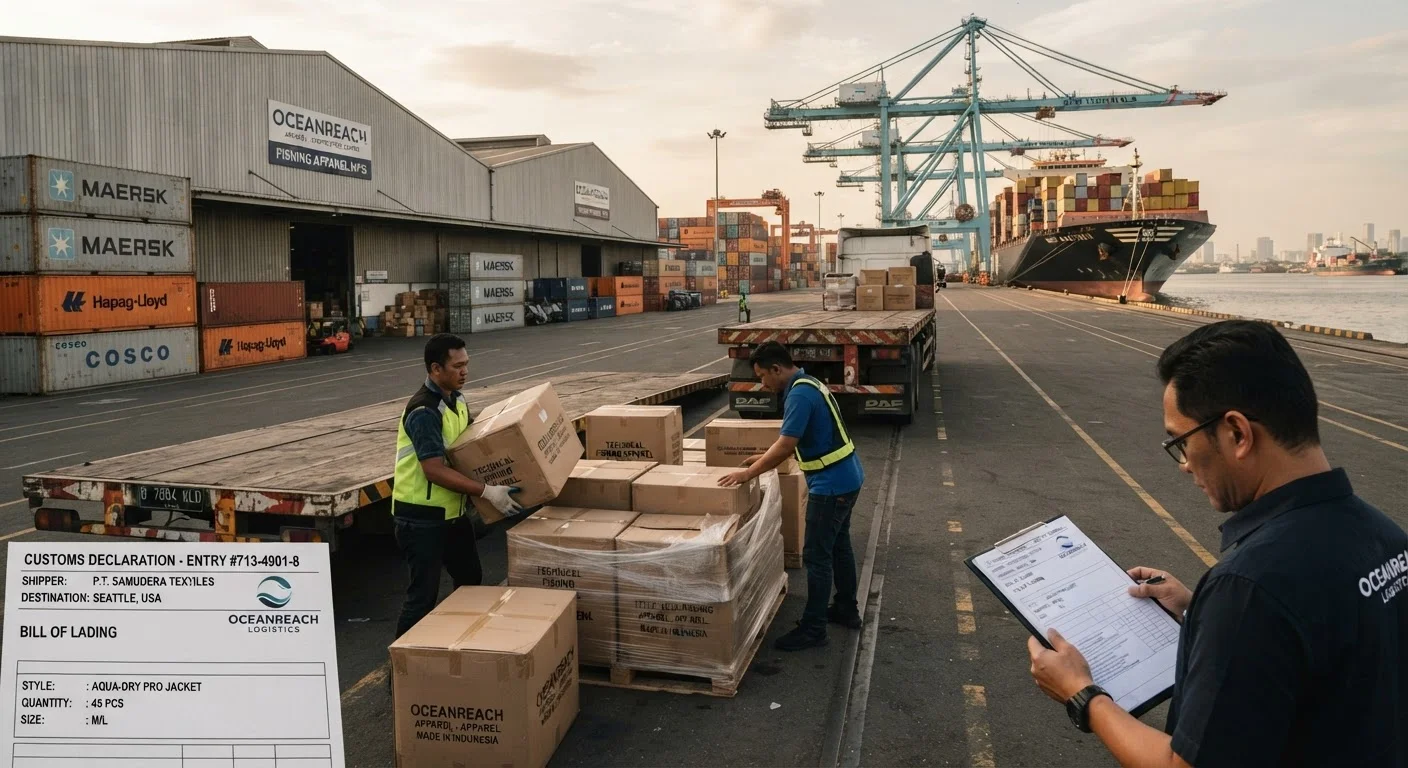
Fishing apparel importers face the same DDP vs DDU decision as anyone else, but with technical fabrics and gear-specific HS codes added to the mix. fishingapparelfactory.com ships DDP or DDU worldwide, straight to your warehouse or 3PL, with landed responsibility locked in before the container leaves port.
DDP means the factory carries it to your door, taxes included. Freight, insurance, clearance, and duties are all on their side. You take over once cartons land.
DDU/DAP means they deliver to your door, but taxes are on you. They handle freight and delivery. You settle import duties and taxes at the destination.
Their quote form asks for your destination and Incoterm upfront, so shipping becomes a line item rather than a border surprise. Paperwork includes a commercial invoice, packing list, and certificate of origin on request. Send your destination, order size, Incoterm preference, and target date, and you'll get the freight structure and door ETA within 24 hours. Contact: [email protected] or WhatsApp +86 177 0272 7677, GMT+8, Mon–Sat.
Conclusion
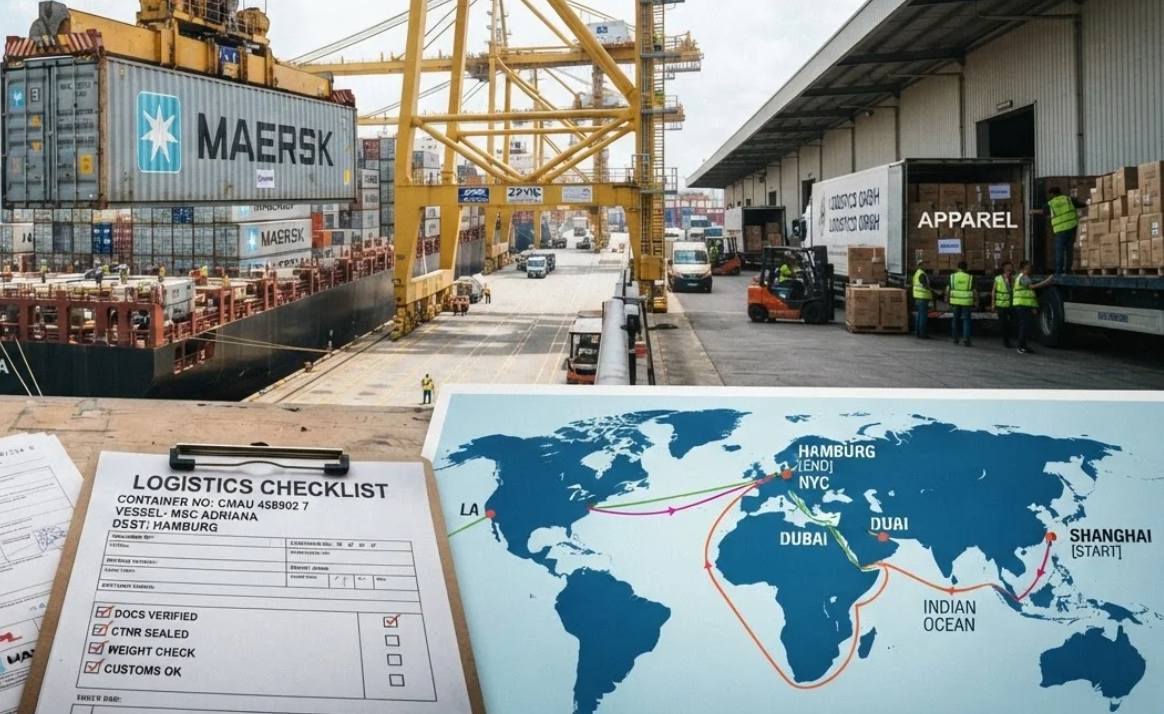
Your choice between DDP and DDU comes down to one thing: who you trust to handle customs clearance without blowing your timeline or your margins.
If you're new to importing, still learning a target country's duty structure, or shipping smaller apparel batches, DDP buys you predictability. If you've got the volume, the broker relationships, and want tighter control over your landed cost, DDU puts more money back in your pocket —
Run the numbers through the cost template before you sign anything. Ask your fishing clothing supplier or freight forwarder to quote both terms side by side. That single request will tell you more about their reliability than any sales pitch.
Get the contract language right this time, and you'll never lose sleep over a container stuck at customs again.