A charter captain’s brand lives or dies on first impressions, and nothing undermines a six-figure fishing operation faster than mismatched polos and faded logos on deck. Most fleet operators treat crew apparel as an afterthought—order shirts once and hope they hold up. They don’t.
Gear that actually performs on the water takes more than that. You need the right fabric blends, sizing that works for a rotating crew, and fishing apparel vendor relationships that won’t leave you scrambling before peak season. Here’s what a functional apparel program looks like: the core kit essentials and the procurement benchmarks that separate professional fleets from the ones that look thrown together. If you’re building your first program or fixing a broken one, you’ll walk away with a clearer blueprint and fewer surprises when the invoice arrives.
Understanding the Charter Fleet Apparel Program Structure
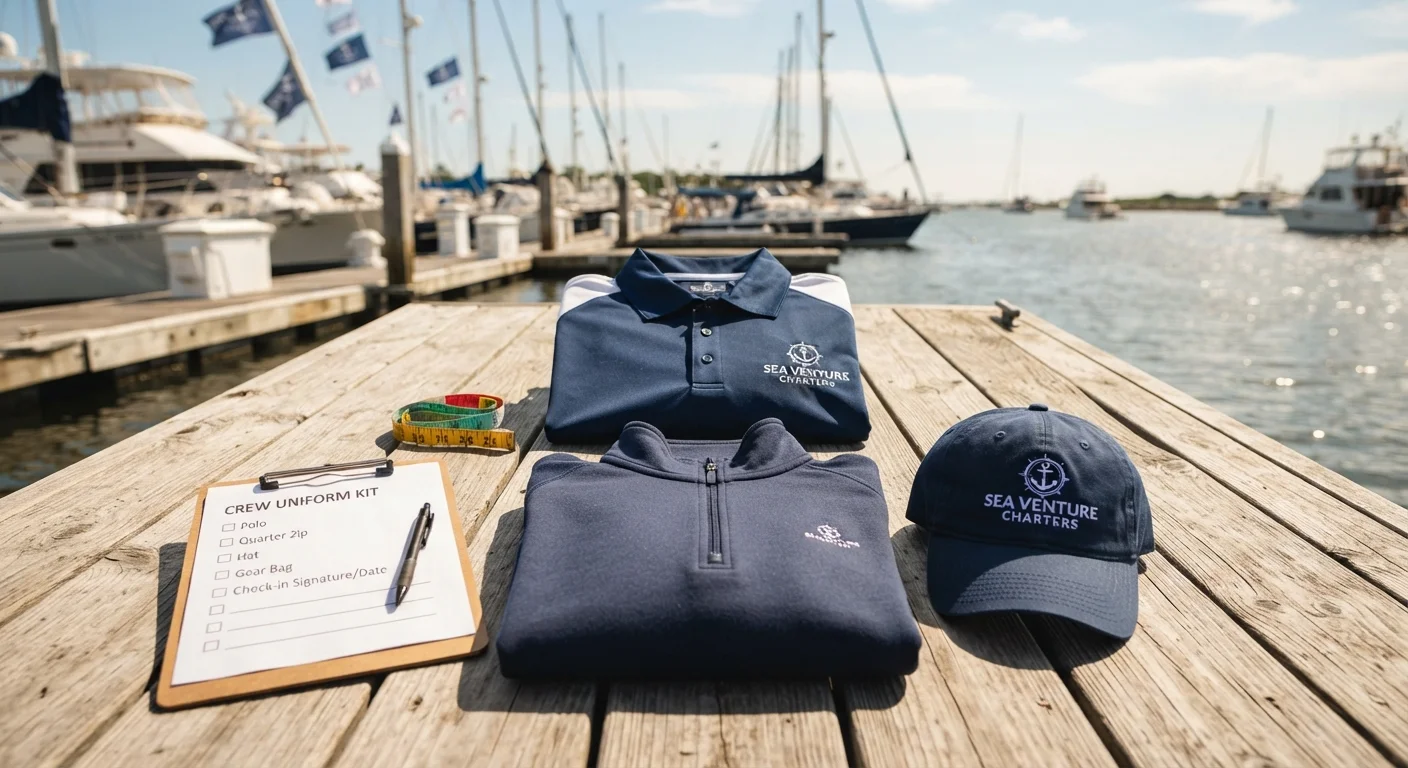
Structure beats guesswork. Every well-run charter fleet apparel program comes down to a controlled, approved-product system, a repeatable process for choosing gear, locking down branding, and keeping orders from turning into chaos.
An approved catalog covers polos, jackets, hats, work uniforms, fleece, bags, and event apparel—nothing off-menu. Brand rules cover logo placement, embroidery vs. printing vs. patches, size, color, and department variations. Consistency isn't optional. Ordering can be bulk, by department, by event, by location, or through a self-serve employee portal. Fulfillment involves production, inspection, and shipping, either in bulk or to multiple docks.
Real fleets use an allotment model instead of counting units. Crew get a uniform credit to spend across the catalog. New hires get company t-shirts on day one, then the full package after 30 days. That credit doesn't roll over. Use it or lose it annually. After the first year, crew just reorder what's worn out instead of restocking everything.
Ordering runs through a portal. Cintas users know shop.mycintas.com, backed by phone support at 1-800-864-3676.
The Minimal Viable Kit: Three Core Categories
Forget the 47-item catalog for a second. Before you order anything, borrow a trick from product teams building software: define your MVP first. Minimum viable kit, not maximum ambition.
Every category earns its place by solving one problem, not ten.
Category One: The Goal Garment. Pick the single item that solves your biggest visible problem—usually the polo or performance shirt crew wear on deck, all day, every trip. Everything else is secondary.
Category Two: The Workflow Piece. Map the actual day. Dock at 6 a.m., sun by 10, rain by 2. That's your user flow. The piece that survives all three conditions—a quarter-zip or a breathable jacket—earns its spot.
Category Three: The Priority List. Score everything else P0, P1, P2. Must-have, should-have, nice-to-have. Industry pattern: P0 items make up roughly 20–30% of your total catalog. The rest—fleece vests, event polos, branded totes—waits.
Build those three categories first. Add depth later, once you know what actually gets worn.
Common Apparel Items Used in Charter Fleet Branding
Five items do 90% of the work. Everything else is decoration.
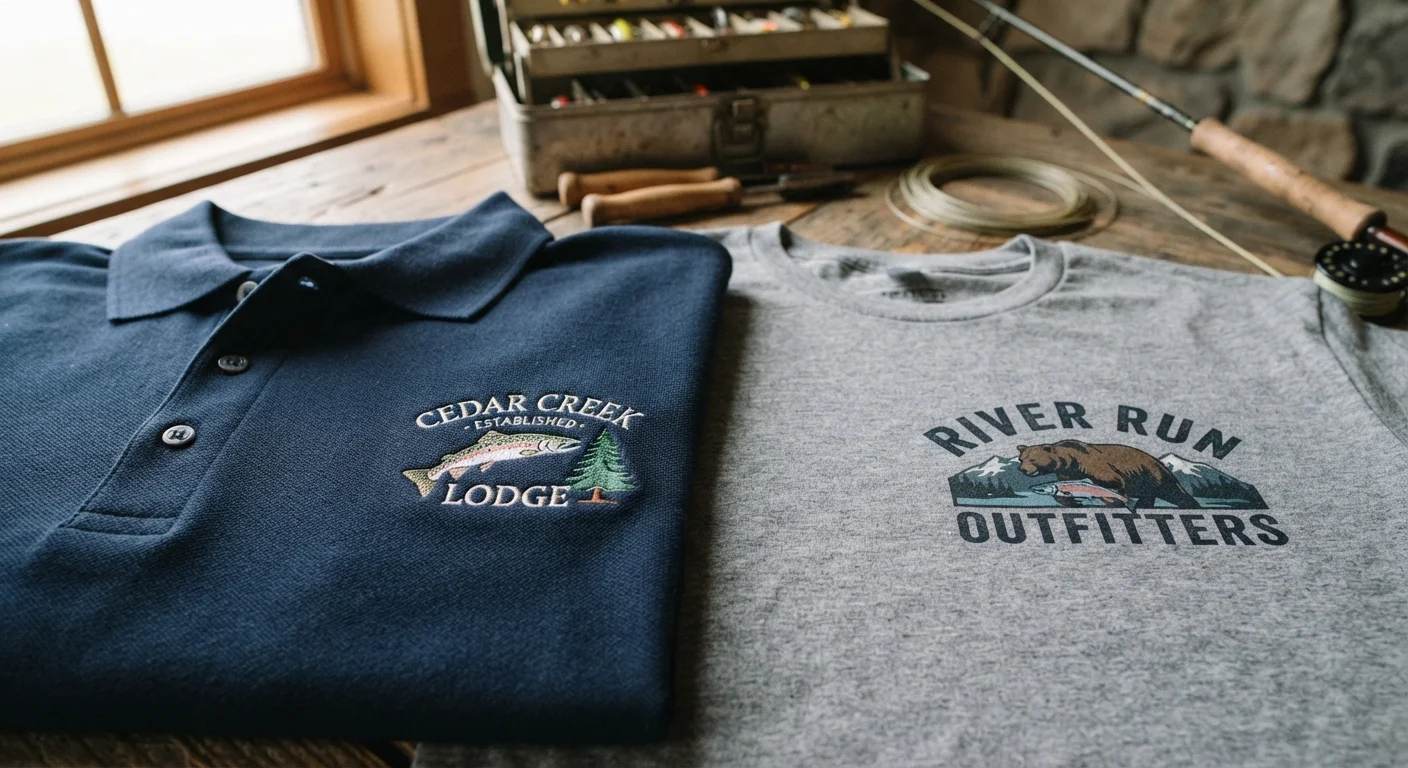
The performance polo is your anchor piece. It's moisture-wicking, cut in boat colors, with a small embroidered boat name on the chest. This is the shirt captains live in. Expect to pay around $34.88 for a quality version. Performance long-sleeve shirts handle sun protection, usually in a lighter shade, sometimes with a hood for brutal midday exposure. Roughly $29.88 . When temperatures drop, crews layer with a quarter-zip pullover ( $29.88 ) or hoodie ( $36.88 ), both embroidered in the same boat colors as the polo.
Then there's headwear. A snapback or rope hat with the boat name stitched across the crown is the most photographed item on any charter. Guests take pictures. Guests buy hats. Budget $36.00 for a baseball cap, or less for a peaked or fisherman-style version ( $20–21 ).
If you're building the bare minimum, the formula is one polo, one long sleeve, one cold-layer, one hat. That's the whole kit.
Beyond the Core Kit
Larger operations expand into blouses, board shorts, SPF shirts, dress shirts with epaulets, chef wear, even footwear. Guest-facing merch tells a different story. Think branded t-shirts, beach bags, umbrellas, water bottles. These aren't crew uniforms. They're marketing.
On branding format: embroidery wins for durability on polos, hats, and jackets. Screen printing works fine for lower-cost guest tees. Either way, print the company name, location, and phone number somewhere visible. That's not vanity. That's a walking business card.
Material and Functional Requirements for Marine Crew Apparel
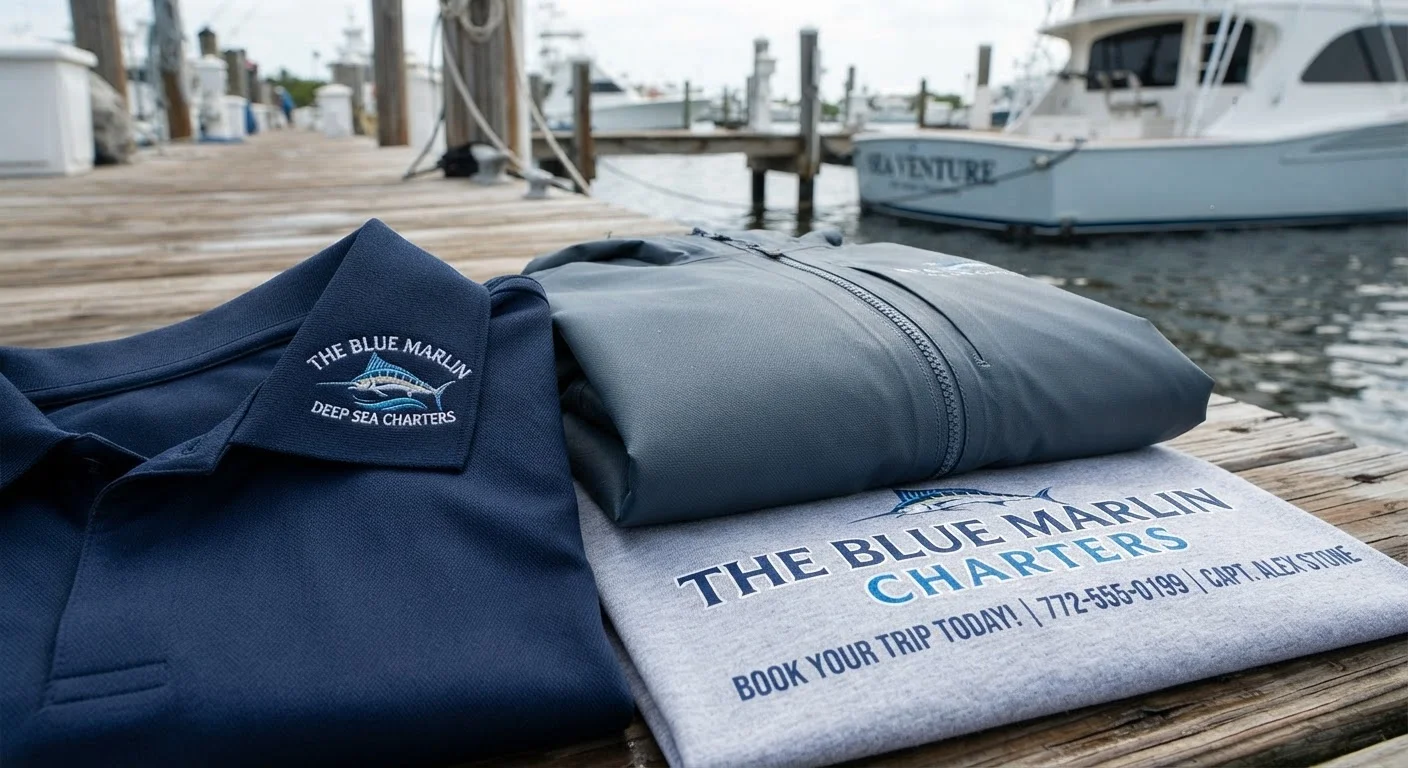
Fabric choice is an engineering decision. The gsm, the fiber blend, the coating on that jacket shell determine whether your crew survives a full charter season or you're reordering by August.
Smart fleets spec fabric by job function , not garment type. Interior staff, deckhands, engineers, and galley crew each face different threats. Match the fabric to the threat.
Interior crew wear poly-cotton stretch wovens, 180–220 gsm, with 2–4% elastane for movement. These need to survive commercial laundering without pilling (check ISO 15797) and hold color through repeated washes (ISO 105-C06). Expect 24–36 months of service life from tailored wool-poly sets.
Deck crew need polyester-spandex or Supplex-nylon blends, 150–240 gsm depending on the piece. This is where UPF 50+ matters—test to AS/NZS 4399. Quick-dry finishes should bring dry time under 30–60 minutes. Salt-resistant trims prevent corroded zippers by mid-season. Outer shells need a hydrostatic head of at least 1,500mm to block water, not just resist a light drizzle. Service life: 18–24 months.
Engineering staff require flame-resistant treated cotton or Nomex blends, 240–320 gsm, meeting EN ISO 11612 for heat exposure. Natural fibers char instead of melt—critical near engines. These sets last 24+ months.
Galley crew get cotton-rich twill with stain-guard finishes and vented backs. High cotton content means heat tolerance without melting. Expect 12–18 months given daily high-temp washing.
Write these specs down by role, by fabric weight, by standard before you ever place an order. That's how you outfit a charter fleet correctly.
Branding and Customization Methods
Skip the assumption that one embroidery file fits every vessel in your fleet. It doesn't.
Outfitting a charter fleet starts with a locked brand identity—your boat name, color palette, and phone number—then you build variants from there. Captains get one look. Mates get a slightly different color block. Interior staff get a third. That's a segmented approach, same logic retailers use when they show different homepage banners to different customers.
Start small. Pick one or two high-impact items—the polo and the hat—get those locked, then expand. Adding board shorts and dress shirts before the polo is dialed in just multiplies your mistakes.
Track what works. Watch reorder rates by item. Watch which hat colors guests actually photograph and post. That feedback loop tells you which branding choices earn their spot in next season's order, and which ones get quietly retired.
Governance matters too. Someone owns the brand file. Someone approves new colorways before a vendor prints 200 shirts in the wrong shade of navy. Skip that step, and you're reordering by August—for reasons that have nothing to do with fabric.
fishingapparelfactory.com – Custom Manufacturing for Charter Fleets
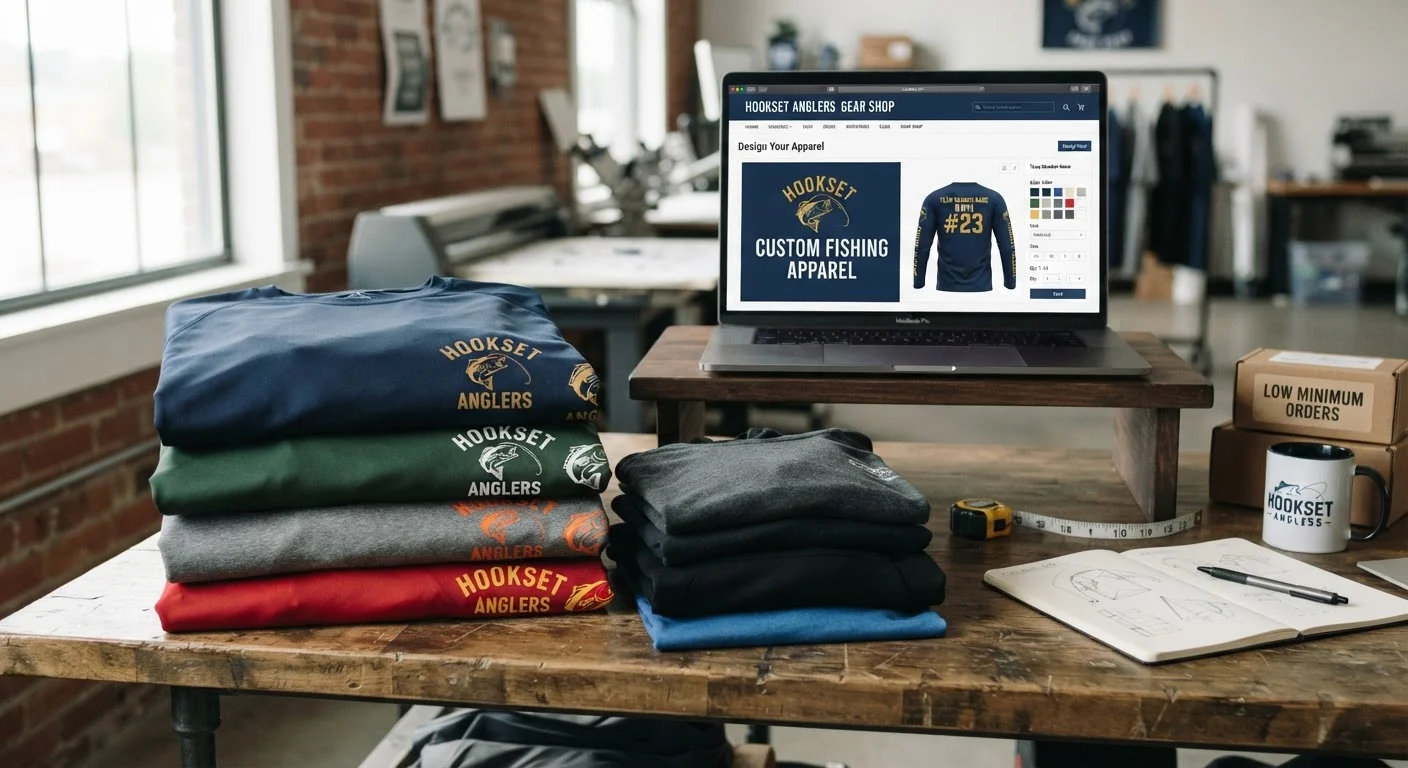
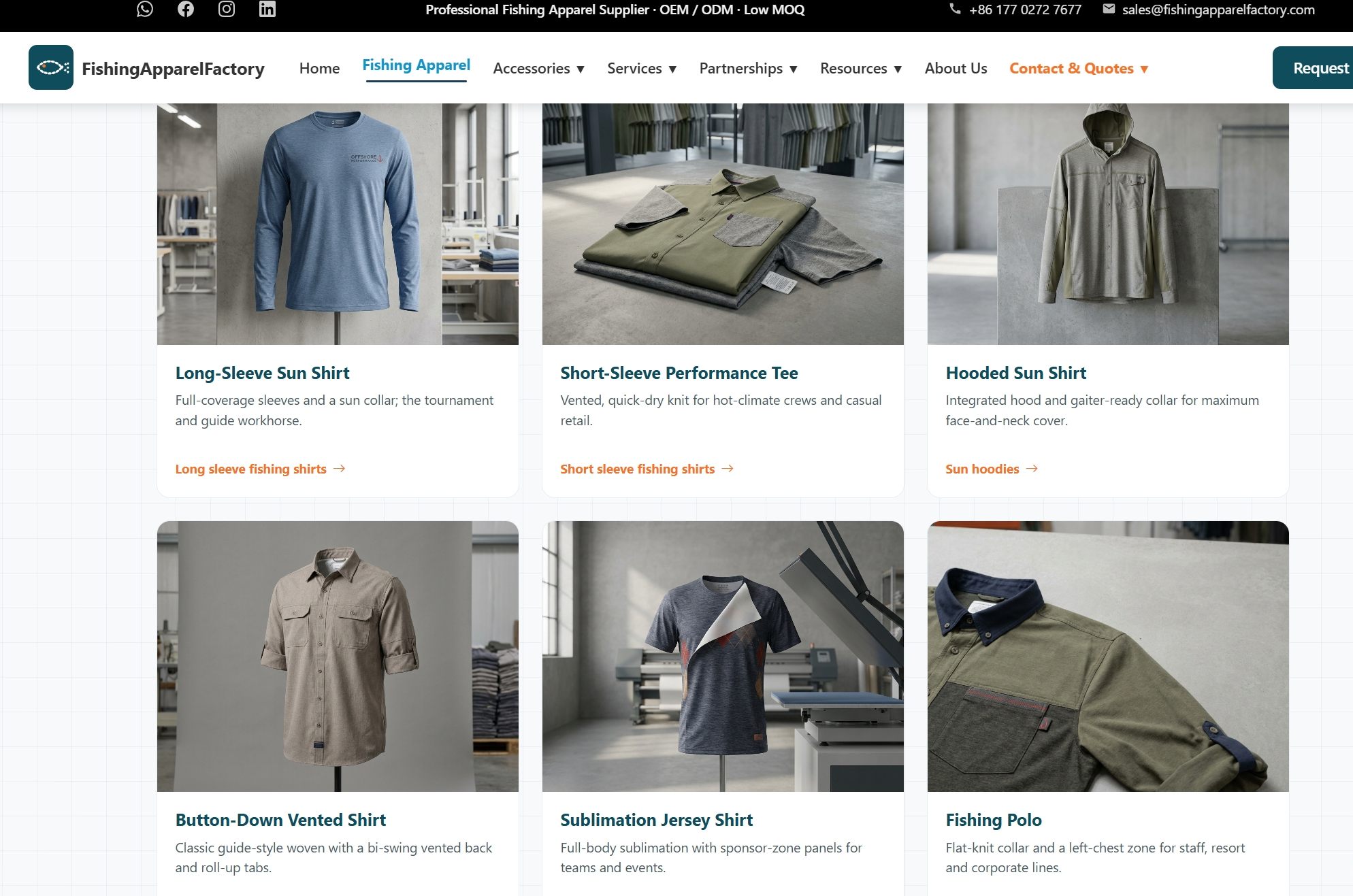
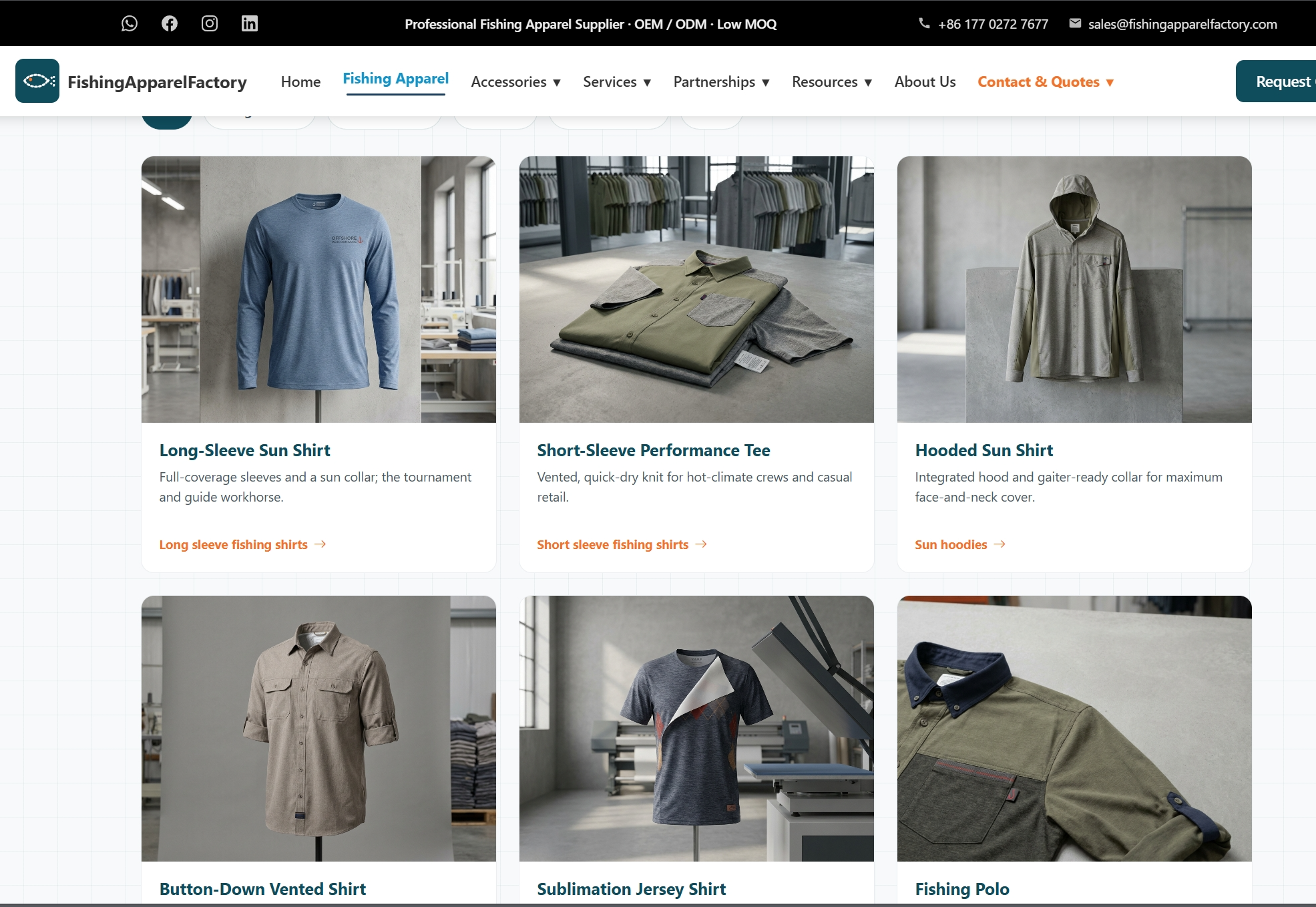
Fishingapparelfactory.com is the front door to Runfish Apparel , a Guangzhou-based OEM/ODM fishing apparel manufacturer that ships branded fishing apparel to over 50 export markets. It's a full-service factory for small fishing brands, tournament teams, and charter fleets that need low-MOQ custom fishing apparel runs without the mass-retail markup.
The Charter-Specific Kit
Runfish targets charter operators directly with their Charter Boat Fleet Uniform program. It covers four pieces: a charter-branded jersey, a crew shirt, a branded hat, and a neck gaiter. The program runs on season-by-season replenishment, matching how real fleets operate. You restock before peak season instead of mid-charter when a mate's shirt rips.
The factory's saltwater collection also includes UPF 50+ performance shirts, sublimation tournament jerseys with full sponsor branding, waterproof offshore jackets, bibs, waders, and saltwater gloves. Runfish tunes patterns, fabric sourcing, and machine setups for salt and sun.
What It Costs
Runfish publishes real MOQ tiers:
Production Path | MOQ | Cost/Shirt | Lead Time |
|---|---|---|---|
POD / On-Demand | 1 pc | $28–$45 | 3–5 days |
Stock Fabric + Custom Print | 30–50 pcs | $14–$19 | 7–10 days |
50–100 pcs | $11–$15 | 10–14 days | |
Domestic Small-Batch OEM | 200–300 pcs | $10–$18 | 18–25 days |
Large Overseas Manufacturer | 500–5,000+ pcs | $6–$9 | 30–45 days |
For most single-fleet operators, the sweet spot is 50–100 pieces for sublimation jerseys to validate fit, then scaling to 200+ pieces once the uniform proves out.
The Process
Sampling takes 7–10 days. You approve fit and color before anything goes to bulk. QC happens three times: fabric inspection, in-line during sewing, and final check against the approved sample.
Reach them through email, or WhatsApp at +86 177 0272 7677. The 24-hour response window is useful when you have a season deadline.
Ordering Models and Logistics
Most fleets order apparel the way they order bait: by gut feel. That gets expensive.
A reorder point model fixes this. Set your ROP per item: average weekly demand times lead time, plus a safety stock buffer. For polos and hats, your highest-turnover items, target a 95-98% fill rate. Nobody wants a mate showing up bare-chested because the polo shipment missed.
Min-max works simpler for smaller fleets. Set a floor and a ceiling per item. When stock drops to the floor, order enough to hit the ceiling. Review weekly for core pieces, monthly for backup gear like dress shirts or event polos.
Watch your fishing apparel supplier's MOQ constraints too. Runfish's tiers (30 pieces minimum for custom print of sihing apparel, 50-100 for sublimation) should shape your order size, not the other way around.
Track OTIF: on-time, in-full delivery. Anything below 95% before peak season is a red flag. Outfitting a charter fleet with branded gear works only if the gear actually shows up when it's supposed to.
Industry-Standard Procurement Benchmarks
Numbers don't lie. Gut feelings do. Outfitting a charter fleet with branded gear becomes a real procurement operation the moment you start tracking it against outside data instead of last year's invoice.
APQC Open Standards Benchmarking publishes the numbers most fleets ignore. Median cost per purchase order sits at $55. Median fishing apparel supplier on-time delivery lands at 90%. Miss either mark and your polo order is bleeding money nobody's watching.
Spend under management matters too. The industry average is 71% of enterprise spend. Top performers push savings to 8–12% of total spend, which is the gap between a fleet that reorders smart and one that overpays every season.
The Hackett Group, Gartner, and ISM track similar data. Use peer-group medians to judge whether your vendor relationships are working.
Common Pitfalls in Charter Apparel Programs
Seventy-two percent of organizations juggle two or more apparel vendors. That’s chaos wearing a uniform.
Split ordering across multiple suppliers, and you inherit their problems too. The average fleet using decentralized ordering works with 2.32 vendors, and 47% cite managing separate invoices, orders, and billing contacts as their top headache. Worse, 42% report logos that look different depending on which vendor stitched them, and 41% can’t keep delivery timelines coordinated across suppliers.
The fixes are boring but they work:
One approved catalog. Limited SKUs, no exceptions.
A one-page spec sheet covering colors, logo placement, and decoration method for every item.
Minimum issue quantities set by role, so a deckhand isn’t rationing one polo across a six-day charter.
Total program cost tracking—the whole picture, not per-unit price.
Skip these, and outfitting a charter fleet with branded gear becomes an annual scramble instead of a system.
Conclusion
A well-planned crew apparel program—built on a minimal viable kit, matched to real marine conditions, and ordered through a system that won't leave you scrambling before season—protects your crew from brutal sun and saltwater, makes every guest photo a walking advertisement for your business, and signals, without saying a word, that you run a tight operation.
Successful fleets make crew apparel a priority and partner with fishing apparel manufacturers who understand marine-grade fabric and bulk logistics.
Talk to a partner like fishingapparelfactory.com, map out your kit, and order like the pros do.