Your gift shop rack full of unbranded polos and generic ball caps is leaving money on the table every single season. Anglers who just landed a personal-best musky or spent three days at your lodge want something that proves it happened, and they’ll pay a premium for gear that carries your brand instead of a big-box logo. The real question is how to source branded fishing apparel for resorts, lodges, and pro shops without overpaying, over-ordering, or ending up with hoodies that fade after two washes.
We’re breaking down real minimum order quantities, per-unit pricing across three volume tiers, a side-by-side on screen printing versus embroidery, and two case studies showing how a 12-cabin fishing camp and a 200-room resort each built out their retail line differently. Use this as a checklist. By the end, you’ll know exactly what to order and what to ask your vendor first.
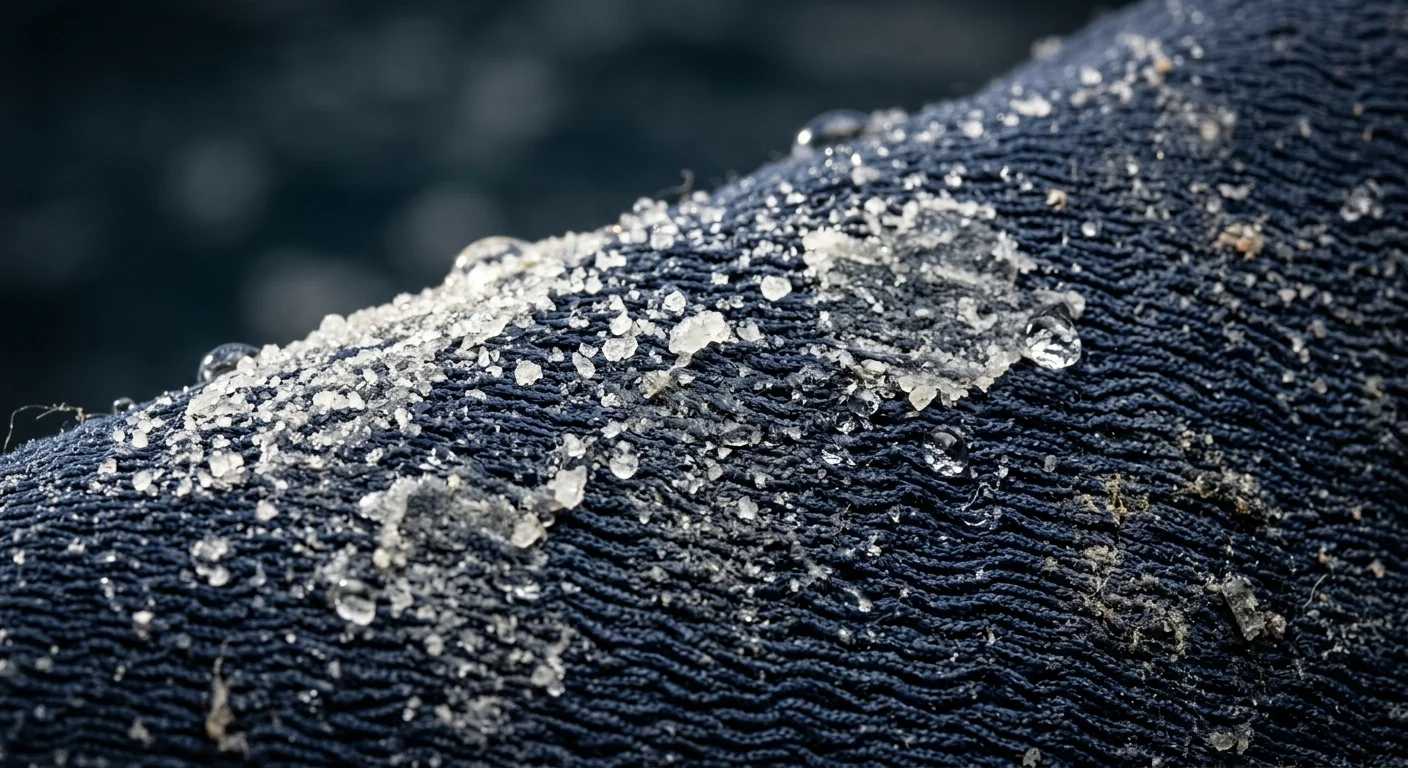
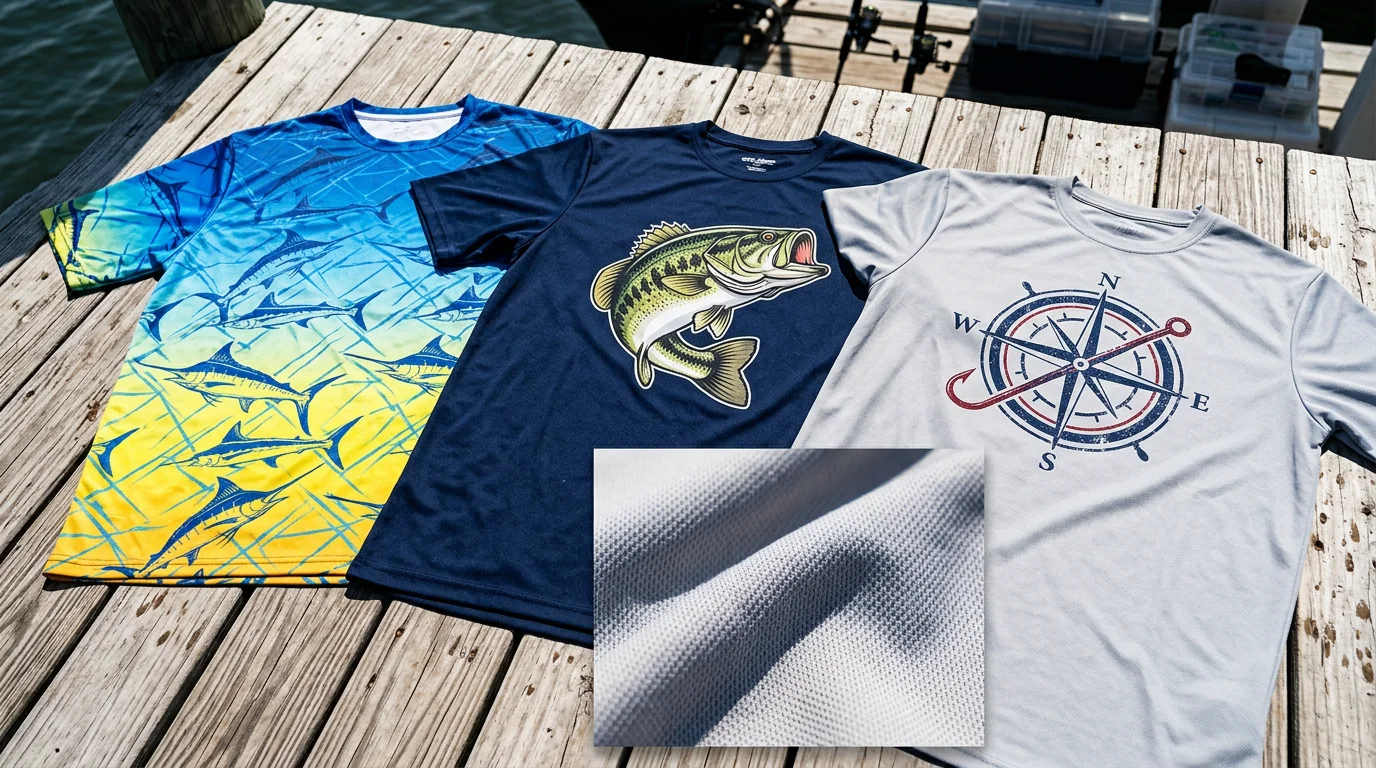
Comparison of three customization methods: screen printing, embroidery and heat transfer printing - costs,durability
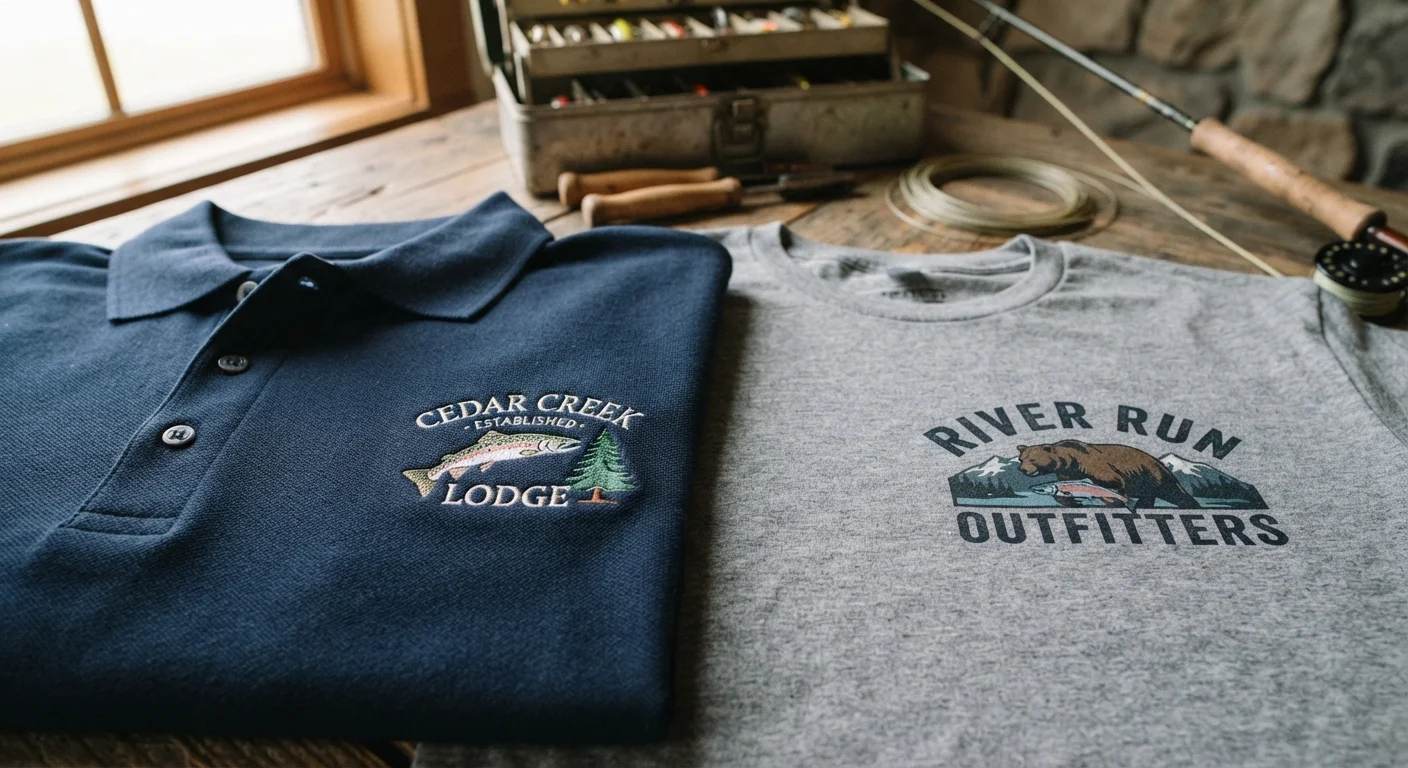
Every vendor you call will push their preferred method first. Don't let them. Each of the three main decoration techniques has a clear sweet spot, and picking the wrong one means either burning cash on small orders or watching your logo peel off after a month of lake water and sunscreen.
Screen printing wins on volume. The ink bonds into the fabric fibers instead of sitting on top, so it survives heavy washing without cracking or flaking. Setup runs $50-200 RMB per color for the screen, which sounds steep until you spread it across a thousand shirts—at that scale, print cost per unit drops to roughly $0.50. The catch is you need at least 50-100 pieces before the math works in your favor. Below that, you're mostly paying for the screen.
Embroidery is the premium play for custom embroidered fishing shirts and polos that need to look sharp at the front desk for years. A 5cm logo on the left chest runs $30-60 per piece, easily double what screen printing costs for the same spot. But it survives 100+ wash cycles without fading or lifting, which matters when your staff polos see saltwater and sun five days a week. There's no minimum order requirement, but the price barely drops with volume since it's charged by stitch count, not quantity.
Heat transfer makes sense only for small, fast jobs. No setup fee means 1-50 piece orders stay affordable—Hong Kong shops quote roughly 10-30 HKD per A4-sized placement. The tradeoff shows up fast: transfers start cracking or curling at the edges after just 20-30 washes, and large designs trap heat, making shirts uncomfortably warm on a summer charter.
Embroider your chest logo for brand identity, screen print anything covering bigger fabric areas at 50+ units, and save heat transfer for one-off event shirts or names and numbers you won't need to reorder.
The minimum order quantities and unit price ranges for different order sizes (50/200/500 pieces)
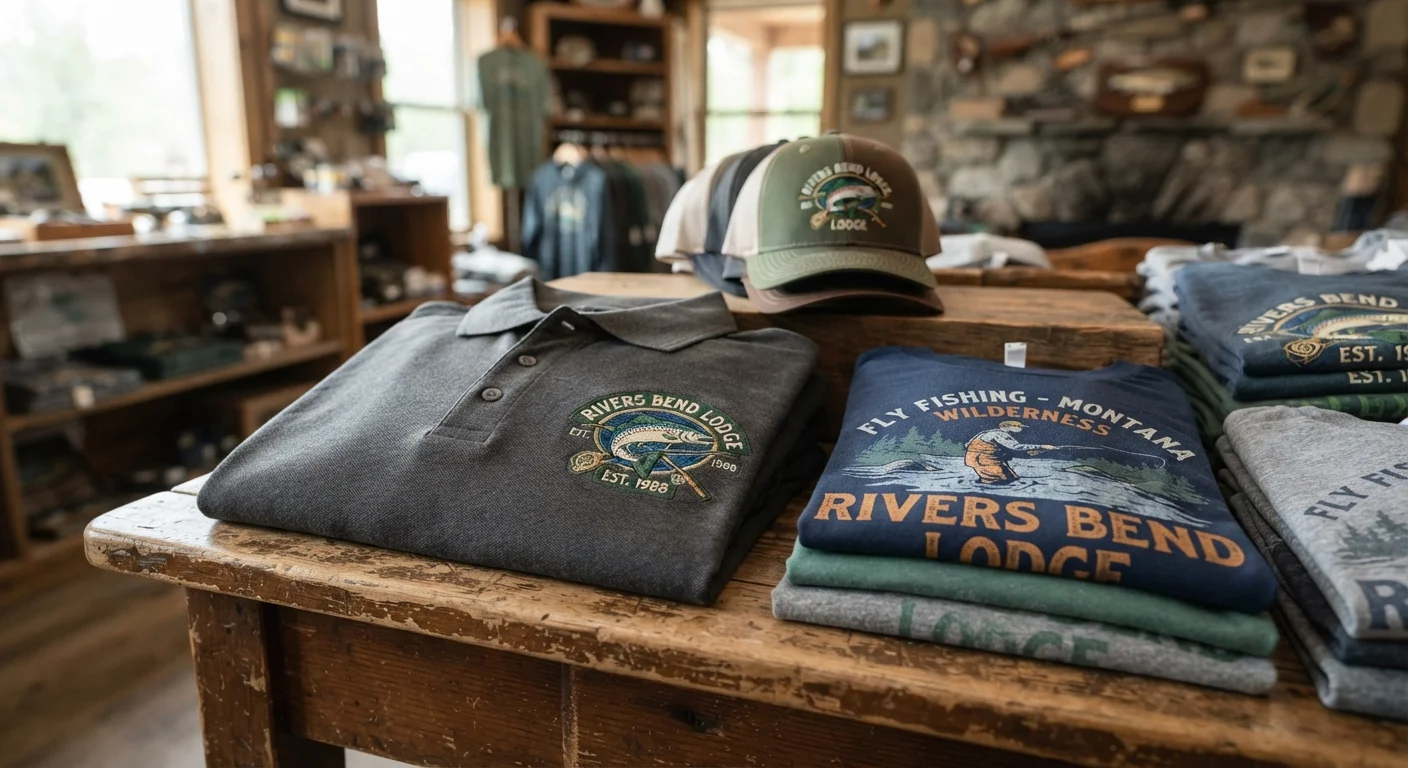
Most garment factories won't even quote you a real number below 500 pieces. Call three vendors, and at least two will say "500 unit minimum." That doesn't mean smaller orders are impossible. You just pay a premium for the flexibility.
Here's how the pricing breaks down across volume tiers, using standard apparel manufacturing rates:
Order Size | Price Per Unit | What You're Really Buying |
|---|---|---|
50 units | $12–18 | Small-batch or custom-run pricing—good for testing a logo before committing your whole season's budget |
200 units | $9.50–11 | Below most factories' official MOQ, but many will run a trial batch at a 20–40% markup |
500 units | ~$8.00 | The industry's real test batch threshold—first tier where you get Fishing Apparel factory pricing instead of retail markup |
2,000 units | ~$5.50 | Standard for a multi-location resort or a lodge stocking a full season of UPF fishing shirts wholesale |
10,000 units | ~$3.75 | Bulk retail volume, typically realistic only for large chains |
Notice the pattern: quantity jumps 3–5x, price drops 25–35% each time. That's not a random discount. Fixed costs (setup, sampling, admin) get spread across more units.
For a 12-cabin fishing camp, 50–200 units covers a season without dead stock. For a 200-room resort running a full pro shop retail apparel line, 500+ is where the per-unit economics finally work in your favor. If your vendor quotes flat pricing regardless of volume, ask why.
Case One: Low-cost customized solution for small family fishing camps
A 12-cabin family fishing camp built around an existing pond, total startup budget between ¥800,000 and ¥2,000,000. Thirty to forty family fishing spots line the shore. The owner already runs a small gift shop selling rods, line, and bait at a 30–50% margin — that profit engine keeps the camp afloat through its first couple of seasons.
Branded apparel was the missing piece. The owner didn't want to risk a 500-unit order for a business that might not fill every cabin on a rainy weekend. So the math went like this:
50 embroidered staff polos at $30 each — one 5cm chest logo, guides and front desk staff only. Total cost about $1,500. These needed to survive a full season of sun and lake water without cracking, so screen printing was out.
100 caps via heat transfer, stocked as personalized fishing hats for the gift shop rack. No setup fee, small run, about $2–3 per placement. Retail price landed at $18–22 each, matching the margin structure the owner already trusted from rod and bait sales.
No hoodies, no bulk vests, no minimum-order headaches. Just enough branded fishing lodge gift shop products to make the rack look intentional instead of leftover stock from last season. The camp didn't need a full pro shop retail apparel line yet. It needed proof that guests would actually pay for something with the lodge's name on it before committing real capital to a bigger inventory run next year.
Case 2: Brand Apparel Retail at a Large Resort
Two hundred rooms and a working marina change the math entirely. At this scale, apparel isn't a side hustle next to the bait cooler. It's a line item the GM reviews alongside F&B and spa revenue every quarter. At upscale properties, fashion and accessories typically account for 5–15% of total resort revenue, and apparel is the single largest category within that number.
This particular resort runs 40 fishing guides and a full pro shop retail apparel line. Their season order hit 2,000 units total: 300 embroidered guide polos, 800 screen-printed retail tees, 500 UPF fishing shirts bought wholesale as sun hoodies, and 400 personalized fishing hats. At that volume, per-unit cost dropped to about $5.50. That's why the math only works when you order at this scale.
The category split:
- Guide uniforms (embroidered, built for daily saltwater use): 15%
- Retail hoodies and vests (screen-printed, built for margin): 45%
- Hats and caps (heat transfer, impulse buys): 30%
- Limited seasonal and logo drops: 10%
The results matched broader resort-retail benchmarks. The top 20 SKUs—mostly branded hoodies and caps—drove close to 45% of total apparel sales. Sell-through on core items hit 72% by season's end, right at the industry target of 70% or higher. Gross margin on the self-branded line landed at 58%, squarely inside the 55–65% range most resort apparel programs aim for.
Embroider what guides wear every day. Screen print what tourists buy once. And let volume—not vendor pressure—decide which method funds which category.
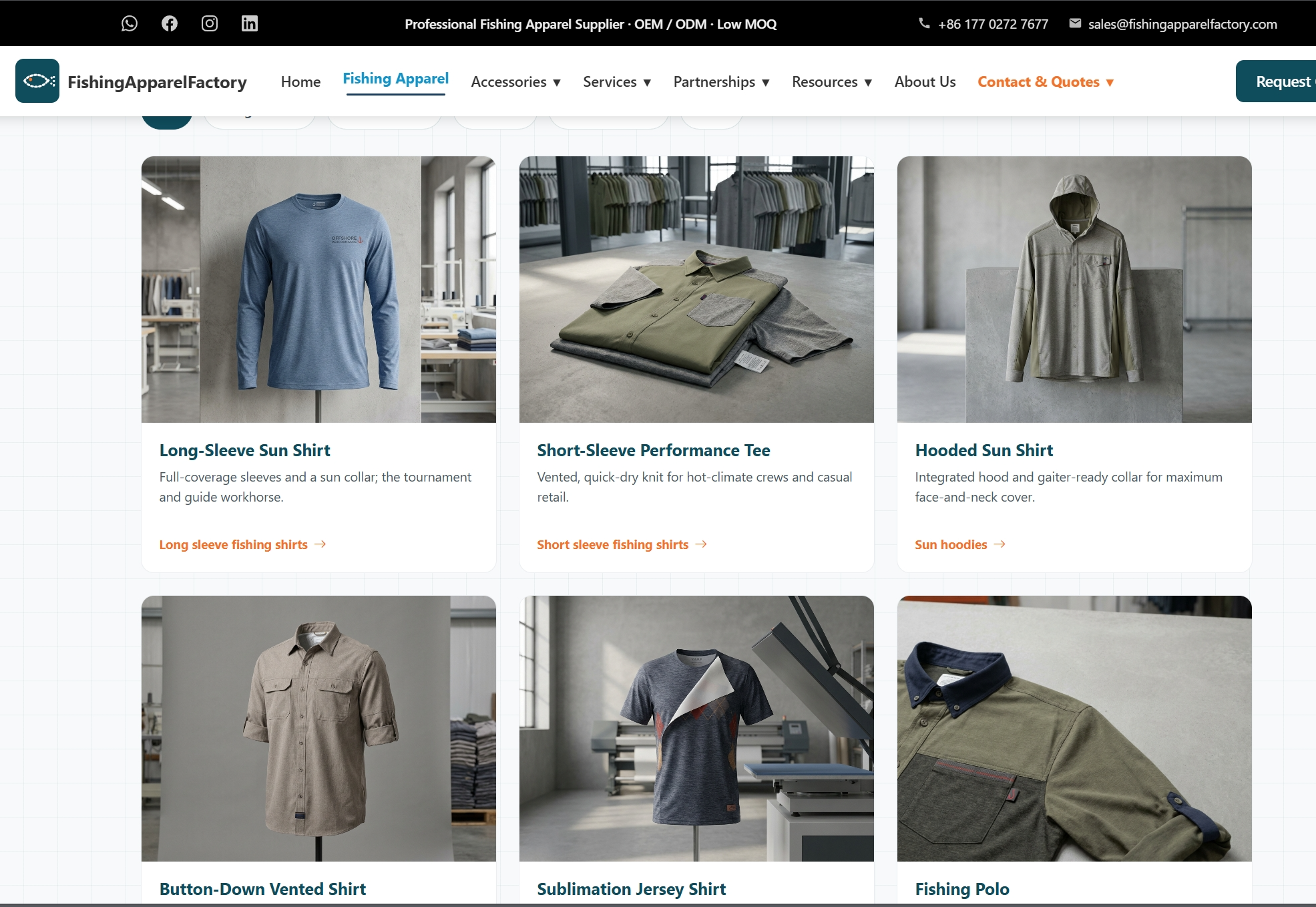
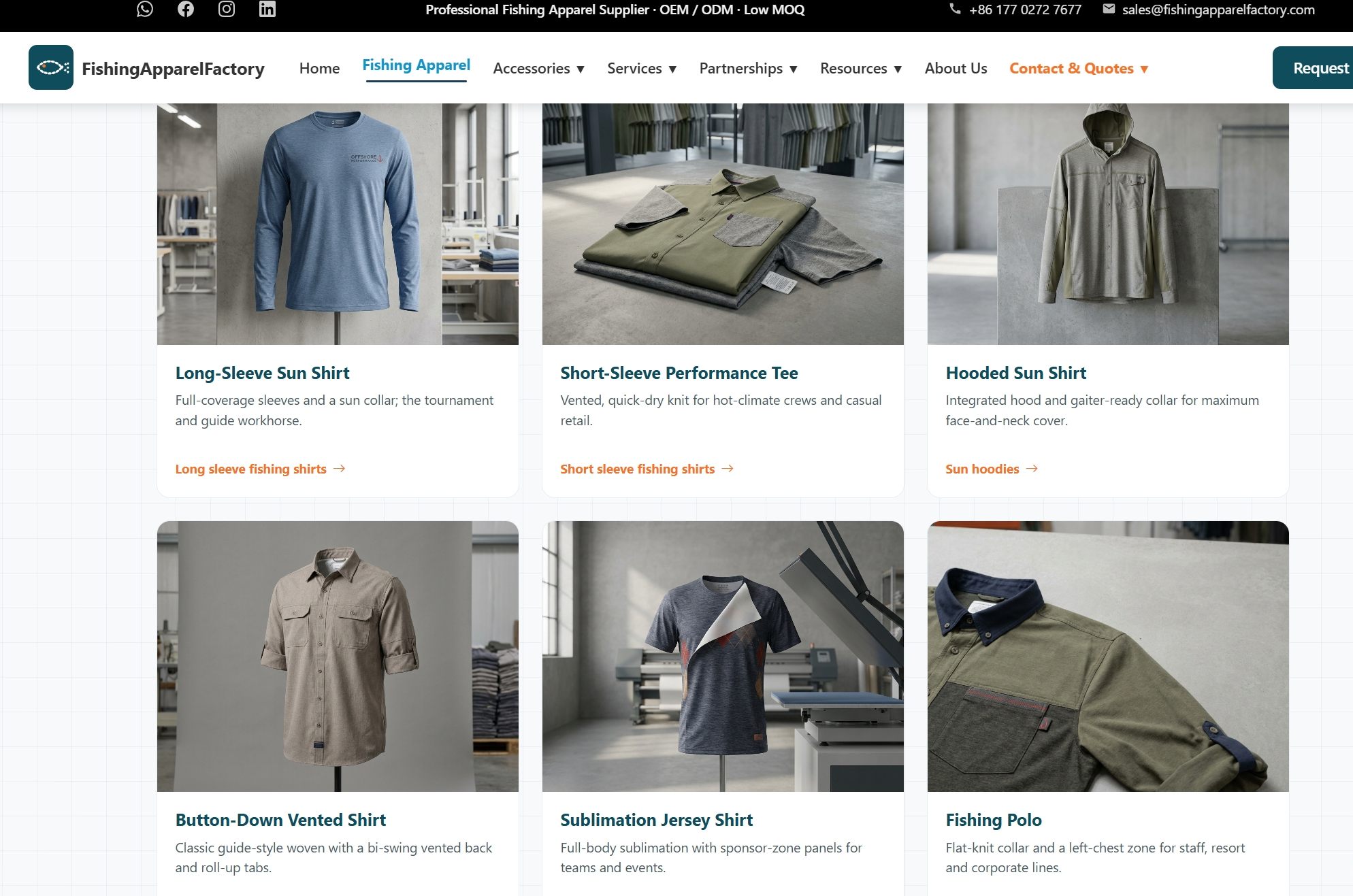
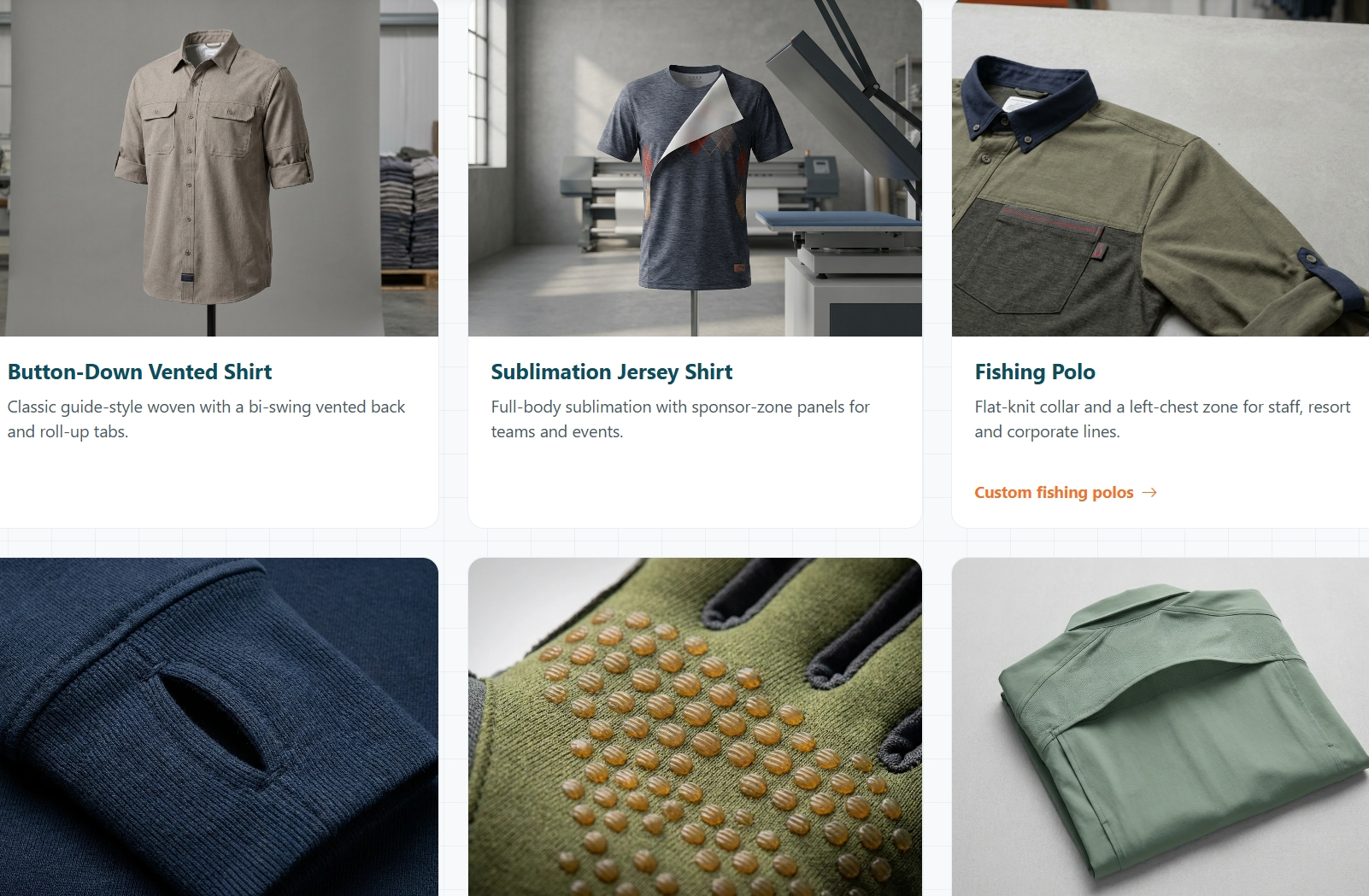
List of common customized products: Quick-drying Polo, sun hat, hoodie, vest
Fabric weight tells you more about quality than any sales pitch. Before you sign a PO, know the GSM range for each product. That number separates a shirt that lasts a season from one that pills after ten washes.
Moisture-wicking fishing apparel starts with the polo. Standard 100% polyester runs 215g and holds up under sun and sweat. Golf-style blends drop to 160g, with 86.3% polyester and 13.7% spandex for stretch across the shoulders during a hard cast. Ice-silk waffle-knit versions add nylon for a cooler feel on humid charter days. Your working range is 150-215g. Per-unit pricing runs from 30-80 RMB for basic screen printing and 100-200 RMB for high-end fiber blends with embroidered logos.
UPF fishing shirts wholesale buyers should look at sun hats next. Taffeta polyester or nylon-mesh blends at 70-120g, with brims running 7-9cm for full coverage and 5-7cm for bucket styles. Look for UPF40+ or UPF50+ labeling. Anything less isn't doing real work on the water. Budget 15-35 RMB for basic caps and 40-80 RMB for certified UPF50+ styles, with MOQs typically starting at 50-100 units.
Hoodies split into two camps: cotton-poly blends at 280-320g for spring gear, and 340-380g fleece for cold-morning charters. Standard retail runs 70-150 RMB, up to 250 RMB for heavy fleece with multi-spot printing.
Vests stay lighter. Figure 120-160g polyester taffeta, priced 20-45 RMB with a single logo. Multi-pocket photography-style vests for guide teams climb to 150 RMB, built for gear-heavy days on the boat.
Embroidery and Printing: A Comparison of Cost and Durability of Brand Exposure Methods
Digitizing a new logo for embroidery costs $50–150 per design, and you pay that fee again every time you tweak the artwork. That’s before a single stitch runs. Screen printing’s version of this cost, the screen setup, runs $20–50 per color, which is why small logos rarely favor embroidery on price alone.
The real gap shows up on large graphics. A back-panel logo at 20cm or bigger costs roughly $10–15 per piece to embroider, about 6–10 times more than the same design foam-printed at $1–2 per piece. Run the math on a 100-unit order with a single-color 15x15cm design. Once you add the $50–115 digitizing fee to $4–8 per-piece stitching charges, embroidery’s total cost lands 3–5 times higher than screen printing across the same batch.
Production speed is the other half of the story. Heat transfer takes seconds per placement. Embroidery runs 3–10 minutes per logo depending on stitch count and complexity, and that’s labor time your vendor bills you for whether it shows up as a line item or not.
Embroidery survives the life of the garment. No cracking, no fading, stitches stay intact through 100+ washes. Screen printing holds up fine at first but starts cracking or peeling within 1–2 years of heavy washing, especially on high-frequency staff apparel. Thin fabrics complicate the choice further. Embroidery on a lightweight tee creates a stiff, bulky patch that ruins the drape and hand feel. Printing lays flat regardless of fabric weight.
Logos under 10cm go embroidered. Anything covering 20cm or more goes to print. Mixing both methods within one order is how the math is supposed to work.
Supplier Quotation Script Template: List of Key Issues
Most vendor calls fall apart in the first ten minutes because buyers ask vague questions and get vague quotes back. "How much for shirts?" gets you a number with no fabric weight, no MOQ, no lead time attached to it. Send one structured message instead of five follow-up emails and you fix that.
Copy-paste opener:
"We run [resort/lodge/pro shop name], stocking branded fishing apparel for our gift shop and guide team. Estimated annual volume: [X units]. Please quote against these specs and confirm feasibility."
Then list, in order:
Fabric : GSM, poly/spandex ratio, UPF rating if applicable (need certificate number, not just a claim)
Decoration : embroidery digitizing fee, screen printing setup cost per color, minimum stitch count pricing
Tiered pricing : quote at 50, 200, and 500 units so you can compare cost curves, not one flat number
Sample lead time : days from art confirmation to sample in hand
Production lead time : days from sample approval to shipment — ask if this is a committed date or an estimate
Sample fee : amount, and whether it's credited against the bulk order
Defect rate : their standard tolerance (industry target is under 0.5%) and who eats the cost on rework
Wash durability : guaranteed wash cycles before cracking or fading, especially for screen-printed logos
Payment terms : standard split for new accounts (commonly 30% deposit, 70% before shipment)
Send this once, to three vendors, and you get quotes you can stack side by side. Anything that comes back without answering all nine points isn't a full quote — it's a placeholder. Ask again before you sign.
Conclusion
Turning your resort’s logo into gear guests actually buy is a revenue line you’re leaving on the table. Whether you’re outfitting a 12-cabin lodge or a 200-slip marina resort, the math works the same. Nail down your order size first, match it to the right decoration method—screen print for quick turnaround, custom embroidered fishing shirts for the premium retail shelf—then get three Branded Fishing Apparel supplier quotes using the questions we covered.
Pick your quantity tier, pick your method, and ask the right questions before you sign anything.
Pull out that pricing sheet, forward it to whoever signs off on your gift shop budget, and get quotes moving this week. Your guests are already buying souvenirs somewhere. The only question is whether your logo’s on it or a competitor’s.