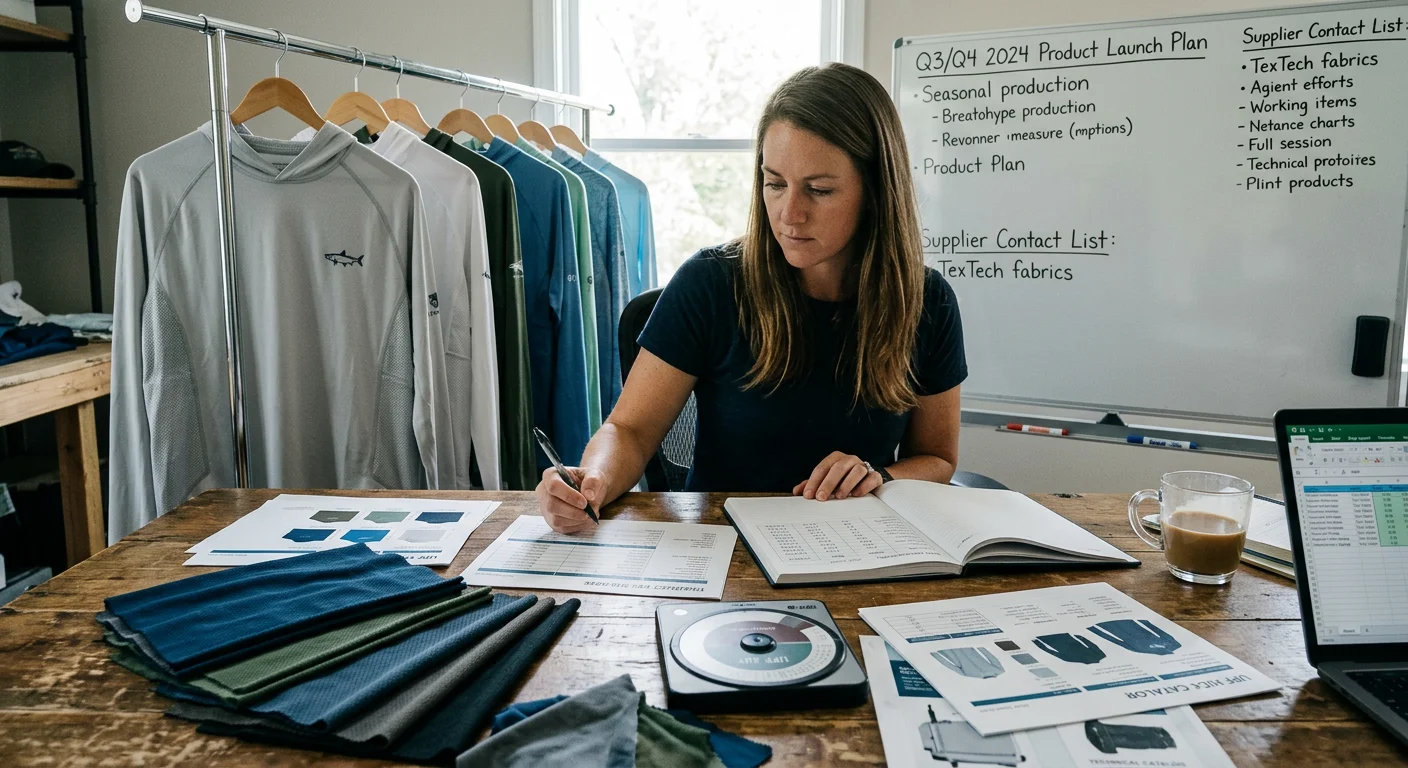
You've probably already sent a few WeChat messages to factory reps who promised "no MOQ" and "UPF 50+ certified fabric", then went quiet the moment you asked for an actual test report.
Sourcing fishing apparel from overseas is different from generic apparel procurement. Treating it the same way leads to mislabeled sun-protection claims, batch color mismatches, or a 60-day sample cycle that kills their launch window.
This is a vertical-specific playbook built from real fishing apparel private label runs—covering which countries actually specialize in moisture-wicking, hook-snag-resistant fabrics, how to negotiate MOQ requirements without overpaying, and the exact factory-vetting questions that separate serious performance fishing wear manufacturers from repackaged blank-shirt suppliers.
Why Fishing-Apparel Sourcing Differs from General Apparel Procurement
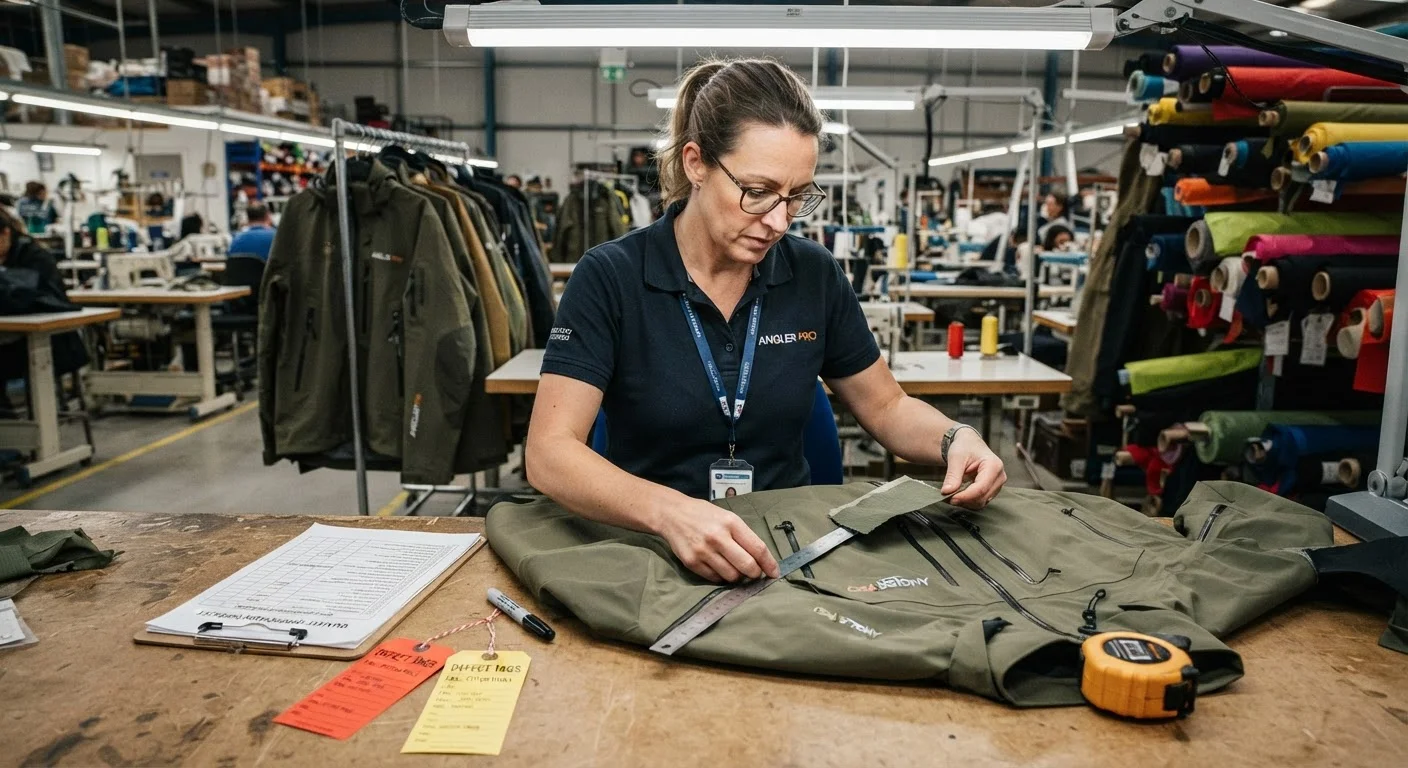
General apparel buying is about style and fit. Fishing apparel buying is about performance specs, marine durability, and certification proof. That changes everything downstream.
Start with fabric. UPF 50+, quick-dry, anti-salt, DWR coatings, corrosion-resistant hardware—these aren't checkbox specs. They need traceable test data, not a tech pack promise. If a supplier claims recycled or ocean-plastic content, ask for a GRS scope certificate (verify it in the certifier database) plus batch-level Transaction Certificates and feedstock records showing input type and recovery region. Skip that step and you're gambling on greenwashing.
MOQ requirements split by sourcing model:
Specialized fishing-line vendors: as low as 50 pcs/style with in-house testing
Generic apparel factories: 300–500 pcs minimum
Custom OEM fishing vests: 500–1,000+ units
Lead time follows the same divide. Offshore production runs 8–10 weeks. Nearshore options replenish in 3–5 weeks. For seasonal, weather-driven demand, that gap decides whether you catch the season or miss it.
Quality qualification needs to be phased too: pilot POs, back-to-back shipment checks, OTD ≥95%, defect rate ≤1%. Do all that before you commit to full volume.
Country-by-Country Factory Sourcing Breakdown—Where to Look for Your Brand Tier
Country choice is a spec-matching exercise. Match your brand tier to the region that already builds what you're selling, and you skip months of trial-and-error.
Mass-market fishing hoodies and basics (retail under $40): Bangladesh, India, Pakistan. These regions run high-volume cut-and-sew at low CMT cost. Pakistan has deep expertise in UV-blocking synthetic fabrics, which matters if your priority is UPF-rated basics at scale rather than technical performance layering. Typical order volumes here start at 5,000 units and climb into the hundreds of thousands.
Mid-tier performance fishing wear (retail $40–$100): China and Vietnam dominate this band. A China fishing clothing factory is often your best bet if you need sublimation printing fishing shirts at scale. China's dye-sublimation infrastructure is more mature and cost-efficient than most Southeast Asian alternatives. Vietnam has become the go-to for technical outerwear and moisture-wicking synthetics, with typical runs of 1,000–30,000 units. If you're weighing a moisture wicking Fishing apparel Supplier , request fabric test reports from both regions before committing. Vietnam factories tend to have stronger in-house lab testing for wicking rate and UPF retention after wash cycles.
Premium/technical performance brands (retail $100–$300): Turkey and Portugal are underused options for fishing apparel, despite being staples in premium streetwear sourcing. Turkey's vertical integration—yarn, fabric, and garment production under one roof—shortens sampling cycles and works well for smaller premium runs (500–5,000 units). Portugal adds a sustainability story if your brand markets recycled or ocean-plastic content, though you'll pay a CMT premium versus Asia.
Luxury/heritage-positioned fishing gear (retail $300+): rare in this category, but Italy and Japan handle small-batch technical textile runs. Think limited-edition guide-collection jackets rather than everyday performance wear.
Quick Reference: Country-to-Tier Shortlist
Mass basics: Bangladesh, Pakistan, India
Mid-tier performance / OEM fishing apparel production: China, Vietnam
Premium technical: Turkey, Portugal
Luxury/small-batch: Italy, Japan
Use factory-discovery tools like Open Supply Hub to pull verified factory lists by country before reaching out. It filters out the "no MOQ" ghost factories fast.
The Fishing-Apparel Factory Vetting Checklist—Beyond Standard Supplier Audits
A factory tour with clean floors and smiling reps tells you nothing about whether they can produce UPF 50+ fishing shirts at scale. Standard supplier audits check for fire exits and payroll records. Overseas fishing apparel quality control needs a different lens.
Legal and Category Verification
First, match the legal name, registration number, and export permits against the entity signing your contract and taking your payment. Factories routinely quote through one shell company and ship through another. Then confirm category fit with proof, not brochures — ask for comparable styles they've produced recently, seam and construction photos, and physical samples in similar performance-knit weights. A factory that mostly sews cotton tees will struggle with moisture-wicking synthetics.
Capacity and Machine Fit
Ask for monthly output by product type, number of sewing lines, headcount, and which processes — washing, dyeing, printing, embroidery — are in-house versus subcontracted. For fishing apparel, verify equipment for flatlock, coverstitch, bonding, and bartack stitching, because hook-snag resistance depends on construction technique, not just the fabric.
Quality System and Traceability
Demand proof of incoming material inspection, in-line QC checkpoints, and the AQL levels used at final inspection. The traceability standard to insist on goes roll numbers → cut tickets → bundle tickets → carton labels. Fabric lot variance directly affects UPF ratings and color consistency across your first 1,000-unit run.
Compliance Documentation
Request the current social-compliance audit report — not just a certificate. For material safety, ask about test coverage for formaldehyde, azo dyes, heavy metals, and PFAS where relevant. If they claim OEKO-TEX, verify which components the certification actually covers.
Benchmark Questions That Expose Reality
"What's your monthly capacity by product?"
"Which operations are subcontracted?"
"Can you show a comparable production line on video?"
"Which components are certified under your compliance claim?"
Vague answers here are your clearest red flag before committing to any OEM fishing apparel production run.
How FishingApparelFactory.com Simplifies OEM/ODM Sourcing for Fishing Brands
Two lanes. That's the whole model. fishingapparelfactory.com gives you a choice between custom fishing apparel OEM work and faster ODM/private label tracks. Pick based on whether you need exclusivity or speed.
OEM works like this: you send CAD files, material specs, and construction details, and the factory builds to that exact blueprint. Under that contract, your design stays yours. ODM skips the heavy development work. You bring a concept or a reference brief, and the factory adapts existing patterns. That alone can cut weeks off your timeline.
Sampling is fast either way. If you come with a finished tech pack, you get production-ready samples in 7 days. Starting from scratch? Expect a concept plus samples in 10 to 14 days.
For custom labels, woven patches, packaging, and full color matching, the Runfish Apparel side handles the branding details most private label fishing apparel runs need.
Decision logic is simple: need IP control and a product that stands apart? Go OEM. Need market entry with less development work? Go ODM/private label.
Either track gets you from idea to production without forcing a workflow that doesn't fit your brand tier.
Fishing Apparel OEM/ODM Specialists—Vetted Factory Profiles
Names matter here. Vague promises don't build a supply chain—verified track records do. Below are factory profiles worth checking against your own vetting criteria before you wire a deposit.
Runfish Apparel (Guangzhou, China) is a source factory, not a trading middleman, running OEM and ODM lines in UPF50+ performance fabric. Reply time sits under 24 hours, business hours run Mon–Sat 9AM–6PM (GMT+8). That responsiveness alone filters out half the ghost suppliers you'll encounter.
Taian BOWINS Garment Co., Ltd. has been in the game since 2007, with a Cambodia facility and a reported 120 million functional clothing sets shipped to 60+ countries. Their sourcing benchmarks: waterproofing ≥10,000mm, breathability ≥8,000 g/m²/24h, UPF 50+, sample testing at $50–$80, MOQs of 500–1,000 units, and lead times of 30–60 days.
CustomFishingWear runs low MOQ from 100 pieces, with OEM under NDA and ODM base-pattern customization, plus full branding—logo, woven labels, hang tags, packaging.
On Alibaba, Lt Industrial Co., Ltd. (Shanghai) shows 7 years operating, 4.9/5 across 63 reviews, 100% on-time delivery, 36% reorder rate, and $1.5M+ in online revenue. Shanghai Zhengxing Clothing Co., Ltd. runs a 550+ m² facility with 24% reorder rate and $960K+ online revenue.
For niche runs: Appareify handles low-volume private label testing at 30–50 pcs/style with 7–14 day sampling. LeelineSports covers tournament jerseys and sponsor-logo apparel at 20–50 pcs/design. Kingfan leans fashion-forward lifestyle ODM.
Cross-check every one against ISO 9001, Oeko-Tex®, and third-party audit reports before committing volume.
MOQ & Price Negotiation Playbook for Fishing-Apparel
The number that moves conversations forward is 100 pcs per style. Some factories publish that outright as a production floor, sizes mixed S–XXL, no drama. That's your anchor point, not your ceiling.
MOQ requirements shift depending on how much customization you're demanding:
Logo-only, ready-made styles: from 50 pcs
Semi-custom (color + logo): around 100 pcs
Full custom, new design: 100–150 pcs
Full ODM, new material: 200–300 pcs
True OEM benchmark: 500–1,000+ pcs
Certified fabric changes the math. Standard materials sit near 100 pcs finished goods. UV-blocking or waterproof-rated fabric pushes that to 150–250 pcs, because mills won't run under 200–500 meters per color per construction. That fabric MOQ, not the garment factory, is your real bottleneck.
Price scales with batch size, not politeness. POD runs $28–$45/pc for a single unit. Stock fabric with custom print runs $14–$19 at 30–50 pcs. Custom sublimation drops to $11–$15 at 50–100 pcs. Domestic small-batch OEM lands $10–$18 at 200–300 pcs. Cross into 500–5,000+ pcs territory and large overseas manufacturers quote $6–$9. That price cliff between 300 and 500 units is where most new brands overpay without realizing it.
Your opening RFQ should force specificity: total units, SKU count (styles × colors × sizes), fabric spec—not "polyester," name the mill spec—sourced-or-milled fabric, decoration complexity, delivery date, target price.
Negotiation levers that work:
- Cut colorways to stay inside one fabric lot
- Mix sizes within a style to hit minimums faster
- Use stock performance fabric instead of custom-developed material
- Downgrade from full custom to semi-custom if you're under 200 pcs
For a first order, keep it simple: one style, 1–2 colors, 100 pcs, mixed sizes, logo plus one print location, stock UPF fabric. That combination clears most factory floors without triggering premium custom-fabric pricing.
From Sample to First Order: A Step-by-Step Timeline with Real-World Pitfalls
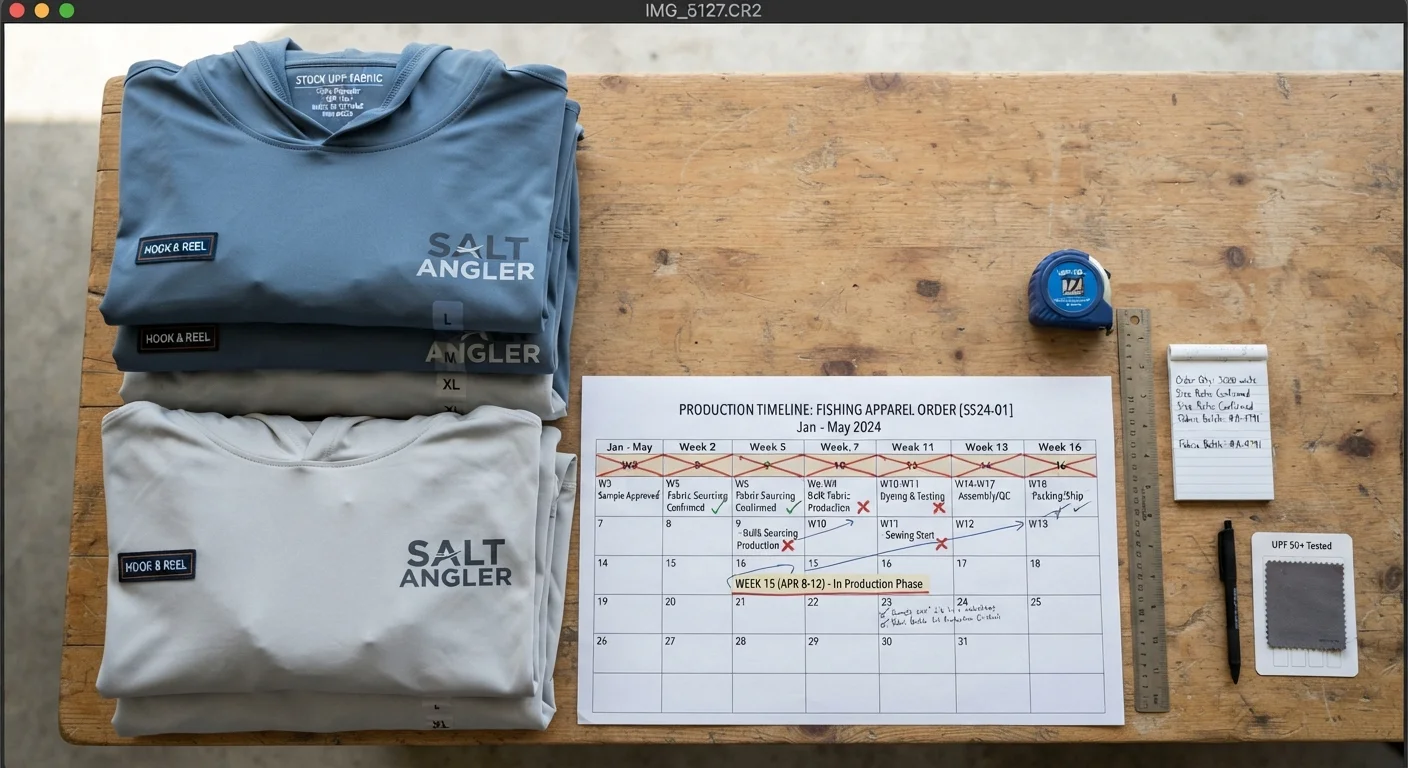
Ten weeks sounds great on a pitch deck. It's rarely what actually happens on a first order.
The honest planning number for fishing apparel private label runs is 10–28 weeks from tech pack to warehouse . The tight end—8 to 10 weeks—only happens with stock fabric, a factory you already trust, and just 1–2 sample rounds. Once you've got an approved sample in hand, budget another 8–20 weeks for sample-to-shipment, depending on fabric lead time and how backed up the production queue is.
Here's the breakdown, stage by stage:
Brief to factory confirmation: 2–6 weeks for a first-time brand comparing quotes and locking a slot
Tech pack finalization: 1–3 weeks
First sample: 7–14 days after tech pack submission
Sample revisions: 1–3 weeks per round (most programs need two rounds)
Materials commit: 1–3 weeks for stock fabric, 4–10 weeks if you're chasing custom UPF-rated material
Bulk production: 4–8 weeks for apparel
QC and packing: 1–2 weeks
Shipping: 3 days by air, up to 8 weeks by sea
Add it up straight and a 200–500 piece private-label run lands around 10–12 weeks . That's the clean version.
Real-world pitfalls stretch that timeline fast:
A factory queue sitting 8 weeks out pushes your "normal" order into 30+ week territory
Custom fabric development alone eats 6–8 weeks
Every extra sample revision round tacks on 1–3 weeks
Sea freight instead of air can quietly add several weeks to a schedule that looked fine on paper
The most useful rule here: if it's your first order with a new factory, assume one extra sample round, six to eight weeks for materials, and standard shipping delays. Those three items cause more schedule slip than anything else in this entire process.
Common Fishing-Apparel Sourcing Disputes and How to Prevent Them
Six disputes cause almost every fishing apparel sourcing headache: sample mismatch, spec and material nonconformance, workmanship defects, transit damage, failed performance tests, and slow remedies once a defect appears after production.
Sample mismatch tops the list. Bulk production drifts from the approved sample with wrong trim, shifted logo placement, or swapped fabric. Lock a written tech pack with photos and measurements before the bulk order, and require a photo comparison against the approved sample at receiving.
Material-spec disputes follow close behind. Weak components, hardware that corrodes, vague specs that never named an actual number. For premium vests, insist on 20,000mm+ waterproof rating, 15,000g+ breathability, and UPF 50+ written into the PO itself, not in a chat thread.
Workmanship defects like seam pucker, misaligned zipper tape, and dimension drift beyond ±1.5cm show up when nobody defined tolerances. Use critical, major, and minor defect categories at inspection.
Run 3–5 back-to-back pilot shipments before raising MOQ past 100 units. Target on-time delivery of 95% or higher and a defect rate of 1% or lower. Put a 72-hour Notice of Defect window and a 15–20 business day remedy deadline into the contract. Then keep a dispute packet ready with defect log, test reports, and communication trail before you ever need it.
Shipping, Logistics & Customs Compliance for Fishing-Apparel Imports
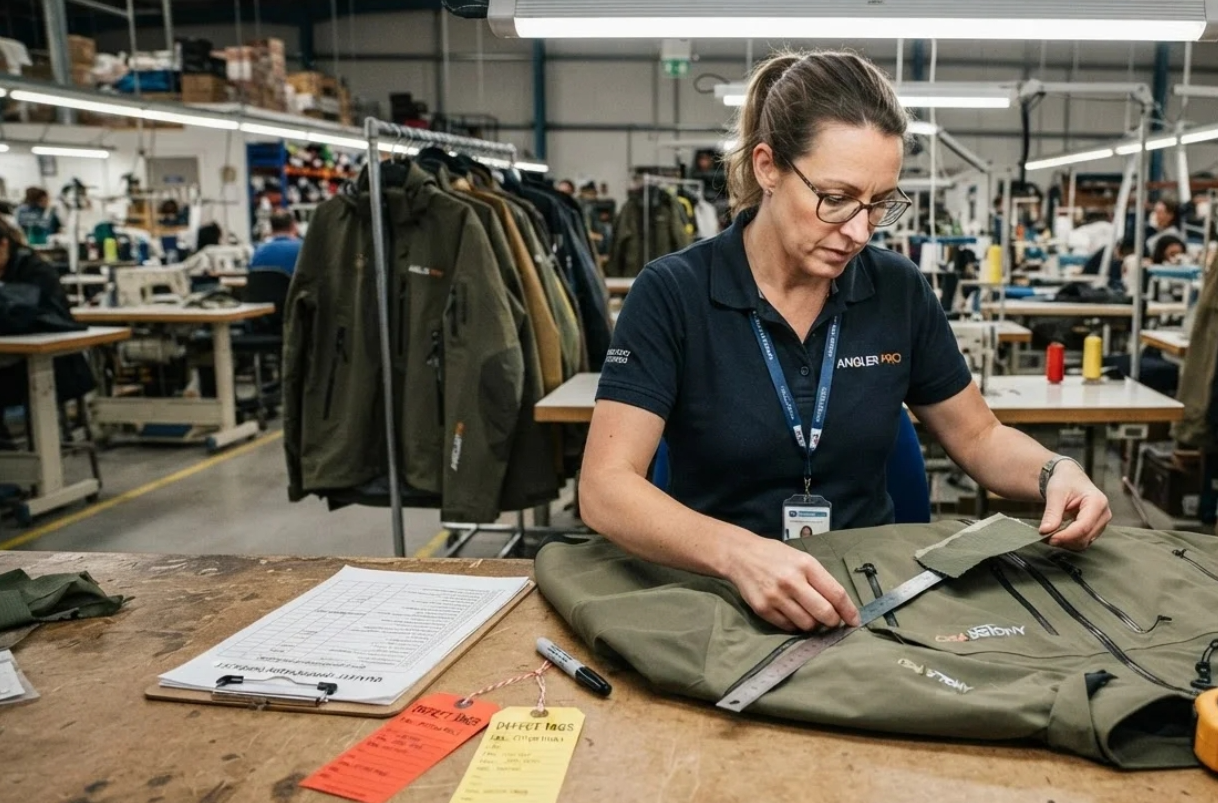
Clearance delays kill more launch timelines than factory delays ever do. Get the paperwork wrong and your 30-day sourcing win sits in a customs warehouse instead of your fulfillment center.
Core documents you need before goods move:
Commercial invoice with exact product descriptions—not "fishing clothing," but "UPF 50+ polyester fishing hoodie"
Packing list matching invoice line-by-line
Bill of lading or air waybill
Certificate of origin when the destination requires it
Compliance certificates for any protective performance claim
Apparel-specific labeling that triggers holds:
Country-of-origin label
Fiber-content label
Care instructions
Correct HS/HTS classification. Textile lines get detailed scrutiny, and misclassification is the fastest way to get flagged.
If you're marketing UV-protection or fire-retardant claims, CBP may require additional compliance documentation beyond standard textile rules. Standard apparel without protective claims only needs labeling, classification, and accurate valuation.
Risk points that stall clearance:
Vague descriptions
Missing manufacturer name/address
Declared value that doesn't match actual cost, including samples
HS code mismatches across invoice, packing list, and entry filing
Use a licensed customs broker for every commercial shipment. Standardize your invoice templates now, before your first 1,000-unit order ships.
Conclusion
Sourcing fishing apparel from overseas is a technical negotiation. It involves UPF certifications, anti-snag stitching, and fabric that won't fail the second it hits saltwater. Get the country selection wrong, skip the fishing-specific vetting checklist, or fumble your MOQ negotiation, and you lose money and months.
The brands that win this game treat their first fishing apparel factory partnership as a test run. They verify UV protection fishing shirt manufacturer claims with lab reports and negotiate MOQs before they need them.
You now have the playbook. Pull your checklist, shortlist three fishing apparel factories this week, and request samples before your competitor does. Your first 1,000-unit order is closer than you think.