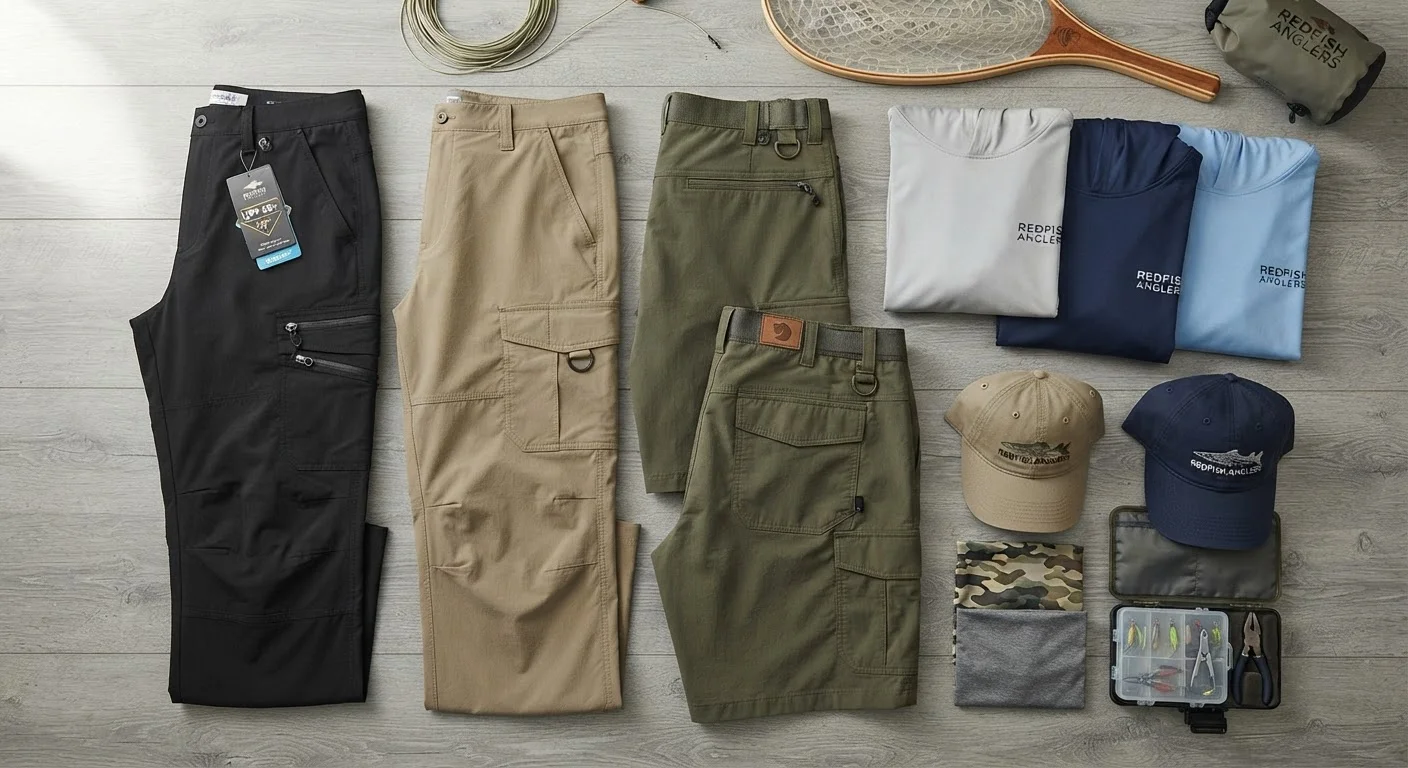
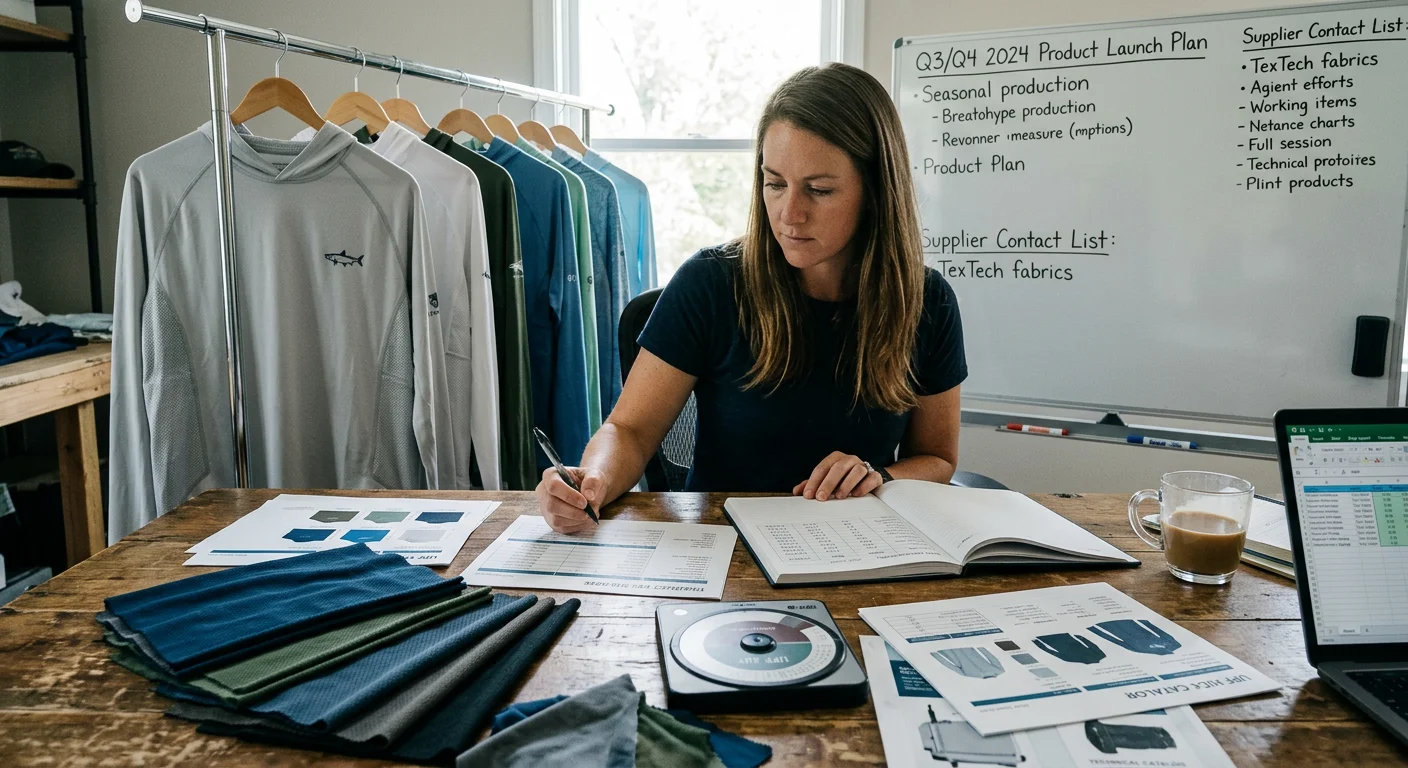
You're staring at a supplier's quote sheet, and the MOQ number just made your stomach drop. Most new fishing apparel brands waste months and thousands of dollars chasing custom designs before they know if their market actually wants what they're selling.
That's where unbranded blank fishing apparel wholesale changes things. Blank gear can slash your MOQ requirements, cut your time-to-market, and let you test designs without betting your entire budget on concepts that haven't proven themselves yet.
But when does blank make sense versus going straight to OEM? We're breaking that down with real numbers, real seller stories, and a decision framework you can use today.
The three typical selection paths for entrepreneurs
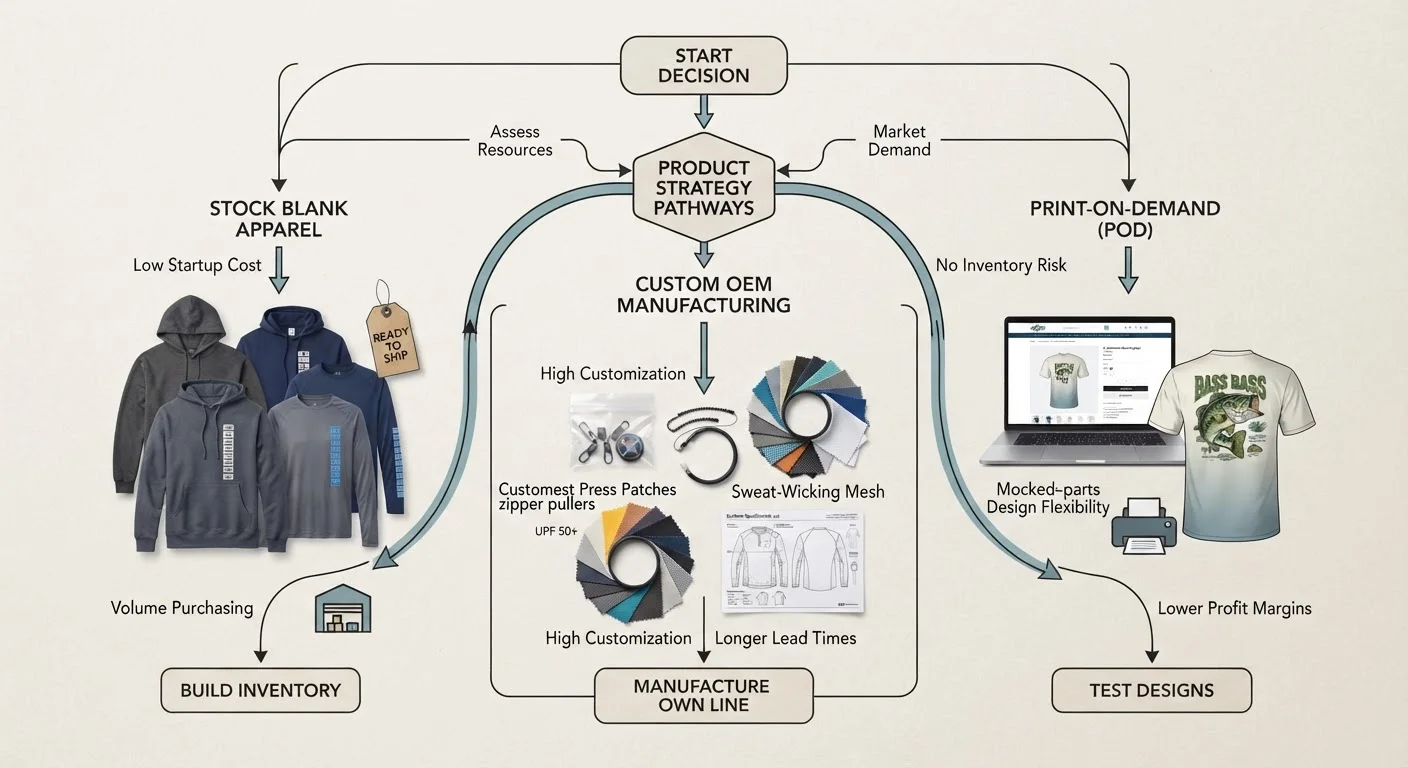
Every fishing apparel startup eventually splits into three paths. Most founders don't realize which one they're on until they've already wasted money.
Path 1: Blank/Iteration Route
This works when the category is low-involvement and the market already has proven bestsellers. If you're stocking a UPF fishing shirt that's already selling 1,000+ units monthly on competitor stores, with 4.6+ star ratings and complaints limited to shipping delays (not fabric quality), you don't need custom development. Bulk fishing hats without branding and blank hoodies for fishing brand launches all fall here. Target MOQ: 100–300 units per style. Gross margin should hit 40%+ if you're sourcing smart. This is the fastest way to test a niche without gambling six months of runway.
Path 2: Custom/OEM Route
You need this when the pain points are structural. If anglers keep complaining about "sleeves too tight for casting" or "vents in the wrong spot for boat use," no blank shirt fixes that. An OEM fishing clothing factory that supports MOQ 200–500 units with mold/pattern development lets you solve the problem. Budget for tooling: expect $3,000–$12,000 in development costs, and only go this route if you're projecting 50%+ margin with a 6–12 month payback window.
Path 3: POD/Light Customization Route
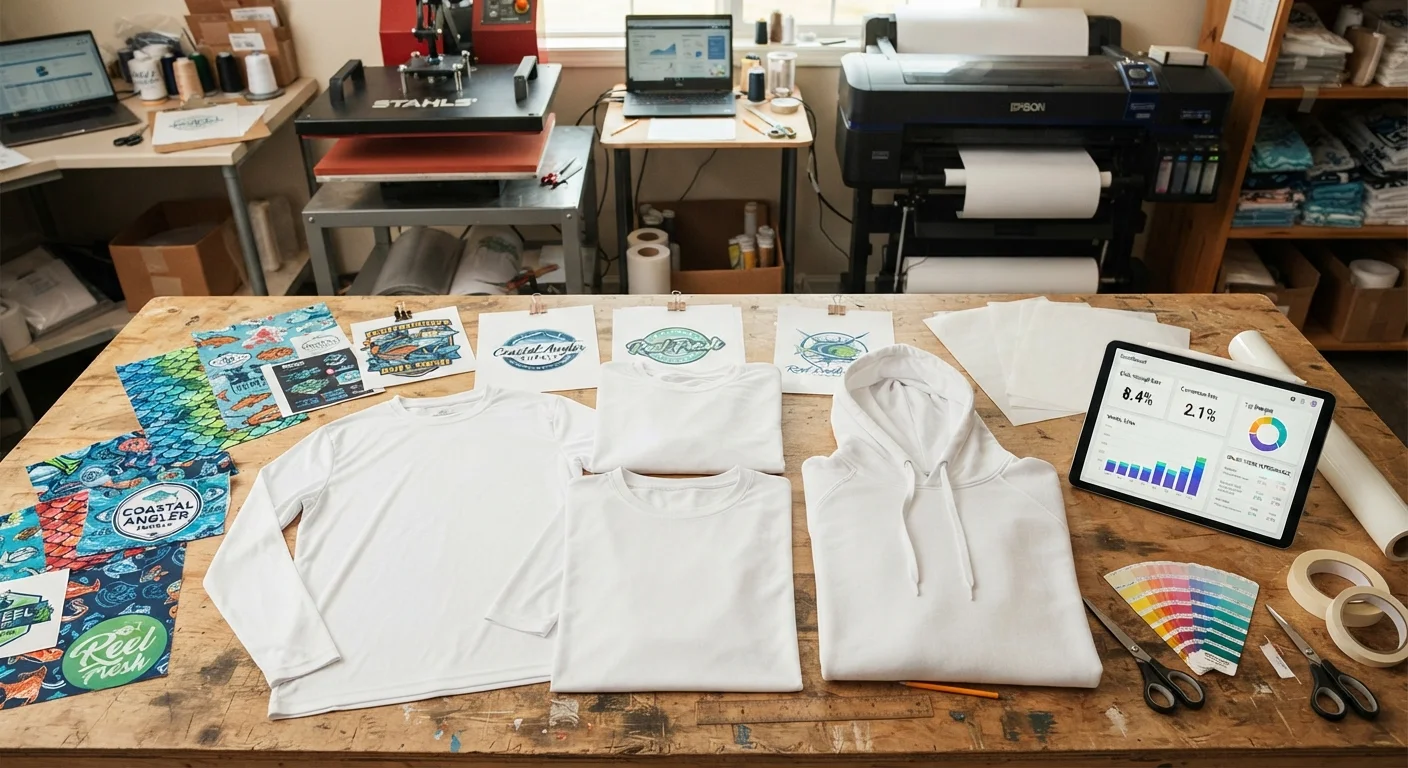
When you want differentiation but can't justify structural R&D, sublimation fishing shirt blanks paired with print-on-demand fill the gap. This suits founders with $2,000–$5,000 testing budgets. Upload 20–50 design variations onto white label activewear manufacturer blanks, track click and conversion data, then double down on the top 5–10 performers. Plan seasonal drops 3–4 months ahead, and stick to digital printing or heat transfer early. Embroidery adds cost and defect risk you don't need yet.
Brand stage + Capital scale + Listing speed: Three-dimensional decision matrix
Forget guessing. Score your business on three axes, and the right sourcing path becomes obvious.
Axis 1: Brand Stage
- Testing (B=1): Under $50K annual revenue, no proven bestseller yet
- Growth (B=2): $50K–$500K revenue, 2–3 SKUs already converting
- Mature (B=3): $500K+ revenue, repeat customer rate above 30%
Axis 2: Capital Scale
- Bootstrap (M=1): Under $5,000 available for inventory
- Funded (M=2): $5,000–$50,000, maybe a small loan or investor check
- Established (M=3): $50,000+, predictable cash flow
Axis 3: Speed-to-Market Need
- Urgent (S=1): Need product on shelves in under 30 days
- Moderate (S=3): 30–90 day runway is fine
- Flexible (S=5): No hard deadline, quality matters more than speed
Add your three scores together. The total tells you which sourcing path fits.
Total Score | Recommended Path |
|---|---|
3–5 | Go blank – bulk fishing hats without branding, blank hoodies for your fishing brand. Minimal MOQ, fastest launch. |
6–8 | POD or light customization – sublimate fishing shirt blanks and rotate designs as you validate demand. |
9–11 | OEM route – you have the revenue, capital, and timeline to justify tooling and mold development. |
A founder scoring 4 (B=1, M=1, S=2) has no business chasing custom molds yet. A founder scoring 10 (B=3, M=3, S=4) is leaving margin on the table by staying blank. Run your numbers before you email a single supplier.
Real Case: How Two Mini Brands Leveraged Blank Models to Penetrate the Market
Numbers are more persuasive than theories. Two real brand cases, both named "MINI", respectively demonstrated how a blank platform could drive premium pricing and sales. This logic can be directly applied to the product selection decisions of unbranded blank fishing apparel wholesale.
Case 1: The "Canceling the Basic Model" Campaign of MINI China
MINI China did something counter-intuitive. They completely eliminated the basic model and only sold limited special editions developed around the same blank platform. The core vehicle models were reduced to 4, but within a year, 12 cultural limited editions were launched based on these 4 "blank chassis". The exterior, interior, and story were different, but the components and structure were highly similar.
Results speak for themselves:
- The average price of the special editions was 48% higher than the previous basic model
- Annual sales increased by 25% after canceling the basic model, and sales did not decline but increased
- The fastest model was sold out within 5 hours, and all limited editions were cleared within 2 days
- The number of sales leads increased by 49% year-on-year, and the social media interaction rate doubled
For this kind of strategy of blank hoodies for fishing brand, this is a practical example: with the same blank hoodie, changing the print theme once can reprice it.
Case 2: The "Blank Canvas" User Culture of Hongguang MINI EV
Another case more directly illustrates what the moisture-wicking fishing apparel supplier should focus on. Hongguang MINI EV was launched in 2020 with an approximate starting price of 28,800 yuan. Within less than 3 years, its cumulative sales exceeded 1.1 million units, and it ranked first in China's pure electric brand sales for 28 consecutive months.
The key data is that 72% of users will modify their vehicles. They regard the original factory body as a "blank canvas" and apply films, modify, and create again. This is exactly the same logic as no-logo performance fishing wear: The seller provides high-quality UPF fishing shirts wholesale blank base plates, and the subsequent printing, embroidery, and theme designs are completed by the brand or the end users. The more "blank" the product is, the greater the space for secondary creation, and the user stickiness is even stronger.
These two cases illustrate the same thing: The blank model is a structural space left for the backend creativity and rapid iteration.
Blank vs Customized:The three real differences in terms of cost, cycle and flexibility
Numbers settle arguments better than opinions. Here's what separates blank from custom when you're sourcing fishing apparel.
Difference 1: The cost structure is completely different
Blank fishing apparel wholesale skips tooling fees. You use existing patterns, standard fits, and stock fabric. Fixed upfront cost is near zero. Branding is just logo placement or heat transfer, often charged a few dollars per unit.
Custom OEM changes the math. Pattern development and grading alone can eat 15–25% of a small order's total cost. If tooling and samples total $3,000, running 1,000 units means $3 per unit in amortized fixed cost. Run 10,000 units, and that drops to $0.30. That's why MOQ matters so much — the same custom design can cost 20–50% more per unit at low volume, but nearly match blank pricing once you hit scale.
Difference 2: The time gap between deliveries is from several weeks to several months.
Blank hoodies with simple logo printing ship in 7–14 days. No tooling, no pattern development. Just stock inventory plus decoration.
Full custom fishing apparel — new fits, custom fabric blends, structural changes — runs 45–60 days minimum. Add multiple sample rounds, 2–4 rounds each taking 4–8 weeks, and you're looking at months, not weeks.
Difference No. 3: Flexibility Determines Whether You Can Make Mistakes and Learn From Them
Blank inventory lets you restock on demand. Low capital lock-up, low warehousing risk, easy resale if a print doesn't move. Custom runs carry real exposure — unsold custom inventory can eat roughly 15% of your margin, and custom returns cost 3–5x more to process than standard blanks.
List of 10 Technical Parameters that Must Be Confirmed by Suppliers During Quotation Process
A quotation sheet states "$4.5 per piece", but it doesn't mention the weight, UPF rating, or shrinkage rate - such a quotation is meaningless. The technical parameters hidden behind the price figure determine whether the goods you receive can be used. Make a table with these 10 items and send it to each supplier. Whoever fails to provide all the information will be directly rejected.
1. Fabric composition and weight (GSM)
Ask the supplier: "What fiber ratio is used for this UPF fishing shirt wholesale? What is the weight?" The target range is 150–180 GSM, lightweight and breathable but not transparent. Fabrics with a weight lower than 140 GSM tend to become transparent after exposure to the sun, and they will be ruined after two wears.
2. UPF sun protection level
Don't accept vague terms like "sun protection". Request a written statement of UPF 30+ or 50+ and ask for a third-party test report. UPF claims without a test report are basically just self-promotion.
3. Wicking/quick-drying performance
Ask the moisture-wicking fishing apparel supplier for test data on moisture evaporation and quick-drying. The main focus is on "moisture evaporation time". The industry standard is that it should be completed within 90 minutes.
4. Shrinkage rate
The shrinkage rate after 5 washes should be controlled within 3% to be considered qualified. If this number is exceeded, the probability of customer complaints about "size changes" will increase sharply.
5. Color fastness
Dry friction ≥ 4 grades, wet friction ≥ 3 grades. Below this standard, a white blank item may be stained onto other clothes after wearing once.
6. Compatibility of printing/symbol
This is the core issue of the blank item. Clarify: Does the fabric support heat transfer printing, digital direct printing (sublimation), or embroidery? The three processes have completely different requirements for the fabric, and asking in advance can save money on subsequent rework.
7. Size tolerance
The tolerance for chest circumference and garment length should be within ±1.5 cm. Otherwise, the same batch of goods will vary in size.
8. MOQ classification
Clearly define the MOQ requirements for fishing apparel - the starting order quantity for single-color and single-style is different, and the two numbers are usually quite different.
9. Delivery commitment
Ask separately about the delivery time for blank items and custom dyed/custom weight items. Don't be deceived by the general promise of "7-day delivery".
10. Packaging and labels
Is it allowed to attach your own tag on the packaging of no-logo performance fishing wear? Is the inner packaging single-piece independent or packed for shipment? This directly affects the efficiency of your secondary processing after receiving the goods.
Make a table with these 10 items, check each one off to confirm, and you won't be led around by ambiguous quotation sheets at the negotiation table.
Transitioning from blank models to customized ones: When to upgrade and the upgrade roadmap
Three data points tell you it's time to stop restocking blanks and start talking to an OEM fishing clothing factory. Ignore them, and you'll keep paying blank-tier prices for a product that no longer fits your brand.
Signal 1: Upgrade threshold triggered by order data
Platforms like Alibaba have already codified this threshold. To unlock online customization tools, a seller needs 5+ direct orders in 90 days, an on-time shipping rate above 85%, and a refund rate under 10%. Miss any of those, and the platform won't let you access the customization module. Your fulfillment consistency is the gatekeeper.
If you're moving 5+ orders per SKU every quarter on blank hoodies for your fishing brand, with shipping and refund metrics that clean, you've outgrown pure blank sourcing. You're operationally ready for attribute-level customization, including fabric weight options, UPF grade selection, and logo placement variables, layered onto your existing blank base.
Signal 2: Upgrade signals for the brand and the scene side
Borrow the tailoring industry's MTM-to-bespoke logic. Three triggers matter:
Fit complaints cluster. If returns keep citing "sleeves too tight for casting," your basic pattern has hit its ceiling.
Wear frequency crosses 200 days/year. Charter crew or guide-service uniforms worn daily need durability blanks can't guarantee. At this point, moisture wicking fishing apparel supplier specs (GSM, seam strength) need custom validation.
Brand identity outgrows a logo print. When you're building a VI system, attribute customization (collar shape, cuff trim, color-blocking) becomes the differentiator.
Upgrade Roadmap: One Table for Four Stages
Stage | Product Form | Trigger Condition |
|---|---|---|
Performance Stage | Blank / UPF Fishing Shirt Wholesale | Stable lead times, ≥5 orders within 90 days |
Aesthetic Stage | Attribute-Customized Products | Fabric, color, and collar options available; MOQ 30–100 pcs |
Service Stage | Platform-Based Customization Model | Pricing, lead times, and fishing apparel MOQ requirements standardized |
Customization Stage | Full Bespoke | Pattern redesign and long-term iteration over 5–10 years |
Move up this table one row at a time. Skip a stage, and you'll either overpay for tooling you don't need yet, or undersell a brand that's already outgrown its blanks.
Conclusion
Going blank gets you to market faster when you're still validating demand—lower MOQs, zero design risk, while you figure out what your customers actually want to buy.
That only works if you walk into every supplier call with your 10-point spec sheet in hand: fabric weight, UPF rating, shrinkage tolerance, print compatibility. Not just "what's your price?"
Pull up your decision matrix. Plug in your current stage, funding, and launch timeline. Get a straight answer on whether blank or custom fishing apparel fits now. Then take the technical checklist to your first three supplier conversations before you sign anything.
The brands that scale aren't the ones with the fanciest hoodie on day one. They're the ones who bought smart when it mattered.