Your fishing apparel ships out looking sharp. Three weeks later, a customer emails a photo of a care label that peeled off, faded into mush, or went blank after one trip offshore. Now you are eating a return, a possible compliance headache, and lost brand trust.
Standard woven labels cannot always handle salt water, UV beatdown, and the washing frequency anglers put their gear through. Damask, taffeta, and satin woven labels perform differently once they hit real fishing conditions. Picking the wrong one is how that 8-15% rework cost sneaks into your first order.
This guide breaks down which woven label type survives which scenario, along with the thread density and wash-test numbers you need in hand before you call your custom woven label fishing apparel supplier.
Why Pleated Woven Labels Survive Saltwater Immersion
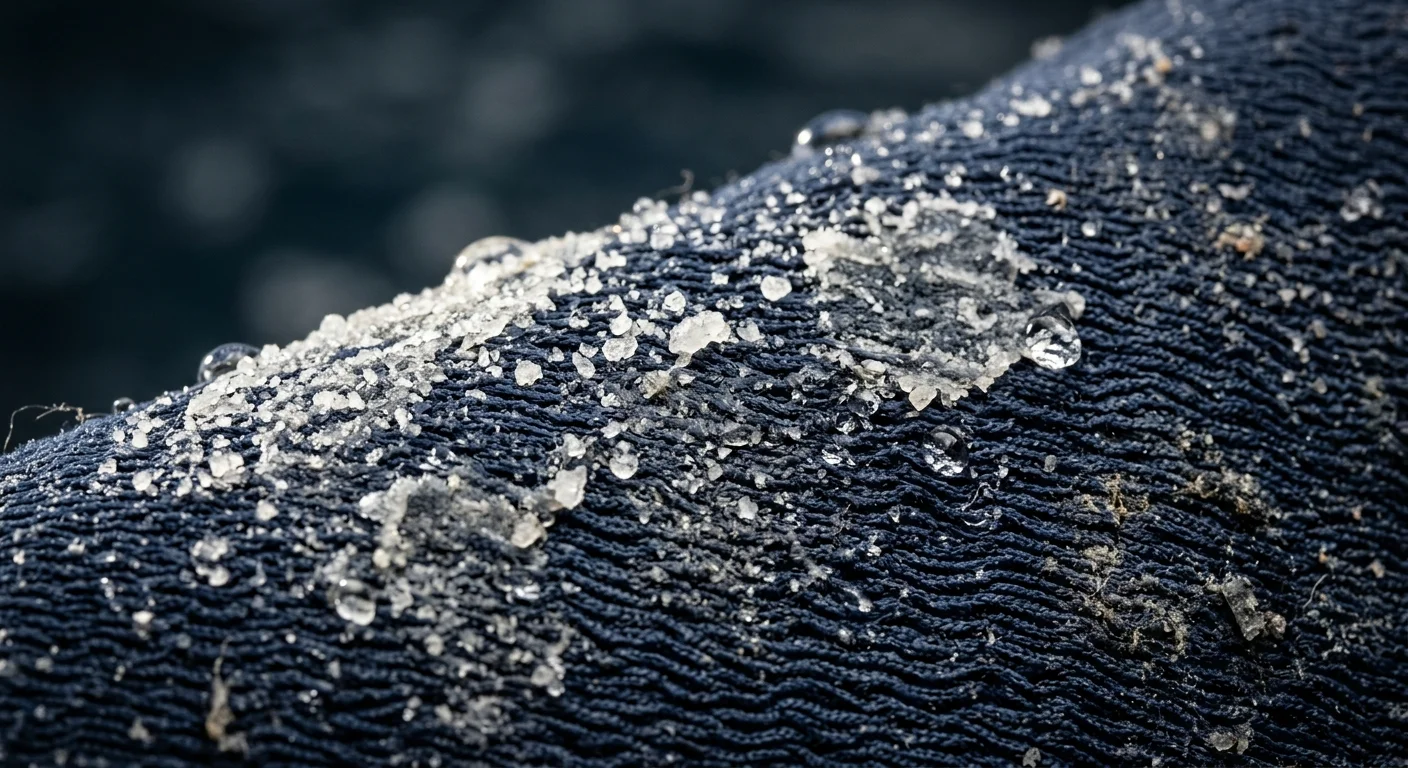
Salt water destroys fabric labels. The damage comes from drying, salt crystals forming in the weave, and repeated exposure every time an angler heads back out. A standard damask woven label or printed cotton tag will fail on swimwear, surf gear, dive suits, and fishing apparel.
Polyester filament yarn woven labels survive these conditions when finished with high-fastness disperse dye or heat-transfer printing and sealed with anti-fray edges. Skip low-grade cotton and basic printed labels because they wick moisture and break down fast.
The Standards You Should Be Testing Against
China's GB/T 5714-2019 (effective March 2020) is the benchmark for saltwater color fastness. International suppliers test against ISO 105-E02 or AATCC 106. This process requires a 30-minute saline soak under ~12.5 kPa pressure, followed by four hours of drying at 37°C before grading.
Add these requirements to your purchasing checklist:
Saltwater color fastness: Demand ≥4 grade for color change and staining. Push to ≥4-5 for premium water-sport lines.
Wash fastness: Require a 30-cycle minimum per ISO 105-C06 or AATCC 61. Bump this to 50 cycles for dive gear or rental apparel.
Post-wash check: Inspect the samples for curling, fraying, delamination, broken yarns, and blurred text.
Chlorine exposure: Test to ISO 105-E03 at 50-100 mg/L if the garment will contact pool water.
Spec Sheet Language You Can Hand to Your Supplier
Material: 100% polyester high-density woven label
Process: High-fastness dyeing, edge-sealed or heat-cut edges
Saltwater resistance: GB/T 5714 / ISO 105-E02, ≥4 grade
Wash durability: 30 cycles, no edge fray or delamination
Care text: Cold water ≤30°C, neutral detergent, no bleach, line dry
Print the care instructions directly on the label. Include "rinse immediately after saltwater exposure," "hand wash or gentle cycle ≤30°C," "no bleach or fabric softener," and "line dry in shade, avoid prolonged wet sun exposure." These instructions solve compliance risks before they become a return.
UV Exposure Scenario: Heat-Cut Edge Satin Woven Labels Balance Brand Shine and Basic Care Text
A fishing boat deck is a tanning bed for your labels. Direct sun, glare off the water, and hours of exposure hit your brand logo and care text right alongside the angler's skin.
Satin woven labels with heat-sealed edges fix this. Polyester keeps the fabric strong, abrasion-resistant, and glossy for your brand identity. The heat-cut edge seals the weave to stop fraying under repeated sun and wash cycles. Keep the edges away from heat sources above 180°C during cutting. Otherwise, the polyester melts, warps, or shrinks at the seam.
The UV Test Your Supplier Should Run
Request ISO 105-B02:2014 xenon-arc light testing. This simulates daylight (D65) and grades fading against a blue wool scale.
Target rating : Ask for a blue wool scale of Grade 5+ for labels on display or exposed outdoor gear. Treat Grade 4 as the absolute minimum for short-term indoor use.
Post-test checks : Look for zero visible fading, yellowing, loss of sheen, or broken care text on the base color, metallic threads, and printed instructions.
Require proof : Ask for before/after photos, grey-scale ratings, and test conditions. A "UV resistant" claim on a spec sheet means nothing without data.
Keeping the Brand Shine Intact
Use high-density polyester satin base cloth. Choose heat-set woven or light-stable dyed options.
Print logos and text with pigment-based ink, thermal sublimation dye, or UV-stable formulas. These hold color better than standard dye under sun exposure.
Avoid saturated deep red, purple, or fluorescent tones on high-visibility logo areas. These shades fade the fastest in strong light. Run a small sun-exposure sample before committing to full production.
Check gloss retention independently of color retention for metallic or mirror-finish threads. A label can keep its color and still lose its shine.
Care Text to Print on the Label
Avoid prolonged direct sunlight. Store in a cool, shaded place. Do not iron on the label. Do not bleach. Gentle cold wash.
Add the following line if the apparel goes on window displays, boat racks, or outdoor gear walls. Avoid direct light or UV lamps during display. Rotate display position often.
Storage and Display Rules That Protect Your Inventory
Keep display units away from windows, skylights, and UV lamps. Add UV-filter glass or acrylic covers. Rotate your stock to reduce cumulative light exposure.
Store unused labels in opaque bags, drawers, or UV-blocking containers. Keep humidity under 60%.
Clean with cold water. Avoid bleach, strong alkaline cleaners, and high-heat steam. Use a cloth barrier and a low temperature setting if you must iron the label.
Spec Sheet Language for This Scenario
Material: 100% polyester satin woven label
Process: Heat-sealed edge, no hardening, charring, or curling
Performance: ISO 105-B02 light fastness, target ≥5 grade
Text: Minimum 6–7 pt font, high-contrast dark ink for sun-care instructions
Samples: Pre-exposure sample, post-UV-test sample, close-up gloss photo, legibility photo
Packaging: Opaque dust bag to block light during shipping and warehousing
Hand this sheet to your custom fishing clothing label manufacturer before you place a bulk fishing apparel order. It stops you from finding out three months and one summer later that your logo is sun-bleached and your care text has vanished.
High-Frequency Washing Scenarios: High-Density Damask Woven Labels Are Top Choice for Information and Brand Details
Fishing apparel gets washed more than almost any other category. Salt, sweat, fish oil, and sunscreen residue mean every trip ends in the washing machine. Printed labels quit under these conditions, but damask woven labels earn fishing suits their price tag.
Damask weaves the care symbols, fiber content, size, and brand logo into the yarn structure. Nothing sits on the surface to crack or rub off.
The Density Numbers That Matter
Push for 300+ threads/inch if your label carries small text, fine borders, or a detailed logo. Standard high-density damask runs 180–220 picks/cm. That density keeps care symbols readable down to 4mm text height. With a lower density, your washing instructions blur into a gray smudge by wash twenty.
Insist on solution-dyed or pre-dyed yarn. The color lives inside the fiber, so there is no ink layer to flake off during hot-water cycles.
Wash Testing Benchmarks
Baseline : 60°C machine wash, no visible fading or distortion.
Premium tier : 100+ industrial wash cycles, the standard for hotel, restaurant, and high-performance outdoor lines.
Denim-grade : some Micro-HD damask suppliers claim 300 washes including enzyme wash, stone wash, and bleach wash.
Require samples tested through wash, dry, friction, sweat, and dry-cleaning before approving bulk production.
Spec Sheet Language
Material: 100% high-tenacity polyester filament, solution-dyed yarn
Weaving density: 300+ threads/inch (180–220 picks/cm minimum)
Edge: woven or heat-cut with bound finish
Wash durability: 60°C baseline, target 100+ cycles
Certification: OEKO-TEX Standard 100, cite cert number and coverage
Ask your custom fishing apparel label manufacturer for the OEKO-TEX cert number. A statement that they are certified offers no proof without the actual number.
180D vs 300D Warp Yarn Comparison: Determining Weaving Density Based on Text Complexity and Durability
Thread size dictates how your label performs. 180D yarn measures 20 tex. 300D measures 33.3 tex, making it 1.67 times heavier. This weight decides if your care text stays sharp or if your logo survives a boat deck's worth of abuse.
Match the Yarn to Your Text
Small text, fine strokes, and complex characters require 180D. Choose 180D/96F or 180D/144F for a thinner filament and smoother surface. Set the warp density at 280–360 threads/inch and the weft at 220–280 to keep edges crisp.
Bold logos and thick outlines need 300D. The fabric feels stiffer but resists abrasion better. Use 300D/96F for a sturdy structure, and set warp density at 240–320 to make the marks wear-resistant.
To get fine detail and heavy durability, use 300D as your base yarn. Increase the warp density and widen your minimum stroke width. Thickening the yarn without adjusting the stroke width ruins legibility.
Sampling Checklist
Run three warp density tiers for each yarn type: 240, 300, 360 . Check the text clarity, broken warp rate, and fabric stiffness before starting bulk production.
Single Label vs. Dual Label: Why Care Compliance and Brand Display Belong Apart
One label trying to do two jobs is where most fishing apparel brands get burned. Putting your logo, size, fiber content, and wash symbols on a single tag creates unnecessary risk. A mid-season rebrand suddenly means touching every piece of compliance text. Fiber content allowances run tight. The standard allowance is 5 percentage points, dropping to 3 points for any fiber under 10%. Just one typo during a redesign turns into a labeling violation.
To solve this, split brand display and care compliance into two labels.
Label A: Brand Display
Placement: back neck, upper side seam, or visible exterior spot.
Content: logo, series name, size, and tagline. Keep it to 1 to 3 lines.
Material: woven label, satin, printed, or high-density jacquard for a premium feel.
Flexibility: swap by season, collab, or market without touching compliance data.
Label B: Care & Compliance
Placement: inner side seam, inner hem, or inner back neck where customers can find it.
Content: size, fiber percentages, wash/bleach/dry/iron/dry-clean symbols, country of origin, Fishing Apparel manufacturer info, and warnings like "do not bleach."
Material: durable nylon, polyester ribbon, or other care instruction label fabric rated for repeat washing.
Design rule: black-on-white or high-contrast, fixed field order, standard symbol library, and zero decorative clutter.
When to Use Each
Single label: one domestic market, basic tees, and stable fiber content.
Dual label: multi-country sales, frequent rebrands, private label fishing apparel with complex fabrics, or collab lines. Before bulk production, cross-check fiber percentages across your fabric test report, tech pack, care label, hangtag, and packaging. A single mismatch is a compliance flag waiting to happen.
Stitched vs. Heat-Sealed Labels: Which One Survives a Fishing Boat's Entire Lifespan
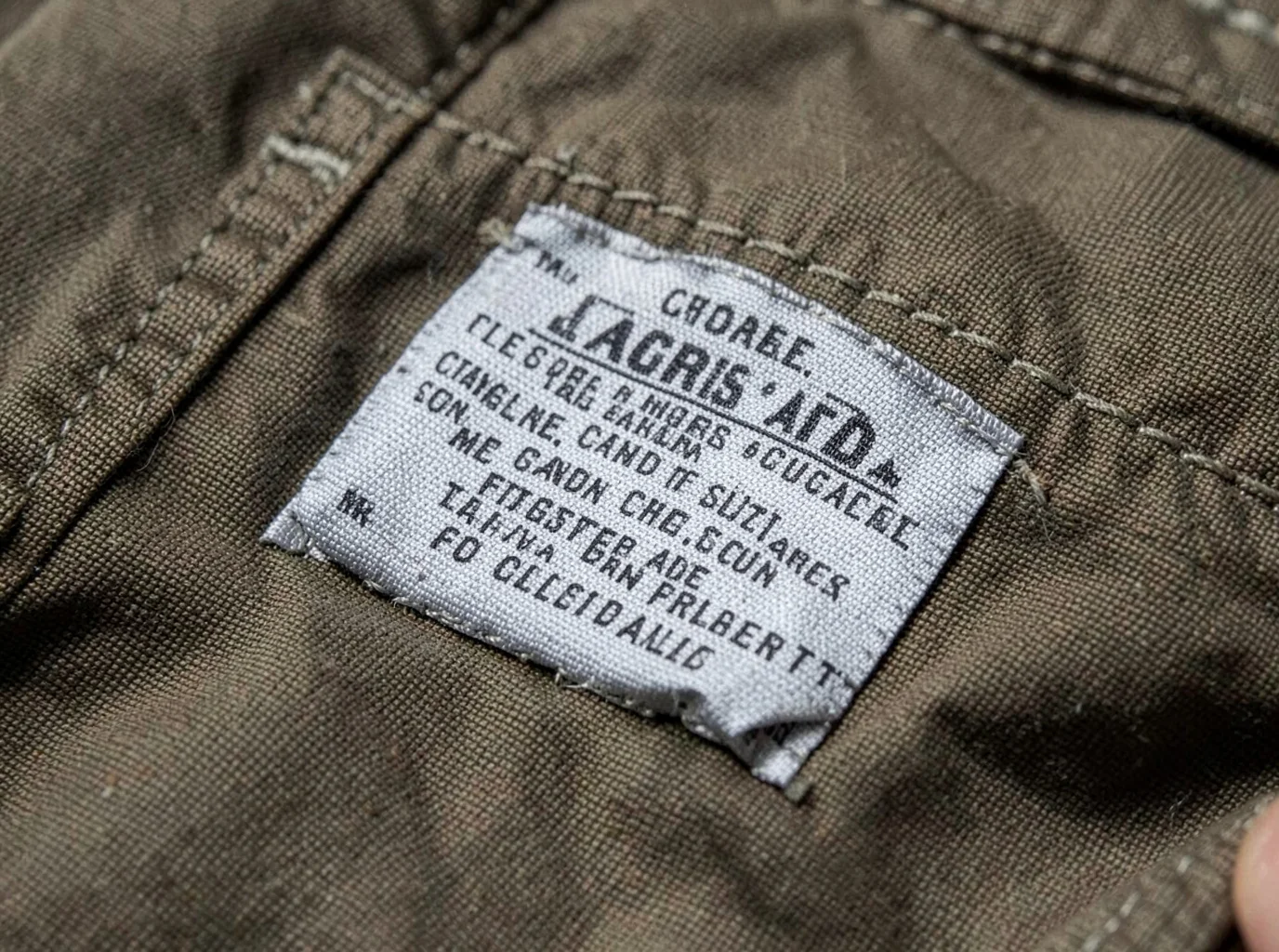
Care labels must survive the entire lifespan of the garment. Stitched labels usually outlast heat-sealed options because the thread creates a mechanical lock. Even after the printed text wears thin, the label body stays attached. Heat-sealed labels depend on adhesive, film, and heat-press bonding, and repeated washing, drying, and stretching break that connection down much faster.
Where Heat-Sealed Labels Fail
The FTC Care Labeling Rule requires care info to stay legible for the garment's entire useful life. ISO 3758 sets the same standard, requiring label durability to match or exceed the garment's own care tolerance. A heat-sealed label that curls, cracks, or peels after twenty washes puts you out of compliance.
Comparison | Stitched Label | Heat-Sealed Label |
|---|---|---|
Fixing method | Thread-stitched into side seam or back neck | Adhesive/film bonded to fabric |
Long-term wash stability | High, handles repeat and industrial washing | Depends on film, adhesive, heat, pressure, cure time |
Failure mode | Thread break, edge wear | Edge lift, cracking, color fade, delamination |
Best for stretch fabric | Yes, with stretch webbing | Risky, as stretch stresses the film layer |
When Heat-Sealed Still Makes Sense
Soft heat-sealed labels work for base layers and underwear where skin contact matters. If you use them, demand high-elasticity film and run your wash test on the finished garment instead of testing the label swatch on its own. For outerwear, waders, and frequently laundered fishing gear, stitched woven labels remain the safer default.
Fishing Apparel Label RFQ Spec Checklist: Send Directly to Your Custom Clothing Label Manufacturer
Copy the checklist below, fill in your blanks, and send it to your label supplier. This gives them everything they need to price your order on the first pass without endless back-and-forth emails.
Basic Info Block
Products: fishing shirts, quick-dry tees, fishing pants, outdoor jackets, sun hats
Label uses: main label, size label, fiber/care label, origin label, hem tag, reflective/functional label
Target market: US / EU / UK / AU
First order qty + monthly reorder qty
Number of styles and colors per style
Packaging: sorted by style, units per bag, carton marked with PO, style number, quantity
Material & Position Table
Position | Recommended Type | Specs to Fill |
|---|---|---|
Neck main label | high-density jacquard or soft satin print | size, fold/straight cut, sewn |
Size label | satin print | XS–XXL, dimensions |
Care label | heat-transfer or nylon/polyester print | wash-resistant, dimensions |
Fiber/origin label | printed woven | fiber content, Made in ___ |
Hem tag | woven, rubber, or silicone | dimensions, single/double-sided |
Functional label | reflective tape, heat-transfer, or silicone | reflective grade/color |
Hat label | folded woven, hook-loop, or silicone | dimensions |
Performance & Certs
Ask for a minimum of 30 to 50 wash cycles. Request test data for sweat, friction, chlorine, and saltwater resistance. You should also require OEKO-TEX Standard 100, GRS for recycled polyester, REACH/SVHC, and CPSIA testing for US kids' gear.
Pricing Tiers
Request quotes at 50, 100, 300, 500, 1,000, and 5,000 pieces. For reference, 100 pieces cost about $1.55 each, 250 pieces drop to $1.00 each, and 500 pieces sit around $0.60 each. Bulk woven labels run between $0.01 and $0.15 per piece at a 500 to 1,000 MOQ. Make sure the supplier lists setup fees, sample fees, and their standard 3-4 week lead time as separate line items.
Final Configuration for Three Typical Products: Match Label Specs Directly to Garment Structure
Here is the configuration sheet to hand your supplier, broken down by the three garment categories most fishing apparel lines ship.
Garment Type | Label Zone | Recommended Label Type | Final Spec | Why It Fits |
|---|---|---|---|---|
Quick-dry tees, base layers, fishing-specific underwear | Back neck or side seam, skin-contact zone | Flexible printed woven label, low profile | 40×20mm to 54×34mm, soft PET or textile base, heat-sealed edge | Thin fabric needs a label that won't chafe skin during a 6-hour cast session |
Fishing shirts, jackets, vests | Back neck (brand) + inner side seam (care) | Damask or satin brand label + separate care instruction label fabric | Brand label sewn at neck, care label at side seam, 180–220 picks/cm minimum | Stable structures allow a dual-label split. The brand stays visible, and compliance data stays protected inside. |
Waders, bibs, foul-weather gear, heavy outerwear | Inner collar or hem, stitched | High-density damask, stitched woven label, industrial-grade | Target 200 industrial wash/press cycles, 180°C heat tolerance, OEKO-TEX Standard 100 certified | Stitched labels hold tight through repeated saltwater rinses and high-heat drying. |
The Rule of Thumb
Match label rigidity to how close the garment sits to skin and how often it gets abused.
Thin and worn against skin: Choose soft, printed, low-profile labels. Stiff materials turn into complaint tickets.
Mid-weight, structured garments: Split the label. Put the brand display at the neck and hide compliance text at the side seam. You can rebrand your logo next season without reprinting a single care symbol.
Heavy-duty, heavily laundered gear: Stitch the labels. Push for the 200-cycle, 180°C benchmark in writing, and request the OEKO-TEX cert number.
Test the label on the finished garment. Stretch, seam tension, and fold direction change how a label performs once it is sewn in.
Conclusion
Fishing apparel fails when the attached label cannot survive the same abuse as the garment. Saltwater, UV exposure, and 30+ wash cycles demand specific weave densities and attachment methods, regardless of your branding budget.
Match the scenario to the material. Use pleated weaves for brine exposure, heat-sealed satin for sun-drenched gear, and high-density damask woven labels for frequent washing. Then split your care info from your brand story by using one label for compliance and another for identity.
These details give you a spec sheet you can hand off today.
Pull your garment list, match each piece to the correct scenario, and send the specs straight to your custom fishing clothing label supplier. Ask for ISO 6330 test data before you approve a single sample run. This protects your first-order budget and lowers your return rate.