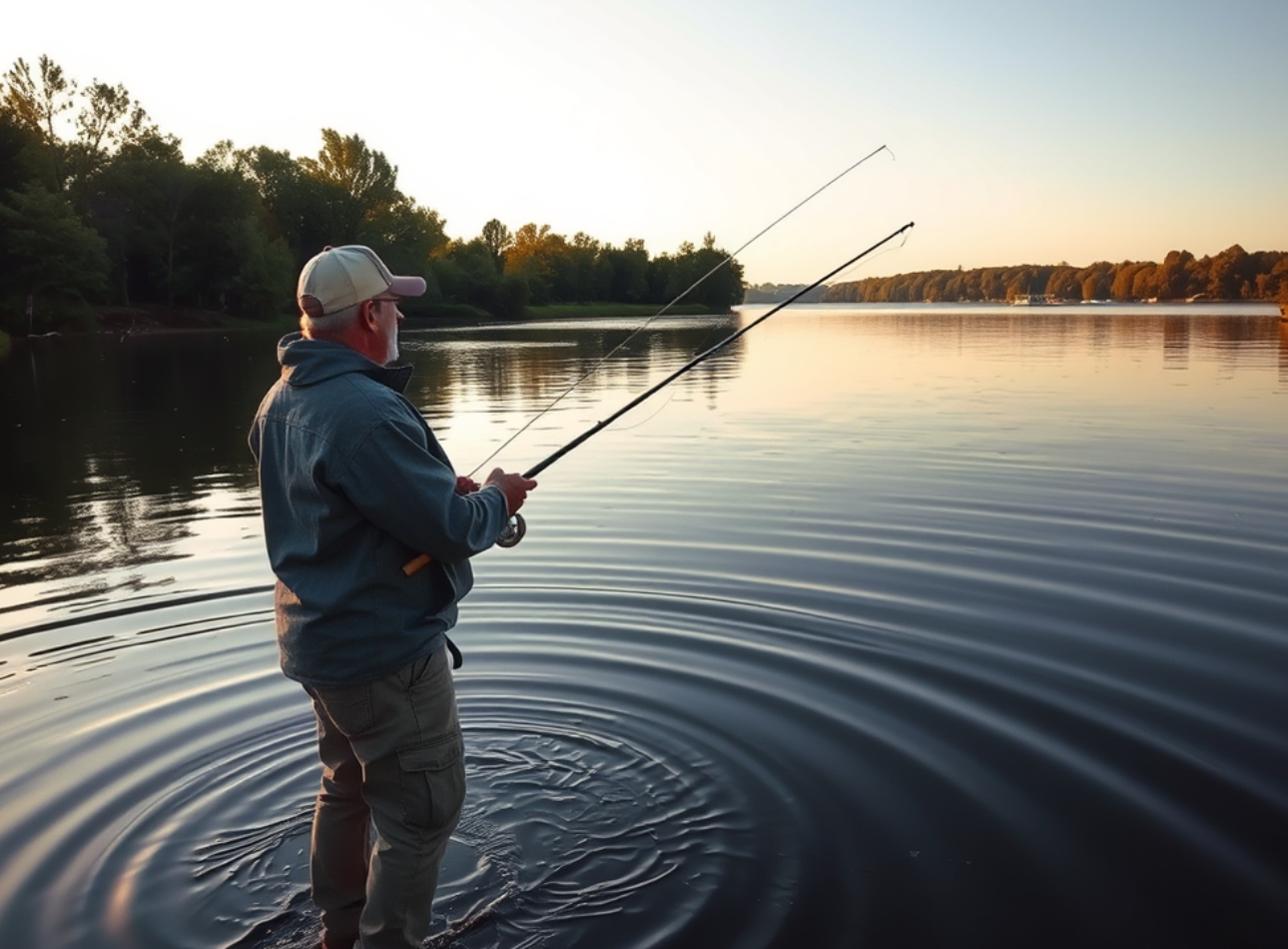
It's 9 AM on a July morning. Humidity sits at 85%. You're three hours into a bass session on a shallow flat — no shade, and a sun that feels like it has a grudge. Your shirt is soaked through. Your focus is slipping. Somewhere between your third water bottle and your fifth cast, you start questioning that "cooling fabric technology for hot conditions" claim on your shirt's hang tag. Was it real engineering? Or marketing copy written by someone who has never fished in heat like this?
That question deserves a straight answer. This guide breaks down the science behind evaporative cooling fabric, phase change materials, mineral-infused yarns, and infrared reflective coatings.Brands can develop custom sun protection fishing apparel with advanced cooling fabric technologies. The goal isn't to sell you a shirt. It's to give you the technical framework to judge every shirt on your own.
High-Humidity Waterfront Challenges & Cooling Technology Performance Baseline
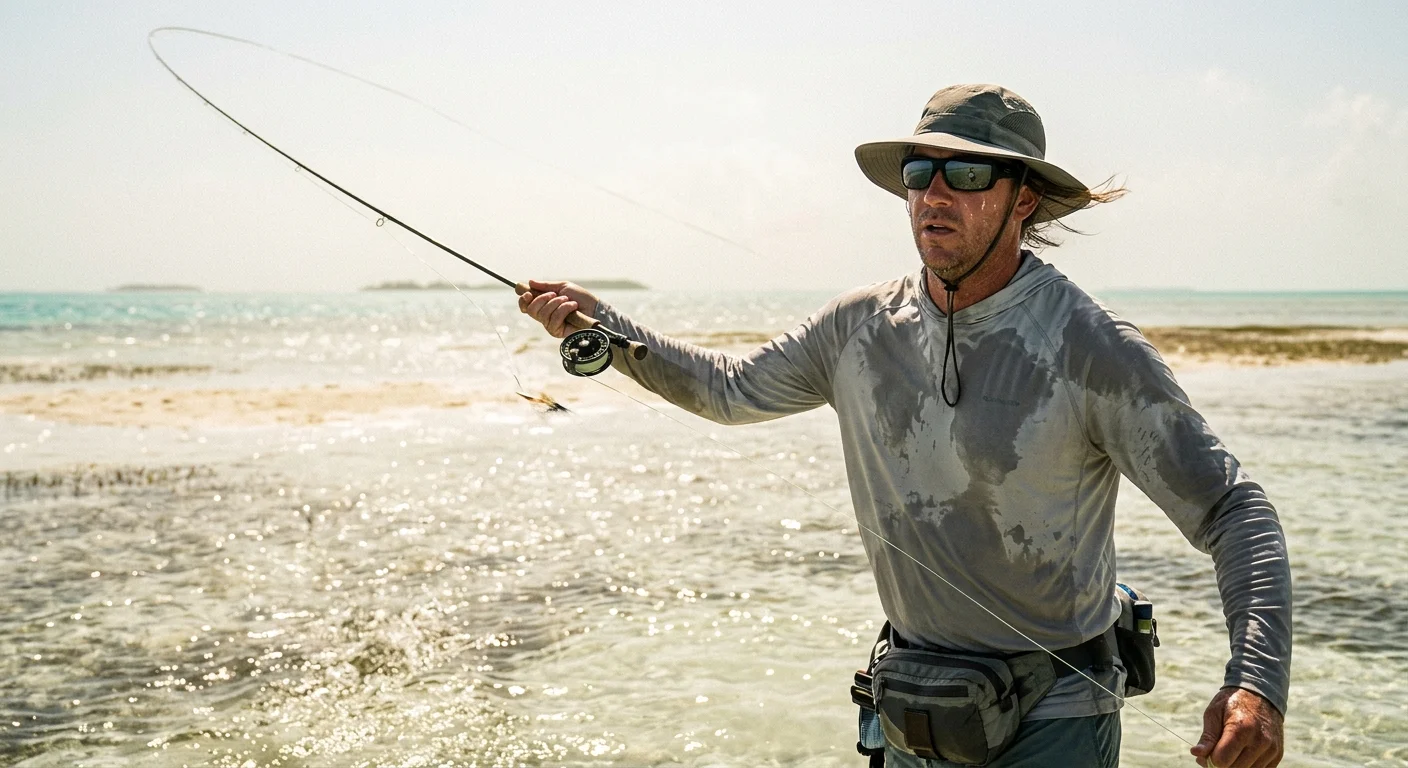
Waterfront heat isn't just hot. It's a different category of punishment.
Fishing a coastal flat or a tropical reservoir at midday puts at least three forces against your body at once. Air temperature runs 32–38°C . Humidity sits between 75–90% . Solar radiation heats exposed surfaces — dock planks, aluminum gunwales, sandy banks — to 10–20°C above ambient . That last part matters more than most anglers realize. You're not just standing in 38°C air. You're absorbing radiant heat bouncing off every horizontal surface around you.
Then there's the wind. Or rather, the absence of it.
Covered boat decks, shoreline vegetation, and deep-cut river banks all cut airflow to near zero. Static posture fishing — locked onto a feeding lane, afraid to move — removes even the small cooling benefit you get from walking. At that point, your clothing and your skin become the primary thermal regulation system . Nothing else is doing the job.A professional fishing apparel factory helps create performance garments for extreme heat conditions.
Why Evaporative Cooling Loses Its Edge Here
This is the part the hang tags don't mention.
Evaporative cooling is the mechanism behind most "sweat evaporation textile technology" marketing claims. The idea is simple: moisture evaporates from fabric and carries heat away. In dry air, this works well. At 30–40% RH , direct evaporative systems can drop temperature by as much as 15°C . That's real, measurable relief.
But waterfront air isn't dry. It's close to saturated.
Past 65–70% RH , the vapor pressure gap between your wet shirt and the surrounding air collapses. The atmosphere has no room left to take on more moisture. Performance data from evaporative cooling systems shows this clearly:
RH ≤40% : High effectiveness
RH 40–60% : Diminished but functional
RH ≥70% : Largely ineffective
At 75–90% RH — the range typical of tropical lakeshores and coastal fishing spots — pure evaporative fabric technology delivers 40–60% less cooling than the same shirt would on a dry-land hiking trail. The shirt isn't broken. The physics just changed on you.
The Performance Baseline Any Fishing Shirt Must Clear
This humidity ceiling changes how you should think about fabric selection. "Cooling" in waterfront conditions can't rely on a single mechanism. For heat dissipation sportswear to work in high-humidity fishing scenarios, it needs to clear these minimum targets:
Performance Metric | Minimum Target | Why It Matters |
|---|---|---|
Fabric weight | ≈100–150 g/m² | Reduces thermal mass, accelerates drying |
Air permeability | >50 cm³/cm²/s | Enables convective exchange when wind exists |
UV protection | UPF 50+ (≥98% UV blocked) | Eliminates radiative heat gain through fabric |
These aren't marketing figures. They come from performance sportswear and tropical workwear engineering standards. Think of them as the floor, not the ceiling.
Hitting all three still leaves the 40–60% evaporative deficit unresolved. That gap is why more advanced cooling fabric technologies exist — phase change materials, mineral-infused yarns, infrared reflective coatings, and structural ventilation designs. Each one works through a different mechanism: conductive heat transfer, latent heat absorption, or radiation management. None of them need dry air to function.
That's what the next sections break apart.
Evaporative Cooling & Hydrophilic Sweat Evaporation Textile Technology
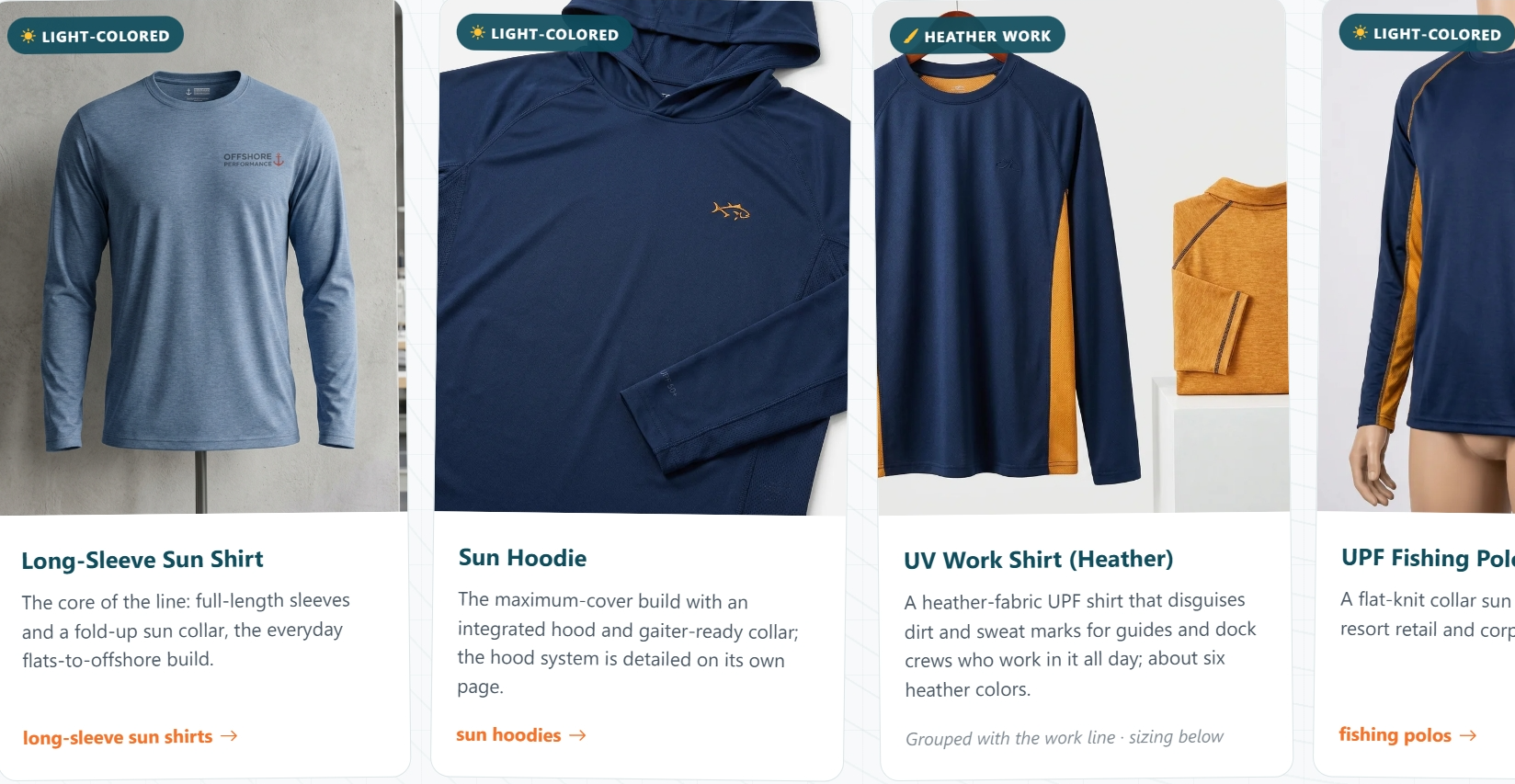
Sweat is already doing the cooling work. The fabric's job is to get out of its way.
That's the core idea behind evaporative cooling textile engineering — no marketing fluff. Your body produces sweat to shed heat. That moisture needs to move. Trap it against your skin in a saturated inner layer and the whole system fails. Heat stays locked in. Discomfort builds. The shirt stops being a solution and starts being the problem.
The engineering fix is called a Janus structure — also known as a wettability gradient build. The inner layer sits against your skin and uses hydrophobic fibers . These fibers don't absorb sweat. They push it away. The outer layer uses hydrophilic fibers . These spread and absorb liquid fast, pulling it off the skin and spreading it across a larger surface area to evaporate. Moisture travels in one direction: out.
The better builds take this further. Instead of two flat uniform layers, top-tier hydrophilic fabric coatings and constructions use a radiating grid pattern. Hydrophilic channels run through a hydrophobic fiber network. Those channels act like tiny pipelines that speed up liquid movement. The hydrophobic sections between them keep the fabric open and breathable while moisture pushes outward. This is the same thinking behind Coolmax-style channeled fiber cross-sections and the microporous groove designs you'll find in performance microfiber cooling shirts .Private label cooling fishing shirts allow brands to build unique hot-weather collections.
What the Performance Numbers Look Like
Lab research on wearable textiles gives us hard targets for what well-built sweat evaporation textile technology can hit:
Unidirectional moisture transport index : 476%
Water evaporation rate : 5,209 g/m²/day
Skin temperature reduction : 4.1°C versus conventional textiles
Thermal conductivity (3D double-layer wetting structure): 0.315 W·m⁻¹·K⁻¹
Two numbers matter most when you're shopping: wicking transport index above 400% and evaporation rate above 5,000 g/m²/day . A shirt clearing both targets moves moisture fast — no question. A shirt that doesn't publish those figures at all? Worth questioning before you buy.
The Timing Dimension Most Buyers Miss
Hang tags never tell you how these fabrics shift performance over time. Here's what they skip. Initial cooling hits hardest at low moisture levels. The first sweat wave produces the sharpest temperature drop. As the fabric gets wetter, that early burst of cooling softens. But saturation isn't a failure — a wetter fabric keeps evaporating longer. You get steadier, slower relief across a full session instead of one sharp spike.
For a two-hour morning bite, basic moisture management gets the job done. For a six-hour offshore grind , you need a build that holds transport efficiency under a heavy, sustained sweat load. Asymmetric knit structures with 3D lateral and vertical wicking channels handle that better than flat single-layer moisture-wicking weaves.
One hard limit applies to all of this: airflow. Evaporation needs the vapor to go somewhere. On tree-lined banks, estuary edges, and calm-water flats, the air often carries near-maximum humidity already. The physics slow down regardless of how good the fabric is. That's not a flaw in the technology. It's the point where other cooling fabric technologies need to take over.
Phase Change Material Clothing & Mineral-Infused Yarn Systems
Here's something the evaporative cooling section can't tell you: some fabrics work without any air movement at all.
Phase change materials don't need wind. They don't need low humidity. They need heat — your heat — and they absorb it through a physical state transition, not evaporation. That difference is huge on a dead-still, swamp-thick river bend at noon.
How PCM Clothing Works
Fishing apparel makers engineer microencapsulated PCMs to melt between 28–32°C .Reliable cooling fabric fishing apparel suppliers provide specialized textile solutions for fishing brands. That range is deliberate. It sits just below your core skin temperature. That gap creates a thermal buffer. The buffer pulls in excess heat before you even feel discomfort. The phase change — solid turning to liquid inside tiny capsules — consumes heat energy in the transition itself. Your skin temperature drops. The air stays the same. The humidity stays the same. The fabric handles the heat load for you.
This is thermal buffering , not refrigeration. Know that before you buy. You're not getting air conditioning stitched into a collar. You're getting a short burst of heat absorption.
How short? Research on transient conditions puts the active buffering window at about 15 minutes in standard wear. That sounds modest. But consider where it pays off most — the first brutal stretch of stepping back into full sun after a shaded break, or the heat spike that hits you at 10 AM when cloud cover burns off fast. PCM clothing handles peak thermal events. Manufacturers can combine PCM and UV protection features through custom fishing apparel development.It doesn't offer marathon cooling.
For this to actually work, the specs need to hold up:
Latent heat capacity : ≥30 J/g — below this, the buffering effect is too weak to feel
MVTR (moisture vapor transmission rate) : >8,000 g/m²/24 hr — PCM construction can't block breathability
Temperature gradient : the body-to-PCM melt-point gap must exceed 6°C for real hot-climate performance
Get those specs right, then place the PCM fabric in the upper torso and scapular zone — the areas with the highest heat load. Human wear testing shows torso skin temperature reductions of 2–3°C in that setup. Some spray-coated constructions reach 4.5°C cooler than untreated fabric after 30 minutes under simulated sunlight. Outlast Thermocules carry the most documented commercial track record for this approach.
Mineral-Infused Yarns: Lower Evidence, Real Mechanism
Jade fiber, mica-blended yarn, and similar mineral-infused fabrics sit in a different spot — both in the market and in the evidence hierarchy. The core claim: mineral particles spread through the fiber matrix improve conductive heat transfer away from your skin. The fabric becomes a more efficient passive conductor.
The mechanism holds up physically. Mineral additives do raise fiber thermal conductivity. The broader textile engineering literature backs conductive filler approaches as a real passive cooling strategy. What's missing from public research is the specific performance data you see on product pages — precise wash-durability grades, exact particle concentrations, proprietary channel structures. That data gap doesn't mean mineral yarns are a scam. It means you need to ask harder questions.
Ask for independent test data. Don't take hot weather fishing apparel manufacturer specs at face value. A brand that produces third-party thermal conductivity measurements or independent ASTM-standard wear test results gives you something real to evaluate. A spec sheet with only brand-generated numbers and trademarked system names? Dig further before you buy.
The practical takeaway for anglers: PCM fabrics shine in high-humidity, low-airflow waterfront conditions — the exact environment where evaporative cooling loses its edge. Mineral-infused fabrics add a secondary passive layer that may stretch your comfort window, but the research behind them isn't as solid. Find both technologies in the same garment? Skip the marketing claims and check the PCM latent heat figure first. That one number tells you more than everything else on the hang tag.
Infrared Reflective Fabric & Ventilation Mesh Panel Design Integration
Radiant heat and ambient heat are two different problems. Most fishing shirts are built to solve one — not both.
At noon on a coastal flat, 50% of the solar energy hitting your shirt arrives as near-infrared radiation — wavelengths between 700 and 2,500 nm . Your eyes can't see these wavelengths. Your skin feels them as heat load right away. Standard moisture-wicking fabrics don't block this radiation. They absorb it. That absorbed energy turns into surface warmth. This heat buildup overwhelms any evaporative or conductive cooling the fabric tries to deliver against your skin.
Infrared reflective coatings fix the problem at the source. Instead of managing heat after it enters the fabric, they push it back before it gets in. These flexible NIR-reflective coating systems use inorganic pigments, nanoparticles, or metallic compounds. You can apply them to outer shell fabrics without losing color quality or natural drape. A ZrO₂ nanoparticle treatment at 1% concentration with a 6% citric acid coating on cotton/nylon blends reached durable NIR management with rubbing fastness ratings above 4/5 . That's commercial-grade durability — not a lab-exclusive result.
The Reflectance Numbers You Need to Know
MIT wearable textile modeling sets a clear target range: IR reflectance of 0.2–0.3 with IR transmittance of 0.58–0.64 for garments used in ambient temperatures up to 26°C . Push above those reflectance values and the coating trade-offs — stiffness, reduced breathability — start working against you.
This is where garment architecture matters more than any single material spec.
Dual-Zone Design: Why the Whole Shirt Shouldn't Work the Same Way
The most effective infrared reflective fabric setup isn't a full-coverage treatment. It's a split system:
IR-reflective outer shell on sun-facing panels — shoulders, upper back, chest — where direct solar load is highest
Open ventilation mesh panels at the underarms, lateral torso, and upper scapular zone — where metabolic heat and sweat build up most
These two zones serve opposite thermal functions. High NIR reflectance needs a denser surface structure. High convective airflow needs an open one. Try to do both in the same panel and you end up doing neither well. A dual-zone architecture puts each function where it works best.
For hot-weather fishing, place the mesh panels where your rod arm and casting shoulder generate sustained exertion heat — not based on symmetry or aesthetics. Functional placement outperforms symmetric placement every time.
One purchasing check worth running: a brand that claims full-garment IR reflectance and maximum breathability in the same shell fabric should back that up. Ask for the ASTM or ISO transmittance data . These two properties exist in measurable tension. A shirt that truly resolves that tension will have the numbers to prove it.
Scenario-Specific Matrix for Best Fabric for Fishing in Heat & Climate Adaptation
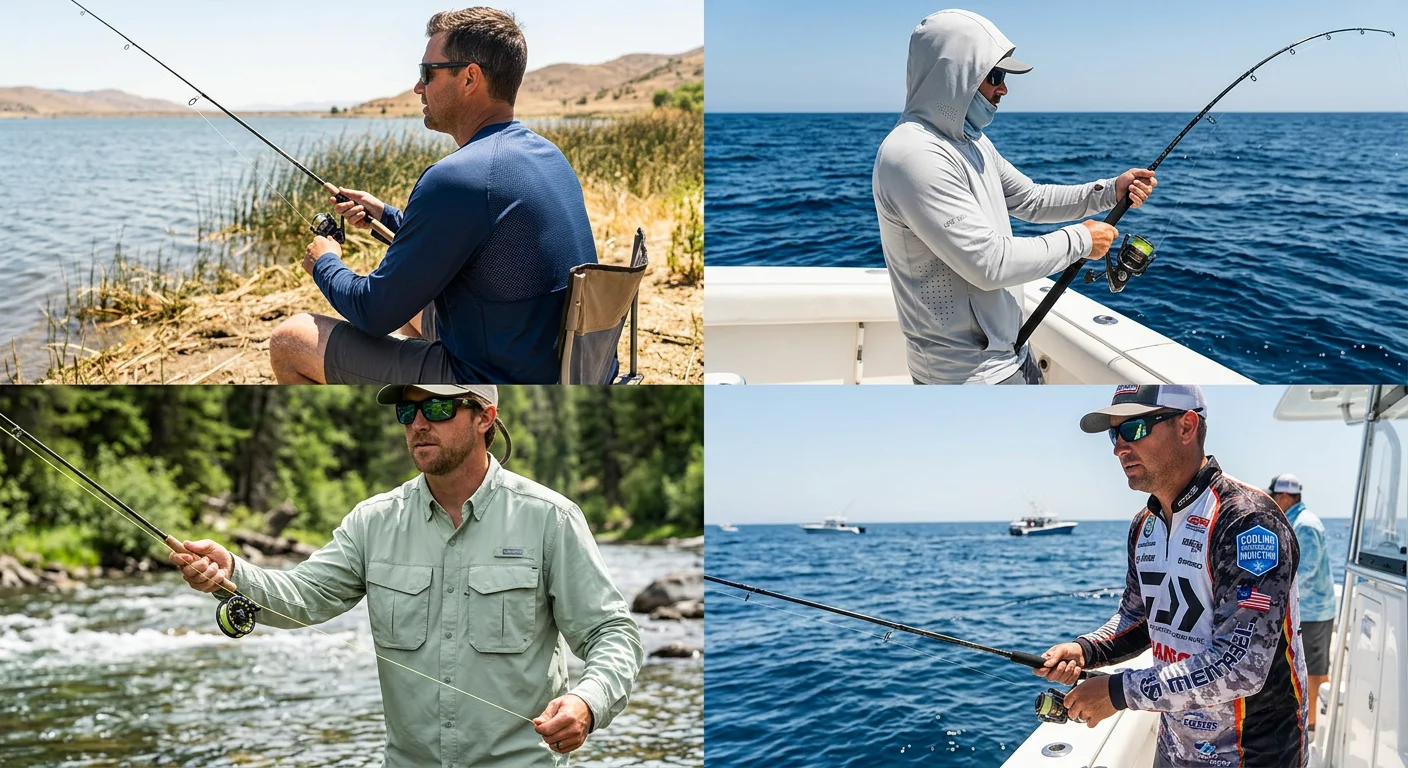
Four anglers. Four different spots. Same sweltering July afternoon. The right shirt for each one is different — not slightly different, but different at the technology level.
The technologies covered in the previous sections don't work in a vacuum. Each one performs against specific conditions: humidity level, wind availability, exertion level, session length. Match the technology to your situation and it does its job. Get it wrong and you've spent real money on engineering that never gets to work.
Here's how that matching works.
The Four Core Fishing Scenarios — and What Each One Demands
Freshwater shore and lake fishing — the long, static, high-humidity grind — is where evaporative cooling breaks down first. Ambient saturation is high. Wind is inconsistent or gone. You're locked in position for four, five, six hours. The right fabric stack here relies on PCM/mineral conductivity for about 60% of the cooling work . Mesh ventilation panels at the back and underarms handle the rest. Mesh ventilation in humid-climate shirts delivers a measurable 35–40% breathability improvement over solid-face fabric. The atmosphere can't absorb more moisture at that point. So you need physical airflow structure — not chemistry — to pull heat off the body.
Saltwater and offshore boat fishing flips the priority entirely. You have wind. Consistent, boat-generated wind. That changes the evaporative equation. The vapor pressure gap opens back up. Sweat can leave the fabric. A lightweight polyester wicking build — 4 to 5 oz fabric weight, UPF 50+ , sub-15-minute dry time — outperforms heavier PCM constructions here. Polyester beats nylon in salt environments: faster drying, more stable UV protection, better moisture transport under sustained spray. Microfiber polyester moves moisture away from skin 50% faster than cotton under the same conditions. On an offshore deck with airflow on your side, that speed advantage builds across a full day.
Fly fishing and wading brings a variable the other scenarios skip: sustained, repetitive upper-body exertion. The casting stroke generates heat at the shoulder and torso in ways static fishing never does. A 4-way stretch knit isn't optional here — it's a requirement. Stiff fabric fights the casting motion and traps heat in the exact zones producing it. Pit zips and underarm ventilation panels give you the most direct fix. Add gusseted seams at the shoulder for full range of motion without tension points. Ventilated back and side panels support the torso zone that heats up most during long casting sessions. The priority order is: stretch first, then vent placement, then moisture transport.
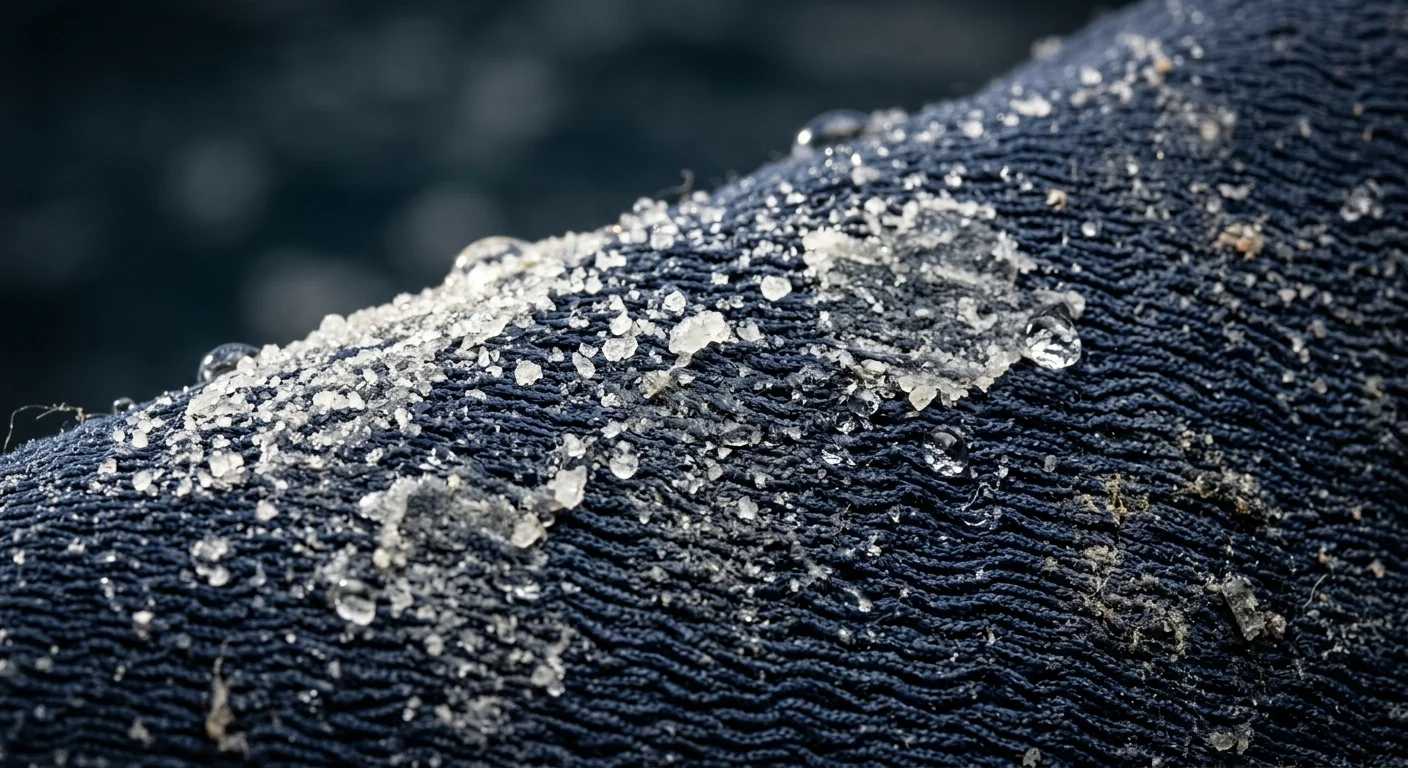
Multi-day tournament and charter fishing adds a durability and hygiene demand that single-day trips don't require. Repeated sweat cycles, limited wash access, salt buildup — these break down standard fabrics and create odor faster than most anglers expect. Antimicrobial-treated quick-dry synthetics with reinforced seams are the base requirement for this use case. A shirt that performs well on day one but smells like a bait bucket by day three is a gear failure, plain and simple. Look for silver-ion or zinc-based antimicrobial treatments backed by published wash-cycle durability data — not just a label claim that the fabric is "odor-resistant."
The Climate Decision Framework
Before matching a scenario, run your climate conditions through this two-variable check:
Humidity above 85%, wind low or absent: Point your fabric selection toward PCM latent heat capacity and mineral conductive yarn, backed by structural mesh ventilation. Evaporative cooling loses most of its effect here. Physical heat management and airflow structure carry the session.
Humidity below 60%, consistent breeze available: Shift toward high-performance evaporative wicking and ventilation mesh panel design. Wind restores the vapor pressure difference that makes sweat evaporation work. A fast-wicking polyester build will beat a PCM shirt in these conditions — lighter, simpler, and more responsive to the airflow doing most of the work.
Across both climate types, light colors and relaxed fit cut solar heat gain and reduce skin contact. UPF 50+ is the baseline for any sun-exposed scenario — not a premium upgrade.
Condensed Feature Stack by Use Case
Fishing Type | Priority Stack |
|---|---|
Freshwater shore/lake | Lightweight synthetic + mesh back/underarms + quick-dry + PCM or mineral layer |
Offshore boat | Polyester, 4–5 oz, UPF 50+, sub-15-min dry, salt-resistant construction |
Wading/fly casting | 4-way stretch knit + pit zips + gusseted seams + ventilated back and side panels |
Tournament/charter | Antimicrobial finish + reinforced seams + quick-dry + repeat-wear durability |
Key numbers to keep in mind: UPF 50+ across every category. 4–5 oz fabric weight for offshore and flats work. Under 15 minutes to 80% dry as a quick-dry benchmark worth asking about before you buy. 35–40% breathability lift from mesh ventilation in humid conditions — a real, measurable gap, not a texture preference.
Buy the shirt that fits your scenario. Not the one with the longest feature list on the hang tag.
Field Verification Indicators & Performance Benchmarking Methods
Every spec sheet is optimistic. The numbers on hang tags were written by people with a financial interest in the outcome. That's not cynicism — it's just the economics of apparel retail. Here's a set of tests and benchmarks you can run yourself, with your hands and a few basic tools. Check whether a shirt's claims hold up before you commit to six hours in it on a July flat.
Fabric Weight & Structural Uniformity
Weight is the starting point. Target 110–145 g/m² for peak-summer synthetic builds. Most commercial "ultra-light" sun shirts fall in the 90–120 g/m² range. Standard performance tees run 130–150 g/m² . A Men's M long-sleeve in that range should weigh around 160–210 g on a postal scale. Push past 230 g in the same fabric type and you're holding a denser knit. It will hold heat longer.
The backlight check catches what the scale misses. Hold a single fabric layer tight against a phone flashlight at about 2–4 cm distance. A smooth, even glow across the surface means uniform weave structure — consistent heat transfer, consistent UPF. Visible hotspots, streaks, or large pores mean the opposite. You get localized heat trapping and uneven sun protection. That problem gets worse as the fabric stretches under casting motion.
Score the uniformity: 0 for patchy , 1 for minor hotspots , 2 for very uniform . Pair a backlight score of ≥1 with a weight estimate of 120–140 g/m² . That combination clears the structural baseline.
Thermal Resistance: The Number Brands Don't Publish
Most buyers never see this figure. Rct — thermal resistance measured in m²·K/W under ASTM F1868 or ISO 11092 — is the closest thing to a scientific ground truth for how much heat a fabric traps.
The field benchmark for a single ultralight summer shirt layer: Rct below 0.15 m²·K/W . The practical grading scale:
≤0.10 m²·K/W → very light, high heat transfer, best performance
0.10–0.15 m²·K/W → acceptable for peak summer fishing
>0.15 m²·K/W → runs warm under direct solar load
Contact your Hot-Weather Fishing Apparel supplier and ask for the full ASTM F1868 or ISO 11092 test report. Not a summary line — the full report. It should list test plate temperature, humidity conditions, and both Rct and Ret (evaporative resistance) values.
Any garment positioned as a "cooling" fishing shirt but sold without a standard method ID and Rct value is marketing copy. Treat it that way.
The 0.5 mL Wicking Drop Test
This one costs nothing. Fill a medical syringe or small pipette with 0.5 mL of distilled water . Drop it onto the inner (skin-facing) surface of the fabric, laid flat and held with light tension. Watch what happens.
Result | Time | Classification |
|---|---|---|
Visible radial spread, droplet dome collapses | ≤3–5 s | Tier A — effective hydrophilic system |
Significant spread begins | 6–10 s | Tier B — borderline |
Still beaded or flat with no spread | >10 s | Reject |
Test three zones — chest, mid-back, underarm. Average the spread time across all three. Mean ≤4 seconds earns Tier A. Mean above 7 seconds is a disqualification , regardless of what the moisture-wicking language on the tag says. This is a solid field proxy for lab AATCC 197/198 wicking tests when you don't have lab access.
UPF Certification: Read the Fine Print
A UPF number without a test standard is a decoration. The accepted methods are:
AS/NZS 4399 — Australian/New Zealand standard, used across global markets
EN 13758-2 / EN UV Standard 801 — European standard; UV 801 is stricter, tests on wet and aged fabric
AATCC 183 — US textile method
Watch for these red flags: tags that say "UV shield," "UV cut," or "sun protection" with no standard ID and no lab reference . The term "SPF fabric" is borrowed from sunscreen testing. It doesn't apply to textiles. Seeing it on a tag signals the marketing team had no technical oversight.
The acceptance rule is simple. UPF ≥50, method named, lab or report ID available = green. UPF stated but no method = amber, non-critical use only. No UPF metric at all = treat as unverified shade.
Breathability Proxy: The 37°C Sleeve Test
Warm a gel pack or sealed saline bag to 37°C — body temperature — using a water bath. Dampen its surface, not dripping. Wrap it in a sleeve or tubular fabric sample, single layer. Leave it in still air for 60 seconds . Unwrap and assess:
Grade A: outer surface dry or just cool-damp, minimal condensation inside → high MVTR, qualifies for "cooling" or "breathable" positioning
Grade B: noticeable outer dampness, thin moisture film inside → moderate
Grade C: outer surface wet, condensation beads inside → low MVTR, clamminess risk under sustained exertion
Only Grade A results should carry "cooling" or "high breathability" positioning on fishing sun shirts. Grade B is acceptable for casual use. Grade C is a thermal trap on a hot day.
Premium cooling fishing shirts often publish MVTR values of 5,000–20,000 g/m²/24h under ASTM E96 or ISO 15496. A brand that publishes that range but can't produce the test report needs to provide it before you approve the line.
Q-Max: Cool-Touch Durability Test
Q-max measures peak heat flux — the instant thermal transfer rate when cool fabric first contacts warm skin. It's measured via the Kawabata KES-F7 instrument system and reported in W/cm².
The threshold for credible cool-touch claims: Q-max ≥0.25 W/cm² . Basic polyester or degraded surface coatings measure below 0.15 W/cm² . The tactile difference is real and immediate. Press your inner wrist against the fabric at room temperature (22–26°C). Authentic high-conductivity finishes or PCM materials deliver a clear, immediate cool sensation compared to a cotton control. Surface silicone prints can mimic that sensation well — but only for the first three to five wear cycles .
This test reveals coating degradation. Take a new sample and a sample washed 10–20 times . Run the wrist test on both. A sharp drop in cool sensation on the washed sample means the shirt relied on a surface treatment that doesn't survive real use. That's a product that fails in year two of tournament fishing.
The Verification Grid at a Glance
Indicator | Target | Test Method |
|---|---|---|
Fabric weight | 110–145 g/m² | Postal scale + size proxy |
Backlight uniformity | Score ≥1 | Phone flashlight, single layer |
Thermal resistance (Rct) | <0.15 m²·K/W | ASTM F1868 / ISO 11092 report |
Wicking drop test | Mean spread ≤4 s (Tier A) | 0.5 mL water, 3 zones |
UPF certification | ≥50 + named standard | Tag or spec sheet |
Breathability proxy | Grade A | 37°C gel sleeve, 60 s |
Q-max cool-touch | ≥0.25 W/cm², stable post-wash | KES-F7 report + tactile wash test |
Run this grid against any shirt before you buy. Seven indicators. Every one is measurable. None require a lab. A shirt that won't produce the underlying data for Rct, UPF method, or Q-max isn't hiding nothing — it's hiding something specific. The anglers who fish in the most brutal heat don't need better gear. They need better questions.
Conclusion
After years of sweating through tournament days and dawn-to-dusk shore sessions, here's what I've learned: the angler who understands the fabric wins the long game. Not because gear makes you a better caster. Because heat fatigue makes you a worse one.
The gap between evaporative cooling that works at 85% humidity and a label that just says "cooling" isn't marketing — it's measurable. Fabric weight, moisture transfer rate, UPF certification backed by real ASTM data. You now have the tools to read those numbers on your own.
Stop buying the claim. Start buying the mechanism.
Before your next hot-weather session, pull out the fishing shirt hanging in your gear room. Retailers can request custom wholesale price options for UV protection fishing shirts in bulk.Run it through the five verification indicators we covered. You'll see it in a new light — and pick your next one with a sharper eye.
The water doesn't care how hot it is. Neither should you.