You pulled your Columbia PFG shirt out of the wash expecting fresh and ready-to-fish. Instead, you're staring at a faded collar, a fish odor that won't quit, and that nagging feeling your $80 sun shirt is degrading faster than it should. Not all UPF fabric is built the same. The standard cold wash, tumble dry routine you use on a cotton tee could be quietly stripping away the sun protection you paid for. Whether your gear relies on a chemical coating or a tightly woven fiber structure changes everything—from which detergent to grab, to whether that dryer sheet is secretly the enemy. This is the real washing UPF and performance fabrics playbook. Brands sourcing custom Performance Fabric Fishing Shirts from an OEM or ODM fishing apparel services supplier should also consider wash durability during development.It's built from what actually happens to Huk, Simms, and PFG technology wash after wash, including the odor-killing soak ratio and the two-minute test that tells you if your shirt's sun protection is already gone.
Understanding UPF Fabric Types: Coating-Based vs. Fiber-Structure-Based
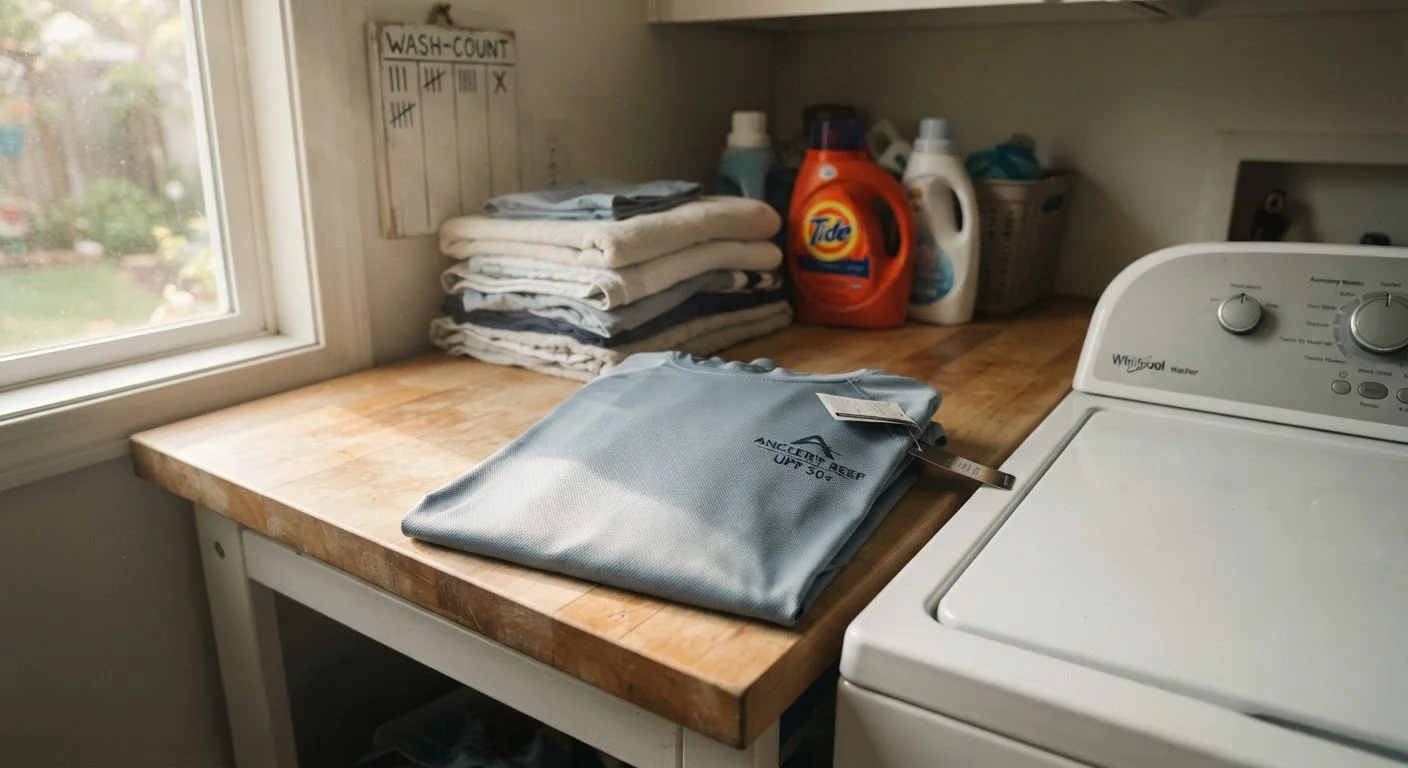
Here's a number worth remembering: UPF 30 blocks about 96.7% of UV rays, while UPF 50+ blocks at least 98%. That tiny percentage gap is exactly why fishing shirt fabric technology matters so much when you're doing laundry. Not all UPF is built the same way, and knowing which type you own is the first real step in sun protection fabric care.
There are two core pathways to UPF:
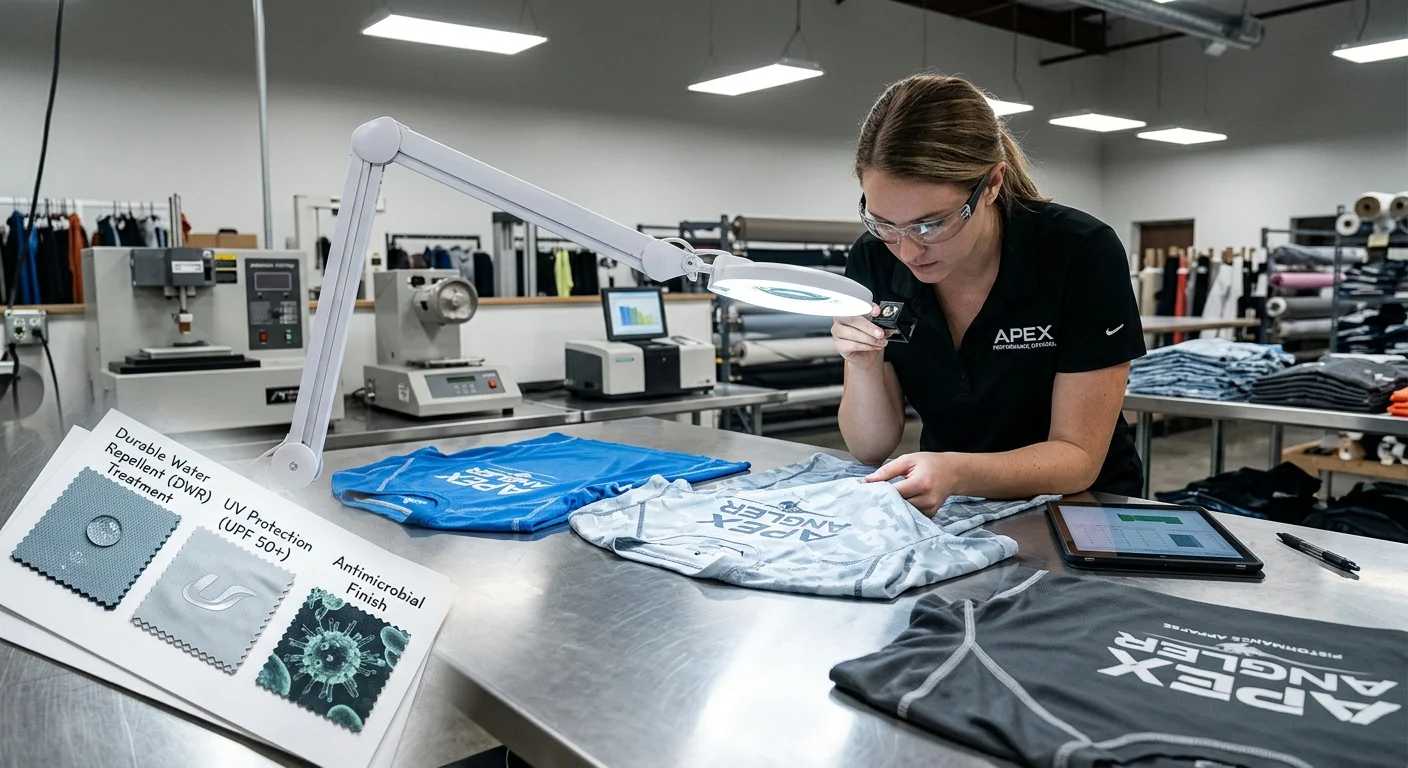
Coating-based UPF — A UV-protective finish sits on top of the fabric surface. Think TiO₂ nanoparticles, metal-organic frameworks, or benzotriazole and triazine compounds sprayed or bonded onto the fibers. This method works especially well on fabrics like silk or linen that don't naturally resist UV.
Fiber-structure-based UPF — The protection is baked into the fabric itself. Polyester's aromatic polymer structure naturally blocks UV, and when you pair that with a tight weave and low porosity, you get serious, durable protection. One study found white polyester with porosity under 5% hit a UPF over 20 from fiber chemistry alone.
What actually drives UPF performance? Two structural factors dominate: cover factor (higher = better) and porosity (higher = worse). Yarn density, fabric weight, dye color, and even humidity play supporting roles, but those two variables carry the most weight.
Here's the practical difference for your closet: coated fabrics can boost UV performance on a fiber that wouldn't otherwise deliver it, but that coating's durability after repeated washing depends entirely on the chemistry used. Fiber-structure-based UPF, by contrast, tends to hold up better over the wash cycles because the protection isn't a surface layer that can wear off—it's woven into the fabric's DNA.A reliable Performance Fishing apparel manufacturer tests this fiber-level protection before bulk production.
Before you touch the detergent for technical fabrics you own, figure out which camp your gear falls into. That single detail determines everything about upf 50 shirt maintenance going forward, and it's the reason two shirts that look identical can age at completely different rates.
Pre-Treatment: Removing Salt, Blood, and Fish Odor Before the Wash
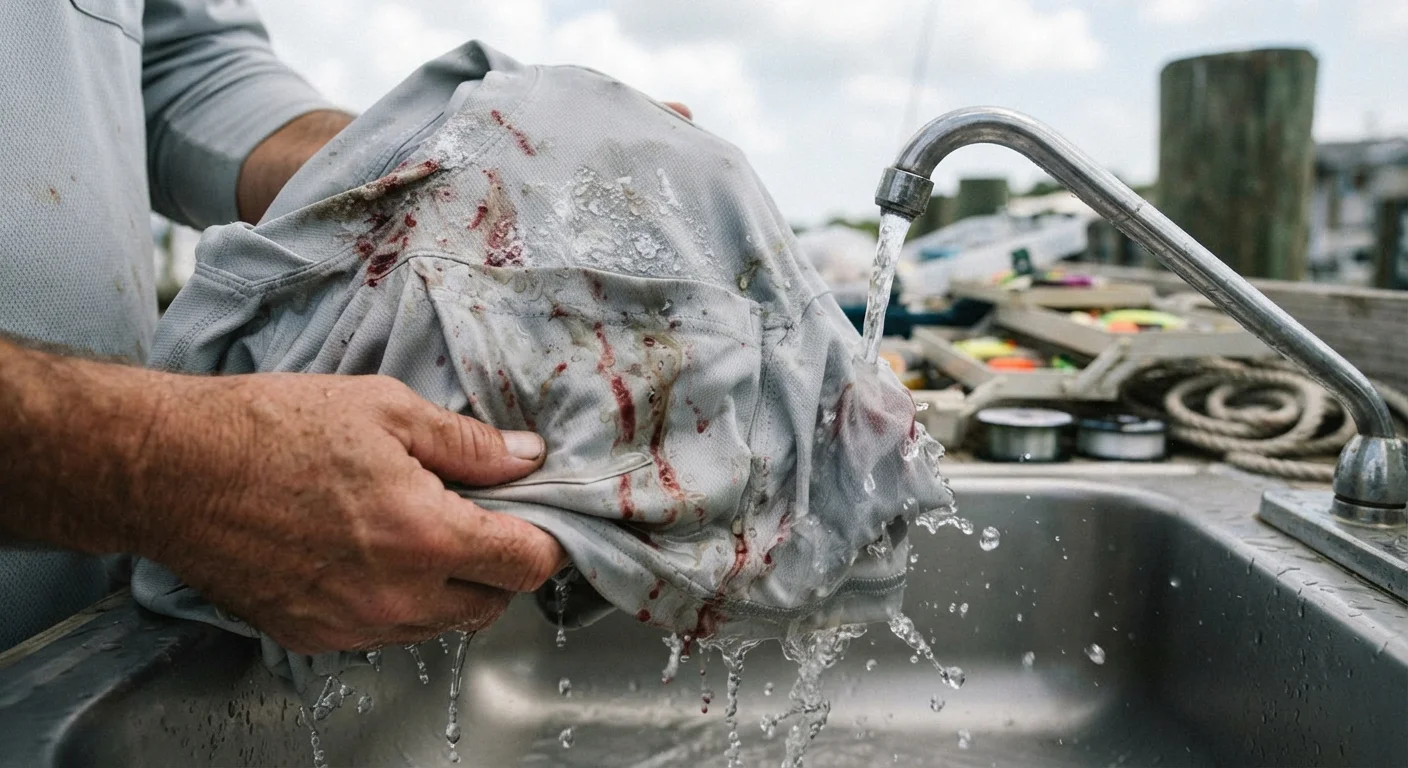
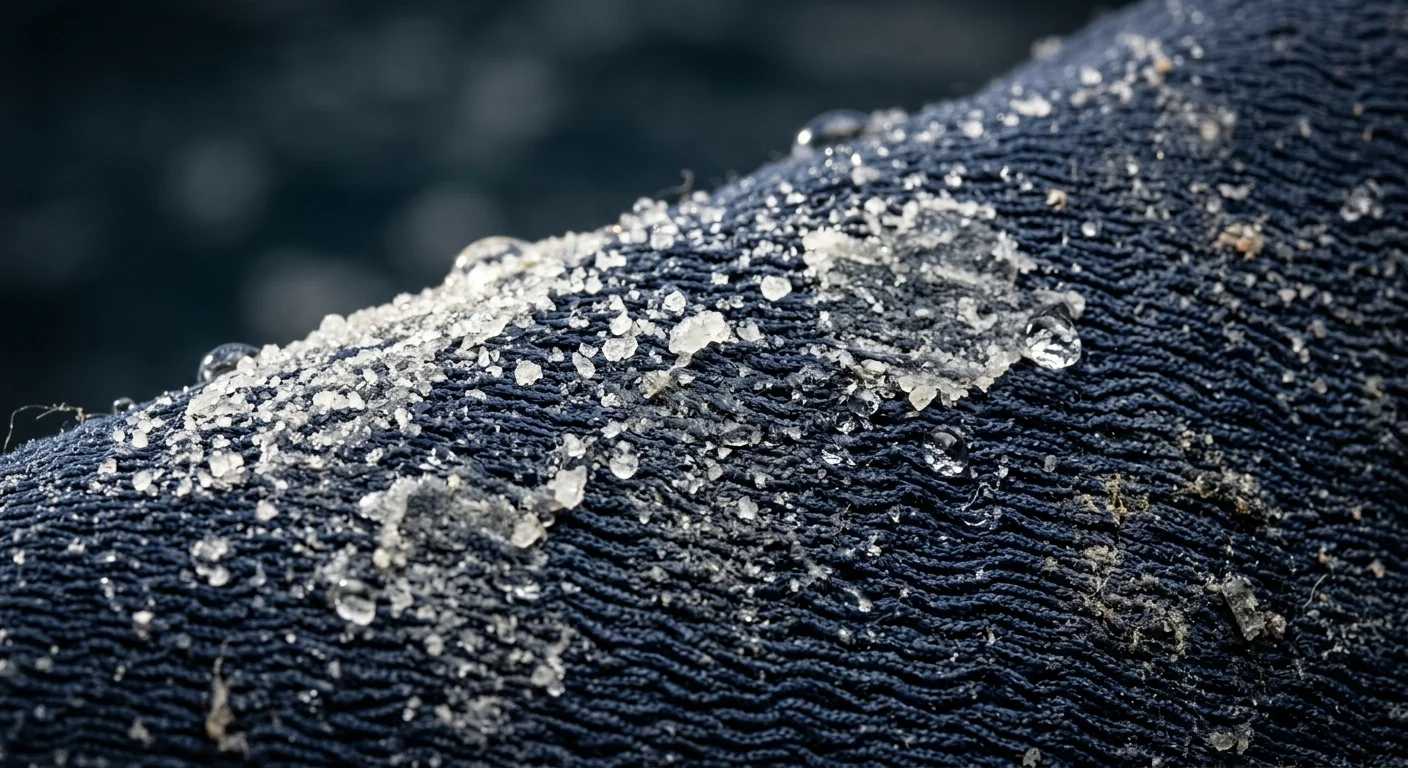
Seafood processors have known this for decades, but most anglers never think about it: the smell isn't coming from the fabric. It's coming from what's still on it. Blood, slime, and salt residue are the same three things that make fish smell bad if you don't clean them before cooking, and they behave the same way on your Huk hoodie or Simms shirt. Throw a shirt straight into the washing machine with these residues intact, and you're just spreading the odor across the whole load, not getting rid of it.
The pre-treatment sequence that works:
Cold rinse immediately — Don't wait until laundry day. Rinse blood and slime off under cold water right after you take the shirt off, preferably at the dock or sink.
Soak in a light brine solution — Mix about 1% salt to water (roughly 2 tablespoons of table salt per gallon of cold water) and soak for 15–30 minutes. This matches the standard freshwater fish pre-treatment ratio and pulls dissolved proteins out of the fabric before they set.
Rinse again, then dry completely — Residual moisture is the main reason fishy smell lingers. Blot with a towel and air dry before the shirt ever hits the washing machine.
Skip this step, and your detergent can't do its job, no matter how good the rest of your quick dry fishing clothing care routine is.Professional custom fishing apparel suppliers often include odor-control testing in fabric selection.
Exclusive Anti-Odor Soak Recipe (Does Not Damage UPF Coating)
Ninety-two percent versus fifty-eight percent. That's the retention gap between two soaking methods after 25 wash cycles, and it's the single most persuasive number in anti odor fishing apparel washing.
The vinegar soak (best for stubborn odor):
- 1 part distilled white vinegar to 4 parts cold water
- Soak 15–30 minutes , no agitation beyond a gentle swish
- Rinse well, air-dry flat out of direct sun
That ratio delivered 92% UPF 50+ retention after 25 cycles , compared to just 58% retention with standard detergent and warm water. This data helps wholesalers evaluate the real custom wholesale price value of Performance Fabric Fishing Shirts.Vinegar's low pH neutralizes odor-causing bacteria without attacking the UV coating.
A gentler variant if your fabric feels delicate:
- 1 tablespoon castile soap per quart of cool water
- Soak 8–12 minutes , agitate gently by hand
- Rinse twice in cool water
Prefer to skip vinegar? A pH-neutral, fragrance-free, enzyme-free detergent at 1 teaspoon per soak , cold water, 12–15 minutes, works as a preservation-first alternative.
Non-negotiable rules: keep water under 25–30°C, avoid twisting or wringing, and never reach for fabric softener, bleach, enzyme detergents, or baking soda—all repeatedly flagged as coating killers in sun protective clothing lifespan.
Machine Washing: Water Temperature, Program, and Detergent Selection
Most laundry advice treats fishing shirts like bath towels, and that's exactly where things go wrong. Your Simms or Huk shirt is a synthetic—polyester, nylon, or a blend—which puts it in a completely different temperature bracket than the cotton sheets you're washing it next to.
Match the water temperature to the fabric, not the soil level:
Cold water (60–80°F / 15–27°C) — your default for UPF shirts, especially anything with color, bleeding dye risk, or a coating you want to preserve.
Warm water (90–110°F / 32–43°C) — acceptable for synthetics and blends when the shirt is genuinely dirty, but this is the ceiling, not the starting point.
Hot water (130°F+ / 54°C+) — reserve this for white cotton towels and bedding. It has no place in UPF 50 shirt maintenance, full stop. Heat accelerates UV coating breakdown the same way a dryer does.
Program selection matters as much as temperature:
Easy Care / Synthetics cycle — typically runs around 40°C and is built for acrylic, polyester, polyamide, and elastane. This is the program your fishing shirt actually wants.
Delicates cycle — use this when no 20°C setting exists on your machine; it's gentler on coated fabrics than a standard cottons program.
Skip the Cottons/White program entirely for technical gear—it's calibrated for 60–95°C and will cook a UPF coating in one cycle.
Detergent for technical fabrics comes down to one rule: no bleach, no optical brighteners.Many Performance Fishing Shirts wholesalers now request fabric care reports before placing larger orders. Look for a color detergent or low-temp formula designed for 30–40°C washes. Full detergents with brightening agents are made for white cotton, not synthetic UV coatings, and they'll fade colors while doing little for odor.
Actionable rule for fishing gear: cold or 30°C water, Easy Care/Synthetics program, color or low-temp detergent. No exceptions.
Drying: Why High Heat and Sunlight Shorten UPF Life
Twenty to thirty hot-wash-and-dry cycles. That’s roughly how long it takes a UPF 50+ shirt to drop to UPF 40 or lower, based on real-world benchmarking from fishing apparel care guides. Cold wash paired with air dry lets that rating hold much longer. Drying is where most anglers unknowingly undo everything they got right in the wash.
Heat plus tumbling abrasion is the real villain, more damaging to sun protective clothing than the wash cycle itself. Hot dryer air relaxes synthetic fibers and loosens the weave structure. Spandex distorts. The tight construction that gave your shirt its UPF rating starts to open up, letting more UV through.
Sunlight during drying adds a second layer of damage. Hanging a wet shirt on the clothesline under direct sun feels efficient, but that UV exposure stresses fibers and fades dyes while the fabric is already vulnerable and wet. REI has noted that wetness itself can significantly lower a garment’s UPF rating for many materials, so a shirt drying in full sun takes a UV hit while offering less protection than usual.
The drying checklist that actually preserves fishing shirt fabric technology:
Air dry flat or on a hanger, never in direct sunlight
If you must use a dryer, select lowest heat or air-fluff mode only
Pull the shirt out while still slightly damp; over-drying leads to brittle fibers
Never iron high-heat UPF synthetics
Shade, low heat, and a little patience. That combination protects your investment far more than any detergent choice ever will.
How to Test If Your Fishing Shirt’s UPF Is Still Effective (Home Methods)
Grab the shirt and walk it to the nearest sunny window. That five-second move tells you more about your UPF 50 shirt maintenance than any label ever will.
The bright-light test: Hold the fabric up to direct sunlight. If noticeably more light passes through than when the shirt was new, the weave has loosened and UV blocking has likely dropped.
The UV-card test: Slide a UV test card under the fabric in sunlight. A strong color change means too much UV is getting through.
The wet test: Repeat both checks after wetting the shirt. Protection often drops further when fabric is damp, which matters because most fishing happens wet.
The stretch test: Gently pull the fabric. If it turns more transparent, the knit has opened up and UV exposure is rising.
The benchmark comparison: Hold your shirt beside a newer one of the same model. Side-by-side differences show how fast it fades.
UPF 50+ blocks 98% or more of UV, letting through 2% or less . Chemically treated fabrics lose 20–30% of that absorption after 20–30 home launderings , and most treated shirts last through roughly 30–50 wash cycles before they need replacing.
Washing Frequency: How Often Is Necessary (Without Over-Washing)
Fiber wear from repeated laundering is the quiet culprit behind fading and shortened garment life, and it’s why more washing isn’t better care. Sportswear norms say wash after every wear, but UPF fishing shirts don’t play by the same rulebook as your gym tee.
A smarter benchmark for how often to wash fishing shirts:
Light day, no odor, no visible soil: rinse and air dry. Skip the full wash cycle.
Sweat-heavy or fishy day: full wash following the cold-water, low-heat protocol.
Multi-day trips: cold rinse each evening, save the machine wash for the final day.
Think of it the way denim lovers treat raw jeans: worn multiple times before laundering, because every wash cycle chips away at fiber integrity. Your UPF shirt deserves that same restraint. Wash by wear condition, sweat level, and odor. You’ll stretch sun protective clothing lifespan further.
What Destroys UPF and Quick-Dry (Prohibited Actions)
Most anglers don't realize that certain laundry habits slowly wreck their technical fabrics. Here's what to keep away from your fishing apparel care routine.
Bleach and chlorine-based cleaners are the biggest threat to UPF and moisture-wicking performance. They break down synthetic fibers, weaken elasticity, yellow fabric, and compromise UV protection.
Fabric softener and dryer sheets coat technical fibers with a waxy residue that blocks the capillary channels responsible for moisture wicking. Polyester, spandex, and wicking blends should never touch either product.
High heat and "extra dry" or wrinkle-release dryer settings weaken fibers, shrink synthetics, and leave them brittle. Combined with dryer sheet residue, it's a double hit to quick-dry performance.
Ironing, steam, and radiator drying are concentrated heat sources that damage coating integrity fast.
Dry cleaning and powder or enzyme-heavy detergents leave residue and degrade performance materials over time.
Instead, use cold wash, mild liquid detergent, no bleach, no softener, air-dry in shade, and pull garments while still slightly damp to avoid over-drying brittleness.
Conclusion
Every seasoned angler learns this the hard way: your $80 Columbia PFG fishing shirt fails because of bad laundry habits, not bad luck. Smart fishing apparel care comes down to three rules. First, figure out if your fabric is coating-based or knit-based before you touch the detergent. Second, skip fabric softener—it basically poisons the UPF finish. Third, air-dry your gear instead of blasting it with high heat. Get those three right, and you add months or seasons to your gear’s real-world life.
Next wash day, grab your gear, check the tag, run the water test we described, and hit the odor with that soak recipe instead of random supermarket products. You’ll thank yourself later, standing knee-deep in a river wearing gear that’s sun-safe and smells fine.